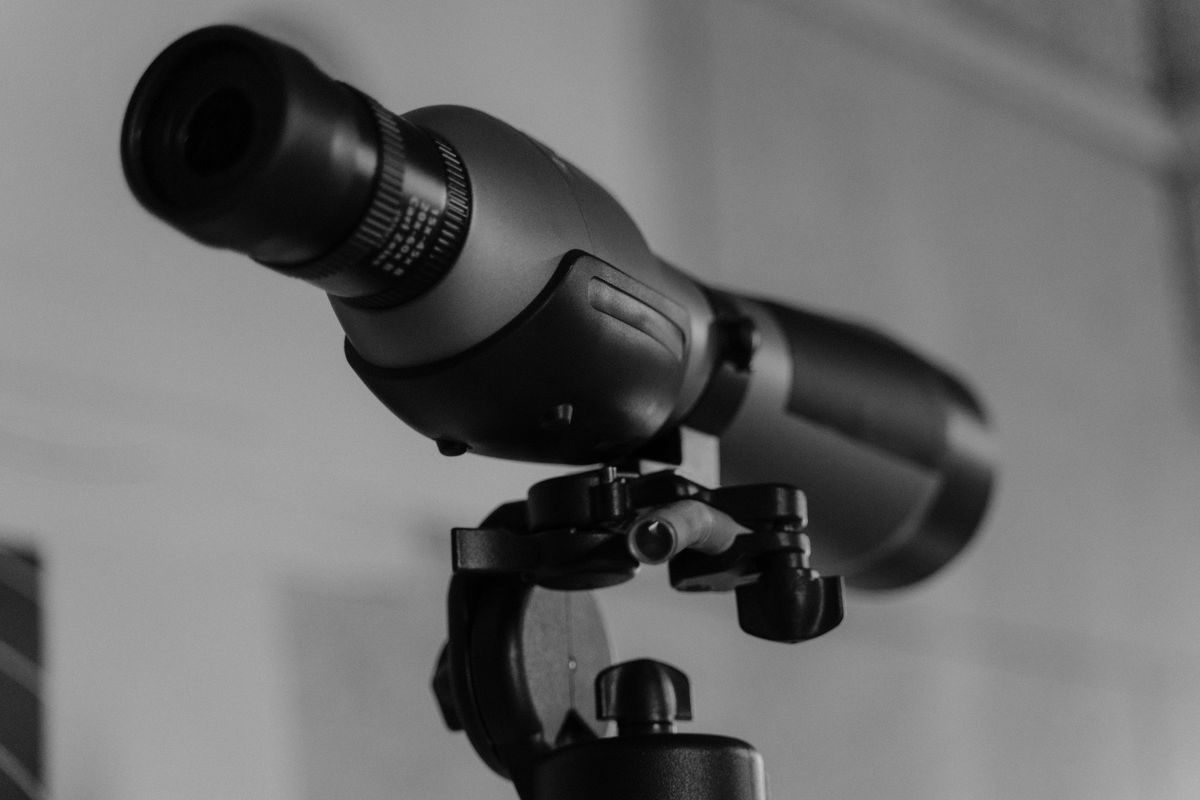
A convex lens in a telescope gathers light from distant stars and brings it to a focus. This convex lens in telescope is the most spectacular use of a convex lens — it lets us see galaxies millions of light-years away. But the same converging property makes convex lenses essential in magnifying glasses, cameras, microscopes, eyeglasses, and projectors. Here is how each one works.
Think of a convex lens as a light bucket. The larger the lens, the more light it catches, and the brighter and clearer the image becomes. This is why the biggest telescopes have the largest lenses — they are the biggest light buckets we can make.
Convex lens in telescope: how it works
The most famous use of a convex lens in a telescope is in a refracting telescope. It works with two convex lenses. The large objective lens at the front gathers light from a distant object and converges it to a real image at its focal point inside the tube. The smaller eyepiece lens then magnifies that image for your eye.
The key number is the focal length. A long focal length objective (60 cm to several metres) gives high magnification when paired with a short focal length eyepiece. The magnification equals the objective focal length divided by the eyepiece focal length. A 100 cm objective with a 1 cm eyepiece gives 100× magnification.
The BBC Bitesize guide on convex lenses shows the ray diagram for how a convex lens forms an image from a distant object — the same principle that makes a telescope work.
Magnifying glass
A magnifying glass is the simplest convex lens application. When you hold an object closer to the lens than its focal length (inside F), the lens produces a virtual, upright, magnified image on the same side as the object. The magnification depends on the focal length: a 10 cm focal length lens gives about 2.5× magnification; a 5 cm lens gives about 5×.
Camera
A camera uses a convex lens (or a compound lens system) to focus light onto the image sensor. When the object is beyond twice the focal length (2F), the lens forms a real, inverted, diminished image on the sensor. The photographer adjusts the focus by moving the lens elements closer to or farther from the sensor, shifting where the image forms.
The aperture (the adjustable opening inside the lens) controls how much light enters. A wider aperture lets in more light but reduces depth of field — the range of distances that stay in focus.
Microscope
A compound microscope uses two convex lenses in sequence. The objective lens (short focal length, typically 4 mm to 40 mm) produces a real, magnified, inverted image of the specimen. The eyepiece lens then magnifies that image further, producing the final enlarged view. The total magnification is the objective magnification times the eyepiece magnification — a 40× objective with a 10× eyepiece gives 400× total.
Eyeglasses for farsightedness
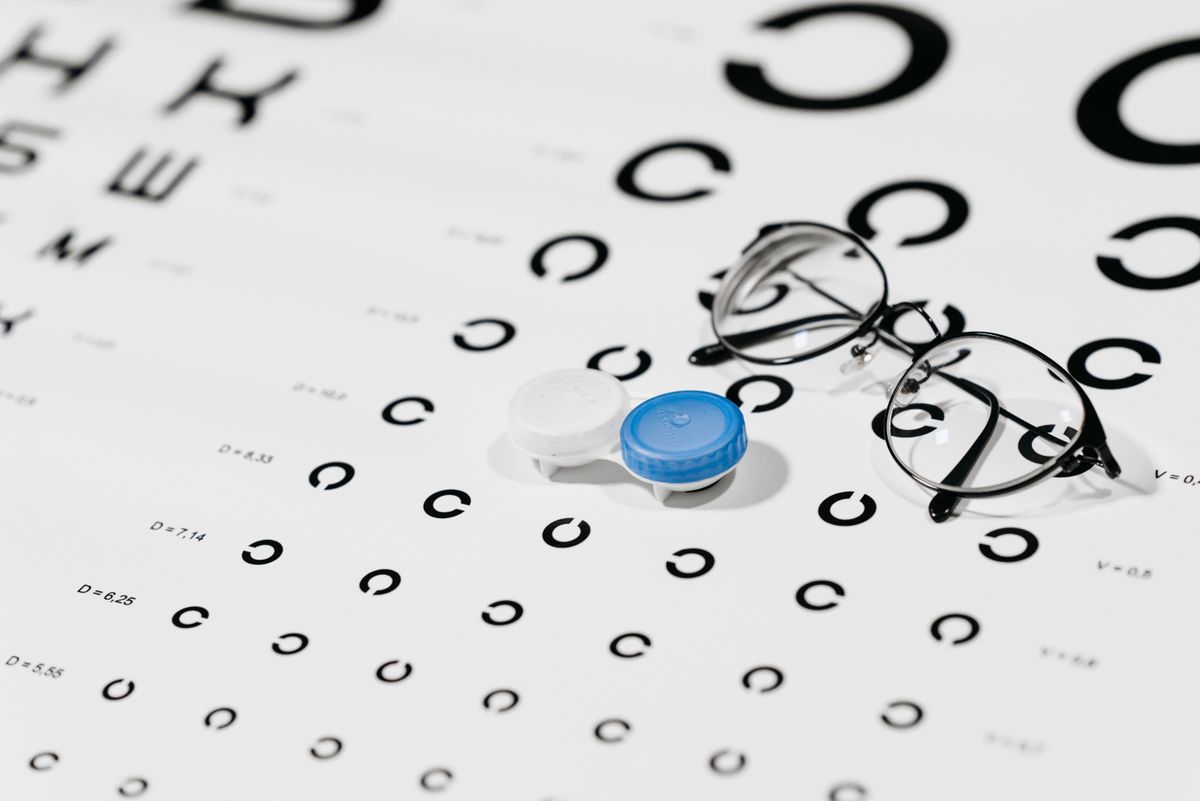
A convex lens corrects hyperopia (farsightedness) by adding convergence before light reaches the eye. In a farsighted eye, the eyeball is too short or the natural lens is too weak, so the image forms behind the retina. A convex lens of the right power — measured in dioptres (D) — shifts the focal point forward onto the retina. A prescription of +2.50 D means a convex lens with a focal length of 0.4 m.
The OpenStax textbook on geometric optics explains how convex lenses are used in both microscopes and telescopes, with worked examples for lens combinations.
Projector
A projector uses a convex lens to project a magnified image onto a screen. The slide or film sits between one and two focal lengths from the lens (between F and 2F), and the lens produces a real, inverted, magnified image on the far side. The image is upside down, which is why slides are loaded upside down in the projector — the lens flips them right-side up on the screen.
Common misconception: "a bigger lens always magnifies more"
Many people assume a larger convex lens gives stronger magnification. In a telescope, a larger objective lens does gather more light (making the image brighter), but the magnification depends on the ratio of objective to eyepiece focal lengths — not the size alone. A small telescope with a short focal length eyepiece can magnify more than a large one with the wrong eyepiece.
A related myth: "a convex lens is only useful for magnification." In fact, convex lenses are equally important for reducing and projecting images. A camera uses a convex lens to shrink a mountain onto a tiny sensor. That is the opposite of magnification, yet the same lens does both.
For a detailed comparison of convex and concave lenses, see our guide on concave vs convex lens. The full physics of how convex lenses work is covered in our convex lens guide. The general principle of how lenses bend light is explained in how lenses use refraction.
Frequently Asked Questions
What is a convex lens used for in a telescope?
A convex lens in a telescope serves as the objective lens — it gathers light from distant objects and brings it to a focus. A second convex lens (the eyepiece) magnifies the image. This design is called a refracting telescope.
What are 5 uses of convex lenses?
Convex lenses are used in telescopes (to gather and focus light from distant objects), magnifying glasses (to enlarge nearby objects), cameras (to focus light onto the sensor), microscopes (to magnify tiny specimens), and eyeglasses (to correct farsightedness). They are also used in projectors, solar concentrators, and laser collimators.
Is a magnifying glass a convex lens?
Yes, a magnifying glass is a simple convex lens. When the object is placed closer to the lens than its focal length, the lens produces an enlarged, upright, virtual image.
How does a convex lens work in a camera?
In a camera, a convex lens (or a system of lenses) focuses light from the scene onto the image sensor. When the object is beyond 2F, the lens forms a real, inverted, diminished image on the sensor.
How do convex lenses correct farsightedness?
In farsightedness (hyperopia), the eye focuses images behind the retina. A convex lens adds extra convergence before the light enters the eye, shifting the focal point forward onto the retina.
What is the difference between a convex lens and a concave lens?
A convex lens is thicker in the middle and converges light to a focal point. A concave lens is thinner in the middle and diverges light. Convex lenses have positive focal lengths; concave lenses have negative focal lengths.

About Umar Farooq
Umar Farooq writes in-depth guides on the physics of light and optics — from reflection, refraction, and lenses to diffraction, lasers, and fiber optics, explained from first principles.
Read more about Umar Farooq →