Lasers are everywhere. They correct your vision, carry your internet traffic through glass fibres thinner than a hair, cut through steel in car factories, and read the barcode on your shopping. What are lasers used for? The short answer is: almost everything that needs precise, controlled light.
Here is what we cover: 10 major areas where lasers are used in the modern world, from medicine and manufacturing to entertainment and everyday devices.
What Are Lasers Used For? The 10 Key Applications
1. Medicine and Surgery
Lasers have transformed medicine. Their ability to deliver concentrated energy to a tiny spot — down to a fraction of a millimetre — makes them ideal for procedures where precision is the difference between success and failure.
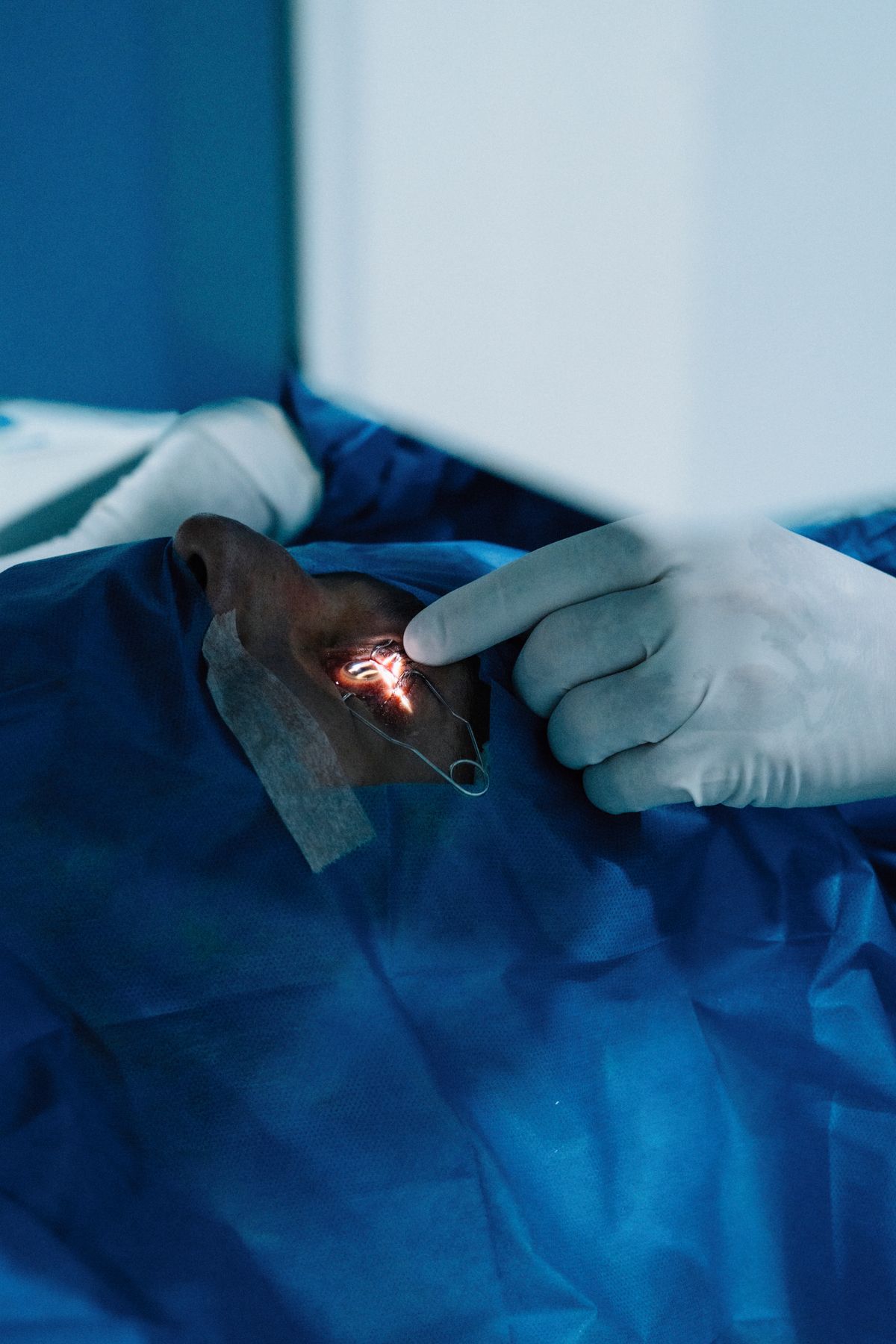
Eye surgery (LASIK) is the most famous medical laser application. A cool ultraviolet excimer laser at 193 nm reshapes the cornea by vaporising microscopic layers of tissue, correcting nearsightedness, farsightedness, and astigmatism in under a minute per eye. The laser removes tissue without burning because the pulse is shorter than the time it takes heat to spread.
Dermatology uses several laser types. Ruby lasers (694 nm) remove tattoos. Pulsed dye lasers treat port-wine stains and rosacea. CO2 lasers (10.6 μm) vaporise skin layers for scar revision and wrinkle treatment. Each wavelength targets a different substance in the skin — melanin, haemoglobin, or water — which lets doctors treat specific issues without damaging surrounding tissue.
Surgery benefits from laser scalpels that cut and cauterise simultaneously, reducing blood loss. Lasers destroy kidney stones by fragmenting them with pulses. In dentistry, lasers remove decay, reshape gums, and whiten teeth.
2. Manufacturing and Industry
Industrial lasers are workhorses. They cut, weld, drill, mark, engrave, and heat-treat materials with a precision no mechanical tool can match.
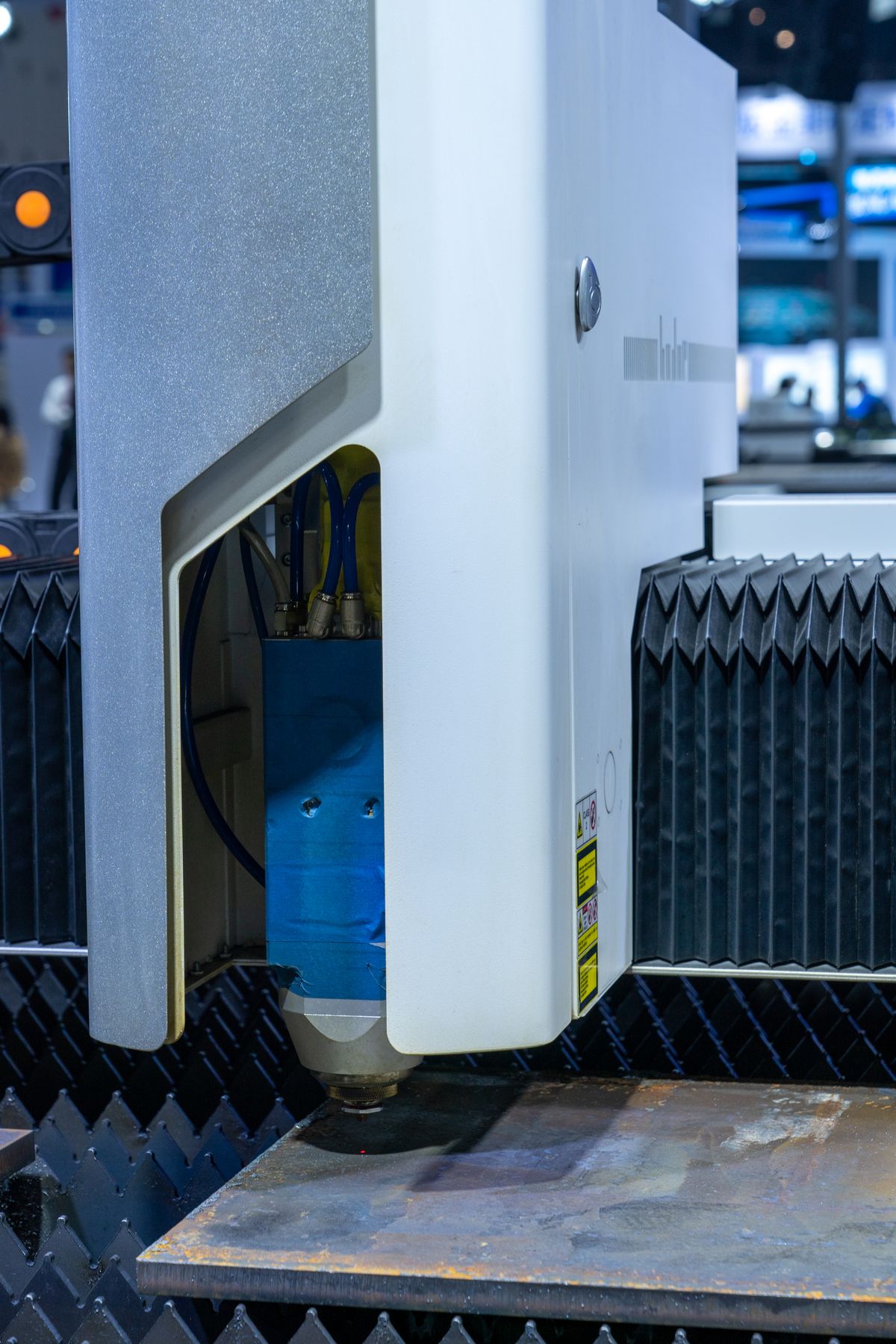
Laser cutting uses a focused beam to melt or vaporise material along a programmed path. A 2–10 kW fibre laser cuts steel plate up to 25 mm thick faster than a plasma torch and with a narrower kerf (cut width). The beam never dulls, never needs sharpening, and produces parts with clean edges that need no secondary finishing.
Laser welding joins metals with a deep, narrow weld that minimises heat distortion. Car manufacturers use laser welding to join roof panels, door frames, and battery packs for electric vehicles. The weld is stronger and faster than spot welding, and it can be done remotely — the laser head sits hundreds of millimetres from the workpiece.
Laser marking and engraving permanently etches serial numbers, barcodes, logos, and QR codes onto metal, plastic, glass, and wood. Unlike ink printing, laser marking never fades or rubs off.
Drilling with lasers produces holes as small as 5 micrometres — roughly a twentieth the width of a human hair. Jet engine manufacturers laser-drill thousands of cooling holes into turbine blades, each hole angled precisely for maximum airflow efficiency.
3. Communications
The internet runs on lasers. Fibre optic cables — thin strands of ultrapure glass — carry data as pulses of laser light across continents and under oceans. A single fibre pair can carry hundreds of terabits per second, enough for millions of simultaneous video streams.
How it works: a laser diode at the transmitting end flashes on and off billions of times per second, encoding data as light pulses. The light travels through the glass fibre by total internal reflection — it bounces off the inner walls, trapped inside the core. At the receiving end, a photodetector converts the light pulses back into electrical signals.
Modern submarine cable systems use lasers operating at 1550 nm (infrared) because glass is most transparent at this wavelength. Amplifier stations every 60–100 km boost the signal. A single cable can span 10,000 km from London to Tokyo with lasers flashing reliably at the bottom of the ocean.
Without lasers, the internet would be dial-up. Every search, stream, and message depends on laser light travelling through glass.
4. Data Storage
Every CD, DVD, and Blu-ray disc stores and retrieves data using a laser. The laser beam reflects off the disc's surface, and a sensor reads the pattern of pits and lands that encode the data.
The laser's wavelength determines how much data fits. CDs use a 780 nm infrared laser — fine for audio. DVDs use a 650 nm red laser, which focuses to a smaller spot and packs about 7 times more data. Blu-ray uses a 405 nm violet laser. The shorter wavelength focuses to an even smaller spot, cramming 25 GB onto a single layer — enough for a full HD movie.
The principle is the same in hard drives, optical mice, and holographic data systems: short wavelengths mean tighter focus, which means more information in less space.
5. Retail and Commerce
Every time a cashier scans a barcode, a laser is at work. The laser beam sweeps across the black-and-white stripes. Dark bars absorb the light; white spaces reflect it. A sensor reads the reflected pattern, decodes it into a number, and the till looks up the price.
The first laser barcode scanner was installed in a supermarket in 1974. Today, billions of scans happen daily. The laser is typically a low-power helium-neon or diode laser, safe enough to shine across a checkout counter without eye risk.
Retail lasers also power inventory management systems, automated warehouse sorting, and 3D shelf-scanning robots. The combination of speed, precision, and low cost makes them ideal for commerce.
6. Scientific Research
Scientists use lasers to probe the atomic world, measure the Earth's distance from the Moon, slow atoms to near absolute zero, and attempt nuclear fusion.
LIDAR (Light Detection and Ranging) fires laser pulses at the ground from aircraft or satellites and measures the return time to build 3D maps of terrain, forests, and cityscapes. Archaeologists use LIDAR to discover ancient ruins hidden beneath jungle canopies. Meteorologists track wind speed and pollution with it.
Laser cooling uses precisely tuned laser beams to slow atoms, cooling them to temperatures within billionths of a degree of absolute zero. The cooled atoms form Bose-Einstein condensates — a state of matter where quantum effects become visible at the macroscopic scale.
Lunar laser ranging bounces laser pulses off retroreflectors left on the Moon by Apollo astronauts. The round trip takes about 2.5 seconds. Measuring it to picosecond precision tells us the Moon is drifting away at 3.8 cm per year.
Nuclear fusion research uses the world's most powerful lasers — arrays the size of sports stadiums — to compress tiny fuel pellets, hoping to ignite a self-sustaining fusion reaction that produces more energy than it consumes.
7. Military and Defence
Military lasers serve many roles, from measuring distances to destroying threats.
Laser rangefinders send a pulse to a target and measure the time it takes to return, giving an accurate distance in seconds. Modern handheld rangefinders are accurate to within one metre at 20 km.
Target designators illuminate a target with an infrared laser beam invisible to the naked eye. Guided bombs and missiles home in on the reflected spot, enabling precision strikes with minimal collateral damage.
Directed-energy weapons use high-power lasers to destroy drones, rockets, and mortars in flight. These are not science fiction. The US Navy's LaWS (Laser Weapon System) and the UK's DragonFire have both demonstrated the ability to shoot down aerial targets at the speed of light.
LIDAR in military applications maps terrain for navigation, detects chemical warfare agents, and identifies underwater mines from aircraft.
8. Entertainment
Laser light shows have been dazzling audiences since the 1970s. High-power argon-ion and DPSS lasers project animated patterns on stadium walls, synchronised to music. The beams are scanned by galvanometer mirrors that move faster than the eye can follow, drawing shapes in mid-air.
Laser projectors in cinemas use red, green, and blue lasers to produce a wider colour gamut than traditional xenon lamp projectors. The lasers last longer, consume less power, and maintain consistent brightness over years of use.
Laser tag uses infrared laser diodes in toy guns. Players wear sensor vests that detect hits. The lasers are low-power and completely eye-safe, but the principle is identical to a military target designator.
Laser harps are musical instruments where laser beams replace strings. Breaking a beam triggers a note. The instrument looks futuristic — which is the point — but the physics is simple: a laser diode, a photodetector, and a MIDI controller.
9. Construction and Surveying
Laser levels have replaced bubble levels on construction sites. A rotating laser level projects a horizontal or vertical plane of laser light around an entire room. Workers align walls, ceilings, and fittings to the reference line, accurate to within a millimetre at 30 metres.
Laser rangefinders for surveyors measure distances to sub-millimetre precision over hundreds of metres. Combined with GPS and robotic instruments, they map building sites, calculate earth volumes, and guide excavation machinery automatically.
Laser alignment ensures that industrial machinery — turbines, conveyor belts, printing presses — stays perfectly aligned. A misaligned shaft by 0.1 mm can cause bearing failure within weeks. Laser alignment tools detect and correct it in minutes.
10. Everyday Life
The most common laser you interact with is probably invisible. Laser printers use a laser diode to draw an electrostatic image on a rotating drum. The image attracts toner, which transfers to paper and is fused by heat. Every page you print is written by a laser.
Laser mice use a laser diode (often infrared) to track movement on surfaces where optical LEDs fail — glass, polished wood, glossy magazines. The laser illuminates microscopic surface features, and a sensor detects relative motion.
Laser pointers are the simplest laser device most people own. A red diode laser (650 nm) or a green DPSS laser (532 nm) produces a collimated beam visible across a lecture hall.
A Common Misconception: Lasers Are Always Dangerous
Many people picture lasers as high-power beams that burn through anything. In reality, most lasers in everyday life are Class 1 or Class 2 — safe under normal use. The laser in a CD player operates at about 0.5 mW. The laser in a fibre optic cable is invisible and contained within the glass. Only industrial and research lasers reach power levels that require safety interlocks and protective housings.
The same physics that lets a 10 kW laser cut battleship steel also lets a 5 mW laser read a barcode. The difference is power — not principle. Understanding that context changes how you see the laser in every device around you.
External resources
- Wikipedia: List of laser applications — comprehensive catalogue organised by field, from scientific and military to medical and industrial
- Britannica: Laser applications — authoritative overview covering information processing, energy delivery, and measurement
- RP Photonics: Laser applications — detailed encyclopedia article with sections on manufacturing, medicine, metrology, and spectroscopy
See our guide on how laser light works for the physics that makes these applications possible, and read about the types of lasers used in each of these applications. For the history of the technology, see when were lasers invented.
Frequently Asked Questions
What are lasers used for in everyday life?
Lasers are used in barcode scanners at supermarkets, laser printers in offices, CD and DVD players, fibre optic internet connections, laser pointers in classrooms, and laser levels in construction. Many of these devices use low-power diode lasers that are safe for consumer use.
What is the most common use of lasers?
The most widespread use of lasers is in optical communications — the fibre optic cables that carry the internet, phone calls, and streaming video across continents and under oceans. Every time you send a message or load a webpage, laser light travelling through glass fibres makes it happen.
How far does a laser go?
A laser beam's range depends on its power, divergence, and the medium it travels through. A typical 5 mW laser pointer is visible for about 1-2 km at night. Military lasers can reach targets tens of kilometres away. The Apollo lunar laser ranging experiment bounces light off retroreflectors on the Moon — a round trip of about 770,000 km.
Can lasers cut through anything?
Lasers can cut many materials — steel, aluminium, wood, acrylic, glass, and fabrics — but not everything. They struggle with highly reflective materials like copper and aluminium (which reflect the beam instead of absorbing it), and transparent materials may pass the light through. The cutting ability depends on the laser's power, wavelength, and the material's absorption properties.
How fast is a laser beam?
All laser light travels at the speed of light in whatever medium it passes through — about 299,792,458 m/s in vacuum, roughly 200,000 km/s in glass fibre, and slightly slower in air. This is what makes fibre optic communication so fast: data travels at near light speed.
What is laser power measured in?
Laser power is measured in watts (W). A laser pointer typically emits 1-5 mW (milliwatts). Industrial cutting lasers range from 1 kW to 10 kW (kilowatts). Research lasers used for nuclear fusion can produce petawatts — quadrillions of watts — in ultra-short pulses.

About Umar Farooq
Umar Farooq writes in-depth guides on the physics of light and optics — from reflection, refraction, and lenses to diffraction, lasers, and fiber optics, explained from first principles.
Read more about Umar Farooq →