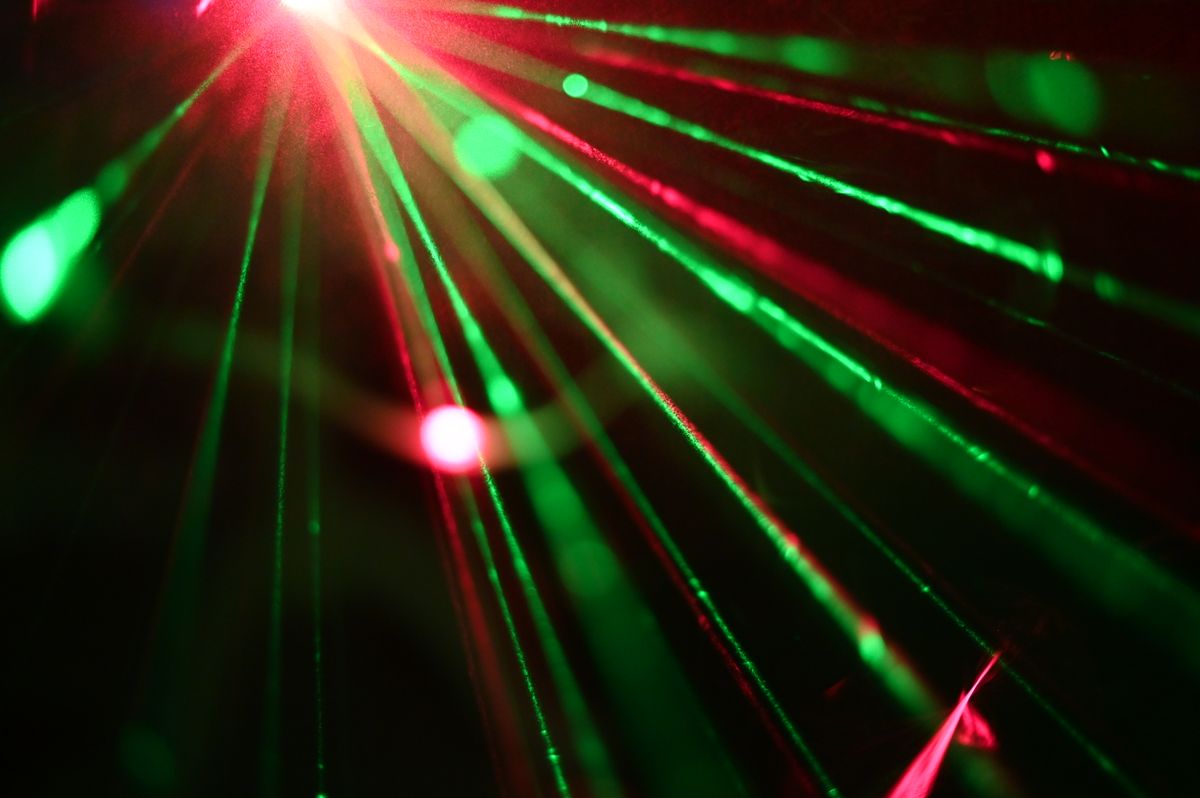
Lasers are classified by the material that amplifies light inside them — their gain medium. That material determines the laser's wavelength, power, beam quality, and what jobs it can do. There are 7 main types of lasers: gas, solid-state, semiconductor, dye, fibre, chemical, and excimer.
Here is what we cover: the 7 laser types by gain medium, how each works, what each is used for, a comparison table, and how to choose the right one.
What Are the 7 Types of Lasers?
Every laser has three parts: a gain medium, a pump source, and an optical cavity. The gain medium — the material that actually produces the light — is what defines the laser type. Change the medium, and you change nearly everything about the laser.
| Type | Gain Medium | Common Examples | Wavelength Range | Typical Power |
|---|---|---|---|---|
| Gas | Gas in a tube | HeNe, CO2, argon-ion | UV to far-IR | mW to kW |
| Solid-state | Crystal or glass | Ruby, Nd:YAG, Ti:sapphire | Visible to near-IR | mW to kW |
| Semiconductor | Diode chip | GaAs, InGaN | IR to visible | mW to W |
| Dye | Liquid dye solution | Rhodamine 6G | Tunable, visible | mW to W |
| Fibre | Doped optical fibre | Erbium, ytterbium fibre | IR (mostly) | W to kW |
| Chemical | Chemical reaction | HF, COIL | IR | kW to MW |
| Excimer | Reactive gas mixture | ArF, KrF, XeCl | UV | W to kW |
Different types of lasers are like different kinds of engines. A petrol engine, a diesel engine, and an electric motor all produce rotation, but they use different fuels, have different sizes, and suit different jobs. The same is true of the 7 types of lasers: the gain medium is the "fuel" that determines the laser's character.
Gas Lasers — The Workhorses of Industry and Science
Gas lasers are the oldest established type of laser. They use a gas-filled tube as the gain medium. An electrical discharge excites the gas atoms, and mirrors at each end of the tube form the optical cavity. They are valued for their excellent beam quality and long coherence length.
Helium-neon (HeNe) lasers are the classic red laser you see in school physics labs. They emit at 632.8 nm (deep red) with a few milliwatts of power. They are low-power but produce exceptionally clean, stable beams — ideal for alignment, interferometry, and holography.
CO2 lasers are the heavyweights. They emit at 10.6 μm (far infrared) and can deliver kilowatts of continuous power. CO2 lasers cut and weld metal, engrave wood and acrylic, and perform surgical procedures. A 5 kW CO2 laser can cut through 25 mm steel plate in a single pass.
Argon-ion lasers produce blue and green light (488 nm and 514 nm). They were the standard for laser light shows, flow cytometry, and retinal surgery before diode lasers replaced them in most roles.
Solid-State Lasers — Crystals That Amplify Light
Solid-state lasers represent a versatile type of laser for demanding applications. They use a crystal or glass rod doped with ions (like chromium, neodymium, or titanium) as the gain medium. A flash lamp or another laser pumps energy into the rod, and the ions do the light amplification.
Ruby lasers were the first type of laser ever built. Theodore Maiman fired the first ruby laser on 16 May 1960, producing a pulsed red beam at 694 nm. Ruby lasers are mostly historical now, replaced by more efficient designs.
Nd:YAG lasers are the most common solid-state laser. Neodymium ions in a yttrium aluminium garnet crystal produce infrared light at 1064 nm. Nd:YAG lasers cut, weld, and mark metals, drill holes in turbine blades, remove tattoos, and treat glaucoma. They can run in pulsed or continuous mode, reaching kilowatt-class power.
Ti:sapphire lasers are tunable — you can adjust the wavelength across a wide range (roughly 650 nm to 1100 nm). They produce ultra-short pulses (femtoseconds) and are essential in scientific research, spectroscopy, and multiphoton microscopy.
Semiconductor (Diode) Lasers — The Tiny Powerhouses
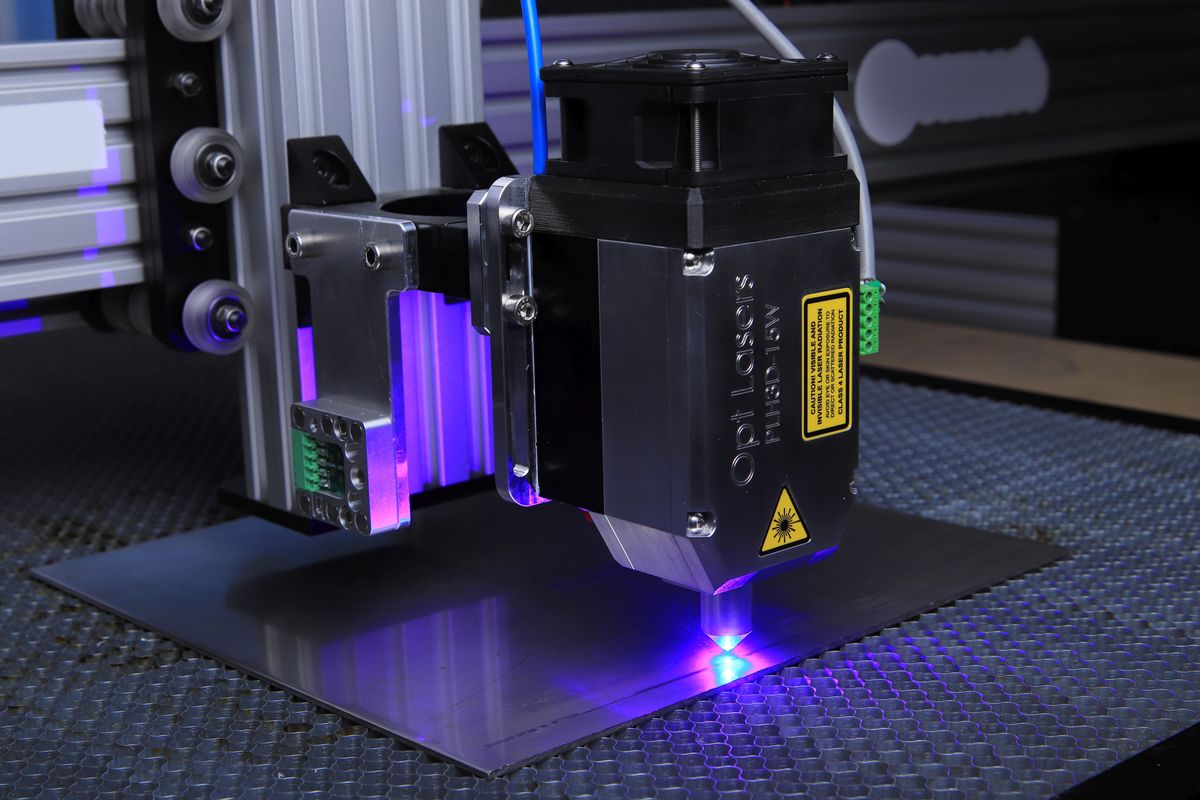
Semiconductor lasers are the most commercially important type of laser. Also called laser diodes, they are the most widespread type of lasers by volume. The gain medium is a tiny chip of semiconductor material — typically gallium arsenide (GaAs) or indium gallium nitride (InGaN). The cleaved edges of the chip itself act as the mirrors.
How do diode lasers work? An electrical current passes through the semiconductor junction. Electrons and holes recombine at the junction and release photons. The two polished edges of the chip reflect some light back, creating the optical cavity. The entire laser is smaller than a grain of rice.
Diode lasers are cheap, efficient, and compact. They power:
- Laser pointers — red (650 nm), green (532 nm DPSS), blue (445 nm)
- Fibre-optic communications — infrared diodes at 1310 nm and 1550 nm send data down glass fibres
- Barcode scanners and laser printers
- CD/DVD/Blu-ray players — 780 nm (CD), 650 nm (DVD), 405 nm (Blu-ray)
- Lidar in self-driving cars — 905 nm or 1550 nm pulsed diodes
Diode lasers produce lower beam quality than gas or solid-state types, but their tiny size and low cost make them the right choice for most everyday applications.
Dye, Fibre, Chemical & Excimer — Specialised Types of Lasers
Dye Lasers
Dye lasers use a liquid solution of organic dye (like rhodamine 6G) as the gain medium. The dye is pumped by another laser or a flash lamp. Their defining feature is tunability — you can adjust the output wavelength across a broad range (typically 50-100 nm) by changing the dye or the optical alignment. Among all types of lasers, dye lasers offer the widest continuous tunability. They are used in spectroscopy, laser medicine (port-wine stain removal), and atomic physics research.
Fibre Lasers
Fibre lasers use an optical fibre doped with rare-earth elements (erbium, ytterbium, thulium) as the gain medium. The pump light from diode lasers is coupled into the fibre, and the doped core amplifies it. The fibre itself acts as both gain medium and waveguide, so the beam stays clean and focused.
Fibre lasers are the fastest-growing type of industrial laser. They offer high efficiency (over 30%), excellent beam quality, compact size, and low maintenance. They cut and weld metal, mark parts, and serve as amplifiers in long-distance fibre-optic cables. A modern fibre laser can deliver 10 kW of clean, focusable power from a box the size of a suitcase.
Chemical Lasers
Chemical lasers get their energy from a chemical reaction rather than electricity or light. The most famous is the COIL (Chemical Oxygen Iodine Laser), which uses a reaction between chlorine and hydrogen peroxide to excite iodine atoms. COIL lasers reach megawatt-class power and were developed for military applications including the US Airborne Laser program.
Chemical lasers are not common outside military and research settings, but they demonstrate that laser pumping does not always require electricity.
Excimer Lasers
Excimer lasers use a mixture of a noble gas (argon, krypton, xenon) and a halogen (fluorine, chlorine). When excited by an electrical discharge, they form temporary molecules called excited dimers — hence "excimer." When these molecules break apart, they release ultraviolet photons.
Excimer lasers produce short pulses of high-energy UV light. They are the only type of laser that can deliver nanosecond pulses at deep-UV wavelengths. Their most famous application is LASIK eye surgery, where an ArF excimer laser (193 nm) reshapes the cornea with sub-micron precision. They also drive photolithography machines that manufacture computer chips.
How Do the 7 Types of Lasers Compare?
Understanding how these types of lasers stack up against each other helps you pick the right one for your work.
| Property | Gas | Solid-State | Diode | Dye | Fibre | Chemical | Excimer |
|---|---|---|---|---|---|---|---|
| Beam quality | Excellent | Very good | Moderate | Good | Excellent | Good | Moderate |
| Efficiency | Low (1-10%) | Low (1-5%) | High (30-50%) | Low (<1%) | High (20-35%) | Moderate | Low (1-2%) |
| Size | Large (tube + gas) | Medium | Tiny (chip) | Large (dye circulator) | Compact (fibre coil) | Very large | Large |
| Cost | Moderate-high | Moderate | Very low | High | Moderate-high | Very high | High |
| Key strength | Cleanest beam | High peak power | Cheap & small | Tunability | Efficiency & beam | Ultimate power | UV output |
Common Misconception: A Laser Diode Is a Different Species from a Semiconductor Laser
Some sources treat "laser diode" and "semiconductor laser" as separate categories. They are the same thing. A laser diode is a semiconductor laser. The confusion comes because the first semiconductor lasers were simple diode junctions, but modern semiconductor lasers include more complex structures like quantum-well and VCSEL designs. Calling them all semiconductor lasers is technically precise; calling them laser diodes is acceptable shorthand.
What matters is the gain medium: semiconductor material (gallium arsenide, indium phosphide, etc.) excited by an electric current.
How to Choose the Right Type of Laser
When choosing between types of lasers for a specific job, here is a quick guide:
For everyday low-power uses (pointers, barcode scanners, disc readers): choose a diode laser. Cheap, small, efficient. Will not break your budget.
For industrial cutting and welding: choose a CO2 gas laser (for non-metals like wood, acrylic, plastic) or a fibre laser (for metals). Fibre is winning in most categories now.
For scientific research requiring a clean, stable beam: choose a HeNe gas laser (low power, excellent coherence) or a Ti:sapphire solid-state laser (tunable, ultra-short pulses).
For UV applications (eye surgery, chip manufacturing): choose an excimer laser. No other type produces the combination of short wavelength and precise ablation.
For spectroscopy needing a tunable source: choose a dye laser or a Ti:sapphire laser, depending on the wavelength range you need.
For telecommunications: choose diode lasers at 1310 nm or 1550 nm, with erbium-doped fibre amplifiers to boost the signal along the cable.
See our guide on how laser light works for the physics behind all these types of lasers, and read about what LASER stands for if you want the full acronym breakdown.
External resources
- Edmund Optics: Common Laser Types — technical guide covering gas, solid-state, and diode lasers with wavelength charts
- RP Photonics: Lasers — encyclopedia of laser types, physics, and applications from a leading photonics resource
- Britannica: Laser — authoritative encyclopedia entry covering laser technology and history
Frequently Asked Questions
What are the 7 types of lasers?
The 7 main types of lasers by gain medium are: gas lasers (HeNe, CO2, argon-ion), solid-state crystal lasers (ruby, Nd:YAG, Ti:sapphire), semiconductor diode lasers, dye lasers (liquid organic), fibre lasers, chemical lasers, and excimer lasers.
What is the most common type of laser?
Semiconductor diode lasers are the most common type. They are found in laser pointers, barcode scanners, CD/DVD/Blu-ray drives, fibre-optic communications, and laser printers. They are cheap, tiny, and efficient.
What is the difference between a gas laser and a solid-state laser?
A gas laser uses a gas-filled tube as the gain medium (like helium-neon or CO2), while a solid-state laser uses a crystal or glass rod (like ruby or Nd:YAG). Gas lasers typically produce cleaner beams with better coherence, while solid-state lasers can achieve higher peak powers and are more compact.
What type of laser is used in laser pointers?
Most laser pointers use semiconductor diode lasers. Red pointers use a 650 nm diode, green pointers use a 532 nm diode-pumped solid-state (DPSS) laser, and blue pointers use a 445 nm diode.
Which laser type is most powerful?
Chemical lasers and CO2 gas lasers achieve the highest continuous power levels. Chemical lasers like COIL (Chemical Oxygen Iodine Laser) can reach megawatt-class power for military applications. CO2 lasers commonly deliver kilowatts for industrial cutting.
What is a fibre laser used for?
Fibre lasers are used for industrial cutting and welding (especially metals), laser marking, telecommunications (as amplifiers in fibre-optic cables), and medical surgery. They are valued for their high efficiency, excellent beam quality, and compact footprint.
How do I choose the right type of laser?
Choose by considering wavelength (what colour or invisible band you need), power output (milliwatts to kilowatts), beam quality, cost, and application. Diode lasers are best for low-cost, low-power uses. CO2 and fibre lasers suit industrial cutting. Excimer lasers are essential for UV applications like eye surgery.

About Umar Farooq
Umar Farooq writes in-depth guides on the physics of light and optics — from reflection, refraction, and lenses to diffraction, lasers, and fiber optics, explained from first principles.
Read more about Umar Farooq →