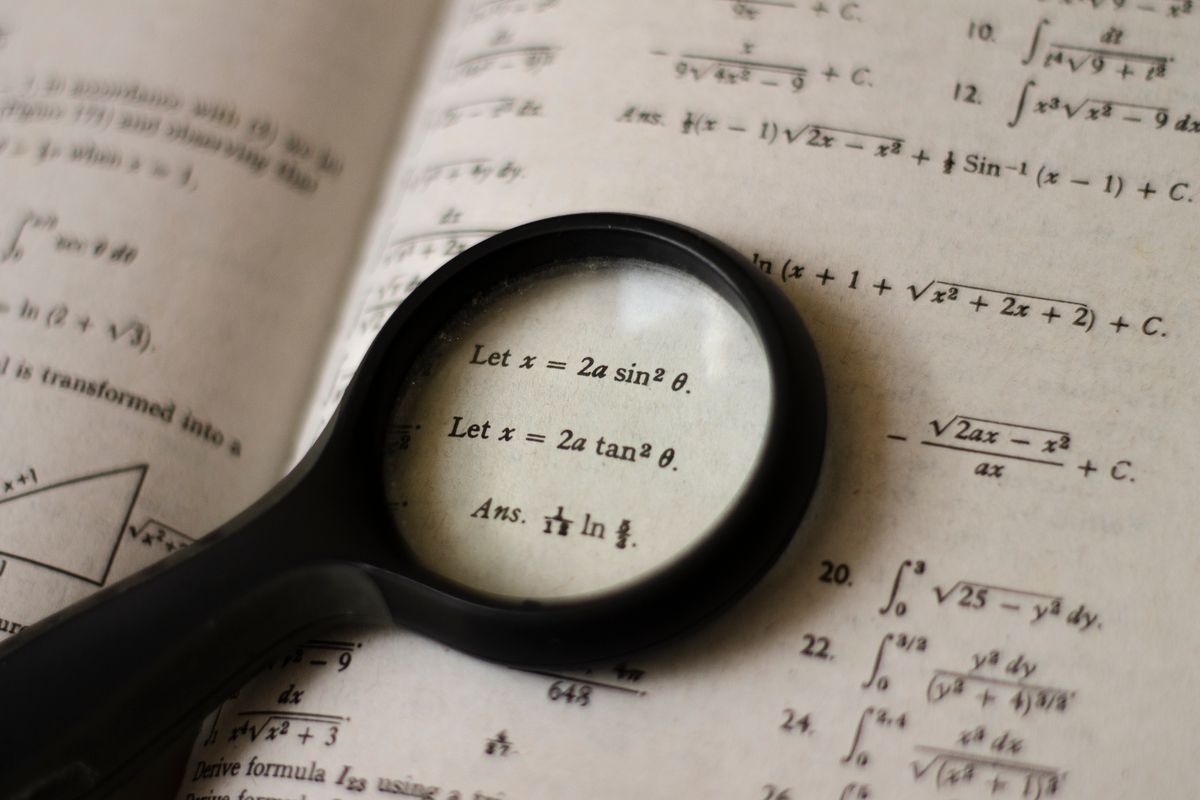
Is a magnifying glass convex or concave? It is convex. A magnifying glass uses a convex lens — thicker in the middle, thinner at the edges. This shape converges light rays to a focal point, and when the object is placed between the lens and that focal point, the lens produces a magnified image. Here is why only a convex lens can work as a magnifying glass and how the physics behind it actually works.
Think of a magnifying glass as an optical funnel. A convex lens gathers light from across its surface and funnels it toward a focal point. A concave lens does the opposite — like a spray nozzle — it spreads light apart. That spreading is why a concave lens can never make things look bigger.
Is a magnifying glass convex or concave? The shape
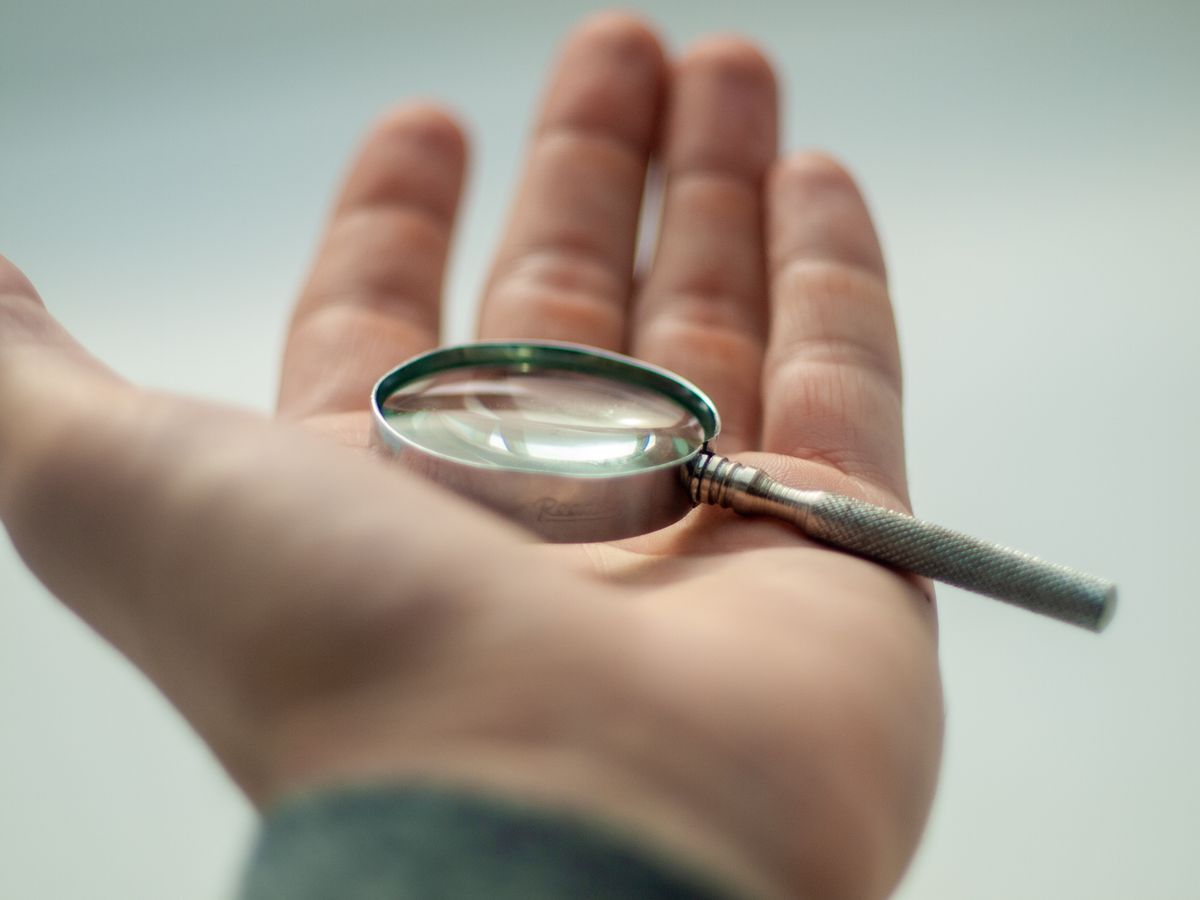
A magnifying glass is a convex lens. Run your finger across its surface and you will feel the centre bulge outward. The lens is thickest in the middle and gradually tapers toward the edges. This is the opposite of a concave lens, which is thinner in the middle and thicker at the edges.
You can also tell by looking through it. Hold a magnifying glass over a line of text. If the text appears larger, the lens is convex. If it appears smaller, the lens is concave. There is no magnifying glass that uses a concave lens — the shape simply cannot produce enlargement.
How does a magnifying glass work?
The trick is all about where you place the object relative to the focal point.
Every convex lens has a focal length — the distance from the lens centre to the point where parallel rays converge. A typical magnifying glass has a focal length between 5 cm and 20 cm. When you hold an object closer to the lens than this distance (inside the focal length), something special happens.
The light rays from the object pass through the convex lens and refract — bending inward as they enter the glass and outward as they leave. Because the object is inside the focal length, the rays emerge still diverging, but less so than when they entered. Your eye traces these diverging rays backward in straight lines, and they appear to come from a point behind the lens. The result is a virtual image that is upright, magnified, and on the same side of the lens as the object.
This is the only configuration where a single lens produces magnification. Move the object beyond the focal length and the image becomes real and inverted — useful for cameras and projectors, but not for magnifying.
The BBC Bitesize guide on convex and concave lenses shows the ray diagram for this arrangement. The Physics Classroom tutorial on refraction by lenses walks through the three principal rays step by step.
Why a concave lens cannot be a magnifying glass
A concave lens always diverges light. No matter where you place an object, the rays spread apart after passing through the lens. The image is always virtual, upright, and diminished — smaller than the object. A concave lens can never produce magnification.
A concave lens has important uses — correcting myopia (nearsightedness), widening the view in door peepholes, and expanding laser beams — but magnification is not one of them.
So which is it — and how do you check the one you own?
It is convex: thicker through the middle than at the rim. A concave magnifying glass does not exist, because a diverging lens can only ever produce an image smaller than the object. There is no version of the design that works.
Two ways to confirm the one on your desk:
Feel it. Run a finger from the edge to the centre. A magnifier thickens toward the middle. If it thins toward the middle, it is a diverging lens and it will never magnify anything.
Point it at a bright window. Hold it a hand's width from a wall. A convex lens throws a small upside-down picture of the window onto the wall. A concave lens throws nothing at all.
How strong is a typical magnifying glass?
Magnifying glasses are rated by their magnification power, written as a number followed by × (for example, 3× means the image appears three times larger).
The magnification depends on the focal length. A shorter focal length gives stronger magnification. The approximate formula is:
M ≈ 250 / f
where f is the focal length in millimetres and 250 mm is the standard near-point distance of the human eye. A lens with a 100 mm (10 cm) focal length gives about 2.5× magnification. A stronger lens with a 50 mm focal length gives about 5×.
The power of the lens in dioptres is P = 1/f (in metres). A 2.5× magnifying glass has a focal length of 0.1 m, so its power is +10 D. A jeweller's loupe with 10× magnification may have a focal length of just 25 mm and a power of +40 D.
Common misconception: "a bigger magnifying glass magnifies more"
Many people assume a larger magnifying glass gives stronger magnification. In fact, the opposite is usually true. A larger magnifying glass has a longer focal length, which gives weaker magnification. A small, thick magnifying glass with a short focal length magnifies far more than a large, flat one.
The size of the lens affects how much light it gathers — a larger lens collects more light, making the image brighter — but the magnification is determined by the curvature, not the diameter.
A related myth is that any lens can work as a magnifying glass. Only a convex (converging) lens can magnify. A concave lens, a cylindrical lens, or a flat window cannot produce an enlarged image no matter how you hold them.
For a deeper comparison between the two lens types, see our guide on concave vs convex lens. For the full details on how a convex lens works, read our convex lens guide. The physics of how both types bend light is explained in our article on how lenses use refraction.
Frequently Asked Questions
What type of lens is a magnifying glass?
A magnifying glass is a convex lens — also called a converging lens. It is thicker in the middle than at the edges, which makes it converge light rays to a focal point. When the object is placed inside the focal length, the lens produces a magnified, upright, virtual image.
Can a concave lens be used as a magnifying glass?
No. A concave lens always diverges light and produces a diminished, virtual image regardless of where the object is placed. It can never magnify. Only a convex lens can produce magnified images.
What kind of image does a magnifying glass produce?
A magnifying glass produces a virtual, upright, and magnified image. The image appears on the same side of the lens as the object and cannot be projected onto a screen. Only the person looking through the lens can see it.
Is a magnifying glass a converging lens?
Yes, a magnifying glass is a converging lens. It bends parallel light rays inward so they meet at a single point called the focus. The technical name for a convex lens is a converging lens.
How does a magnifying glass work?
A magnifying glass works by placing the object closer to the lens than its focal length. The convex lens refracts the incoming light rays so they diverge on the far side. The eye traces these diverging rays backward, forming a magnified, upright virtual image on the same side as the object.
Why does a magnifying glass make things look bigger?
A magnifying glass makes things look bigger because the convex lens bends light rays so they enter the eye at a wider angle than they would without the lens. The brain interprets this wider angle as a larger object. The effect only works when the object is inside the lens's focal length.

About Umar Farooq
Umar Farooq writes in-depth guides on the physics of light and optics — from reflection, refraction, and lenses to diffraction, lasers, and fiber optics, explained from first principles.
Read more about Umar Farooq →