How does a light switch work? A light switch is simply a gate in the loop of wire that feeds your bulb. For the bulb to glow, electric current has to flow all the way around an unbroken circuit, and the switch's only job is to complete that loop or break it. Flick it on, the circuit closes and current flows; flick it off, the circuit opens and the light dies. Here's where we're going: the basic mechanism, then how two-way, dimmer, and smart switches build on it.
How does a light switch work? The quick answer
Picture the wiring as a loop of water pipe with a tap in it. The pump (the mains) is always pushing, but water only flows when the tap is open. A light switch is that tap. When it's "on," two metal contacts inside touch and current runs around the loop, through the bulb, and back. When it's "off," the contacts pull apart, the loop is broken, and nothing flows.
Here's a small catch in the language. Electricians call the "on" position a closed circuit and "off" an open one — the opposite of how a door feels. A closed switch means the loop is closed and complete, so current flows. Keep that in mind and the rest falls into place. The bulb at the end of that loop turns the current into light; for how that part works, see our guide to how a light bulb works.
What's inside a light switch?
A basic mechanical switch is a small, clever bit of engineering with just a few parts:
- Two terminals — where the circuit wires screw in: one bringing current in, one sending it on to the bulb.
- A pair of contacts — the metal surfaces that touch to carry current or separate to stop it.
- A rocker or toggle — the part your finger moves.
- A spring — the hidden hero. It snaps the contacts together or apart fast.
That spring matters more than it looks. If the contacts drifted apart slowly, current would keep arcing across the shrinking gap, pitting the metal and wearing the switch out. The spring makes the break quick and decisive, so the spark is tiny and brief. (Wikipedia's light switch article covers the variations.)
How a single-pole (one-way) switch works
The everyday switch that controls one light from one spot is a single-pole, or one-way, switch. It is the simplest case: one input, one output, and a mechanism that either bridges them or doesn't.
Flick it up and the rocker pushes the contacts together, closing the circuit — current flows and the bulb lights. Flick it down and the contacts part, opening the circuit — the flow stops and the bulb goes dark. There is no in-between. It's a plain on/off gate, and the vast majority of switches in a home are exactly this.
How a two-way (3-way) switch works
Now the clever one. A two-way switch (called a 3-way switch in North America) lets you control a single light from two places — the classic example being the top and bottom of a staircase. Here's a way to see it: think of two doors into the same room. Either door can let you in or out, independently.
The trick is the wiring. Each switch has a common terminal and two traveller wires running between the two switches. Instead of just making or breaking one connection, each switch flips its common contact from one traveller to the other. The light is on only when both switches route the current down the same traveller. Flick either switch and you change which traveller is live, completing the circuit if it was broken or breaking it if it was complete. That's why either switch, at either end of the stairs, toggles the light. (Wikipedia's multiway switching article has the wiring diagrams.)
How does a dimmer switch work?
A dimmer changes how bright the light is, not just whether it's on. Old dimmers did this crudely, with a resistor that bled off the spare energy as heat — wasteful, and the dimmer itself got warm. Modern dimmers are far smarter.
Here's what's actually happening. Mains electricity is alternating current: it rises and falls in waves, 50 times a second in the UK or 60 in the US. A modern dimmer switches the supply off for part of each wave and back on for the rest — a method called phase control. By passing only, say, the last third of every half-cycle, it delivers less total energy, so the bulb runs dimmer. It does this roughly 100 to 120 times a second, far faster than your eye can follow, so you see a steady dimmer glow rather than a flicker.
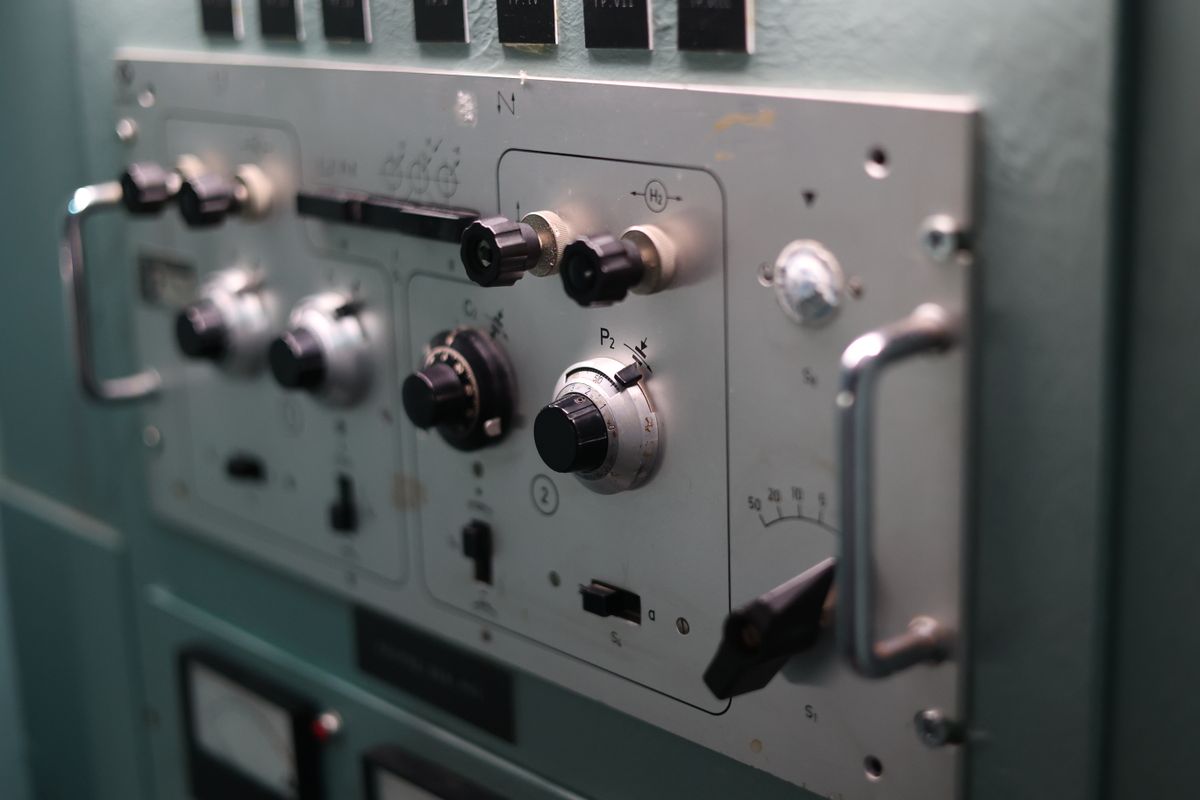
Here's the misconception worth fixing: a modern dimmer is not a volume knob that "wastes" the extra electricity as heat. By chopping each cycle rather than resisting the current, it actually reduces the power drawn — so dimming a light genuinely saves energy. (Wikipedia's dimmer article explains phase control in depth.)
How do smart light switches work?
A smart switch keeps the same job — completing or breaking the circuit — but swaps the finger-powered mechanism for an electronic one. Think of it as an ordinary switch with a tiny radio and a small computer added.
Inside sits an electronic relay or a solid-state switch, plus a wireless chip for Wi-Fi, Bluetooth, or Zigbee. When you tap an app or ask a voice assistant, the chip tells the relay to open or close the circuit — exactly what your finger would have done, just triggered remotely. Many smart switches also dim, using the same phase-control trick as a standalone dimmer. The light-making still happens in the bulb; the switch just gets a brain.
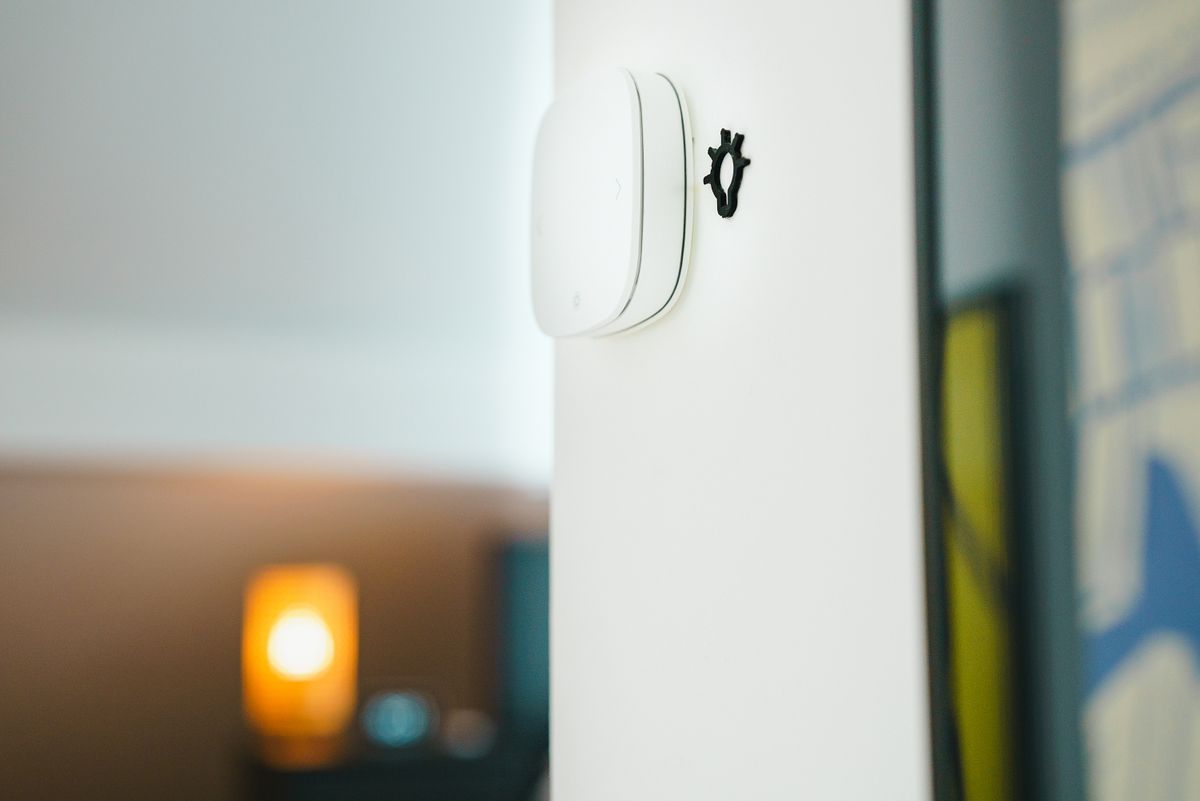
One original diagram for this article: a single circuit loop drawn four ways. Panel one, a one-way switch as a simple gap that closes; panel two, a two-way pair with the common contact flipping between two travellers; panel three, a dimmer chopping the AC wave (show the sine wave with slices removed); panel four, a smart switch with a relay and a little wireless icon. One image that shows every switch as the same loop, gated differently.
Want to follow the circuit all the way to the glow? See how a light bulb works and what light energy actually is, or browse all our optics guides.
Frequently Asked Questions
How does a light switch work in simple terms?
A light switch is a gate in the loop of wire that powers a bulb. For a bulb to light, current must flow all the way round an unbroken circuit. Flick the switch on and two metal contacts touch, completing the loop so current flows. Flick it off and the contacts separate, breaking the loop and stopping the current.
What is inside a light switch?
Inside a basic switch are two metal terminals, a pair of contacts, and a spring-loaded rocker or toggle. The mechanism snaps the contacts together or apart. The spring makes the action quick and decisive, which limits the tiny spark that can jump as the contacts part.
How does a two-way (3-way) light switch work?
A two-way setup (called a 3-way switch in North America) controls one light from two places, like the top and bottom of a staircase. Each switch has a common terminal and two traveller wires. Flicking either switch moves its common contact from one traveller to the other, which either completes or breaks the shared circuit — so either switch can toggle the light.
How does a dimmer switch work?
A modern dimmer doesn't throttle the current with resistance. It rapidly switches the mains on and off within each cycle — about 100 to 120 times a second — passing only part of each wave. Your eye blends the flicker into a steady, dimmer glow. Because it blocks part of each cycle rather than burning the energy off, it genuinely reduces power use.
How do smart light switches work?
A smart switch replaces the mechanical contacts with an electronic relay or solid-state switch, plus a small wireless chip. It connects to Wi-Fi, Bluetooth, or a hub and flips the circuit on command from an app or voice assistant. Many also dim, using the same phase-control trick as a standard dimmer.
Why does a light switch sometimes spark or click?
The click is the spring snapping the contacts together or apart. The faint spark is a tiny arc of current jumping the last gap as the contacts separate under load. The spring's speed keeps that arc brief, which is why switches last for tens of thousands of flicks before wearing out.

About Umar Farooq
Umar Farooq writes in-depth guides on the physics of light and optics — from reflection, refraction, and lenses to diffraction, lasers, and fiber optics, explained from first principles.
Read more about Umar Farooq →