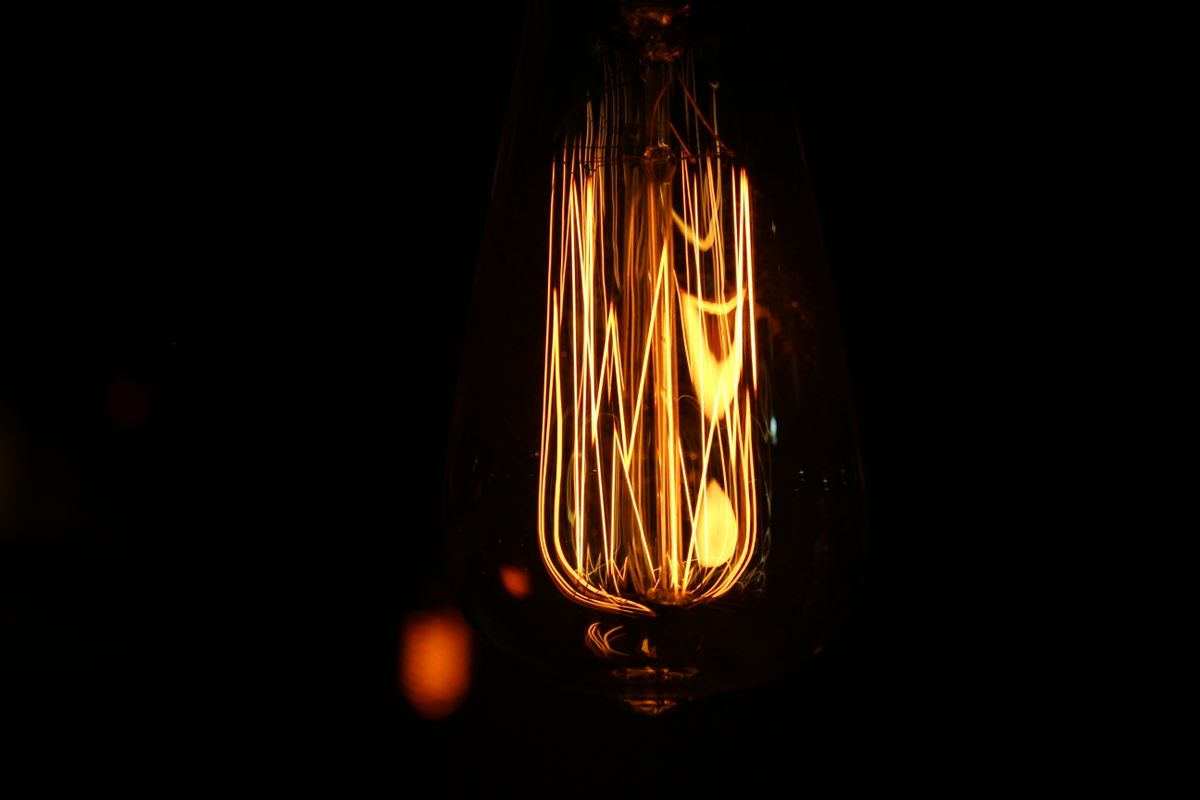
How does a light bulb work? At its heart, a light bulb turns electrical energy into light — but it can do that in one of three very different ways. An incandescent bulb heats a wire until it glows. An LED bulb passes current through a chip that emits light directly. A smart bulb is an LED with a wireless brain added. Here's where we're going: the parts inside, then exactly how each type makes light, and which one earns its place in your lamp.
How does a light bulb work? The quick answer
Every bulb does the same basic job: push electric current through something, and get light out. The difference is what the current flows through.
- Incandescent: current heats a thin metal filament until it's white-hot and glows.
- LED: current flows through a semiconductor that emits light without heating up.
- Smart: an LED bulb plus a tiny radio and controller, so an app can change it.
The glowing-wire bulb came first and ruled for a century. The chip-based LED has now almost entirely replaced it, for one reason we'll get to: it wastes far less energy. Light itself — what it is and how it carries energy — is covered in our guide to what light energy is.
The parts of a light bulb: a labelled diagram
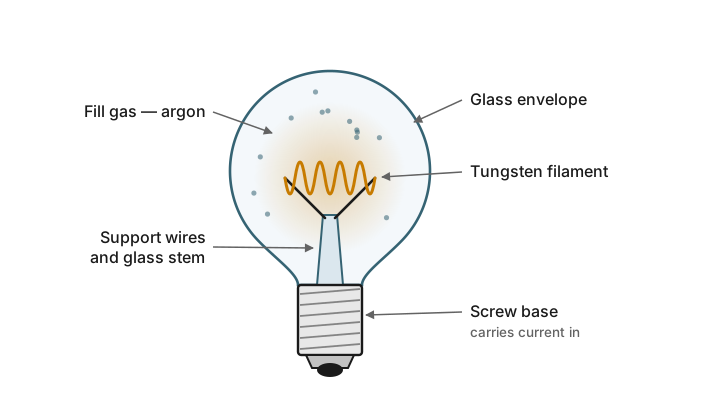
Before the physics, the anatomy. A traditional incandescent bulb — a light globe, if you are in Australia or New Zealand — has five parts worth naming:
- The glass envelope — the bulb you see, which seals everything from the outside air.
- The filament — a coiled thread of tungsten, the part that actually glows.
- The support wires and stem — they hold the fragile filament in place and carry current to it.
- The fill gas — usually argon, an inert gas that stops the hot filament from burning up.
- The base — the metal screw or bayonet fitting that connects to the mains and carries current in.
An LED bulb keeps the base and a covering, but swaps the filament for three new parts: the LED chip that makes the light, a circuit board with a small driver to tame the mains voltage, and a metal heat sink to carry away what little warmth there is.
How does an incandescent light bulb work?
An incandescent bulb makes light with heat — a process called incandescence. You already know the effect. Watch an electric stove element: switch it on and it warms, then glows dull red, then orange as it gets hotter. Push enough current through any thin wire and it does the same. Heat something enough and it glows.
A bulb takes that to the extreme. Current is forced through a tungsten filament so thin and resistive that it heats to around 2,500 °C — white-hot. At that temperature the wire pours out visible light. Tungsten is chosen because it survives the heat: it has the highest melting point of any metal, 3,422 °C, so it can run white-hot without melting. The argon gas around it stops it burning away too fast. (Wikipedia's incandescent bulb article traces the full design.)
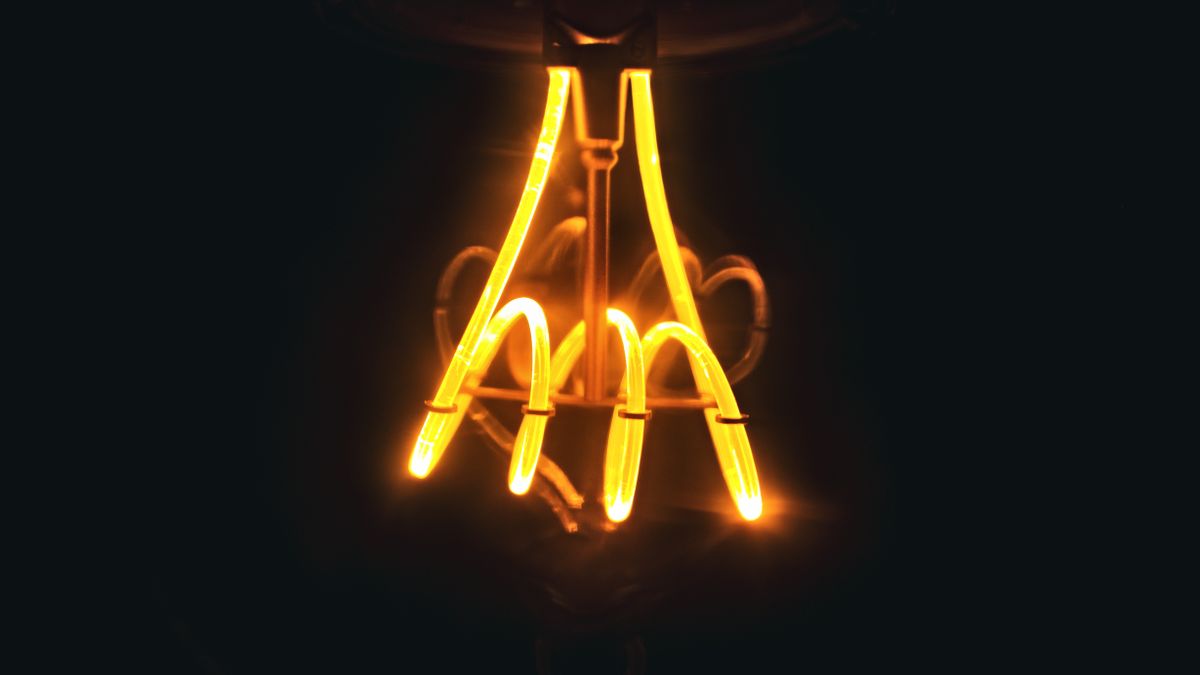
Here's a misconception worth fixing: an incandescent bulb is not mainly a light maker — it's mostly a heater. Only about 5 to 10 percent of the energy it draws becomes visible light. The other 90-odd percent leaves as heat and invisible infrared. The bulb glows because it's hot, so the heat isn't a side effect — it's the whole method, and that's exactly why this design is so wasteful.
How do LED lights work?
An LED makes light a completely different way — without getting hot at all. LED stands for light-emitting diode, and it works by electroluminescence: turning electricity straight into light inside a semiconductor.
Here's the key idea. Inside the chip, electrons carry energy. When an electron drops across the diode's built-in energy gap, it has to shed the energy it loses — and it sheds it as a single particle of light, a photon. Picture a ball rolling off a ledge: the higher the drop, the more energy it releases at the bottom. In an LED, the height of that energy step sets the photon's wavelength — its colour. Engineer the gap, and you choose the colour of the light. This is the same atomic-scale process behind how materials emit different types of light, just harnessed in a chip.
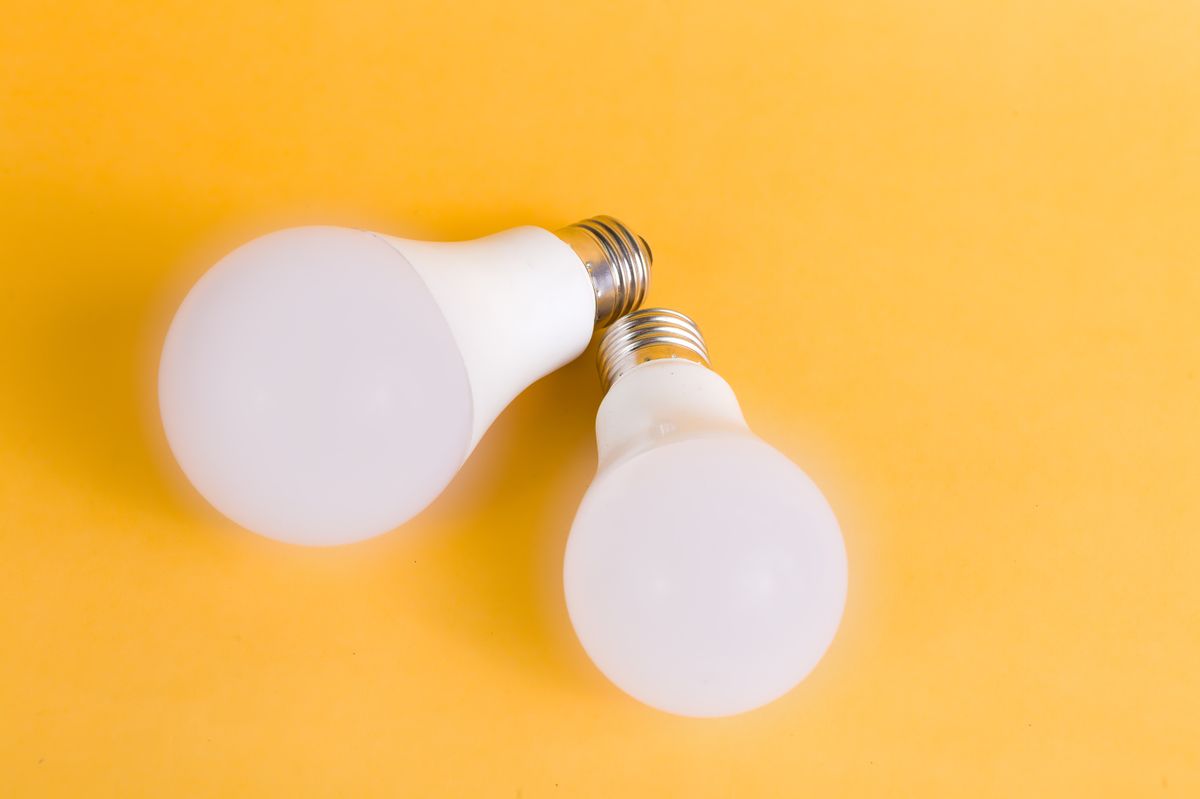
Because the light comes from electrons crossing a gap rather than from a glowing-hot wire, almost no energy is wasted as heat. That's why an LED uses roughly 75 to 90 percent less energy than an incandescent for the same brightness, and lasts around 25,000 hours instead of about 1,000. (Wikipedia's LED lamp overview covers the engineering.)
How do smart light bulbs work?
A smart bulb is the simplest of the three to explain, because the light-making part is just an LED. Think of it as an ordinary LED bulb with a tiny radio and a small computer bolted on.
Inside the base sits a wireless chip — Wi-Fi, Bluetooth, or Zigbee — and a microcontroller. The controller connects to your home network or a hub and listens for commands from an app or a voice assistant. When you ask for "warm white" or "20 percent," it adjusts the current to a set of red, green, blue, and white LEDs to mix that exact colour and brightness. The clever part isn't the light; it's the control layer wrapped around a normal LED. (Wikipedia's smart lighting article covers the networking side.)
Incandescent vs LED vs smart: which should you use?
For almost every job, an LED wins. It sips power, lasts for years, and runs cool. The incandescent's only real advantages are a warm light some people prefer and a low sticker price — but its running cost and short life undo that quickly.
| Bulb type | How it makes light | Efficiency | Typical lifespan |
|---|---|---|---|
| Incandescent | Heated tungsten filament glows | ~5–10% of energy as light | ~1,000 hours |
| LED | Semiconductor emits photons | ~75–90% less energy than incandescent | ~25,000 hours |
| Smart (LED) | LED + wireless control | Same as LED | ~25,000 hours |
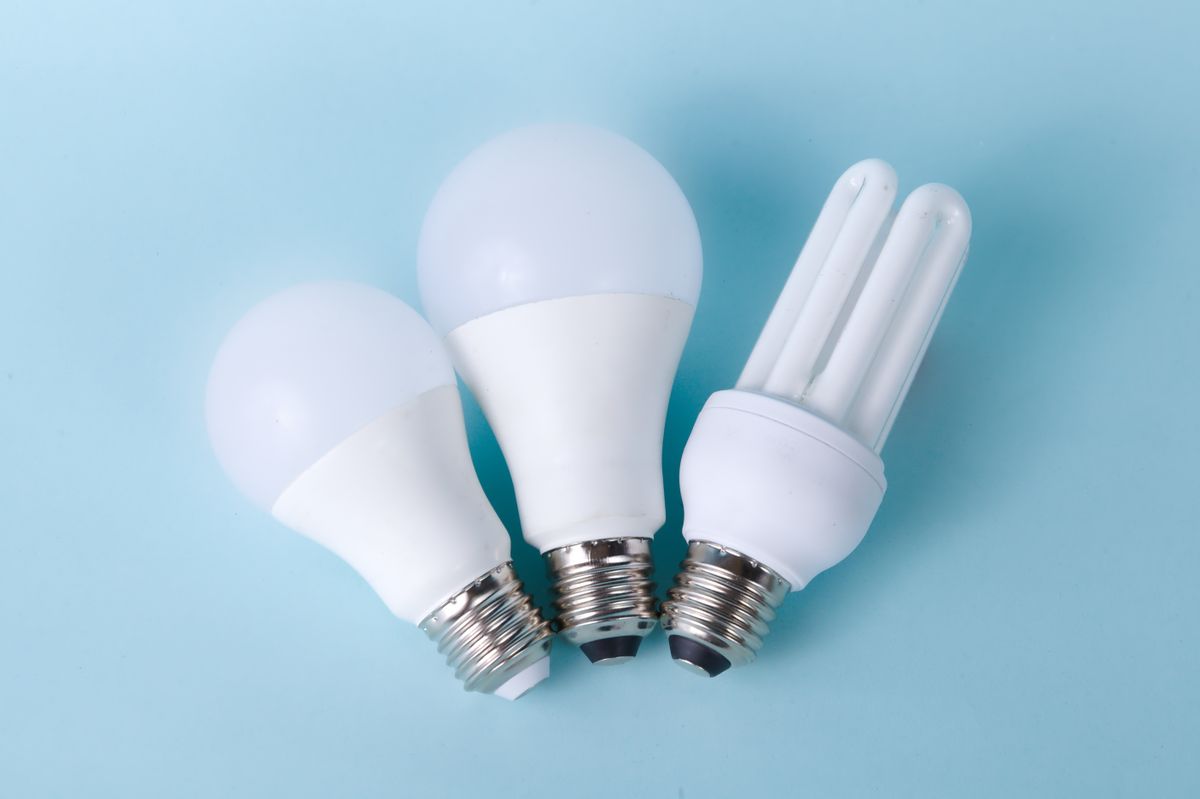
The rule of thumb: choose LED for the running cost, and a smart LED if you want app or voice control of colour and brightness. The incandescent is mostly a museum piece now — a beautiful, glowing, very inefficient one.
One original diagram for this article: a three-panel cutaway. Panel one, an incandescent bulb with the current path heating the tungsten coil to a white glow (most arrows leaving as "heat"). Panel two, an LED chip with electrons dropping across the energy gap and emitting photons (almost no heat arrows). Panel three, a smart bulb showing the same LED plus a labelled wireless chip and controller. One image that contrasts "glow from heat" with "light from a chip."
Want the physics underneath all of this — how electricity becomes light in the first place? Start with our light energy guide, or browse all our optics guides.
Frequently Asked Questions
How does a light bulb work in simple terms?
A light bulb turns electricity into light. In an incandescent bulb, current heats a thin tungsten wire until it glows white-hot. In an LED bulb, current passes through a semiconductor chip that emits light directly, with almost no heat. Either way, electrical energy goes in and light comes out.
What are the parts of a light bulb?
A classic incandescent bulb has five main parts: the glass envelope, the tungsten filament that glows, two support wires and a stem holding the filament, an inert gas (usually argon) filling the bulb, and the metal screw or bayonet base that carries the current in. An LED bulb swaps the filament for a chip, a circuit board, and a heat sink.
How do LED lights work?
An LED makes light by electroluminescence. Current flows through a semiconductor diode, and as electrons drop across the chip's energy gap they release the lost energy as photons. The size of that gap sets the colour. No filament glows and very little heat is made, which is why LEDs are so efficient.
How do smart light bulbs work?
A smart bulb is an LED bulb with a tiny wireless chip and controller built in. It connects to your home Wi-Fi, Bluetooth, or a hub, and the controller adjusts the LEDs' brightness and colour on command from an app or voice assistant. The light-making part is still an ordinary LED.
Why do incandescent bulbs get so hot?
Because heat is how they make light. The filament has to reach around 2,500 °C to glow brightly, and only about 5 to 10 percent of the energy becomes visible light — the rest leaves as heat and infrared. An incandescent bulb is essentially a tiny heater that happens to glow.
Which light bulb is most energy efficient?
LED bulbs, by a wide margin. They use roughly 75 to 90 percent less energy than incandescent bulbs to give the same brightness, and a good LED lasts around 25,000 hours versus about 1,000 hours for an incandescent. Smart bulbs are LEDs, so they share that efficiency.

About Umar Farooq
Umar Farooq writes in-depth guides on the physics of light and optics — from reflection, refraction, and lenses to diffraction, lasers, and fiber optics, explained from first principles.
Read more about Umar Farooq →