Is light a wave or a particle? The honest answer is both — and at a deeper level, neither. Light spreads and overlaps like a wave when it passes through narrow slits, yet it arrives in countable lumps of energy called photons when it strikes a metal. Which face you see depends on the experiment you run. Physicists call this wave-particle duality, and here's where we're going: the wave evidence, the particle evidence, and how both can be true at once.
Is light a wave or a particle? The short answer
Run a wave-style experiment and light acts like a wave. Run a particle-style experiment and it acts like a stream of particles. Neither result is a trick or an illusion — both are real, repeatable, and central to modern physics.
The mistake is assuming light has to be one of the two, the way everything in everyday life is clearly either a ripple or a pebble. Light isn't an everyday object. It's a quantum one, and quantum objects don't fit the either/or boxes our intuition was built from. (For the energy each photon carries, see our guide to what light energy is.)
The wave evidence: how light behaves like a wave
For most of the 1800s, the case was closed: light is a wave. Everything it did matched wave behaviour. It reflects, refracts, spreads around edges (diffraction), and — the clincher — it can cancel itself out.
That last one is the giveaway. Drop two stones in a still pond and watch the ripples cross: where two crests meet, the water piles higher; where a crest meets a trough, they flatten to nothing. Light does the same. Where two light waves arrive in step, you get a bright band; out of step, a dark one. Particles can't do that — two streams of pebbles never add up to no pebbles. Only waves cancel. These wave behaviours are the whole field of optics, covered in our guide to the properties of light.
What type of wave is a light wave?
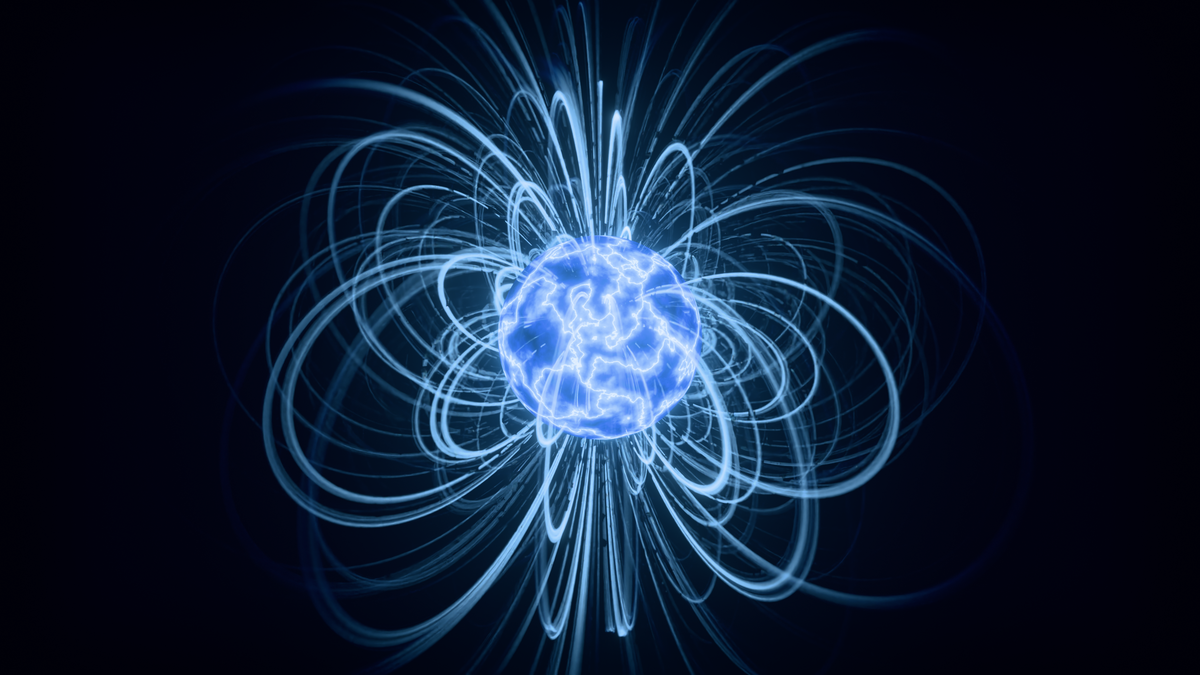
Light is a transverse electromagnetic wave. "Transverse" means it wiggles side to side, at right angles to the direction it travels — not back and forth like sound. "Electromagnetic" means the wiggle is a linked pair of electric and magnetic fields, each one regenerating the other as the wave moves.
That answer came from one of physics' great moments. In 1865, James Clerk Maxwell wrote down the equations linking electricity and magnetism and found they predict a wave. When he calculated how fast that wave should travel, the number matched the measured speed of light almost exactly: 299,792,458 metres per second. The conclusion was breathtaking — light is an electromagnetic wave. Radio, microwaves, X-rays, and visible light are all the same phenomenon at different wavelengths, with visible light a thin band from about 380 to 700 nanometres. (NASA's anatomy of an electromagnetic wave shows the two fields in step.)
The particle evidence: light as photons
Then the wave picture hit a wall. By 1900, experiments showed light delivering its energy not in a smooth flow but in fixed lumps. Max Planck found that energy comes in discrete packets, and Einstein took it further: light itself is grainy, made of particles we now call photons.
A photon is the smallest possible amount of light at a given frequency. It has no mass, no charge, always moves at the speed of light, and carries an energy set entirely by its frequency: E = hf, where h is the Planck constant, 6.626 × 10⁻³⁴ J·s. A 500-nanometre green photon carries about 2.5 electronvolts — a tiny sliver of energy. What makes a beam bright isn't bigger photons; it's more of them arriving each second.
The photoelectric effect: the experiment that needed particles
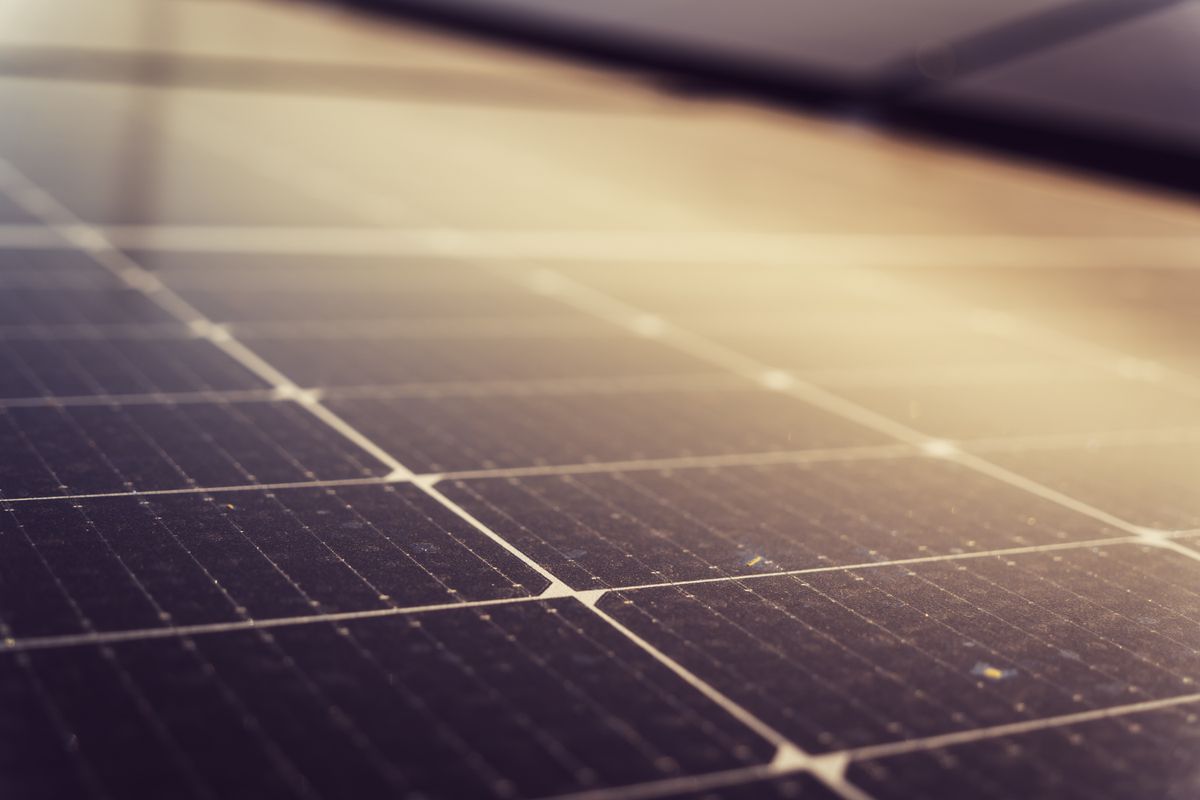
Here's the experiment that forced the particle picture. Shine light on a metal surface and it can knock electrons loose — the photoelectric effect, the same physics that runs the solar panels on a roof. The puzzle was which light worked. Dim blue light freed electrons instantly; intense red light freed none at all, no matter how bright.
Think of it like trying to knock a coconut off a shelf. A thousand gentle taps (lots of low-energy red photons) do nothing — each tap is too weak. One firm knock (a single high-energy blue photon) does it. The energy has to arrive in one parcel big enough to do the job. A smooth wave, which could pour in energy gradually, can't explain that threshold. Discrete photons can — and Einstein's explanation won him the 1921 Nobel Prize. (The Nobel committee's summary lays out why it mattered.)
The double-slit experiment: both faces at once
So light is a wave and light is particles. The double-slit experiment is where the two pictures collide most beautifully. Send light through two narrow, closely spaced slits and you get a striped pattern of light and dark fringes on the screen — pure wave interference.
Now turn the light source down until it emits one photon at a time. Each photon lands as a single dot, like a particle. But let thousands pile up, and those dots slowly build the same striped interference pattern — as if each lone photon somehow went through both slits and interfered with itself. It behaves as a particle when it lands and a wave on the way there. That single result is wave-particle duality in one experiment, and it sits at the heart of quantum physics. (The double-slit experiment has been run with electrons and whole molecules too.)
So, is light both a wave and a particle?
Here's a misconception worth fixing: light does not flip back and forth between being a wave and a particle, switching costume depending on the day. That picture is tempting, but it's wrong. Light is one thing the whole time; what changes is the question we ask of it.
Picture the old parable of blind men meeting an elephant. One holds the trunk and says "snake"; another holds a leg and says "tree trunk." Each is reporting something real, yet neither has the whole animal. "Wave" and "particle" are our trunk and leg — two honest descriptions, each true for the experiment that reveals it, neither equal to the thing itself. The wave model and the particle model are tools; the smart move, the one physicists actually make, is to name which tool fits the job in front of you. For interference and rainbows, reach for the wave. For the energy of a single photon hitting a solar cell, reach for the particle.
What is light, then, underneath both faces? A quantum object — better described by quantum electrodynamics than by either everyday picture. But you rarely need that machinery. For almost everything you'll meet, knowing when to use which face is the whole skill.
One original diagram for this article: a two-column "which face shows up?" chart. Left column lists wave-revealing tests (double slit, diffraction grating, thin-film colours) with a rippled wavefront icon; right column lists particle-revealing tests (photoelectric effect, photon counting, atomic absorption) with a dot-stream icon. A single light source feeds both — one object, two faces, decided by the measurement.
Want the bigger picture of what light is and how it carries energy? Start with our light energy guide, or browse all our optics guides.
Frequently Asked Questions
Is light a wave or a particle?
Both, depending on how you test it. Light behaves as a wave in interference and diffraction, and as a stream of particles (photons) in effects like the photoelectric effect. Neither picture is the whole truth — each is a model that captures one face of something that is neither a classical wave nor a classical particle. Physicists call this wave-particle duality.
What is light made of?
Light is made of photons — indivisible packets of electromagnetic energy with no mass and no electric charge. Each photon carries energy E = hf, set by its frequency. A stream of photons together also behaves as an electromagnetic wave, which is why light shows both particle and wave behaviour.
What type of wave is a light wave?
Light is a transverse electromagnetic wave. The electric and magnetic fields oscillate at right angles to each other and to the direction the light travels. Unlike sound, it needs no medium, so it crosses the vacuum of space at 299,792,458 metres per second.
Is light electromagnetic?
Yes. In 1865 James Clerk Maxwell showed that light is an electromagnetic wave — the same phenomenon as radio waves, microwaves, and X-rays, just at a different wavelength. Visible light is the narrow band our eyes can detect, from about 380 to 700 nanometres.
Why is light both a wave and a particle?
Because light is neither a classical wave nor a classical particle — it is a quantum object whose behaviour depends on the measurement. Wave-style experiments (the double slit) reveal a wave face; particle-style experiments (the photoelectric effect) reveal a particle face. Light doesn't switch between them; our test decides which face we see.
What is a photon?
A photon is the smallest possible amount of light at a given frequency — a single quantum of electromagnetic energy. It has no mass, always travels at the speed of light, and carries energy E = hf. The brightness of a beam is just the number of photons arriving per second.

About Umar Farooq
Umar Farooq writes in-depth guides on the physics of light and optics — from reflection, refraction, and lenses to diffraction, lasers, and fiber optics, explained from first principles.
Read more about Umar Farooq →