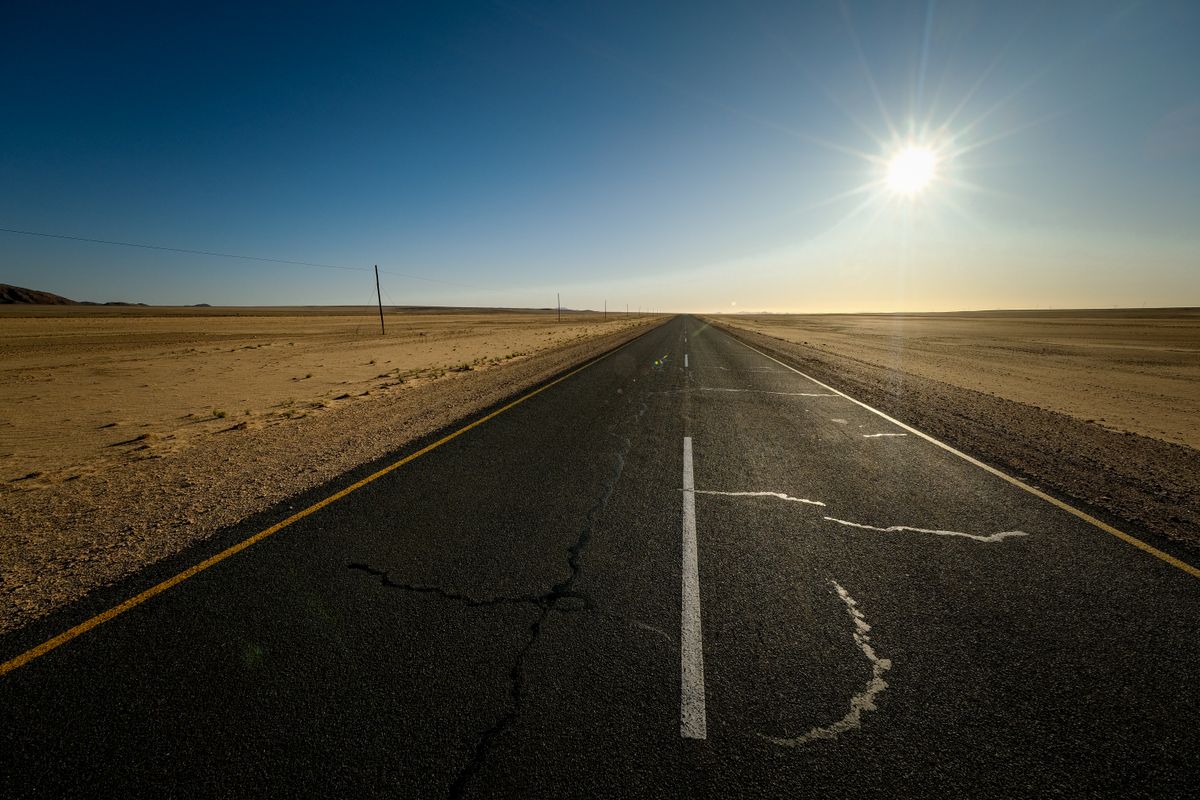
What happens when light is absorbed? In short, the light hands its energy to whatever it hits, and then stops existing as light. The photons' energy isn't destroyed — it's transferred to the atoms of the material and converted into another form, almost always heat. A black road baking in the sun is the everyday proof: the sunlight vanishes into the surface and comes back out as warmth. Here's where we're going: where that energy actually goes, why colour decides how much gets absorbed, and what absorbed light does in the real world.
What happens when light is absorbed? The quick answer
Light meeting a surface can do three things: bounce off (reflection), pass through (transmission), or be taken in (absorption). When it's absorbed, the light's energy is handed over to the material and reappears as a different form of energy — usually heat.
Here's the key idea, and the misconception it clears up: absorbed light is not destroyed, and it doesn't simply vanish into nothing. That would break the law of conservation of energy. The light stops being light, yes — but every bit of energy it carried is still there, now stored in the warming, the chemistry, or the electricity it produced. (Wikipedia's article on absorption covers the physics.)
Where does the energy of absorbed light go?
Follow a single photon in. Light arrives as photons, each carrying a packet of energy. When a photon is absorbed, it gives that energy to an electron in one of the material's atoms, kicking the electron into a more energetic, jittery state.
Think of it like a relay race. The photon is a runner carrying a baton of energy; it hands the baton to an electron and disappears. The electron passes the energy on by jostling its neighbouring atoms, and all that jostling is heat. The material warms up and slowly re-radiates the energy as invisible infrared. Nothing is lost in the handover — the baton just keeps moving. That's why absorbed light so reliably ends up as warmth, and it's the same light energy story told at the scale of a single atom.
In plain terms: photon in, electron excited, vibration, heat out. Energy conserved at every step.
Why does colour decide how much light is absorbed?
Here's the satisfying part. A material doesn't absorb every photon equally — it's picky about which wavelengths it takes in. Picture a tuning fork: it only rings when a sound matches its own note, and ignores the rest. An atom is similar. It absorbs photons whose energy matches a jump its electrons can make, and lets the others pass or bounce.
That pickiness is exactly why things have colour. A red apple absorbs the blue, green, and yellow wavelengths of the white light hitting it, and reflects the red back to your eye — so you see red. A leaf absorbs red and blue for energy and reflects green. Black absorbs nearly all the visible wavelengths and reflects almost none, which is why a black surface looks black and heats up fastest in the sun. White reflects most wavelengths, so it stays cooler. The colour you see is a map of the light a material didn't absorb.

Absorption, reflection, and transmission: the three fates of light
Absorption is one of three things that can happen when light meets a surface, and most materials do a mix of all three:
- Absorption — the energy is taken in and converted, usually to heat. (A black jumper on a sunny day.)
- Reflection — the light bounces back. (A mirror, or the glare off water.)
- Transmission — the light passes through. (Clear glass or water.)
The split between them depends on the material and the wavelength. Glass transmits visible light but absorbs much of the ultraviolet — which is why you don't tan through a closed window. These behaviours are the heart of optics; we cover the bouncing-and-bending side in our guide to the properties of light. (NASA's overview of how light behaves lays out all three.)
What absorbed light does in the real world
Heat is the usual outcome, but absorbed light quietly runs some of the most important processes on Earth:
- Warmth. Dark soil, roads, and oceans absorb sunlight and release it as heat — the engine behind weather and climate. A black car seat in summer is the same physics, up close.
- Food. A green leaf absorbs sunlight and stores the energy as sugars through photosynthesis, the base of almost every food chain. (Photosynthesis is absorbed light turned into chemical energy.)
- Electricity. A solar cell absorbs photons and uses their energy to push electrons through a circuit, making power directly from light.
- Sight. Your eyes work by absorbing light: photons land on cells in your retina and trigger the signals your brain reads as an image.
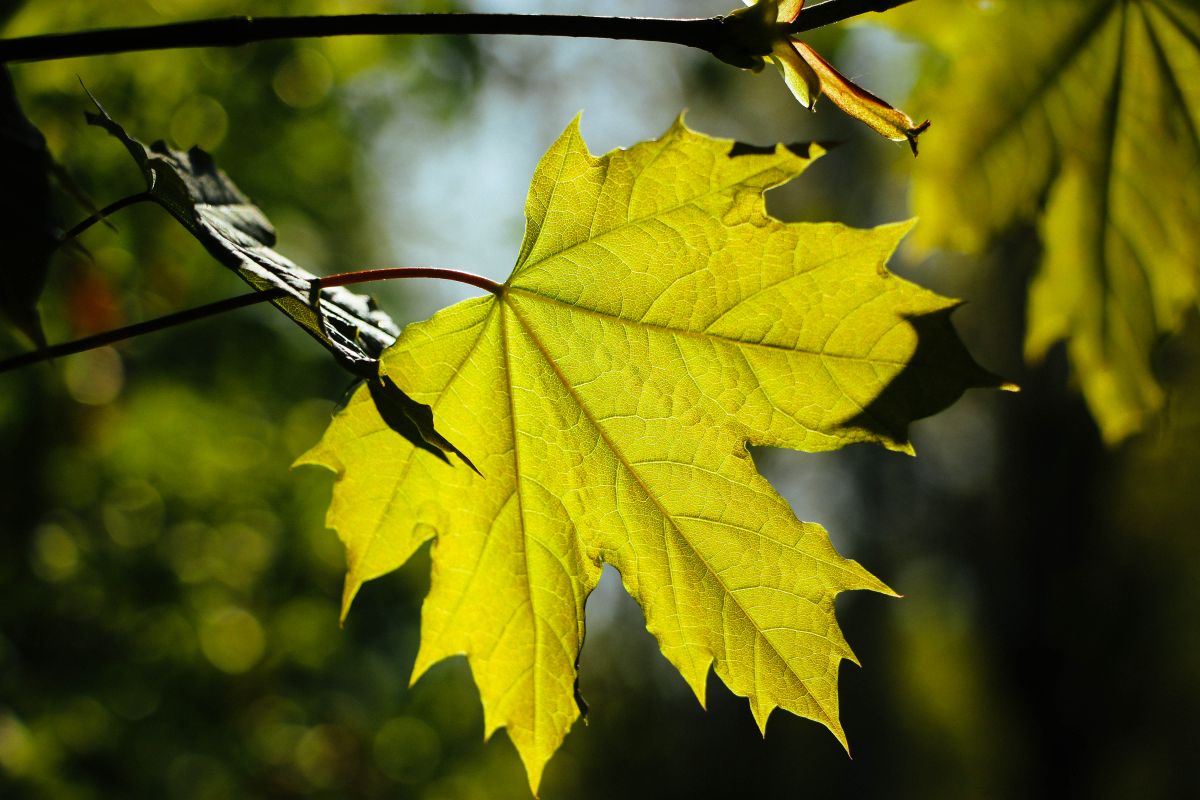
In every case the rule is the same — the light is gone, but its energy is busy doing something useful.
If light has a lot of energy, what does it do?
Not all absorbed light is equal. A photon's energy depends on its frequency: E = hf, energy proportional to frequency. So a high-energy light wave is a high-frequency, short-wavelength one. A 500-nanometre green photon carries about 2.5 electronvolts; an ultraviolet photon, with its shorter wavelength, carries more.
That extra energy changes what absorption does. Low-energy infrared photons mostly just make molecules vibrate — gentle heat. But a high-energy ultraviolet photon, when absorbed by your skin, can carry enough energy to break chemical bonds and damage DNA. That's sunburn: absorbed light with enough energy to do chemistry, not just warming. It's also why the types of light beyond violet are the ones we protect ourselves from.

One original diagram for this article: a single white beam hitting a surface and splitting three ways — part reflecting (bouncing off), part transmitting (passing through), and part absorbed, with that absorbed arrow continuing inside the material as an electron jumping up a level and then shedding the energy as wavy infrared "heat." One picture that shows absorption as energy changing form, not disappearing.
Want the bigger picture of what light is and the energy it carries? Start with our light energy guide, or browse all our optics guides.
Frequently Asked Questions
What happens to light when it is absorbed?
When light is absorbed, its energy is transferred to the material rather than passing through or bouncing off. Photons hand their energy to electrons in the atoms, which start to vibrate, and that vibration spreads as heat. The light itself stops existing as light, but its energy is conserved and converted into another form — usually thermal energy.
Where does the energy of absorbed light go?
It is converted into another form of energy, never destroyed. Most often it becomes heat: the material warms up and re-radiates that energy as infrared. In special cases it is stored as chemical energy (photosynthesis in plants) or turned into electricity (solar panels). Energy is always conserved.
Why do dark objects absorb more light and get hotter?
A black surface absorbs almost all the visible wavelengths that land on it and reflects very little, so nearly all that light energy becomes heat. A white surface reflects most wavelengths back, absorbing little, so it stays cooler. That is why a black car seat scorches in the sun while a white shirt keeps you cooler.
What is the difference between absorption, reflection, and transmission?
They are the three things that can happen when light meets a material. Absorption means the light's energy is taken in and converted, usually to heat. Reflection means it bounces back. Transmission means it passes through, as with glass or water. Most real surfaces do a mix of all three, in proportions that depend on the material and the wavelength.
If light has a lot of energy, what does it have?
A high-energy light wave has a high frequency and a short wavelength, because a photon's energy is E = hf — energy is proportional to frequency. That is why ultraviolet and X-ray photons carry more energy than visible or infrared ones, and why absorbed UV can break chemical bonds in your skin and cause sunburn.
Is energy destroyed when light is absorbed?
No. Absorbing light does not destroy its energy — that would break the law of conservation of energy. The energy simply changes form, most often into heat. The light disappears as light, but every joule it carried is accounted for in the warming, chemistry, or electricity it produces.

About Umar Farooq
Umar Farooq writes in-depth guides on the physics of light and optics — from reflection, refraction, and lenses to diffraction, lasers, and fiber optics, explained from first principles.
Read more about Umar Farooq →