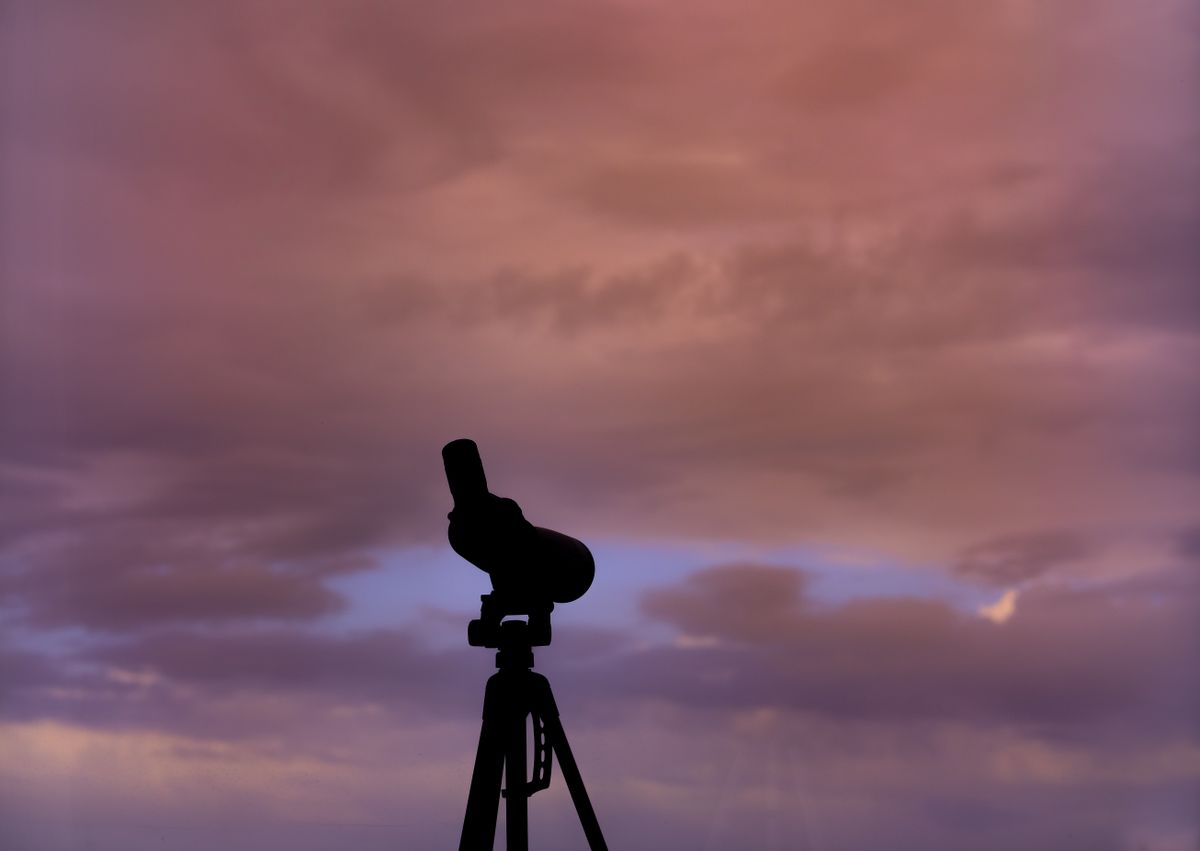
A microscope and a telescope use the same basic ingredients — an objective lens, an eyepiece, and a tube — but they solve opposite problems. A microscope magnifies tiny objects placed a few millimetres away; a telescope magnifies enormous objects that are light-years away. The object distance changes everything about how the lenses are designed and how you calculate magnification.
Picture this. You are looking at a postage stamp through a magnifying glass. The stamp is right under the lens, and you see it enlarged. Now imagine using that same magnifying glass to look at a mountain in the distance. You cannot focus it — the mountain is too far. A microscope is like the first case: the object is close, and the objective makes it bigger. A telescope is the second: the object is far, and the objective gathers light and makes an image that the eyepiece can then magnify.
This guide covers the six key differences between microscopes and telescopes: purpose, optics and lens design, magnification calculations, resolution and light gathering, image orientation, and the common question of whether you can use one as the other.
Purpose: What Each Instrument Is Designed For
The simplest difference is the one that drives every other design choice. A microscope reveals the very small. A telescope reveals the very far.
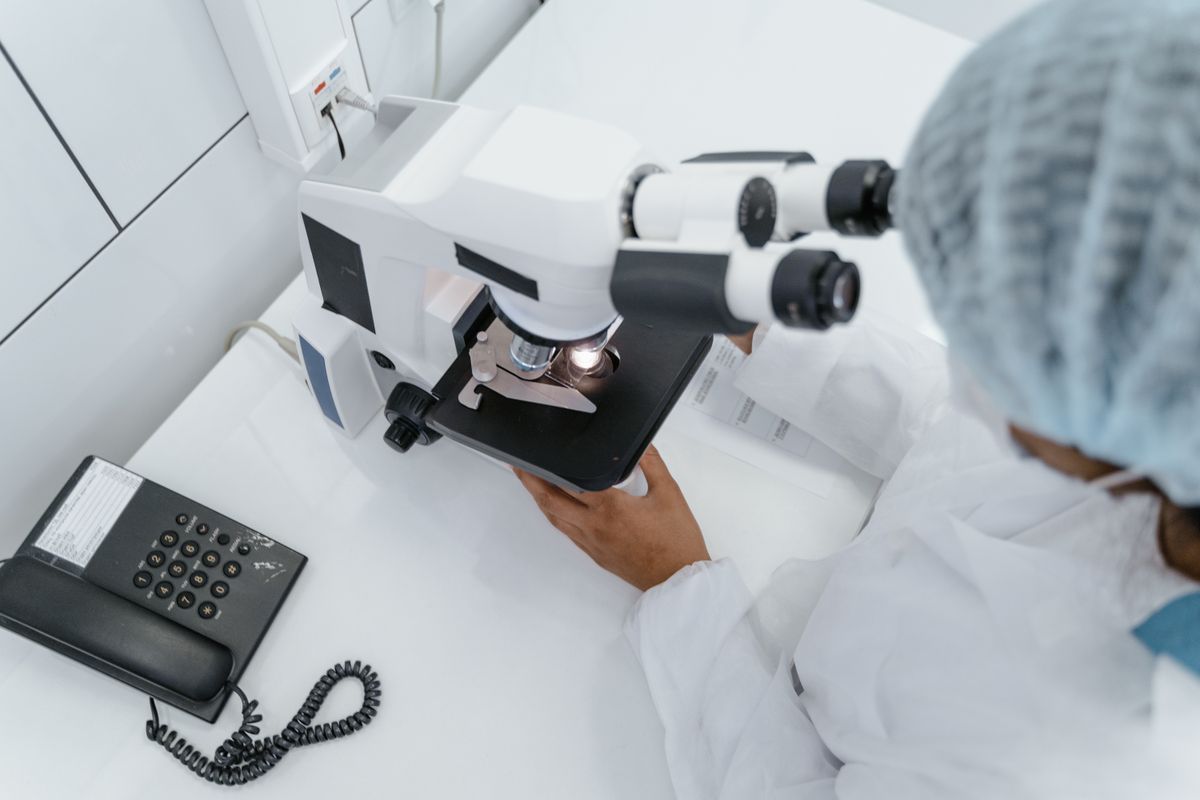
Microscopes are used in biology labs, medical diagnostics, materials science, and forensic analysis. They show you the structure of cells, bacteria, crystals, and defects too small for the naked eye — typically from 0.2 µm up to a few millimetres in size.
Telescopes are used in astronomy, surveillance, and nature observation. They show you planets, stars, galaxies, and terrestrial objects that are too far away to see detail with the naked eye — distances from hundreds of metres to billions of light-years.
Optics and Lens Design: The Focal Length Difference
Both instruments have an objective (the lens or mirror that first receives light from the object) and an eyepiece (the lens you look through). But the focal lengths are reversed.
In a microscope, the objective has a very short focal length — typically 2 mm to 40 mm. The specimen sits just outside this focal point, so the objective produces a real, inverted, enlarged intermediate image. The eyepiece then magnifies this image further. The microscope objective does the heavy lifting of magnification.
In a telescope, the objective has a long focal length — 500 mm to 2000 mm or more. The object is effectively at infinity, so the objective produces a real, inverted, diminished intermediate image at its focal plane. The eyepiece then magnifies this small image. The telescope objective does not magnify directly; it gathers light and forms an image that the eyepiece enlarges.
The direction of the difference matters. A microscope objective is a powerful magnifier by itself. A telescope objective is a light bucket — its large diameter collects far more light than the eye can, and its long focal length spreads that light into an image the eyepiece can work with.
Magnification: Different Formulas for Different Jobs
Because the two instruments handle object distance so differently, their magnification formulas look nothing alike.
Microscope magnification is a product of two factors:
Total magnification = objective magnification × eyepiece magnification
The objective magnification depends on the tube length (standardised at 160 mm for many microscopes) divided by the objective focal length. A 4 mm objective in a 160 mm tube gives 40×. A 10× eyepiece then gives 400× total.
Telescope magnification is a single ratio:
Magnification = focal length of objective ÷ focal length of eyepiece
A telescope with a 1000 mm objective focal length and a 20 mm eyepiece gives 50×. Swap to a 5 mm eyepiece and you get 200×. The same objective, different eyepiece — different magnification.
The key insight: a telescope's magnification changes when you change the eyepiece. A microscope's magnification is fixed for a given objective-eyepiece pair.
Resolution and Light Gathering
Both instruments are limited by diffraction, but the constraint shows up differently.
For a microscope, the resolution limit is given by the Abbe formula: d = λ / (2 × NA). With green light (λ ≈ 500 nm) and a good objective (NA = 1.4), the smallest resolvable detail is about 0.18 µm — roughly 180 nm. This is a hard limit set by the wavelength of visible light. No matter how large you make the objective, you cannot beat it.
For a telescope, the resolution limit is given by the Rayleigh criterion: θ = 1.22 × λ / D, where D is the diameter of the objective. A 100 mm telescope resolves about 1.4 arcseconds — enough to see details on Jupiter's surface. A 1-metre telescope resolves about 0.14 arcseconds. This is why larger telescopes give sharper images: the resolution depends on the diameter of the objective, not its focal length.
Telescopes also care about light gathering in a way microscopes do not. Microscopes illuminate the specimen with a built-in light source, so the objective only needs to collect light from a brightly lit object. Telescopes rely on ambient starlight, so a larger objective gathers more photons and reveals fainter objects. The 10-metre Keck telescope gathers about 2.5 million times more light than the naked eye.
Comparison Table: Microscope vs Telescope
| Feature | Microscope | Telescope |
|---|---|---|
| What it magnifies | Small, nearby objects (cells, bacteria) | Large, distant objects (planets, stars) |
| Object distance | Millimetres from the objective | Effectively infinite |
| Objective focal length | Short (2–40 mm) | Long (500–2000+ mm) |
| Intermediate image | Enlarged relative to object | Diminished relative to object |
| Magnification formula | Objective mag × eyepiece mag | Objective focal length ÷ eyepiece focal length |
| Typical total magnification | 40× to 1500× | 20× to 200× (amateur) |
| Resolution limit | ~0.2 µm (Abbe limit) | ~1.22 λ/D (Rayleigh criterion) |
| Light source | Built-in illuminator | Ambient starlight only |
| Objective size | Small (20–40 mm diameter) | Large (50–10,000 mm diameter) |
| Image orientation | Inverted (standard) | Inverted (astronomical), upright (terrestrial) |
| Typical cost | £200–£50,000 | £100–£1,000,000+ |
Which instrument does the job you have?
Telescope — when the object is far away and faint. Its real job is collecting light, so aperture is the number that matters. A larger objective gathers more photons and resolves finer detail on something already large but distant.
Microscope — when the object is close and tiny. Its job is magnification at very short range, so the objective has a focal length of millimetres and sits almost touching the specimen.
Why one cannot stand in for the other: a telescope physically cannot focus on something a few centimetres away, and a microscope has neither the aperture to collect starlight nor the working distance to reach it. Same physics, opposite designs — which is why the answer to "can I use my telescope as a microscope" is simply no.
Common Misconception: "You Can Use a Telescope as a Microscope"
It is a natural thought. Both make things look bigger, so surely you could reverse them? Point a telescope at a flower or use a microscope to look at the Moon?
It does not work. A telescope cannot focus on something a few centimetres away because its objective is designed for parallel rays from infinity. The image will be a blur. A microscope cannot focus on the Moon because the objective focal length is too short — the intermediate image would form behind the eyepiece.
The two instruments are optimised for opposite ends of the distance spectrum. Asking one to do the other's job violates the design at the most basic optical level.
A Brief History
Telescopes and microscopes both appeared around the same time, but they reveal how differently the same technology can be applied.
The telescope was first. Hans Lippershey, a Dutch spectacle maker, applied for a patent in 1608. The following year, Galileo Galilei built his own version and turned it to the night sky, discovering the moons of Jupiter, the phases of Venus, and the craters on our own Moon. Within a generation, the telescope had overturned the geocentric model of the universe.
The microscope developed alongside it. Around 1595, Zacharias Janssen made the first compound microscope by placing two convex lenses in a tube. Antony van Leeuwenhoek later ground single high-quality lenses and became the first person to see bacteria, in the 1670s. Robert Hooke published Micrographia in 1665, the first book of microscopic observations, introducing the word "cell."
Both instruments use the same physics — refraction through curved glass — but pointed in opposite directions. One revealed the universe; the other revealed that the universe is full of life invisible to the naked eye.
For the fundamentals of how the microscope side works, see how does a microscope work. The lens basics guide explains the refraction that both instruments rely on, and the convex lens in telescopes article covers how lenses are used for astronomical observation.
External Resources
- OpenStax University Physics: Microscopes and Telescopes — textbook-level explanation with diagrams and worked magnification examples
- Pediaa: Difference Between Telescope and Microscope — clear comparison of purpose, optics, and image formation
- Britannica: Microscope vs Telescope — historical and technical context for both instruments
Understanding the microscope vs telescope comparison comes down to one idea: object distance determines everything. A microscope tackles the very small and nearby; a telescope tackles the very large and far away. Everything else — focal length, lens size, magnification formula, resolution limit — follows from that single difference.
Frequently Asked Questions
What is the difference between a microscope and a telescope?
A microscope magnifies small, nearby objects like cells and bacteria. A telescope magnifies large, distant objects like planets and stars. Both use an objective lens (or mirror) and an eyepiece, but a microscope objective has a short focal length and produces an enlarged intermediate image, while a telescope objective has a long focal length and produces a diminished intermediate image.
Can you use a telescope as a microscope?
No. A telescope is designed to focus on objects at infinity; it cannot focus on something a few millimetres away. If you point a telescope at a nearby insect, the image will be completely blurry. The lens arrangement and focal lengths are optimised for opposite distances.
Which instrument has higher magnification, a microscope or a telescope?
A microscope typically provides higher linear magnification — up to 1500× for optical microscopes, versus typically 50× to 200× for amateur telescopes. However, telescope magnification is angular: it makes distant objects appear larger by bringing them optically closer. The useful magnification of both is limited by their resolution.
How is the magnification of a telescope calculated?
Telescope magnification is the focal length of the objective divided by the focal length of the eyepiece. A telescope with a 1000 mm objective focal length and a 10 mm eyepiece gives 100× magnification. Changing the eyepiece changes the magnification.
How is the magnification of a compound microscope calculated?
Compound microscope magnification is the product of the objective magnification and the eyepiece magnification. A 40× objective with a 10× eyepiece gives 400× total magnification. The objective magnification depends on its focal length and the microscope tube length (typically 160 mm).
What do telescopes and microscopes have in common?
Both use a combination of lenses (or mirrors in reflecting telescopes) to magnify images. Both have an objective element that collects light and an eyepiece that magnifies the intermediate image. Both are limited in resolution by the diffraction of light — the Abbe limit for microscopes and the Rayleigh criterion for telescopes.
About Umar Farooq
Umar Farooq writes in-depth guides on the physics of light and optics — from reflection, refraction, and lenses to diffraction, lasers, and fiber optics, explained from first principles.
Read more about Umar Farooq →