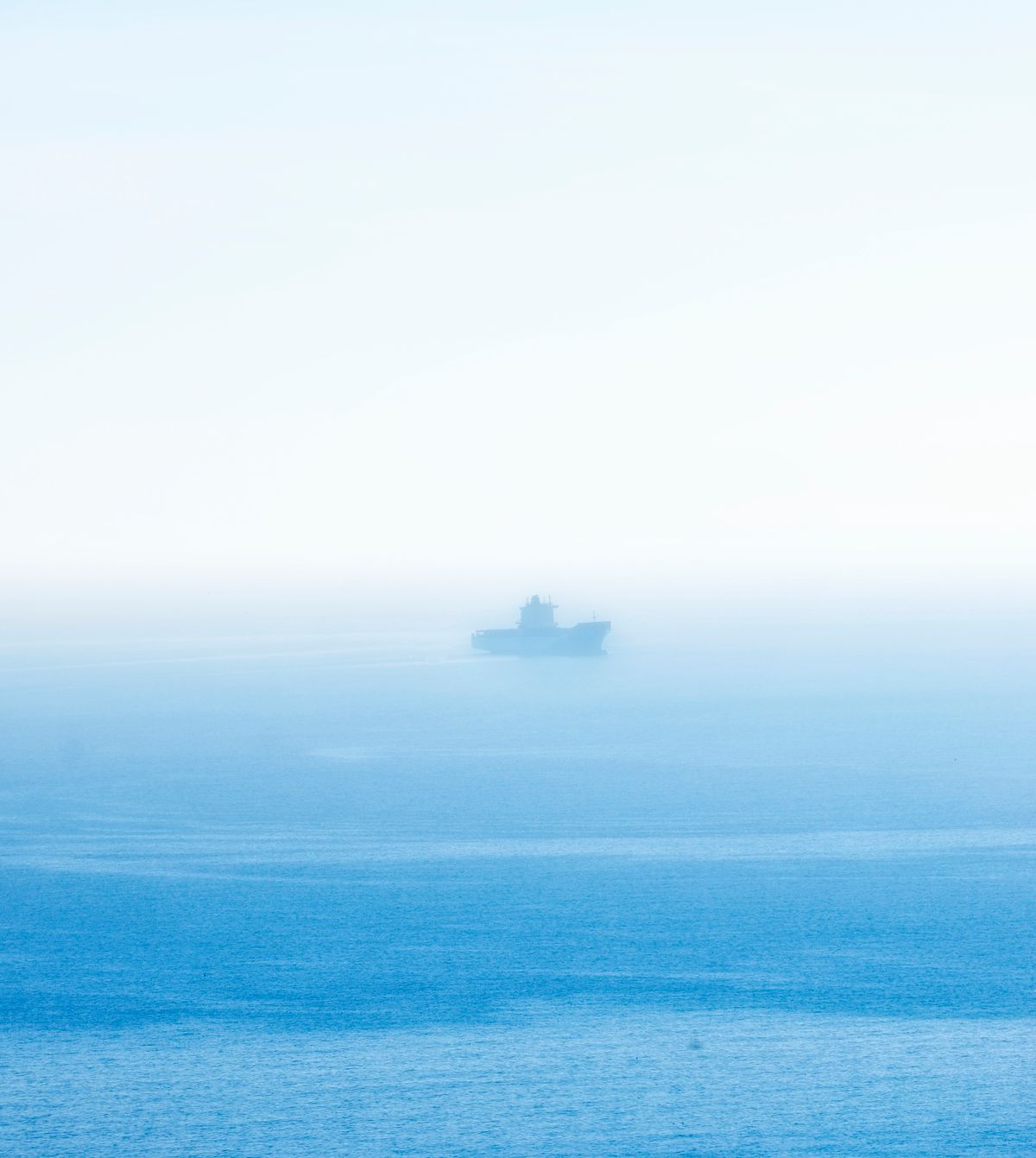
A Fata Morgana is the most spectacular mirage nature can produce. It creates multiple stacked images that alternate between upright and inverted, often stretching and compressing so rapidly that distant ships appear to float, coastlines transform into fairy-tale castles, and the whole scene shifts within seconds. Unlike the simple "puddle on the road" mirage, a Fata Morgana is a complex illusion requiring very specific atmospheric conditions. Here is what we cover: how it works, where to see it, the legends it inspired, and how it differs from an ordinary mirage.
What Is a Fata Morgana?
A Fata Morgana (Italian for "the Fairy Morgana") is a complex form of superior mirage. Think of a normal superior mirage as a single reflection — like a mirror laid on the horizon that lifts a ship above the water line. Now imagine that mirror ripples, multiplies, and stacks several copies of the ship on top of each other, some right-side-up and some upside-down, each stretched or squashed differently. That is a Fata Morgana.
The name comes from Morgan le Fay, the sorceress of Arthurian legend. Local folklore around the Strait of Messina — the narrow channel between the Italian mainland and Sicily — held that Morgan created these mirages as magical castles in the air. The name first appeared in print in 1617, in Marc'Antonio Politi's chronicle of the city of Reggio.
How a Fata Morgana Forms: The Atmospheric Duct
Here is the key idea. All mirages happen because light bends through layers of air at different temperatures. Light travels faster through warm, less-dense air and slower through cold, dense air. When a ray crosses the boundary between warm and cold, it bends — just like a car tyre rolling from smooth tarmac onto loose sand at an angle.
Picture a layer of cold air sitting directly above the water, with warmer air above that — a temperature inversion. Normally the ground is warmest, but here the pattern is flipped: cold near the surface, warm above. Light from a distant ship passing from warm air into cold air bends downward, toward the cold layer.
For a normal superior mirage, this bending just lifts the image a bit. But for a Fata Morgana, the inversion must be so steep that the light curves more than the curvature of the Earth. This creates an atmospheric duct — a natural waveguide that traps and bends light rays into multiple paths, producing several images of the same object stacked vertically.
The analogy: imagine light rays as marbles rolling across a gently curved trampoline. A normal superior mirage is a slight dip. A Fata Morgana is a deep, sharp crease that channels the marbles along multiple paths at once.
Because the atmosphere is never perfectly still, these images shift, stretch, and compress from one moment to the next. That is why 17th-century observers reported "castles with thousands of pilasters" one second and "arcades like Roman aqueducts" the next.
Where to See a Fata Morgana
The classical location is the Strait of Messina, where the phenomenon has been described since at least 1643. Father Ignazio Angelucci's account of the morning of 15 August 1643 is the earliest known detailed observation. He saw the sea "swell up like a chain of dark mountains" and thousands of pilasters appear, then transform into arcades, castles, and finally pine trees.
But the strait is far from the only place. Fata Morgana mirages are most common in:
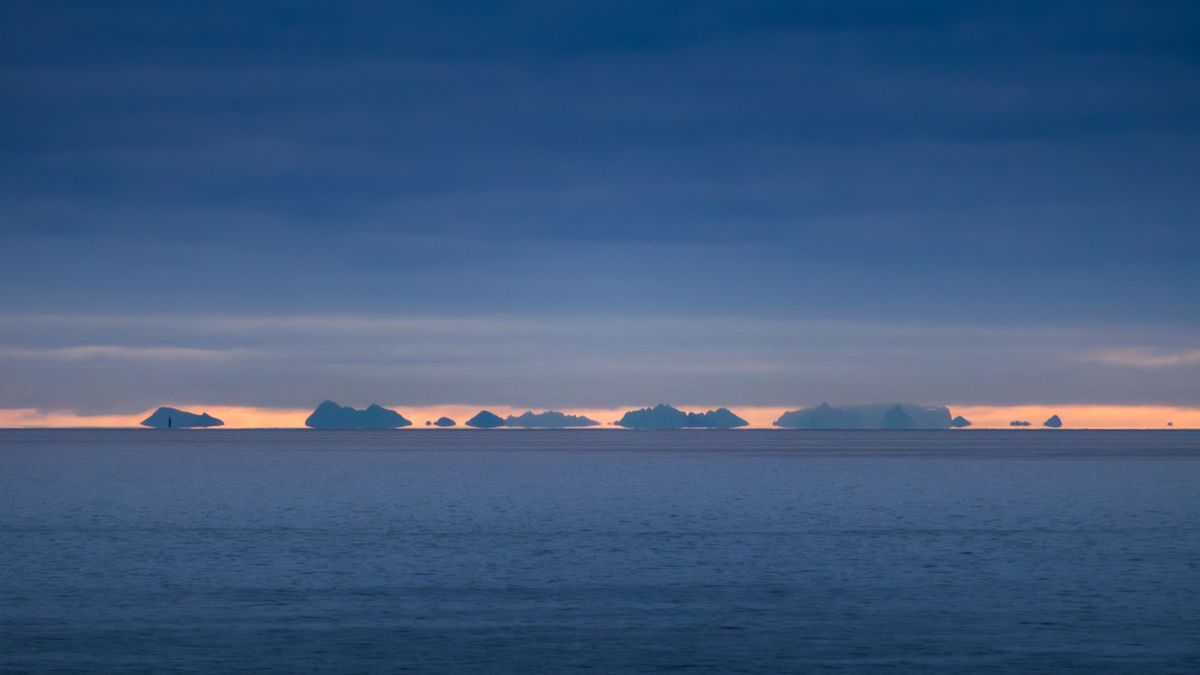
- Polar regions — Antarctica and the Arctic produce some of the clearest Fata Morganas because of the uniform cold surface
- Lake Geneva — studied extensively by F. A. Forel in the 1890s
- Lake Ontario — known for mirages that make the opposite shore appear to loom close
- Any large, calm body of water where cold water sits beneath warmer air in windless conditions
The key conditions are always the same: calm air, a steep temperature inversion near the surface, and a distant object to distort. Twilight hours — dawn and dusk — are the most likely times.
Famous Fata Morgana Sightings
The Flying Dutchman
The legend of the ghost ship doomed to sail the seas forever almost certainly originated from Fata Morgana sightings. A ship below the horizon, normally invisible, can be elevated and distorted into a glowing, multilayered image that appears to float above the water. The famous "ghost ship" description matches exactly what a Fata Morgana of a distant vessel looks like: multiple stacked images, odd colours from dispersion, and the appearance of glowing light.
Phantom Islands
Several non-existent islands appeared on maps for centuries because of Fata Morgana mirages:
- Crocker Land — seen by Robert Peary in 1906, then chased for 200 km by the 1913 Crocker Land Expedition before an Inuk hunter convinced the team it was a mirage
- Sannikov Land — reported by Yakov Sannikov in 1811 north of the New Siberian Islands; searched for repeatedly until 1937
- Croker Mountains — Sir John Ross turned his 1818 Arctic expedition around because he saw a mountain range through Lancaster Sound. His officers protested it was a mirage. The next expedition proved them right.
- Hy Brasil — a phantom island off the coast of Ireland, said to appear once every few years
The Titanic Connection
There is evidence that a Fata Morgana mirage contributed to the Titanic disaster. On the night of 14 April 1912, the sea conditions in the North Atlantic were ideal for temperature inversions. Other ships in the area reported strange mirage effects — the Mesaba sent a warning about "large quantities of field ice and icebergs" and noted a "peculiar refraction" that made the ice hard to see. The Californian's officers reported seeing a "strange, low-lying haze" and a ship that looked "queer" and "like a tramp steamer" — likely the Titanic herself, distorted by a Fata Morgana. The atmospheric duct that created the mirage may have hidden the iceberg against the horizon until it was too late.
Fata Morgana vs Normal Superior Mirage
People often confuse the two. A normal superior mirage produces one or two images (one erect, one inverted) and requires only a thermal inversion. A Fata Morgana is a superior mirage that has become complex — it needs an actual atmospheric duct, produces three or more stacked images, and changes rapidly.
| Feature | Normal Superior Mirage | Fata Morgana |
|---|---|---|
| Images | 1–2 | 3 or more, alternating erect/inverted |
| Cause | Thermal inversion | Inversion + atmospheric duct |
| Light bending | Mild (less than Earth's curve) | Strong (more than Earth's curve) |
| Appearance | Simple looming or tower | Stacked castles, rapidly changing |
| Duration | Stable for hours | Can change in seconds |
Common Misconception: "Fata Morgana Is Imagination"
Some people assume Fata Morganas are hallucinations or pure legend. They are not. A Fata Morgana is a real photographable optical phenomenon. The confusion comes from the fantastic descriptions — castles, armies, cities in the sky. These are the observer's brain trying to make sense of highly distorted images. What they were really seeing was a perfectly ordinary coastline or ship, stretched and stacked into an unrecognisable shape. The physics is real. The interpretation is what runs wild.
Key Facts at a Glance
- First named: 1617 by Marc'Antonio Politi
- First detailed observation: Father Angelucci, 15 August 1643
- Named after: Morgan le Fay, the fairy sorceress
- Requires: Atmospheric duct (not just a thermal inversion)
- Typical conditions: Calm air, twilight, cold water surface
- Best seen with: Binoculars or a telephoto lens
- Famous misidentifications: Flying Dutchman, Crocker Land, Hy Brasil
The physics of a Fata Morgana is the same refraction that bends a straw in a glass of water. For a deeper look at the underlying rule that governs this bending, see Snell's law and the angle of refraction. For the simpler versions of the same phenomenon, compare it with inferior and superior mirages and the familiar heat shimmer on roads.
External resources: Andrew Young's Fata Morgana page at San Diego State University is the definitive technical reference. The Wikipedia entry on Fata Morgana provides a thorough historical overview.
Frequently Asked Questions
What is a Fata Morgana?
A Fata Morgana is a complex form of superior mirage that produces multiple stacked, alternating upright and inverted images of distant objects. It requires an atmospheric duct — a layer where air temperature changes steeply enough to bend light more than the curvature of the Earth. The mirage can make ships appear to float, coastlines look like castles, and distant objects stretch, compress, and change shape within seconds.
What causes a Fata Morgana?
A Fata Morgana is caused by a strong thermal inversion combined with an atmospheric duct. When a layer of warm air sits above a layer of cold air near the surface, light bends downward as it passes through the density change. If the inversion is steep enough, the light curves more than the Earth's curvature, creating multiple alternating erect and inverted images. Calm weather, twilight, and cold water or ice are the common conditions.
Where can you see a Fata Morgana?
Fata Morgana mirages are most famously seen in the Strait of Messina between Italy and Sicily. They also appear commonly in polar regions (Antarctica and the Arctic), over ice sheets, on cold oceans, large lakes like Lake Geneva and Lake Ontario, and occasionally in deserts. The conditions favour locations where cold air near the surface meets warmer air above, with no wind to mix the layers.
Is a Fata Morgana real or imagination?
A Fata Morgana is a real physical optical phenomenon caused by light refracting through layers of air at different temperatures. It is not a hallucination or imagination. The images are genuine photographs of distant objects distorted by atmospheric refraction. However, what the observer interprets the images as — castles, cities, ghost ships — is their brain trying to make sense of highly distorted shapes.
What is the difference between Fata Morgana and normal mirage?
A normal mirage (inferior or superior) typically produces just one or two images — one erect and one inverted. A Fata Morgana is far more complex: it produces many stacked images that alternate between erect and inverted, often with compressed and stretched zones. It requires an atmospheric duct (where light bends more than the Earth's curvature), while a normal superior mirage only needs a thermal inversion without a full duct.
What does Fata Morgana mean in English?
Fata Morgana is Italian for 'the Fairy Morgana' — referring to Morgan le Fay, the sorceress from Arthurian legend. According to folklore, she created these mirages as magical castles in the air over the Strait of Messina. The name has been used since at least 1617.

About Umar Farooq
Umar Farooq writes in-depth guides on the physics of light and optics — from reflection, refraction, and lenses to diffraction, lasers, and fiber optics, explained from first principles.
Read more about Umar Farooq →