An inferior mirage appears below the real object, and a superior mirage appears above it. Both are the same physical phenomenon — light bending through layers of air with different temperatures — just in opposite atmospheric conditions. The inferior mirage is the familiar "water on the road" illusion you see on hot summer days. The superior mirage is rarer: it can make ships appear to float above the horizon in polar regions. Here is what we cover: how each type forms, where to see them, why the Moon produces mirages too, and a direct comparison.
Inferior Mirage Explained
The inferior mirage is by far the most common type. Here is the key idea. On a hot day, the Sun bakes the road surface, which heats the air immediately above it. That thin layer of air becomes much hotter — and therefore less dense — than the cooler air just above it.
Light travels faster through less dense air. When a ray of sunlight coming from the sky passes from cooler, denser air into this hot layer near the ground, it bends upward. Picture it like a car driving from smooth tarmac onto loose sand at an angle: the wheel that hits the sand first slows first, and the car pivots. Here, the light ray hits the less-dense hot air and bends the other way — upward.
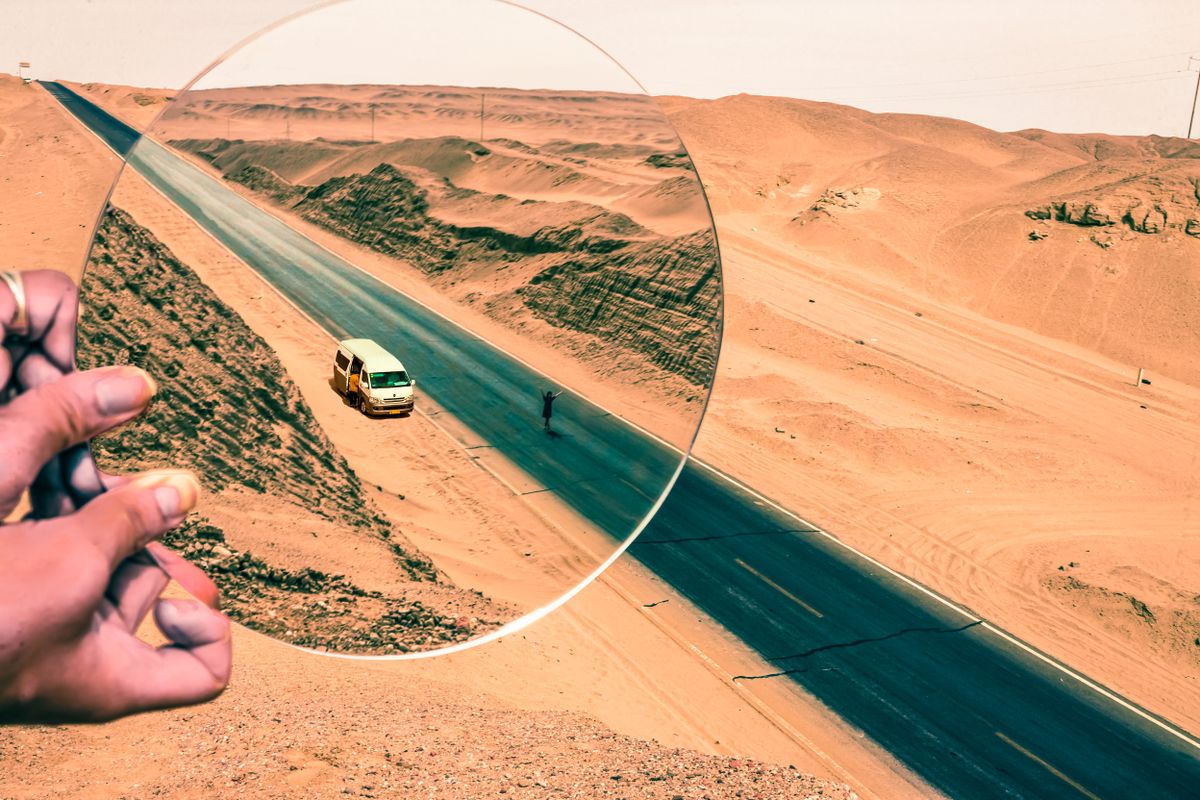
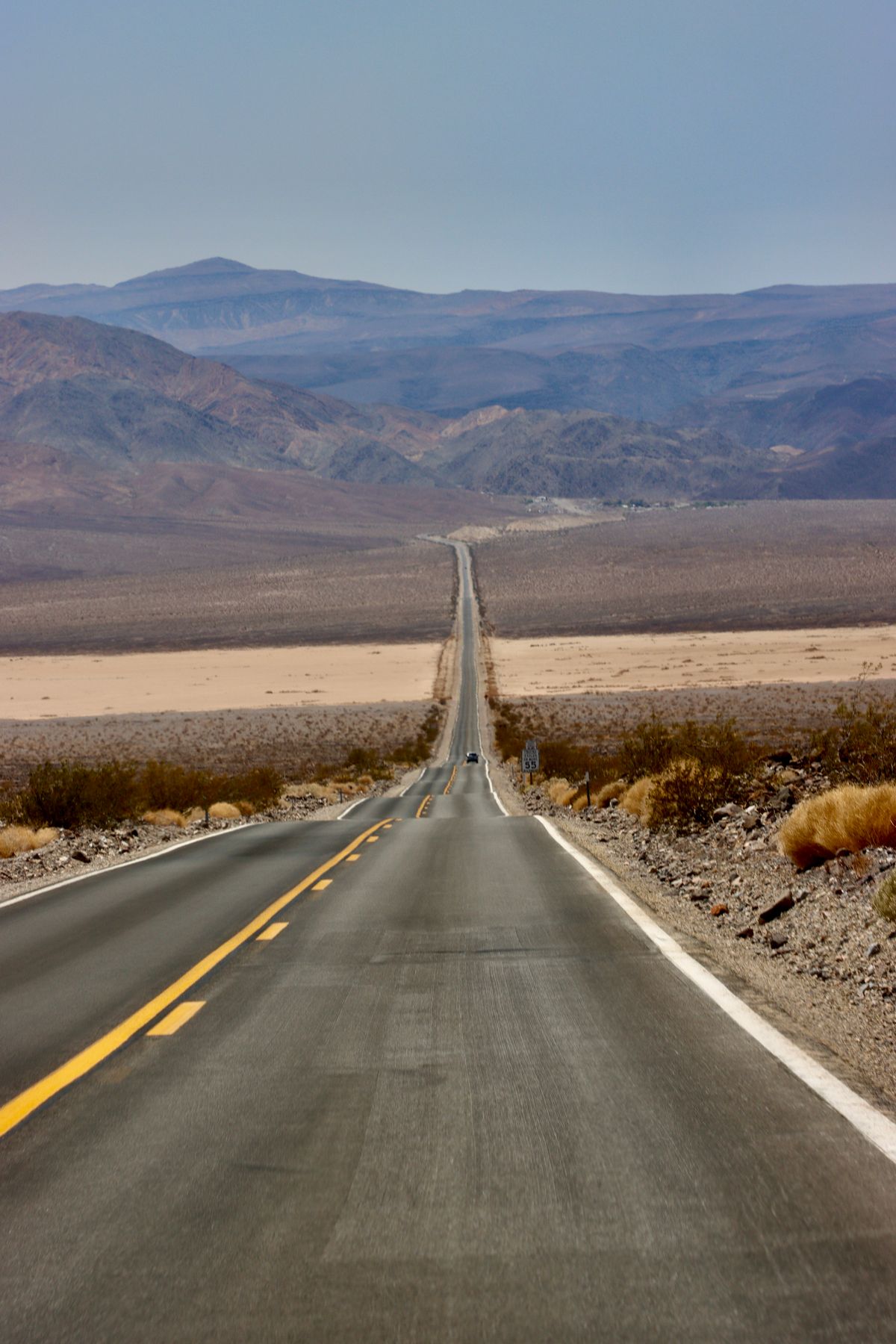
That bent ray then reaches your eye. Your brain assumes light travels in a straight line, so it projects the ray back downward, placing the image on the ground where you see what looks like a pool of blue water. But you are really seeing an image of the blue sky, bent upward and then misinterpreted by your brain.
The real object in an inferior mirage is usually the sky or a distant object in that direction. The mirage image is inverted — upside down — and sits below the real object. That is why it is called "inferior": the image is lower, not because the mirage is poor quality.
Inferior mirages require three conditions:
- A hot surface — asphalt, desert sand, or even sunlit walls
- A steep temperature drop in the first few centimetres above the surface
- A line of sight passing through that hot layer, looking downward at a shallow angle
You also see inferior mirages on airport runways, across sunlit fields, and even on hot rooftops. The shimmering effect, often called heat shimmer or heat haze, is the same phenomenon — just with less organised refraction.
Superior Mirage Explained
A superior mirage is the opposite arrangement. It forms when a layer of cold air sits near the surface with warmer air above it — a temperature inversion. This is common over ice sheets, snow fields, and cold oceans where the surface is much colder than the air.
In this case, light bends downward as it moves from the warm air above into the colder, denser air below. Because the cold air is denser, the light curves toward it. Your brain, again assuming straight lines, projects the image higher than the real object. That is why it is called "superior" — the image appears above.
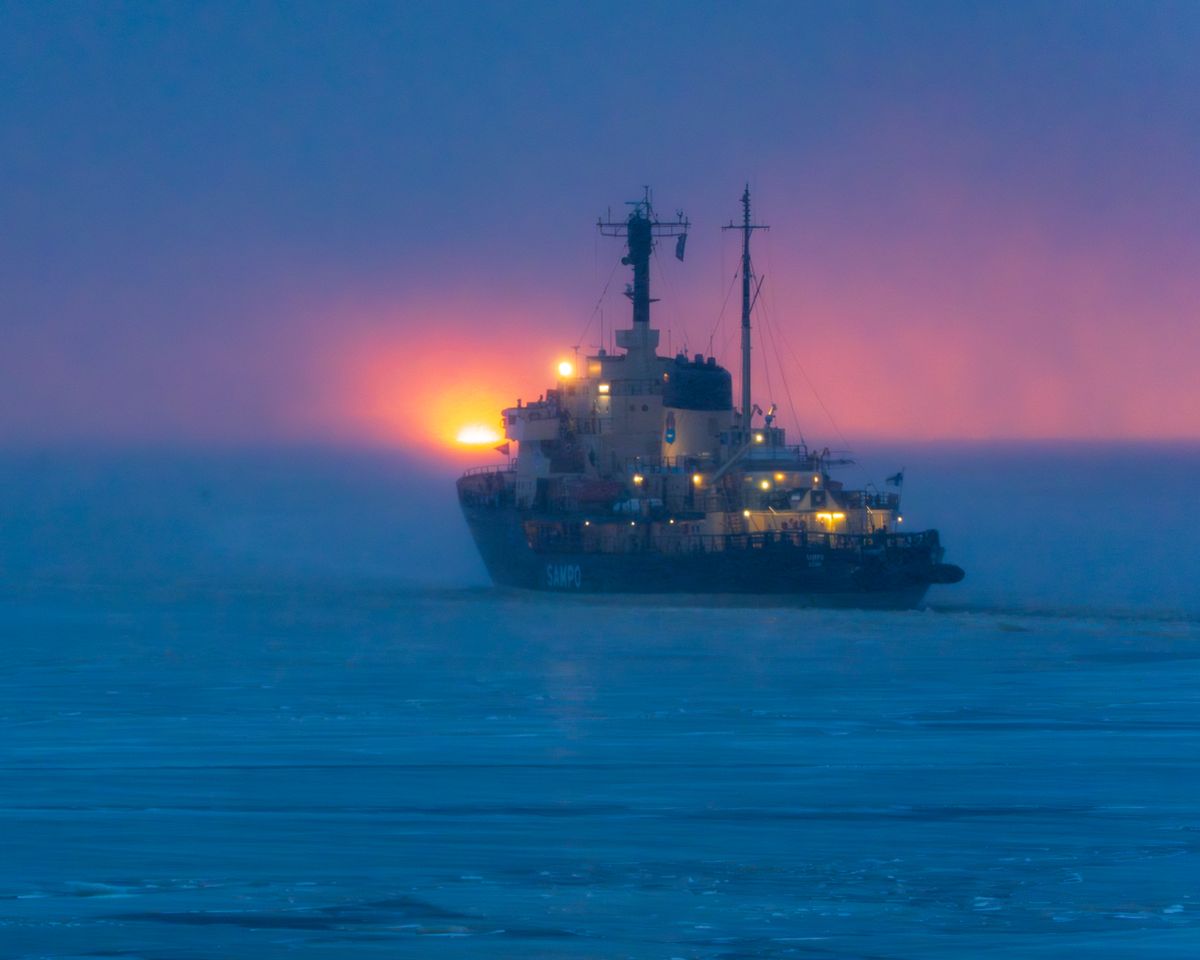
Superior mirages have a few striking effects:
- Looming — objects below the geometric horizon become visible, as if lifted up. Sailors sometimes see ships, coastlines, or icebergs that should be hidden by the curve of the Earth.
- Towering — distant objects appear stretched vertically, sometimes looking taller than they really are
- Floating ships — a classic superior mirage: a ship on the horizon appears to hover above the water line
The most spectacular form of superior mirage is the Fata Morgana — a complex, rapidly changing mirage named after the legendary Morgan le Fay. It produces stacked, stretched, alternating erect and inverted images that seem to shift and dance. It is most famously observed over the Strait of Messina and in polar regions.
Superior mirages are rarer than inferior ones because temperature inversions near the surface are less common than the normal daytime warming of the ground. They are most reliable in polar areas during winter, over cold seas in spring, and on large lakes in autumn when the water is still warm and the air has turned cold.
Moon Mirage: Why the Moon Looks Distorted Near the Horizon
You have probably noticed that the Moon looks flattened, distorted, or oddly shaped when it is close to the horizon. Much of this is caused by the same atmospheric refraction that produces terrestrial mirages.
Here is what is happening. When the Moon is near the horizon, you are looking through the thickest layer of Earth's atmosphere — roughly 40 times more air than when the Moon is overhead. Temperature variations within that thick layer bend moonlight in complex ways.
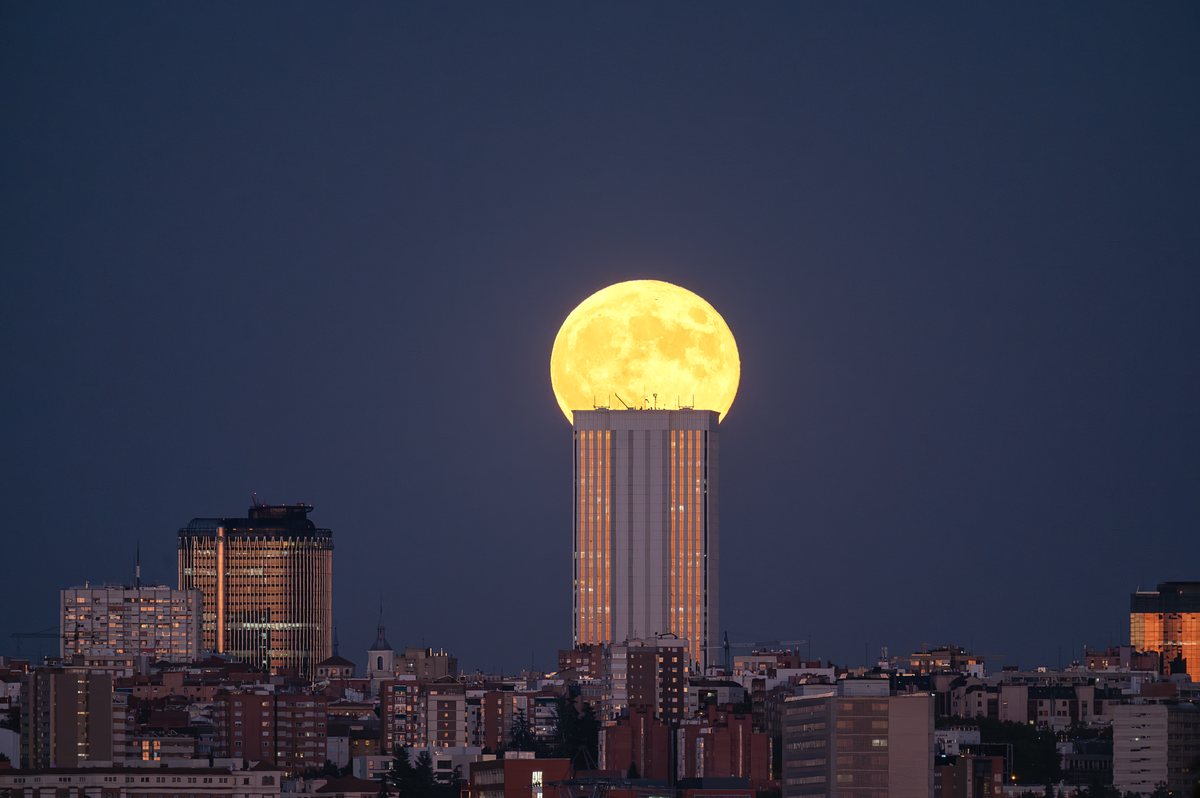
A common moon mirage is an inferior mirage of the Moon. A faint, inverted copy of the Moon appears below the real Moon, just as the "water on the road" mirage appears below the sky. This happens when a warm air layer near the ground (or over a warm sea) bends the Moon's light upward, creating the second image.
Other moon mirage effects include:
- Flattening — the moon appears squashed vertically because refraction lifts the lower limb more than the upper limb
- Dark bands — horizontal stripes across the Moon's face, caused by distinct temperature layers
- Green rim — a thin green edge on the Moon's upper limb, produced by dispersion separating colours, similar to the green flash at sunset
- Multiple images — when several temperature inversions stack, the Moon can appear split into two or three vertically stacked copies
There is an important distinction to make. The famous Moon illusion (the Moon looking much larger near the horizon) is not a mirage. That is a psychological effect — your brain perceives the Moon as bigger when it is near familiar foreground objects. A moon mirage is a real physical distortion of the image by the atmosphere.
Inferior vs Superior Mirage: Quick Comparison
| Feature | Inferior Mirage | Superior Mirage |
|---|---|---|
| Image position | Below the real object | Above the real object |
| Air temperature | Hot near surface, cool above | Cold near surface, warm above |
| Temperature profile | Normal lapse (hot ground) | Temperature inversion |
| Light bends | Upward | Downward |
| Common locations | Hot roads, deserts, runways | Polar ice, cold oceans, lakes |
| Frequency | Very common | Uncommon to rare |
| Typical appearance | "Puddle on the road" illusion | Ships floating, towering cliffs |
| Image inversion | Inverted | Often inverted, but can be erect |
The physics is the same in both cases: light refracts through layers of air with different densities, and the light always bends toward the colder (denser) air. The difference is simply whether the cold air is above (inferior mirage) or below (superior mirage) the line of sight.
Mirages are a direct application of the refraction physics that governs all of optics. For a deeper look at how Snell's law controls this bending of light, see our guide on Snell's law and angle of refraction. The underlying atmospheric refraction is the same phenomenon that makes stars twinkle — explained in refraction at night. And the total internal reflection that sometimes contributes to mirage formation is covered in total internal reflection.
External resources: The San Diego State University mirage types page by Andrew Young is the definitive technical reference on mirage classification. NASA's Moon Illusion article explains the psychological effect that is often confused with moon mirages.
Which mirage are you actually looking at?
One question settles it: is the hot air below the cold air, or above it?
Image below the real object, over hot ground — inferior mirage. Sun-baked tarmac, desert sand, a hot car roof. The image sits under the object and is upside down, which is exactly why it reads as a puddle reflecting the sky. This is the common one, and you have seen it on a motorway in summer.
Image above the real object, over a cold surface — superior mirage. Arctic seas, cold lakes, snowfields. The image floats above the object and can be upright, inverted, or stacked in layers. Ships that appear to hover belong here.
The giveaway: inferior mirages need hot ground and are always inverted. Superior mirages need a cold surface and lift things into the sky.
Frequently Asked Questions
What is an inferior mirage?
An inferior mirage is a type of mirage where the inverted image appears below the real object. It occurs when a layer of hot air sits near the ground beneath cooler air above. Light rays bend upward as they travel through the temperature gradient, creating the illusion of water on the road or sky on the ground.
What is a superior mirage?
A superior mirage is a type of mirage where the image appears above the real object. It forms during a temperature inversion — cold air near the surface with warmer air above. Light bends downward through this inversion, making distant objects appear higher than they really are, sometimes even floating above the horizon.
Can the Moon produce a mirage?
Yes. A moon mirage occurs when moonlight passes through temperature inversions in the atmosphere near the horizon. The Moon can appear flattened, distorted, or even split into multiple stacked images. An inferior mirage of the Moon (a faint inverted copy below the real Moon) is sometimes visible during moonrise.
What is the difference between inferior and superior mirage?
The main difference is image position. An inferior mirage appears below the real object and forms when the ground is hotter than the air above (common on roads and in deserts). A superior mirage appears above the real object and forms when the ground is colder than the air above (common over ice, snow, and cold water).
What causes the water illusion on a hot road?
That is an inferior mirage. The Sun heats the road, which warms the air directly above it. Light from the blue sky bends upward as it passes through the hot, less dense air into your eyes. Your brain assumes light travels straight, so it projects the blue sky downward — creating the illusion of a puddle on the road.
Where can you see superior mirages?
Superior mirages are most common in polar regions, over large ice sheets, and on cold oceans. They also occur over cold lakes and in coastal areas when warm air moves over cool water. Famous sightings include ships appearing to float above the horizon in the Arctic and the Fata Morgana over the Strait of Messina.
What is a moon mirage?
A moon mirage is the distortion of the Moon's image by atmospheric refraction, most noticeable when the Moon is low near the horizon. Temperature layers in the atmosphere can flatten the Moon, create dark bands across its surface, produce a green rim, or generate an inferior mirage below the real Moon.
Is the Moon illusion the same as a moon mirage?
No. The Moon illusion is a psychological effect that makes the Moon look bigger near the horizon — it happens in your brain, not the atmosphere. A moon mirage is a physical distortion of the Moon's shape caused by actual bending of light through temperature layers in the air.

About Umar Farooq
Umar Farooq writes in-depth guides on the physics of light and optics — from reflection, refraction, and lenses to diffraction, lasers, and fiber optics, explained from first principles.
Read more about Umar Farooq →