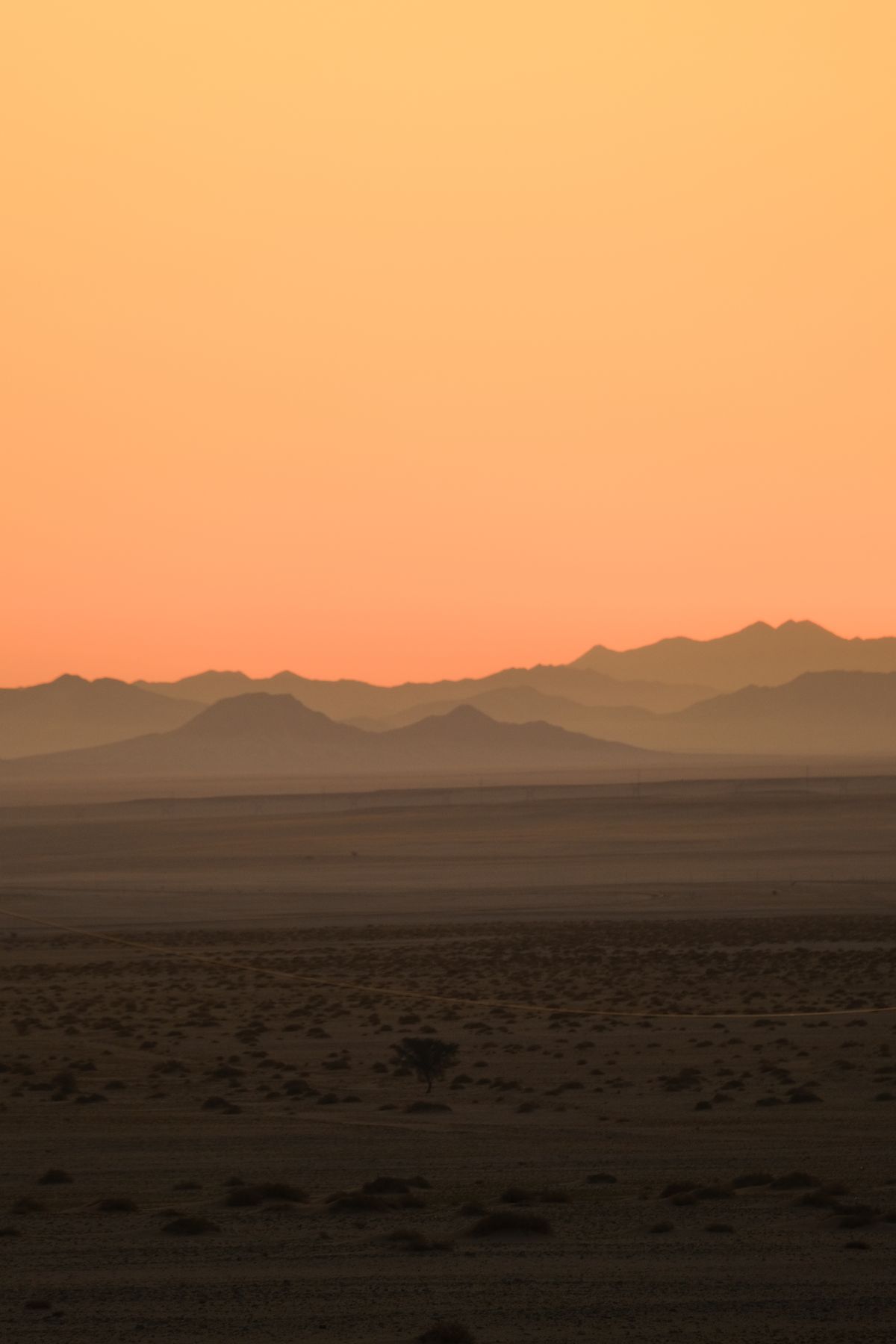
Desert mirages make you see water because hot air near the ground bends light from the sky upward into your eyes, creating a reflection-like image that looks exactly like a pool of water. The illusion is not a hallucination — it is real light, real refraction, and a real photographable effect. Here is what a desert mirage is, the 5 key facts about how it works, and why your brain falls for it every time.
What Is a Desert Mirage?
A desert mirage is an optical illusion where the sky appears reflected on the ground ahead, making it look like a lake or pool of water. It happens when the sand is hot enough to create a steep temperature difference between the air at ground level and the air a few centimetres above it.
The word mirage comes from the French se mirer — to be reflected. The name is accurate: the effect really is a reflection of the sky, just not one caused by water.
Fact 1: Light Bends When It Passes Through Air of Different Temperatures
Light travels at different speeds through materials of different densities. In a vacuum, light moves at 299,792,458 m/s. In air at sea level, it slows to almost the same speed because air has a refractive index of about 1.0003. In hot, thin air the index is slightly lower — the light moves a fraction faster.
When light travels from cool, dense air down into hot, less-dense air, the boundary between the layers bends the light. The effect is gradual: each layer bends the light a tiny amount, and together they curve it into a smooth U-shape.
Think of it like a car driving from smooth tarmac onto soft sand at an angle. The wheel that hits the sand first slows first, so the car pivots toward the sand. Light does the same thing at the boundary between cool and hot air — the part of the wavefront entering the hot air speeds up first, so the beam bends upward instead of continuing straight down.
Fact 2: The Brain Sees Sky-Coloured Light and Guesses "Water"
Here is the part that tricks you. Light from the blue sky enters the hot air layer near the ground, bends upward, and reaches your eye from a direction that is usually associated with the ground — not the sky.
Your brain has spent a lifetime learning that light travels in straight lines. When it receives sky-coloured light coming from the direction of the ground, it makes the most reasonable guess: the light must have reflected off something. And the only thing in nature that creates a mirror-like reflection of the sky is a body of water.
So your brain shows you a pool of water. It is the same mental shortcut that makes you see a face in a cloud or a pattern in a rock — pattern recognition working overtime.
Fact 3: Desert Mirages Are "Inferior" Mirages
Physicists classify mirages into two types based on where the illusion appears relative to the real object.
An inferior mirage appears below the real object. This is what happens in the desert: the image of the sky appears on the ground, below where the sky actually is. It is called "inferior" because the image is lower, not because it is worse.
A superior mirage appears above the real object. This happens when cold air sits near the surface with warmer air above — a temperature inversion. Superior mirages occur over cold oceans or polar ice and can make distant ships appear to float in the sky.
Most desert mirages are inferior mirages. The opposite pattern — superior mirages — happens in cold conditions and is covered in more detail in our guide to inferior vs superior mirages.
Fact 4: The Conditions Need to Be Just Right
For a clear desert mirage, you need:
- Intense ground heating. Desert sand in direct summer sunlight reaches 60–80°C (140–176°F). This creates a temperature difference of 20–30°C between the ground and the air just a metre above it.
- Little or no wind. Wind mixes the hot and cool air layers, destroying the sharp temperature gradient needed for strong refraction.
- A flat, uninterrupted view. Mirages appear near the horizon, so you need a long, flat line of sight. This is why they are so common on deserts and straight highways.
- Dry air. Humidity reduces the temperature gradient because moist air holds heat differently. Deserts are ideal because the air is dry.
The effect is strongest when viewed from a distance of several hundred metres to a few kilometres. Too close and the light has not travelled far enough through the temperature gradient to bend noticeably.
Fact 5: Mirages Are Real — They Are Not Hallucinations
This is one of the most common misconceptions about desert mirages. Many people assume that thirst or heat exhaustion causes travellers to hallucinate water. But a mirage is a genuine optical phenomenon, not a psychological trick.
You can photograph a mirage. You can measure its position and brightness. The light that forms the image is real light from the sky — it has simply been redirected by refraction. What is an illusion is your brain's interpretation of that light as a pool of water on the ground.
The illusion disappears as you approach because the angle changes. The refracted light no longer reaches your eye from the ground direction, so the "water" vanishes — replaced by the dry sand that was always there.
Desert Mirages vs Road Mirages: Same Physics
The shimmering "water" on a hot asphalt road in summer is the same phenomenon as a desert mirage. The road surface absorbs sunlight and heats the air above it, creating the same temperature gradient. Light from the sky bends upward through the hot air, and your brain interprets the reflection as a wet road.
The only difference is the surface. Asphalt gets even hotter than sand — up to 70°C (158°F) on a sunny day — so road mirages can appear at lower air temperatures than desert mirages.
Why Daylight Matters
The Sun needs to be high enough to heat the ground strongly. Desert mirages appear most often between late morning and mid-afternoon, when solar heating is at its peak. Early morning and evening are usually too cool for the temperature gradient to be strong enough.
A clear sky also helps. Clouds block sunlight and reduce ground heating, which weakens the temperature gradient and makes mirages less visible.
More Than a Desert Trick
The physics of desert mirages — refraction through a temperature gradient — is the same principle behind many atmospheric effects. The same bending of light through layers of different density causes stars to twinkle, the setting Sun to look squashed, and the green flash at sunset. It is all atmospheric refraction.
For a deeper look at how refraction bends light through different materials, see our guide on what causes refraction. For more everyday examples of light bending in the atmosphere, check out our refraction examples list. The connection between mirages and total internal reflection is explored in our TIR guide.
Sources used in this article: Sketchplanations — Mirage: Why Do We See a Pool of Water?, HowStuffWorks — How Mirages Work, and Discover Magazine — Why Mirages Are Like Nature's Magic Trick.
Frequently Asked Questions
What is a desert mirage?
A desert mirage is an optical illusion caused by light bending through layers of hot and cool air near the ground. It makes the sky appear to reflect off the sand surface, creating the illusion of a pool of water in the distance.
Why do desert mirages look like water?
Desert mirages look like water because your brain sees sky-coloured light coming from the direction of the ground and interprets it as a reflection. In human experience, only water reflects the sky that way — so the brain jumps to that conclusion.
How do desert mirages form?
Desert mirages form when the sun heats the sand to extreme temperatures, which warms the air just above it. This creates a layer of hot, less-dense air near the ground with cooler, denser air above. Light from the sky bends as it passes through these layers, curving upward before reaching your eyes.
Are mirages hallucinations or real?
Mirages are real optical phenomena, not hallucinations. They can be photographed and measured. The light rays that reach your eye are real — they have just been bent by atmospheric refraction. What is an illusion is your brain's interpretation of the bent light as a pool of water.
What causes the shimmering effect on hot roads?
The shimmering effect on hot roads is the same physics as a desert mirage. Heat rising from the asphalt creates turbulent layers of hot and cool air, which constantly shift and scatter light. This makes the road appear to shimmer or ripple like water.
Can you photograph a mirage?
Yes. Mirages are real optical effects that cameras capture exactly as the eye sees them. Many photographs of desert mirages show the sky apparently reflected on the ground, with distant objects appearing distorted or upside down.
What is the difference between a desert mirage and a road mirage?
There is no physical difference — both are inferior mirages caused by a hot surface heating the air above it. Desert mirages occur over hot sand, while road mirages happen over asphalt. The physics of light bending through a temperature gradient is identical.
How hot does it need to be for a mirage?
The ground needs to be significantly hotter than the air above it. Desert sand can reach 60–80°C (140–176°F) in direct sunlight, while asphalt roads can hit 50–70°C (122–158°F). The greater the temperature difference, the stronger the mirage effect.
Are there different types of desert mirages?
The common desert mirage where the image appears below the real object is called an inferior mirage. The opposite — where the image appears above — is a superior mirage, which occurs over cold water or ice. The most spectacular superior mirage is called a Fata Morgana.
Do mirages only happen in deserts?
No. Mirages can happen anywhere there is a strong temperature gradient near the ground. Hot asphalt roads, beaches, airport runways, and even large fields on summer days can all produce mirages. Deserts produce the most dramatic examples because the temperature difference is largest.

About Umar Farooq
Umar Farooq writes in-depth guides on the physics of light and optics — from reflection, refraction, and lenses to diffraction, lasers, and fiber optics, explained from first principles.
Read more about Umar Farooq →