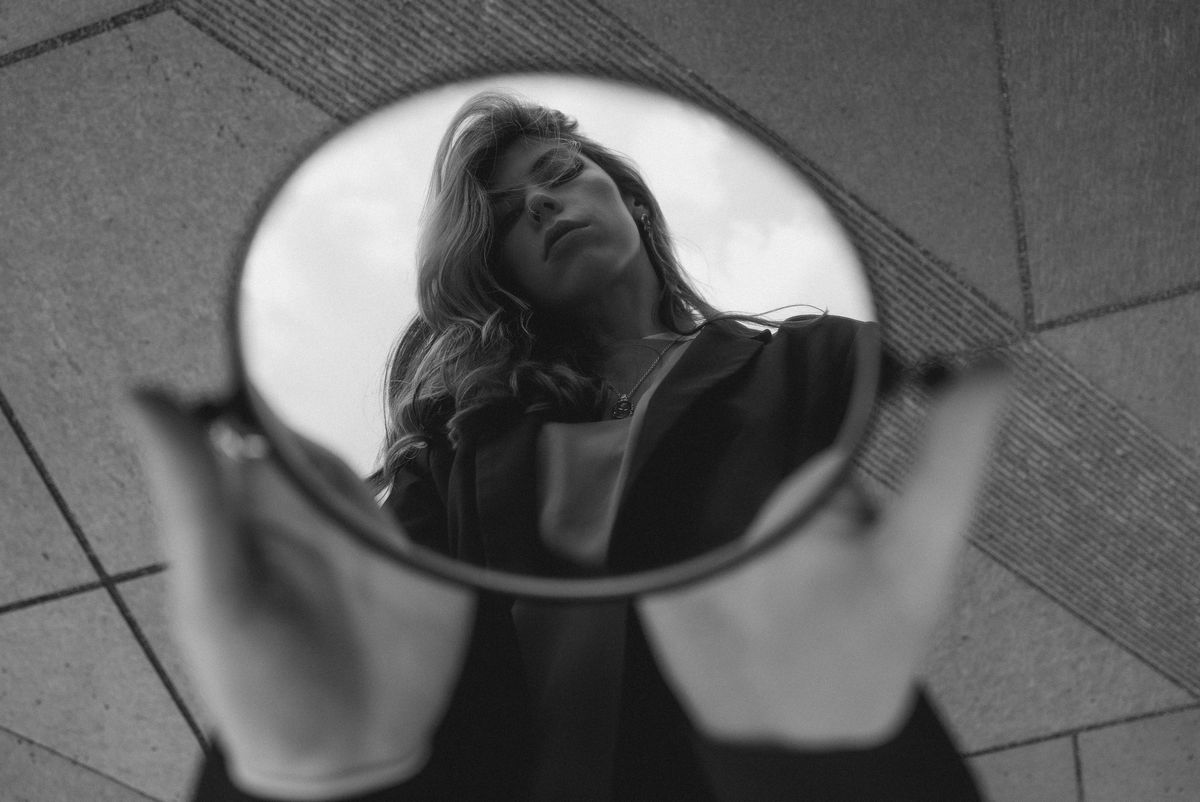
How does a mirror work? It reflects nearly all the light that hits it, sending it back at the same angle it arrived. The answer to how does a mirror work lies in the reflective layer — a thin coating of silver or aluminium on the back of a glass sheet — that absorbs incoming photons and re-emits them almost instantly. This creates a clear, undistorted image because the surface is smooth enough to keep the reflected rays parallel. Here is the physics behind how mirrors work, from the law of reflection to the three types of mirrors and why your reflection flips front-to-back.
Think of a mirror like a perfectly still pond. When you look into the water, you see the trees behind you reflected on the surface because the light bounces off the water at the same angle it arrived. A mirror works the same way, only better — the metal coating reflects far more light than water ever could.
How does a mirror work? The construction
A modern mirror is a sandwich of materials. The front layer is a sheet of glass, chosen for its transparency, rigidity, and ability to be polished perfectly smooth. The glass itself reflects almost nothing — only about 4% of the light that hits it.
The real work happens at the back. A thin layer of metal — usually silver or aluminium — is deposited onto the glass. Silver reflects about 95% of the light that reaches it; aluminium reflects about 90%. A protective coating (paint or lacquer) seals the metal so it does not oxidise or tarnish over time.
When light from an object passes through the glass and hits the metal layer, the free electrons in the metal absorb the photon energy and re-emit it as a reflected wave. This process happens faster than you can imagine — the light leaves the mirror at virtually the same instant it arrives. For a step-by-step atomic-level explanation, see the guide on what happens when light hits a mirror.
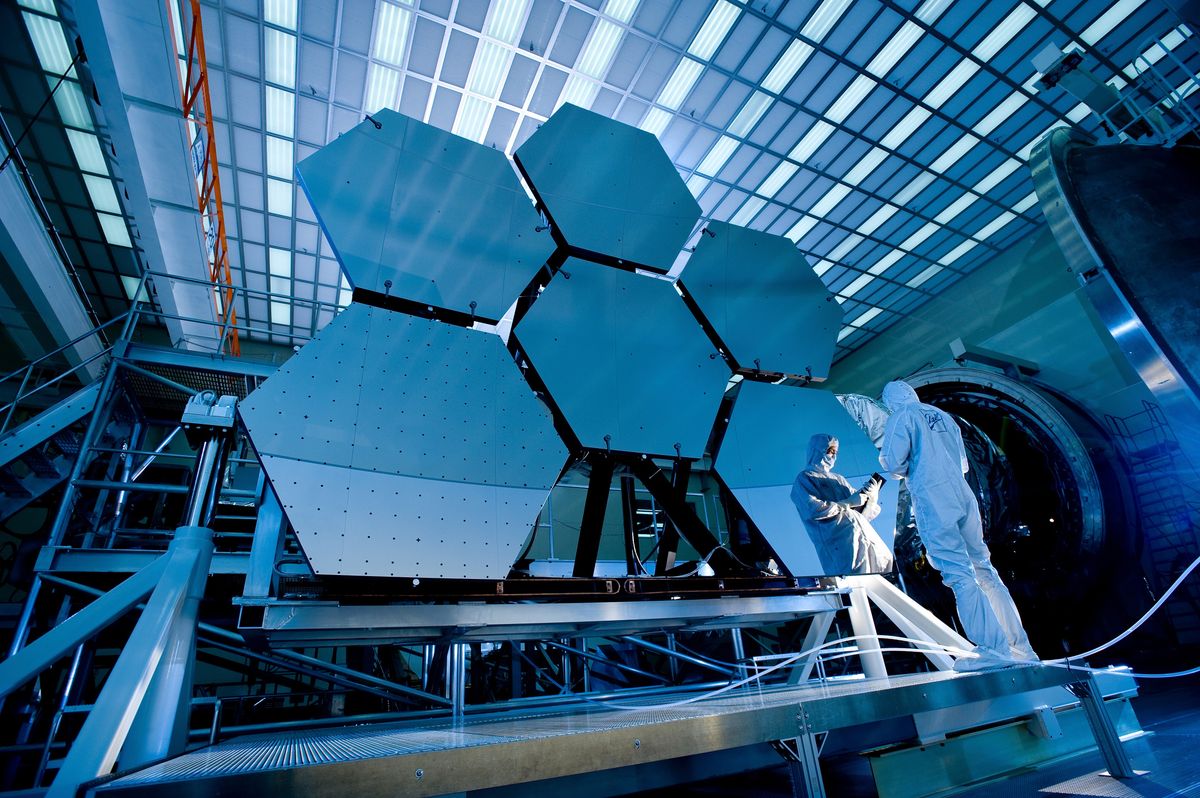
The law of reflection — the single rule behind how mirrors work
To understand how does a mirror work, you only need one rule: the angle of incidence equals the angle of reflection. Every mirror, whether flat or curved, follows it.
Draw an imaginary line perpendicular to the mirror surface at the point where light hits. That is the normal. The incoming ray (incident ray) makes an angle with the normal called the angle of incidence. The outgoing ray (reflected ray) makes an equal angle on the other side. The Physics Classroom law of reflection tutorial provides a detailed visual explanation of this principle.
This law is what makes mirror images possible. Because every ray follows it precisely, the reflected rays preserve the geometric relationship between all the points on the object, forming a recognisable image.
How a plane mirror forms an image
How does a mirror work when it is flat? A plane mirror — a flat mirror like the one on your bathroom wall — creates a virtual image behind the mirror surface. Here is how:
Light from every point on the object spreads out in all directions. Some of those rays hit the mirror and reflect according to the law of reflection. After reflection, the rays diverge — they spread apart. Your eye collects these diverging rays and, because your brain assumes light travels in straight lines, traces them backward behind the mirror.
Where those backward extensions meet, your brain places the image. The result: the image appears to be the same distance behind the mirror as the object is in front, and it is the same size, upright, and virtual (cannot be projected on a screen).
Why mirrors appear to reverse left and right
This is the most persistent myth about mirrors. A mirror does not reverse left and right. It reverses front and back.
Stand facing north in front of a mirror. Your left hand points west. In the reflection, your left hand still points west. The mirror has not swapped left and right. What it has done is reverse which direction counts as "front" — the reflection faces south while you face north. The Explain that Stuff article on how mirrors work demonstrates this with a simple plastic-sheet experiment you can try at home.
The confusion arises because we imagine turning around to face the same direction as our reflection. If you physically turn to face south, your left hand now points east — and that is when left and right appear swapped. The mirror itself never does the swapping; we do it mentally when we imagine ourselves in the reflection's position.
How a concave mirror works
How does a mirror work when it is curved inward? A concave mirror curves inward like the inside of a bowl. It is a converging mirror: parallel light rays that hit it reflect inward and meet at a single point called the focal point (F), which sits in front of the mirror.
The image a concave mirror produces depends on where the object sits:
- Object beyond the focal point: the reflected rays converge in front of the mirror, forming a real, inverted image. This is how a reflecting telescope collects starlight.
- Object between the focal point and the mirror: the reflected rays diverge, and your brain traces them backward to form a magnified, upright virtual image behind the mirror. This is how a shaving mirror or makeup mirror works.
For the full treatment of all six image positions, see the guide on concave mirrors.
How a convex mirror works
A convex mirror curves outward like the outside of a dome. It is a diverging mirror: parallel light rays that hit it reflect outward as if they came from a focal point behind the mirror.
A convex mirror always produces a virtual, upright, and diminished image, regardless of the object's position. The image appears between the pole and the focal point behind the mirror. The diminished size gives the viewer a wider field of view — this is why convex mirrors are used as vehicle side mirrors and security mirrors in shops. The trade-off is the familiar warning: objects appear closer than they really are.
For a detailed comparison, see the guide on convex mirrors and the concave vs convex mirror comparison.
Common misconceptions about mirrors
"Mirrors reverse left and right." As explained above, they reverse front and back, not left and right. The apparent left-right swap is a mental rotation, not a property of the mirror.
"A mirror shows you exactly what others see." Not quite. A mirror shows you a front-back reversed version of yourself. Other people see you without that reversal. This is why photographs often look different from your mirror image — you are used to the reversed version.
"A mirror reflects 100% of light." No mirror is perfect. A typical silver mirror reflects about 95% of visible light; aluminium reflects about 90%. The remaining light is absorbed as heat. This is why a mirror left in direct sunlight feels warm — it is absorbing the 5% it does not reflect.
"Concave mirrors always magnify." They only magnify when the object is inside the focal length. When the object is beyond the focal point, the image is real, inverted, and can be either diminished or magnified depending on distance.
"Convex mirrors can produce a real image." They cannot. A convex mirror always diverges reflected rays, so the rays never converge in front. The image is always virtual.
Summary
How does a mirror work? It reflects light according to the law of reflection: the angle of incidence equals the angle of reflection. A smooth glass sheet provides the rigid surface, and a thin metal coating (silver or aluminium) does the actual reflecting. Plane mirrors form virtual, upright, same-size images behind the mirror. Concave mirrors converge light and can produce real or virtual images depending on the object's position. Convex mirrors diverge light and always produce virtual, upright, diminished images with a wide field of view. The famous left-right reversal of mirrors is actually a front-back reversal — the mirror itself does not swap your left and right sides.
For a more detailed look at how light interacts with mirror surfaces at the atomic level, see the guide on what happens when light hits a mirror. For the mathematics behind image formation, see the concave mirror mirror formula section.
Frequently Asked Questions
How does a mirror work in simple terms?
A mirror works by reflecting light. When light from an object hits the smooth metal coating on the back of a mirror, it bounces off at the same angle it arrived. Your eyes collect this reflected light, and your brain traces the rays back in straight lines, creating the illusion of an image behind the mirror.
What is a mirror made of?
A modern mirror is made of a sheet of glass with a thin reflective metal coating on the back, usually silver or aluminium. The metal is coated with a protective layer to prevent tarnishing. The glass provides a smooth, rigid surface, and the metal does the reflecting. Silver reflects about 95% of the light that hits it, which is why mirrors are so efficient.
Does a mirror reverse left and right?
No — a mirror does not reverse left and right. It reverses front and back. When you face a mirror, the hand on your left side appears on the left side of the reflection. The apparent left-right swap comes from the front-back reversal combined with the fact that you turned to face the mirror. If you write on a transparent sheet and hold it up without turning it, the text appears the same in the mirror.
How does a mirror form a virtual image?
A plane mirror forms a virtual image because the reflected rays diverge after reflection. Your eye collects the diverging rays and traces them back in straight lines behind the mirror surface. The image appears to be behind the mirror at the same distance the object is in front. This image cannot be projected on a screen because the light never actually converges there.
Why does a concave mirror magnify?
A concave mirror magnifies when the object is placed between the focal point and the mirror surface. The curved shape causes the reflected rays to diverge as if coming from a larger object behind the mirror. Your brain interprets the wider angle of the returning rays as a larger image. This is how shaving mirrors and makeup mirrors work.
Why are convex mirrors used in cars?
Convex mirrors bulge outward and spread light rays apart, which creates a diminished but wider-angle image. This lets drivers see more of the road beside and behind them in a single glance. The trade-off is that objects appear smaller and farther than they really are — hence the warning 'objects in mirror are closer than they appear.'
What is the difference between specular and diffuse reflection?
Specular reflection occurs on smooth surfaces like mirrors, where parallel incoming rays remain parallel after reflection, producing a clear image. Diffuse reflection occurs on rough surfaces like paper or fabric, where the microscopic bumps scatter the reflected rays in different directions, producing no clear image but allowing us to see the object from any angle.

About Umar Farooq
Umar Farooq writes in-depth guides on the physics of light and optics — from reflection, refraction, and lenses to diffraction, lasers, and fiber optics, explained from first principles.
Read more about Umar Farooq →