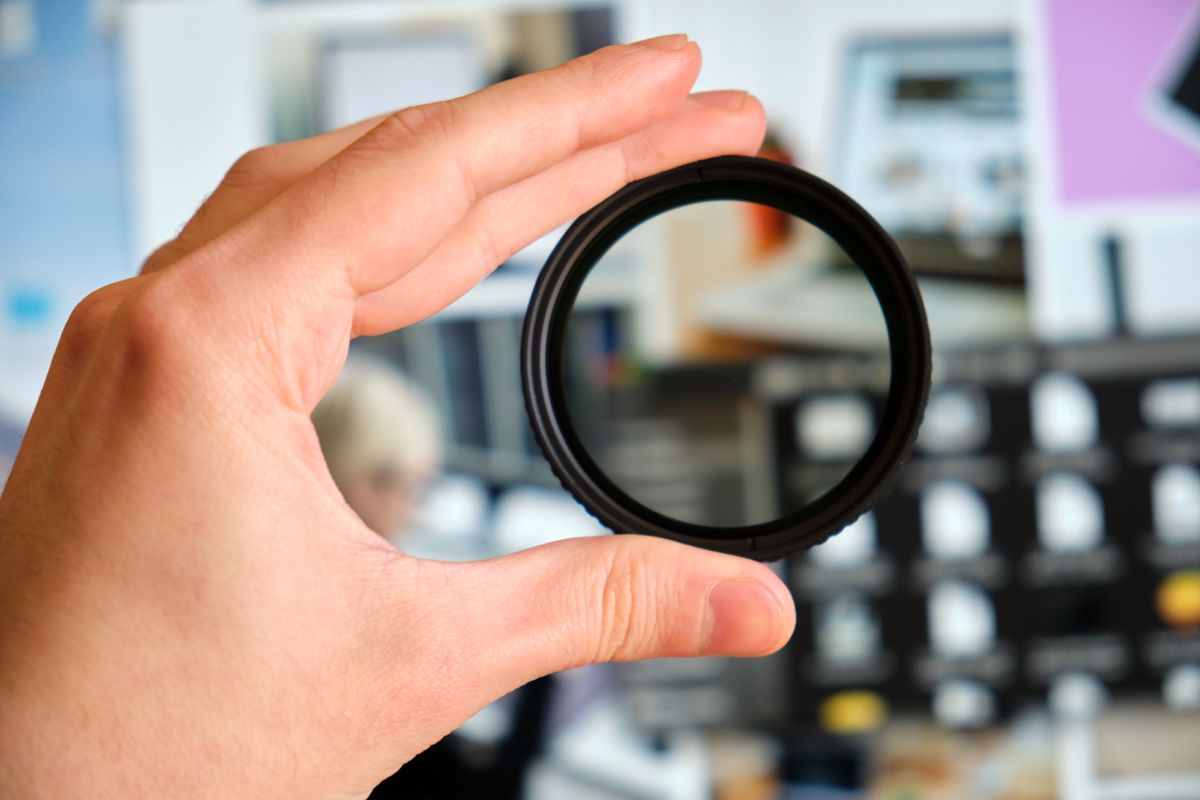
Polarised light is light that vibrates in a single direction. Unpolarised light from the sun or a lamp vibrates randomly in every direction perpendicular to its path. A polarising filter selects one direction and blocks the rest — like a picket fence letting through only a rope shaking in the right orientation.
What is polarized light? It is light whose electric field oscillates in a well-defined plane rather than randomly. This simple property makes possible everything from glare-reducing sunglasses to liquid-crystal displays and 3D cinema.
Picture a rope threaded through a vertical picket fence. If you shake the rope up and down, the wave passes through the gap easily. If you shake it side to side, it smacks against the slats and stops. A polariser does exactly this to light: it has a polarisation axis — an orientation — and only light waves vibrating parallel to that axis get through. Rotate the filter 90 degrees, and the light is blocked entirely.
This is the core picture for understanding what polarization of light means. The rope is the electric field of the light wave. The fence is the polarising filter. The wiggle direction is the polarisation axis.
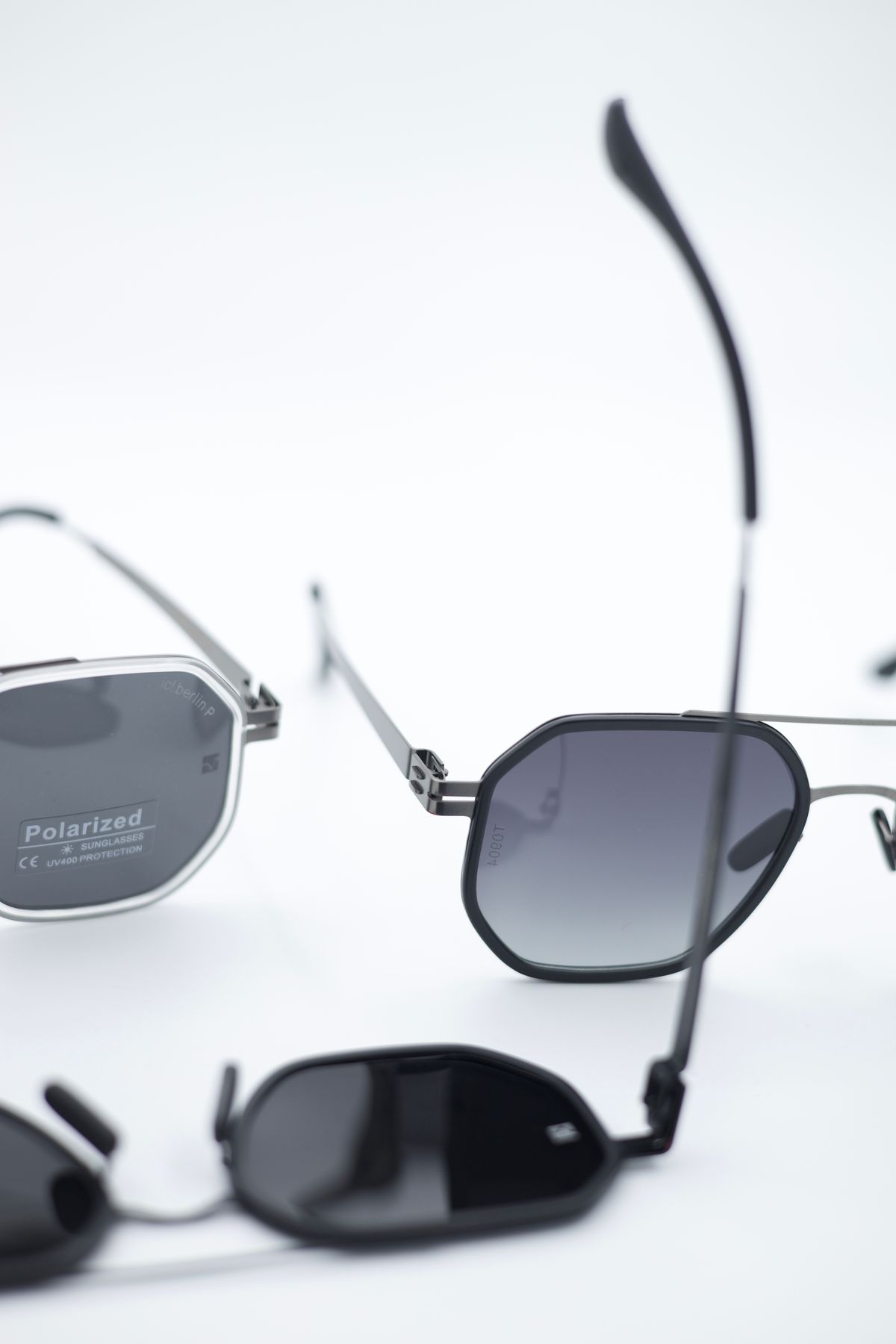
What is polarized light? The transverse wave answer
Light is polarised because it is a transverse wave. The electric field oscillates perpendicular to the direction the wave travels. That perpendicular direction is not fixed — it can be any angle in the 360° plane around the beam.
In unpolarised light, the electric field direction changes randomly billions of times per second. Over any meaningful time interval, all directions are equally represented. In polarised light, the field oscillates along one direction only — or rotates in a controlled way as the wave moves.
This is only possible for transverse waves. Longitudinal waves — like sound — cannot be polarised because their vibration is along the direction of travel, not perpendicular to it.
Unpolarised vs polarised light
| Property | Unpolarised light | Polarised light |
|---|---|---|
| Electric field direction | Random, changes constantly | Fixed in a plane (or rotating predictably) |
| Common sources | Sun, incandescent bulbs, LEDs, candles | Lasers, reflected glare, light through a polariser |
| Passes through a polariser? | Yes — half the intensity gets through | Depends on the angle (follows Malus's law) |
| Can you tell by eye? | No — both look the same to human eyes | No — special equipment reveals it |
For a detailed side-by-side of polarised and unpolarised light, see our guide on unpolarised light.

The three types of polarisation
The way the electric field behaves as the wave travels determines the type of polarisation.
Linear polarisation. The electric field oscillates in one fixed plane. This is the simplest type and the one produced by standard polarising filters and most lasers.
Circular polarisation. The electric field rotates in a circle as the wave propagates. It results from two perpendicular linear components of equal amplitude with a 90° phase shift. The rotation can be right-handed or left-handed.
Elliptical polarisation. The electric field traces an ellipse. This is the most general form: linear and circular polarisation are special cases of elliptical polarisation.
Each type has its own uses. Linear polarisers are common in sunglasses and photography. Circular polarisation is used in 3D movies to separate left-eye and right-eye images. Elliptical polarisation appears in advanced optics and antenna design.
For a complete breakdown of each type, see our guide on types of polarisation.
How light becomes polarised
There are four main ways to produce polarised light.
Polarisation by transmission. Light passes through a polarising filter. The filter contains aligned long-chain molecules that absorb light vibrating parallel to them. Light vibrating perpendicular passes through. This is how camera polarisers and polarised sunglasses work.
Polarisation by reflection. When unpolarised light reflects off a non-metallic surface like water, glass, or a road, the reflected light is partially polarised. At a specific angle — Brewster's angle — the reflected light is 100% polarised parallel to the surface. This is why reflections from a wet road appear as horizontal glare.
Polarisation by scattering. When sunlight scatters off molecules in the atmosphere, the scattered light becomes polarised. This is why the blue sky is partially polarised — and why bees and other insects use sky polarisation for navigation.
Polarisation by refraction (birefringence). Some crystals, like calcite, split light into two orthogonally polarised beams that travel at different speeds. This is called double refraction or birefringence. It is the principle behind many advanced optical devices.
Malus's law: the intensity equation
When polarised light hits a second polariser (called an analyser), the amount that gets through depends on the angle between the two polarisation axes. The relationship is given by Malus's law:
I = I₀ cos²θ
Where I is the transmitted intensity, I₀ is the incident intensity, and θ is the angle between the light's polarisation direction and the analyser's axis.
When θ = 0°, the axes are aligned and all the light passes (I = I₀). When θ = 90°, the axes are crossed and no light passes (I = 0). At 45°, half the intensity passes.
You can test this with two polarising filters. Rotate one relative to the other, and the transmitted light brightens and dims smoothly. At 90°, the view goes nearly black. This is also why polarised sunglasses reduce glare: the lenses are oriented vertically, so they block the horizontally polarised glare from roads and water.
For more physics formulas related to wave behaviour, see our reference guide on destructive interference formula.
Common misconception: polarised sunglasses are just darker
Many people think polarised sunglasses work by being darker — the same way ordinary tinted glasses do. This is wrong.
Ordinary tinted lenses absorb all wavelengths equally. They reduce overall brightness but do not selectively remove glare. Polarised lenses work differently: they block light waves vibrating in a specific orientation (horizontal), while letting vertically vibrating light through. This kills the horizontal glare from roads, water, and car windscreens without darkening the rest of the scene as much.
The result is clearer vision in bright, reflective conditions — better contrast, less eye strain, and improved visibility of details that would otherwise be washed out by glare. That is why drivers, fishermen, and pilots prefer polarised sunglasses over ordinary tinted ones.

Where you see polarisation every day
Polarisation is not a laboratory curiosity. It surrounds you.
- Polarised sunglasses reduce road and water glare.
- LCD screens use two crossed polarisers with a liquid crystal layer that twists the polarisation to create pixels.
- 3D cinema projects left-eye and right-eye images using opposite circular polarisations; your glasses separate them.
- Camera polarising filters screw onto lenses to deepen blue skies, reduce reflections on glass and water, and increase colour saturation.
- Polarised light microscopy reveals structures in minerals, biological tissues, and pharmaceutical compounds that are invisible under ordinary light.
- Bees and ants navigate using the polarisation pattern of the sky, which changes with the sun's position.
- Stress analysis uses polarised light to reveal stress patterns in glass and plastic — the coloured fringes show where the material is under tension.
Key takeaways
- Polarised light has its electric field confined to a single plane (or rotating predictably) rather than random orientations.
- The rope-through-a-picket-fence analogy captures the essence: only vibrations aligned with the polariser's axis pass through.
- The three types are linear, circular, and elliptical polarisation.
- Light becomes polarised by transmission through filters, reflection at surfaces, scattering in the atmosphere, or double refraction in crystals.
- Malus's law (I = I₀ cos²θ) governs how much light passes through a polariser at a given angle.
- Polarised sunglasses selectively block horizontal glare — they do not simply darken the view.
- Everyday applications include LCD screens, 3D movies, camera filters, microscopy, and even insect navigation.
External resources
- Britannica: Polarisation — authoritative encyclopedia entry covering definition, types, and history of light polarisation
- The Physics Classroom: Polarisation — clear tutorial with diagrams on how polarising filters work and Malus's law
- Edmund Optics: Introduction to Polarisation — comprehensive technical guide covering theory, types, and applications of polarised light
Frequently Asked Questions
What is polarized light in simple terms?
Polarized light is light where the electric field vibrates in only one direction. Normal (unpolarized) light vibrates in all directions perpendicular to its path. Think of a rope shaking through a picket fence: only the shaking that matches the fence gaps gets through. That is what a polarising filter does to light.
What is the difference between polarized and unpolarized light?
Unpolarized light has electric field vectors vibrating randomly in all planes perpendicular to the direction of travel. Polarized light has electric field vectors restricted to a single plane. Common sources of unpolarized light include the sun, incandescent bulbs, and LED lights. Common sources of polarized light include lasers, light reflected from water or glass, and light that has passed through a polarising filter.
What are the three types of polarization?
The three types are linear polarization (electric field oscillates in a single plane), circular polarization (electric field rotates in a circle as the wave travels), and elliptical polarization (electric field traces an ellipse — the most general form, with linear and circular as special cases).
How does polarization work?
Polarization works by filtering light waves so that only those with electric fields aligned to a specific direction pass through. A polarising filter contains long-chain molecules aligned in one direction. Light vibrating parallel to these molecules is absorbed; light vibrating perpendicular passes through. This reduces the intensity by roughly half for unpolarized light, following Malus's law I = I₀ cos²θ.
What are examples of polarization in everyday life?
Common examples include: polarised sunglasses that reduce glare from roads and water, LCD screens that use polarized light to create images, 3D movies that use circular polarization for each eye, camera polarising filters that deepen blue skies and reduce reflections, and polarized light microscopy used to study minerals and biological samples.
Do polarised sunglasses work by being darker?
No. Polarised sunglasses block light waves vibrating in a specific orientation — the horizontal glare from roads and water — while letting vertical vibrations through. This selectively reduces horizontal glare without darkening the entire view. Ordinary tinted sunglasses darken everything equally. Polarised lenses give better visibility in bright, reflective conditions because they remove the specific orientation of light that causes glare.
Can humans see polarization?
Most humans cannot see polarization directly, but some people can perceive a faint yellow pattern called Haidinger's brush when looking at a uniform blue sky through a polariser. Many insects, including bees and ants, can see polarization patterns in the sky and use them for navigation.
What is Malus's law?
Malus's law states that the intensity of light passing through a polariser is I = I₀ cos²θ, where I₀ is the incident intensity and θ is the angle between the light's polarisation direction and the polariser's axis. When θ = 0°, all aligned light passes through. When θ = 90°, no light passes. The law is named after Étienne-Louis Malus, who discovered polarisation by reflection in 1808.

About Umar Farooq
Umar Farooq writes in-depth guides on the physics of light and optics — from reflection, refraction, and lenses to diffraction, lasers, and fiber optics, explained from first principles.
Read more about Umar Farooq →