
Polarization in chemistry means the separation of electric charge within a molecule, producing a dipole with a partial positive charge at one end and a partial negative charge at the other. This is fundamentally different from polarisation in physics, which describes the direction an electromagnetic wave oscillates. In chemistry, polarity determines solubility, boiling points, and intermolecular forces — in physics, it determines how light reflects, transmits, and interacts with materials and antennas.
Here is what we cover: what polarisation means in chemistry vs physics, what causes chemical polarity (electronegativity), bond polarity and how to classify bonds, molecular polarity and dipole moments, the 5 essential differences between chemistry and physics polarisation, and why chemical polarity matters in the real world.
What polarisation means in chemistry vs physics
The word "polarisation" is used in both chemistry and physics, and the two meanings are easy to confuse. Here is the short version:
- Chemistry: Polarisation (or polarity) is a static separation of electric charge within a molecule. One end of the molecule is slightly positive, the other slightly negative. Think of a magnet with a north and south pole — except it is an electric dipole, not a magnetic one.
- Physics: Polarisation describes the dynamic direction in which an electromagnetic wave oscillates as it travels. The electric field wiggles in a particular orientation — up-and-down, side-to-side, or in a circle. This is the polarisation we cover in our guide to types of polarisation.
The two concepts share a root idea — charge separation — but they operate on completely different scales and produce completely different effects. Confusing them is like confusing a photograph of a mountain (chemistry — a static picture of charge distribution) with the mountain itself (physics — a wave in motion).
In this article, we focus on what polarisation means in chemistry. For the physics meaning, see our main guide on what is polarised light.
What causes chemical polarity? Electronegativity
The root cause of chemical polarity is electronegativity — an atom's ability to attract shared electrons in a chemical bond. Different elements have different electronegativities, and when two different atoms bond, the more electronegative one pulls harder on the electrons.
Think of it as a tug-of-war between two atoms over the rope of shared electrons. The stronger puller (more electronegative atom) yanks the rope toward itself. The electrons spend more time on that side, giving it a slight negative charge (δ−). The other atom, left with less electron density, becomes slightly positive (δ+).
On the Pauling scale, the most electronegative element is fluorine (3.98), followed by oxygen (3.44) and chlorine (3.16). The least electronegative are caesium (0.79) and francium (0.70). When fluorine bonds with hydrogen (2.20), the difference of 1.78 produces a strongly polar bond.
The greater the electronegativity difference (ΔEN), the more polar the bond:
| ΔEN range | Bond type | Example | ΔEN |
|---|---|---|---|
| 0–0.4 | Nonpolar covalent | H−H, O=O | 0 |
| 0.4–1.9 | Polar covalent | H−F (1.78), H−O (1.24) | 0.4–1.9 |
| >1.9 | Ionic | Na⁺Cl⁻ (2.23) | >1.9 |
The polarisation of the electron cloud within a bond is the most fundamental level of chemical polarity. But it does not stop there — individual bond polarities combine to determine whether the whole molecule is polar.
Bond polarity vs molecular polarity
There are two levels of polarity in chemistry, and they are not the same thing.
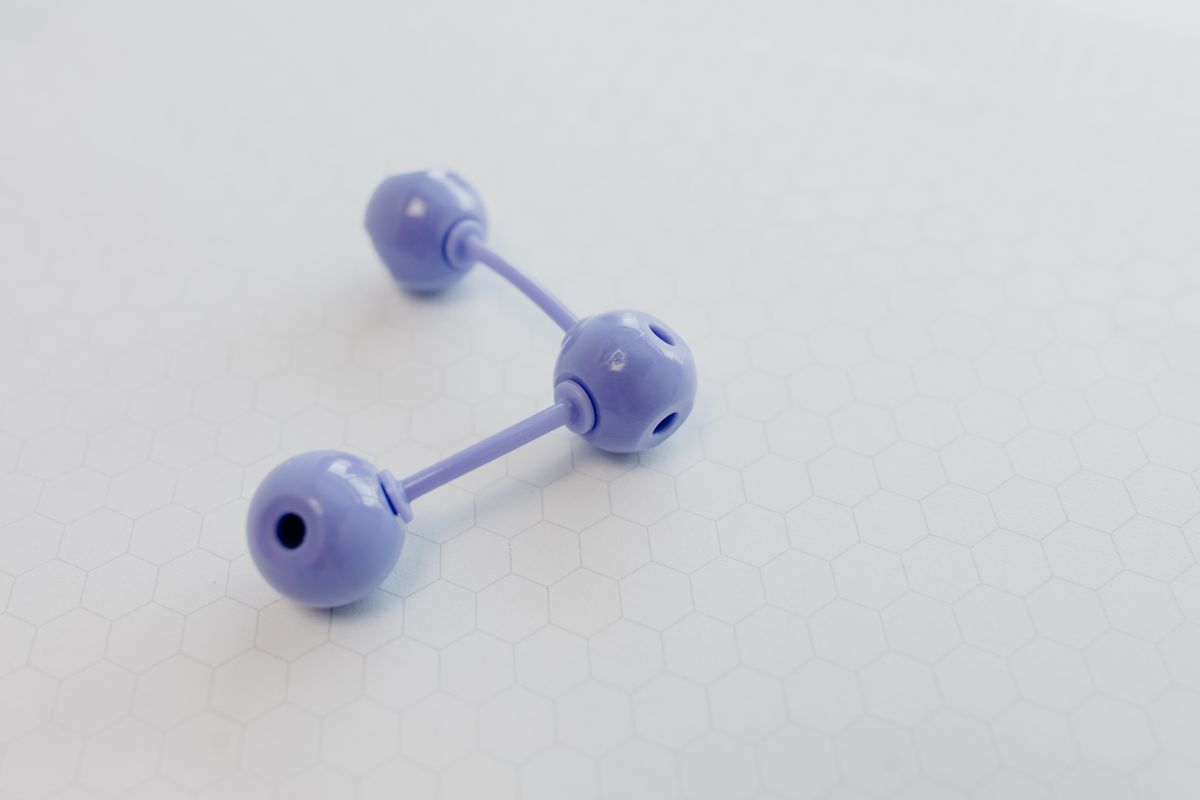
Bond polarity describes a single covalent bond between two atoms with different electronegativities. The bond has a dipole moment — a vector pointing from the positive end to the negative end. Every polar bond is a tiny electric dipole.
Molecular polarity describes the overall molecule. Even if a molecule contains many polar bonds, the molecule as a whole may be nonpolar if the bond dipoles cancel by symmetry.
Picture a tug-of-war with four ropes pulling on a central ring. If two people pull east and two pull west with equal force, the ring does not move — the forces cancel. That is a nonpolar molecule: the bond dipoles point in opposite directions and cancel out. If the forces are uneven or point in directions that do not cancel, the ring shifts — that is a polar molecule.
For example, carbon dioxide (CO₂) has two strongly polar C=O bonds. But the molecule is linear — the two dipoles point in exactly opposite directions and cancel. The result: CO₂ has zero net dipole moment and is nonpolar.
Water (H₂O) also has two polar O−H bonds. But the molecule is bent (104.5°), so the dipoles add at an angle. The result: a net dipole moment of about 1.85 D (in the gas phase), making water strongly polar.
The three factors that determine molecular polarity are:
- Polar bonds — the molecule must have at least one polar bond
- Molecular symmetry — symmetrical shapes (linear, trigonal planar, tetrahedral) often cancel dipoles
- Lone pairs on the central atom — these break symmetry and usually produce a polar molecule
A molecule with a centre of inversion, a horizontal mirror plane, or multiple rotation axes will have no net dipole moment. This is why symmetrical molecules like CCl₄, BF₃, and CH₄ are nonpolar despite containing polar bonds.
Dipole moment: measuring polarity
The strength of a molecular dipole is quantified by the dipole moment (μ). It is calculated as:
μ = δ × d
where δ is the partial charge and d is the distance between charge centres. The SI unit is the coulomb-metre (C·m), but chemists use the debye (D), named after Peter Debye. One debye = 3.336 × 10⁻³⁰ C·m.
Typical values range from 0 D (nonpolar molecules) to about 11 D (highly ionic molecules in the gas phase). Water has 1.85 D, ammonia 1.42 D, and hydrogen fluoride 1.86 D.
The dipole moment is a vector quantity. It has both magnitude and direction, which is why symmetry matters — equal vectors in opposite directions cancel to zero.
For a closer look at how dipoles interact with light and materials, see our guide on how polarisation works.
The 5 essential differences: chemistry polarization vs physics polarization
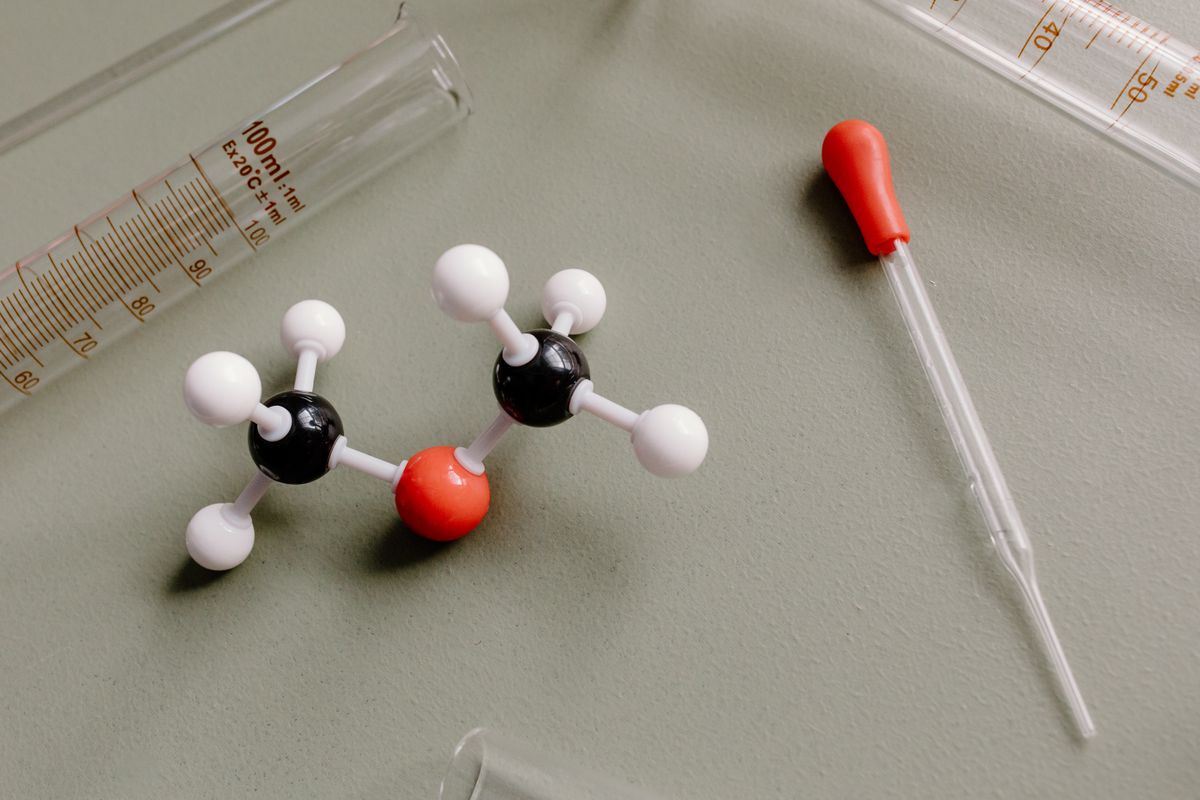
Here are the five fundamental differences between the two meanings of polarisation. If you take one thing from this article, take this table.
| Aspect | Chemistry polarisation | Physics polarisation |
|---|---|---|
| What is being polarised | The electron distribution in a molecule or bond | The oscillation direction of an EM wave |
| The cause | Electronegativity difference between bonded atoms | Transverse nature of EM waves; interaction with materials |
| How it is measured | Dipole moment (μ) in debyes (D) | Malus's law (I = I₀ cos²θ); Stokes parameters |
| The types | Bond polarity, molecular polarity | Linear, circular, elliptical |
| What it affects | Solubility, boiling point, surface tension, intermolecular forces | Light transmission, reflection, birefringence, antenna matching |
In plain terms: chemical polarisation is about how electrons are distributed inside a molecule — a static feature of the molecule's structure. Physics polarisation is about how a wave wiggles as it travels — a dynamic feature of the wave's motion.
Both use the same word. Both involve separation of charge. But they describe different phenomena at different scales, and confusing them leads to real misunderstandings.
Which meaning does your question actually need?
The word does two unrelated jobs, and mixing them up is the whole difficulty.
Chemistry — the polarity of a bond or a molecule. Caused by a difference in electronegativity, measured as a dipole moment in debye. It explains why water dissolves salt, why oil and water separate, and why boiling points differ. No light is involved anywhere.
Physics — the polarisation of a wave. The direction the electric field oscillates in, controlled with filters and described as linear, circular or elliptical. It explains polarised sunglasses, LCD screens and glare.
The check: if the sentence is about molecules, bonds or solubility, you need the chemistry sense. If it is about light, waves or filters, you need the physics sense. One is about where charge sits; the other is about which way a wave wobbles.
Why chemical polarity matters: three real-world examples
Polarity is not just a textbook concept. It determines everyday chemistry.
Solubility — "like dissolves like." Polar solvents (water, ethanol) dissolve polar solutes (salt, sugar) because the dipole-dipole interactions are compatible. Nonpolar solvents (hexane, turpentine) dissolve nonpolar substances (oils, grease). This is why you wash grease off your hands with soap (amphiphilic molecules have both polar and nonpolar ends) rather than water alone. It is also why oil and water do not mix — water molecules prefer each other over oil molecules.
Boiling points. Polar molecules have higher boiling points than nonpolar molecules of similar size. Water (M = 18, boiling point 100 °C) versus methane (M = 16, boiling point −161 °C) is the classic example. The dipole-dipole attractions between polar molecules require more energy to overcome. For water, hydrogen bonding — a particularly strong dipole interaction — amplifies the effect.
Surface tension. Polar liquids have higher surface tension than nonpolar ones. Water's high surface tension (72.8 mN/m at 20 °C) is why water droplets form beads on a surface and why some insects can walk on water. The polar molecules at the surface are pulled inward by stronger intermolecular forces than nonpolar molecules experience.
Common misconception: chemical polarisation and light polarisation are the same thing
Because we use the same word — "polarisation" — for both concepts, it is easy to assume they describe the same phenomenon. They do not.
When a chemistry student hears "polarisation" and a physics student hears "polarisation," they are learning about two different things that happen to share a name. Chemical polarity is about static charge distribution in molecules. Light polarisation is about wave oscillation direction.
The connection? Both involve charge separation. In chemistry, it is permanent (or induced) charge separation within a molecule. In physics, the oscillating electric field of a light wave separates charges temporarily as it passes through a material — which is how polarisers work at the microscopic level.
But the difference in scale is enormous. A molecular dipole is about 0.1–1 nm across. A light wave's electric field oscillates over hundreds of nanometres. They are related by the same underlying physics of electromagnetism, but they are not the same thing, and you should not substitute one meaning for the other.
For more on how light polarisation works at the material level, see our guide on s and p polarisation.
Key takeaways
- Polarisation in chemistry means separation of electric charge within a molecule, creating a dipole.
- It is caused by differences in electronegativity between bonded atoms — the greater the difference, the more polar the bond.
- Bond polarity is about individual bonds; molecular polarity depends on bond polarities and the molecule's geometry.
- Symmetrical molecules (CO₂, CCl₄, CH₄) are nonpolar because bond dipoles cancel — asymmetrical molecules (H₂O, NH₃, HF) are polar.
- Chemical polarity is measured by dipole moment in debyes.
- The 5 essential differences from physics polarisation: what is polarised, the cause, the measurement, the types, and the effects.
- Polarity determines solubility ("like dissolves like"), boiling points, and surface tension.
- Chemical polarisation and light polarisation are not the same thing — they share a name and a root concept but describe different phenomena.
External resources
- Wikipedia: Chemical Polarity — comprehensive reference covering bond polarity, molecular polarity, and the Pauling electronegativity scale
- Chemistutor: Polarity — student-friendly guide to bond polarity, dipole moments, and molecular symmetry with clear diagrams
- Chemistry Learner: Polarity — detailed explanation of what causes polarity, how to determine molecular polarity, and examples with worked problems
Frequently Asked Questions
What does polarity mean in chemistry?
Polarity in chemistry means the separation of electric charge within a molecule, leading to a dipole with a partial positive charge at one end and a partial negative charge at the other. It arises from differences in electronegativity between bonded atoms and determines properties like solubility, boiling point, and surface tension.
What causes polarity in chemistry?
Polarity is caused by differences in electronegativity between atoms in a covalent bond. The more electronegative atom pulls shared electrons closer, creating a partial negative charge (δ−), while the less electronegative atom becomes partially positive (δ+). This charge separation produces a dipole moment.
What is the difference between polar and nonpolar molecules?
Polar molecules have an uneven distribution of charge with a net dipole moment, usually due to asymmetrical geometry (like water's bent shape). Nonpolar molecules have symmetrical charge distribution where bond dipoles cancel out (like carbon dioxide's linear shape), resulting in no net dipole moment.
How does polarity affect solubility?
Polarity follows the 'like dissolves like' principle. Polar solvents (like water) dissolve polar solutes (like sugar and salt) because dipole-dipole interactions form. Nonpolar solvents (like oil) dissolve nonpolar substances (like grease). Polar and nonpolar substances do not mix because the intermolecular forces are incompatible.
Is water polar or nonpolar?
Water (H₂O) is a polar molecule. Oxygen is more electronegative than hydrogen, so the O−H bonds are polar. The bent molecular geometry means the bond dipoles do not cancel, producing a net dipole moment of about 1.85 D. This polarity is why water is an excellent solvent and has a high boiling point.
What is bond polarity?
Bond polarity describes the unequal sharing of electrons between two atoms in a covalent bond. It depends on the electronegativity difference. Bonds with ΔEN 0–0.4 are nonpolar covalent, 0.4–1.9 are polar covalent, and over 1.9 are generally ionic. Bond polarity is quantified by the bond dipole moment.
How is polarity measured in chemistry?
Polarity in chemistry is measured using dipole moment (μ), calculated as μ = δ × d, where δ is the partial charge and d is the separation distance. The SI unit is the coulomb-metre, but chemists typically use the debye (D). One debye equals 3.336 × 10⁻³⁰ C·m. Water has a dipole moment of about 1.85 D in the gas phase.
What is the difference between chemical polarity and physics polarization?
Chemical polarity refers to charge separation within a molecule due to electronegativity differences, producing a static dipole. Physics polarization describes the dynamic oscillation direction of an electromagnetic wave. Chemical polarity affects solubility and intermolecular forces; physics polarization affects how light transmits, reflects, and interacts with materials and antennas.

About Umar Farooq
Umar Farooq writes in-depth guides on the physics of light and optics — from reflection, refraction, and lenses to diffraction, lasers, and fiber optics, explained from first principles.
Read more about Umar Farooq →