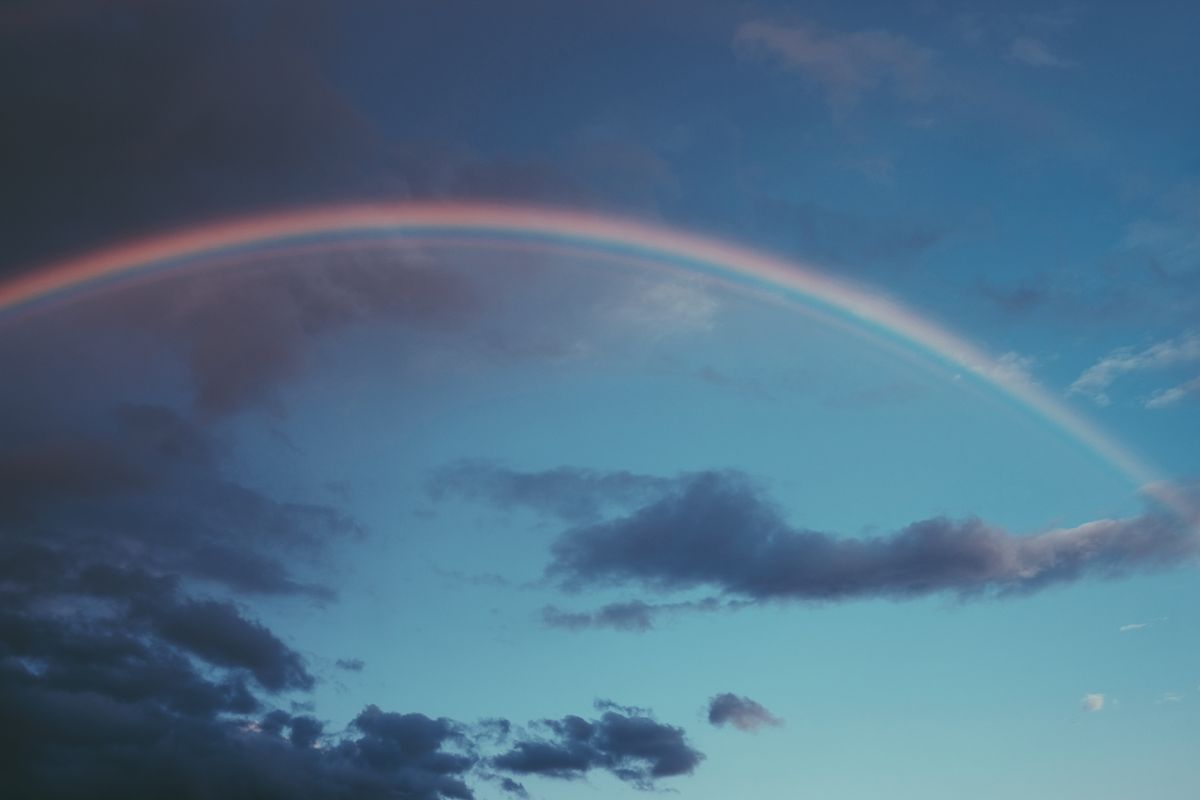
There are far more types of rainbows than the standard arch you see after a summer shower. Most people know the familiar primary rainbow — red on top, violet on the bottom, arcing across the sky at about 42 degrees from the antisolar point. But nature also produces supernumerary bands, twinned bows, triple rainbows, moonbows, fogbows and more. Each rare type of rainbow forms under a specific set of conditions involving droplet size, sun angle, and how many times light reflects inside each droplet.
Here is what we cover: what the rare types of rainbows are, how supernumerary rainbows differ from twinned rainbows, why triple rainbows are so hard to see, and where you can spot each one.
What Are the Rare Types of Rainbows?
The standard primary rainbow (one internal reflection) and the secondary double rainbow (two reflections) account for almost every rainbow people see. Everything beyond that is genuinely rare. Here are the rare types of rainbows worth knowing:
| Type | Key Feature | Rarity Level | Best Viewing Condition |
|---|---|---|---|
| Supernumerary | Pastel bands inside the primary bow | Very rare | Fog, mist, or fine uniform rain |
| Twinned | Two arcs splitting from one base | Rare | Two overlapping rain showers |
| Triple / Multiple | Three or more bows | Extremely rare | Dark clouds + uniform droplets |
| Fogbow | Wide white arc in fog | Uncommon | Coastal or mountain fog |
| Moonbow | Rainbow at night from moonlight | Rare | Full moon + waterfall mist |
| Monochrome | Single-colour red rainbow | Rare | Sunset/sunrise after rain |
| Circular | Full 360° circle | Rare (from ground) | From an aircraft in flight |
Supernumerary Rainbows: The Pastel Fringes
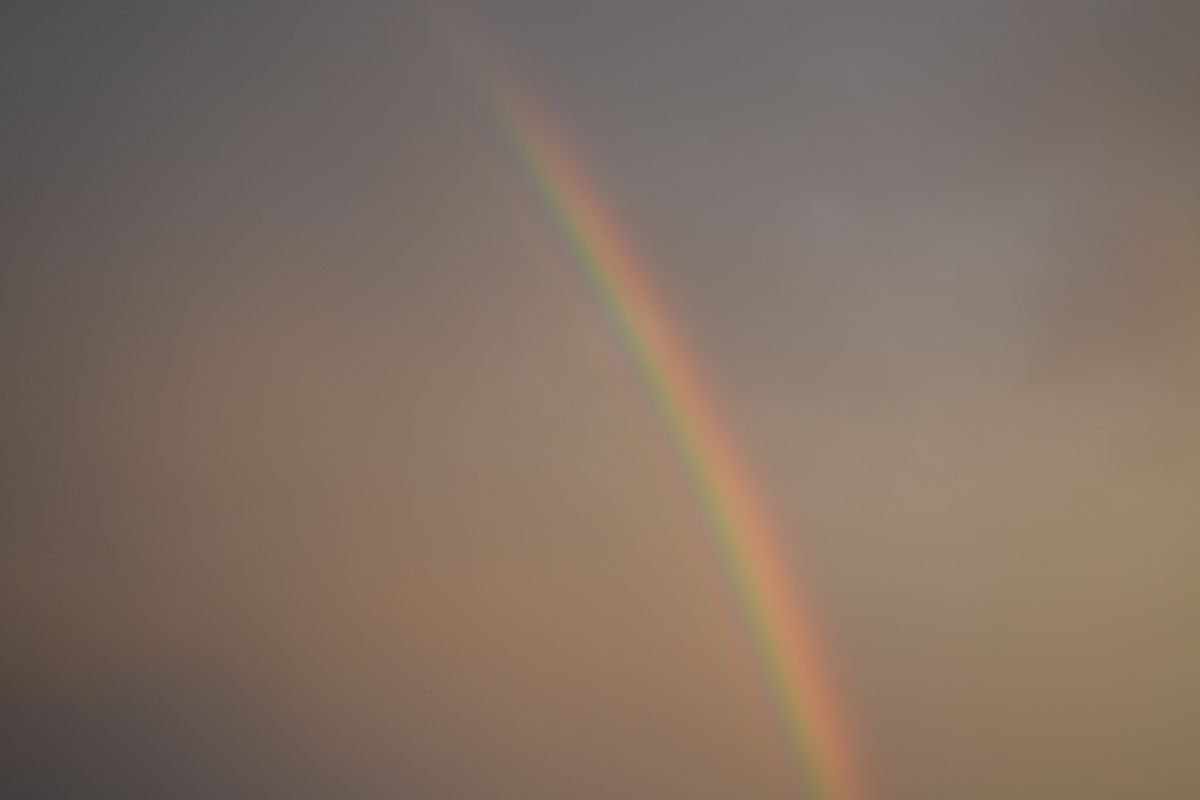
Supernumerary rainbows are faint bands of pastel pink, green and purple that appear just inside the primary rainbow. They are not caused by additional reflections — the usual refraction-and-reflection story cannot explain them. Instead, they are a wave interference effect.
Picture dropping two stones into a still pond. Where the ripples meet, they reinforce in some places and cancel in others, producing a pattern of peaks and flats. Light does the same thing when it passes through tiny, uniformly sized water droplets. The wavefronts from adjacent paths through the droplet interfere, creating alternating bright and dark bands.
The strict condition: the droplets must be very small (under 1 mm in diameter, ideally around 0.5 mm) and nearly all the same size. If the droplets vary, the interference patterns from different droplet populations cancel each other out. This is why supernumerary rainbows are most often seen in fog, mist, or fine drizzle — conditions where droplets are uniform.
Their discovery was historically significant. In the early 1800s, supernumerary bands provided one of the first practical proofs that light behaves as a wave. Thomas Young's double-slit experiment was still controversial; supernumeraries were visible evidence that light interfered with itself.
Supernumerary bands appear closest to the violet edge of the primary bow and fade as they move outward. They are subtle — many people look at a supernumerary rainbow without realising they are seeing something unusual. If you see a rainbow with faint pastel stripes below the main arc, you are looking at one.
Twinned Rainbows: Two Arcs From One Base
A twinned rainbow looks like a single rainbow that splits into two arcs partway up, sharing a common base. This is different from a double rainbow. In a double rainbow, the two arcs are concentric — one outside the other — and the colours are reversed in the outer bow. In a twinned rainbow, both arcs have the same colour order (red on the outside of each), and they emerge from the same starting point before diverging.
The cause is a subtle difference in raindrop size. A twinned rainbow forms when two rain showers with slightly different droplet populations overlap. When the two populations differ by as little as 0.05 mm in droplet diameter — say, one shower producing 0.40 mm drops and another producing 0.45 mm drops — each population produces a rainbow at a slightly different position. The result is a split arc.
Twinned rainbows are among the rarest types of rainbows to be photographed. A numerical ray tracing study published in 2012 confirmed that a droplet size difference of 0.40 mm versus 0.45 mm explained a twinned rainbow photograph — and that even smaller differences could produce a triple-split bow.
Triple, Quadruple and Multiple Rainbows
Triple and quadruple rainbows form when light reflects three or four times inside each raindrop. The physics is the same as for double rainbows — just more reflections. Each additional reflection sends the exiting light in a different direction and makes the bow significantly dimmer.
Here is the catch that makes triple rainbows so hard to see: the third rainbow appears around the sun, not opposite it. The primary and secondary bows appear in the western sky when the sun is in the east. The tertiary bow appears in the eastern sky near the sun, where its faint colours are completely overwhelmed by sunlight. Before 2011, there were only five verified reports of triple rainbows in 250 years of recorded observations.
Multiple rainbows — sometimes called higher-order rainbows — can theoretically extend to five, six or more reflections. Each bow fades by roughly a factor of ten compared to the previous one. In practice, the quaternary bow (four reflections) is at the edge of what can be detected with specialised photography, and anything beyond is purely theoretical.
Fogbows: The White Rainbow
A fogbow (also called a white rainbow or cloudbow) appears as a wide, pale white arc in fog or mist. It forms by the same refraction-reflection mechanism as a regular rainbow, but the water droplets in fog are tiny — typically 0.05 mm or less, roughly one-tenth the size of a typical raindrop.
The droplet size changes everything. When the droplets are that small, the wave nature of light dominates. Each colour spreads into a broad band instead of a narrow one, and the bands overlap so thoroughly that the colours wash out to white. The result is a ghostly arc. Some fogbows show a faint blue tint on the inside edge and a faint red on the outside, but most appear nearly colourless.
Fogbows are most common in coastal regions with persistent marine fog — the Pacific Northwest, Northern California, the British coastline, and the Canadian Maritimes. They also form in mountain valleys with morning fog and occasionally from aircraft flying above a cloud layer.
Moonbows: Rainbows at Night
A moonbow is a rainbow produced by moonlight rather than sunlight. The physics is identical: light refracts into a droplet, reflects off the inside surface, refracts back out, and the different wavelengths spread into a spectrum. But moonlight is roughly 400,000 times dimmer than sunlight, so the colours are too faint for human colour vision.
To the naked eye, a moonbow looks like a white or greyish arc. A long-exposure photograph reveals the full colour spectrum.
The conditions for a moonbow are demanding: a full or nearly full moon, a clear sky in the direction of the moon, rain or mist in the opposite direction, and the moon at an angle below 42 degrees above the horizon. The most reliable viewing spots in the world are Cumberland Falls in Kentucky and Niagara Falls, where the mist from the waterfall combines with bright moonlight on most clear full-moon nights.
Monochrome Rainbows: Red Rainbows at Sunset
Monochrome or red rainbows appear when only the longest wavelengths of light survive the journey through the atmosphere. This happens at sunrise and sunset, when sunlight travels through a much thicker layer of air. Shorter wavelengths — blue, green, indigo — are scattered away by Rayleigh scattering, leaving only the red and orange end of the spectrum.
The effect is the same physics that makes sunsets red. The rainbow that forms in the departing rain shower on the eastern horizon during a sunset will be stripped of most of its colours. The result is a dramatic red or orange arc against a dark sky. Observers in the Plains and the Southeast US see these most often after late-day summer thunderstorms.
Where the Rare Types of Rainbows Overlap
Some of these rare types of rainbows can appear together. A supernumerary rainbow can occur inside a double rainbow. A twinned rainbow can have a secondary bow above it. A moonbow can show supernumerary fringes if the mist droplets are uniformly small.
The key variable in every case is droplet size. Large raindrops (1–3 mm) produce the cleanest, brightest primary bows with well-separated colours. Medium drops produce double rainbows. Small uniform drops produce supernumerary bands. Fog produces fogbows. The droplet size determines not just whether a rainbow forms, but which type of rainbow you see.
A Note on the Physics: Wave Interference Matters
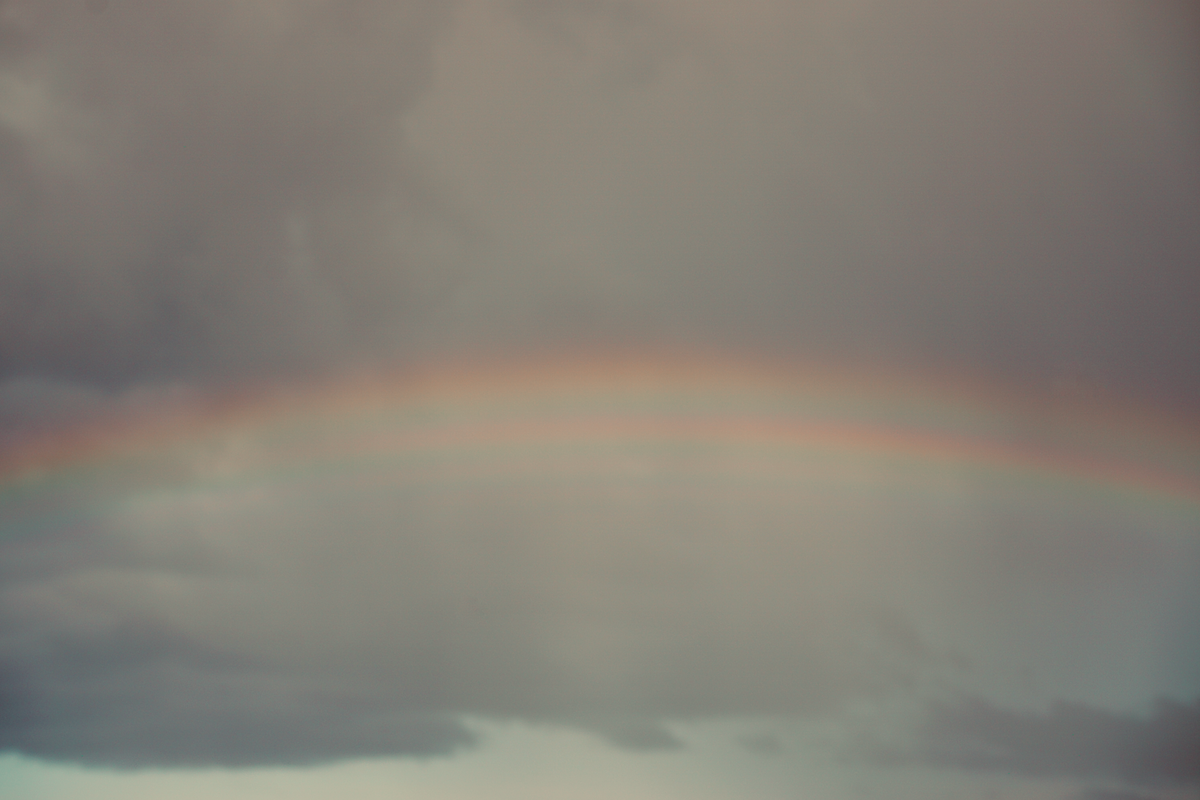
Most explanations of rainbows stop at Descartes' ray-tracing model — refraction in, reflection, refraction out. But that model cannot explain supernumerary bands. To understand the full range of rare types of rainbows, you need the wave theory of light.
George Biddell Airy, the Astronomer Royal, worked out the mathematics in the 1830s. His Airy integral describes the intensity of light near the caustic — the edge of the rainbow — and correctly predicts the interference fringes that produce supernumerary bands. The smaller the droplet, the more pronounced the wave effects become, which is why fogbows and supernumeraries depend so heavily on droplet size.
How to Spot Rare Types of Rainbows
You do not need special equipment to see most of these. A few habits help:
- After thunderstorms: look for supernumerary bands just inside the primary bow. They appear as pastel stripes below the violet edge.
- In coastal fog: scan the horizon for a wide white arc — that is a fogbow.
- During sunset and rain together: the eastern sky may show a monochrome red rainbow.
- On a full-moon night at a waterfall: the mist produces reliable moonbows.
- From an aircraft: look down at a rain layer below for a full-circle rainbow with the plane's shadow at the centre.
The best single resource for rainbow photography and physics is Les Cowley's Atmospheric Optics site, which documents every known rainbow variant with photographs and geometry. For the deeper mathematics behind supernumerary bands, the American Mathematical Society's Feature Column offers a thorough walk-through of Airy's theory.
To understand how refraction drives the basic mechanism, and why different wavelengths (properties of light) bend by different amounts in water, those foundational topics connect directly to every type of rainbow.
The next rainbow you see, look at it twice. The second look might reveal a rare type you never knew existed.
Frequently Asked Questions
How many types of rainbows are there?
There are at least seven distinct types of rainbows: primary, double (secondary), multiple (tertiary and beyond), supernumerary, twinned, circular, monochrome, and moonbows. Some classifications also include fogbows as an eighth type. Each type forms under specific conditions of droplet size, sun angle, and light path.
What is the rarest type of rainbow?
The supernumerary rainbow is widely considered the rarest because it requires uniformly sized water droplets — typically smaller than 1 mm in diameter. If the droplets vary in size, the interference patterns cancel out. True tertiary and quaternary rainbows (three or more internal reflections) are even rarer but are usually included under the multiple-rainbow category.
What causes a supernumerary rainbow?
Supernumerary rainbows are caused by wave interference. When sunlight passes through tiny, uniformly sized water droplets, the light waves interfere with each other — the same way ripples on a pond interfere when two stones are dropped together. This produces faint pastel bands of pink, green and purple just inside the primary rainbow.
What is a twinned rainbow?
A twinned rainbow appears as two rainbow arcs that split from a single base, unlike a double rainbow where the arcs are concentric. The colours in both arcs appear in the same order (not reversed). They form when two rain showers with different-sized raindrops — typically about 0.40 mm and 0.45 mm — combine.
Can rainbows form at night?
Yes. Moonbows form by the same physics as solar rainbows but use moonlight. They require a full or near-full moon, rain or mist opposite the moon, and the moon at an angle under 42 degrees. Moonbows appear white or grey to the naked eye because moonlight is too dim for colour vision, but long-exposure photos reveal the full spectrum.
What is a fogbow?
A fogbow (or white rainbow) forms when sunlight passes through tiny fog droplets instead of raindrops. The droplets in fog are typically 0.05 mm or smaller — so small that wave interference washes out most of the colours, leaving a wide, pale white arc with faint blue on the inside and faint red on the outside.
Are triple rainbows real?
Yes, triple rainbows are real but extremely rare. They form when light reflects three times inside raindrops. The third bow appears around the sun (not the antisolar point), making it nearly impossible to see because the sun's brightness overwhelms it. Before 2011, only five verified reports existed in 250 years.

About Umar Farooq
Umar Farooq writes in-depth guides on the physics of light and optics — from reflection, refraction, and lenses to diffraction, lasers, and fiber optics, explained from first principles.
Read more about Umar Farooq →