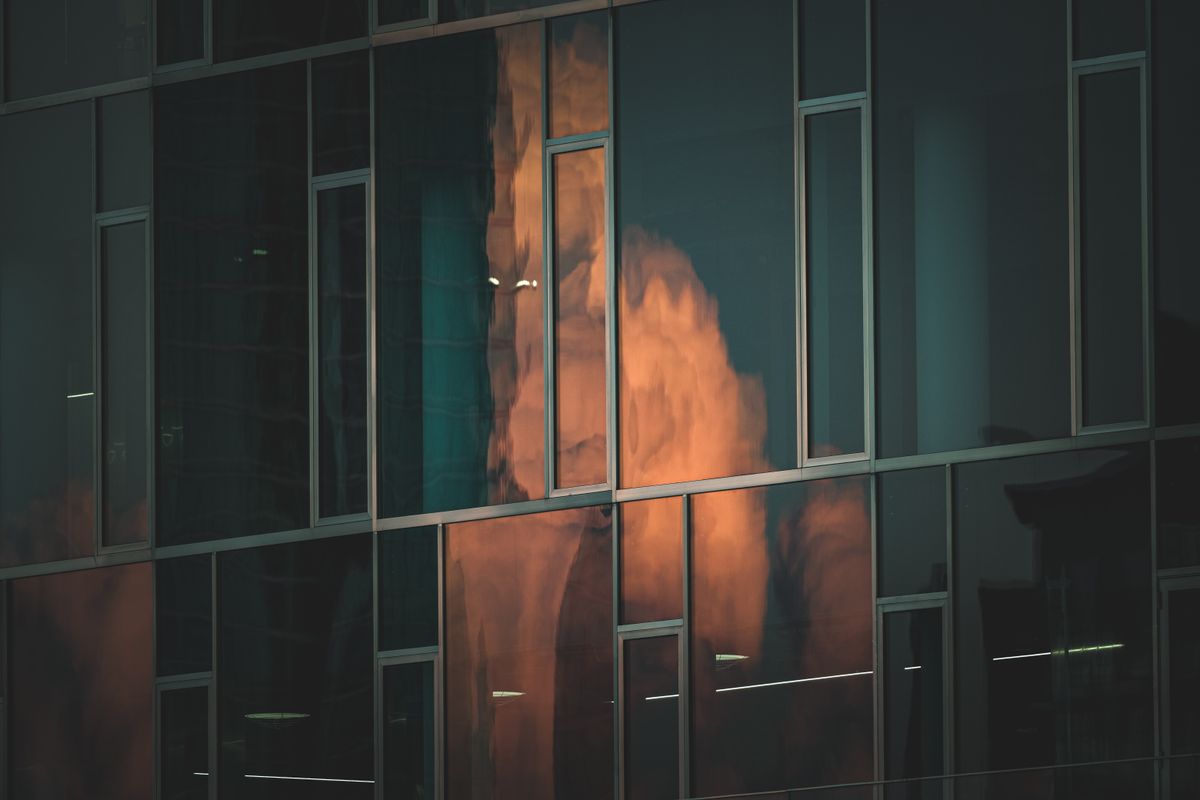
Light reflects off almost everything you see. These reflection of light examples show how the same physics works everywhere — from the mirror you check in the morning to the Moon shining at night. Here are 15 real-world cases grouped into nature, everyday life, and technology.
Natural examples of reflection
1. Mirrors — the perfect specular reflection
A mirror is the cleanest example of reflection. Light from your face travels to the mirror, strikes the smooth glass surface coated with a thin metal layer, and bounces back at the same angle it arrived. The surface is smooth on the scale of the wavelength, so the reflected rays stay parallel and preserve the image. This is specular reflection.
A mirror typically reflects about 90–95% of the light that hits it, absorbing only a tiny fraction as heat. Without reflection, mirrors would be invisible — you would just see a dark rectangle.
2. Still lakes and ponds — nature's mirror
A calm lake acts like a giant mirror. The water surface is flat enough that light reflects specularly, creating a near-perfect inverted image of the sky, trees, and mountains above. The Science Learning Hub notes that Lake Matheson in New Zealand is famous for its mirror-like reflections of Mount Cook and Mount Tasman. The reflection is brightest when the Sun is behind the viewer — the same geometry that makes any specular reflection most visible.
If the wind picks up and the water surface becomes rough, the reflection breaks into ripples because each wavelet now has a different orientation, scattering light in different directions. The same water switches from specular to diffuse reflection depending on the weather. This is one of the best natural reflection of light examples because you can watch the transition happen in real time.
3. The Moon — reflected sunlight
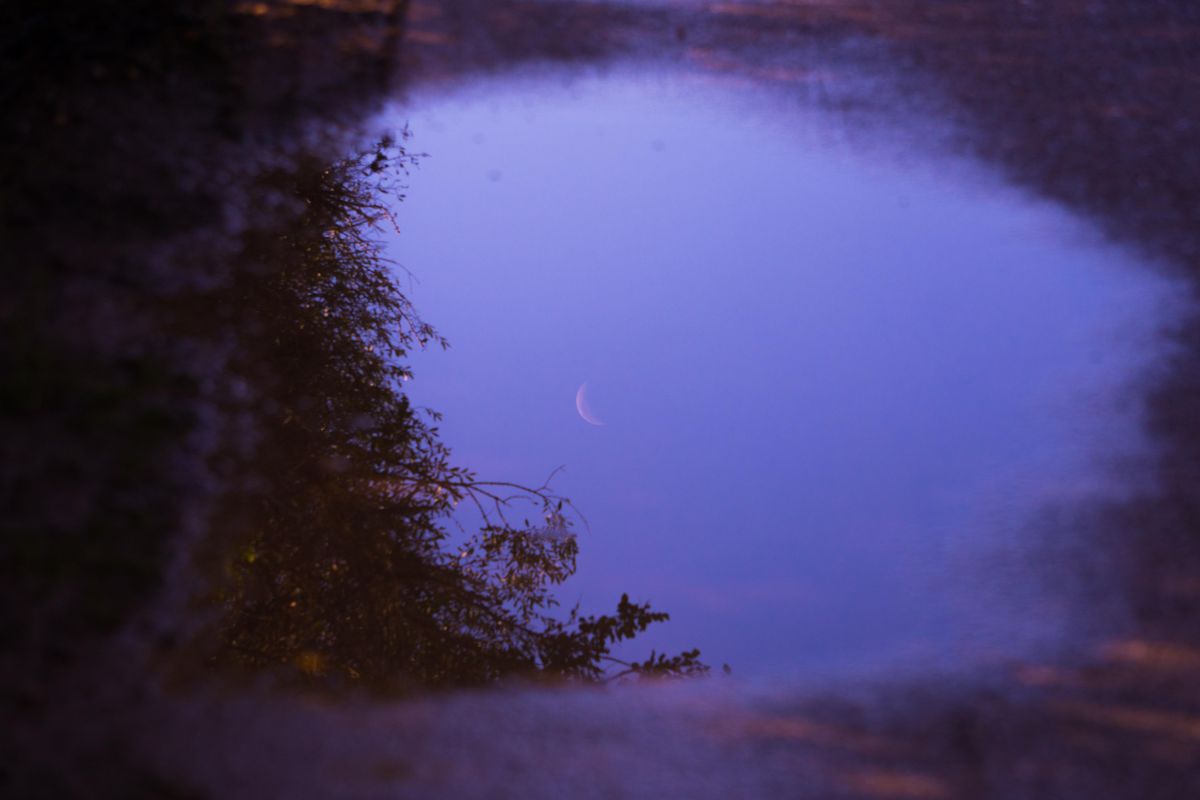
The Moon does not produce its own light. It shines only because its dusty grey surface reflects sunlight toward Earth. The Moon's reflectivity, or albedo, is about 12% — roughly the same as worn asphalt. That is why it appears grey rather than white.
A full Moon is significantly brighter than a crescent Moon not because more of it is lit, but because more of the lit surface is oriented to reflect light back toward Earth. The same reflection physics governs how we see every other planet in the solar system — they all shine by reflected sunlight.
4. Rainbows — internal reflection inside water droplets
A rainbow is sunlight being reflected, refracted, and dispersed by millions of water droplets. Here is the sequence: sunlight enters a raindrop, refracts (bends), reflects once off the inside back surface, then refracts again as it exits. The internal reflection is what sends the light back toward the observer.
Each colour leaves the droplet at a slightly different angle because each wavelength refracts by a different amount — red at about 42° from the incoming direction, violet at about 40°. This separation creates the arc of colours. A secondary rainbow, sometimes visible above the primary one, involves two internal reflections instead of one, which reverses the colour order. Rainbows are a classic reflection of light examples from nature that combine both reflection and refraction in a single visible phenomenon.
5. Animal eyes glowing at night
Have you ever seen a cat's eyes shine bright green or yellow in car headlights? That is a reflective layer called the tapetum lucidum (Latin for "bright tapestry") located behind the retina. Light enters the eye, passes through the retina, hits the tapetum, and reflects back through the retina a second time.
This double pass gives the photoreceptor cells two chances to catch the light, dramatically improving night vision. Many nocturnal animals — cats, dogs, deer, raccoons — have this adaptation. The colour varies by species: cats tend toward green or yellow, dogs toward blue or green, and cows toward blue-white.
Everyday examples of reflection
6. Glare on phone screens
Take your phone outside on a sunny day and you will struggle to read the screen. That is sunlight reflecting off the smooth glass surface. The glass is flat enough to produce specular reflection, so the reflected sunlight overwhelms the display's own light.
Manufacturers add anti-reflection coatings to reduce this. These coatings use thin-film interference — the same physics as soap bubbles — to cancel out specific reflected wavelengths, cutting the reflection from about 8% per surface to under 1%.
7. Eyeglass lens reflections
The glare you see on someone's glasses is light reflecting off the front surface of the lens. Each air-to-glass surface reflects about 4–8% of the light. With two surfaces (front and back), that is up to 16% of the incoming light lost to reflection.
Modern anti-reflection coatings on premium lenses reduce this to under 0.5%, which is why coated lenses look almost invisible and allow more light to reach the eye instead of bouncing off.
8. Car headlights on wet roads
Rain turns a rough asphalt road into a nearly perfect mirror. Dry asphalt reflects light diffusely — the rough surface scatters light in all directions, and the road looks dull. But a thin layer of water fills in the microscopic gaps, creating a smooth surface that reflects headlights specularly.
The result is the blinding glare you see driving at night in the rain. This practical reflection of light examples is a common hazard — the sudden switch from diffuse to specular reflection reduces visibility drastically. The same effect makes wet roads appear darker from above — the light that would normally scatter toward your eyes instead reflects forward, away from you. Knowing this helps explain why road markings are designed with retroreflective beads.
9. A shiny spoon — concave and convex reflection
A shiny spoon is both a concave and a convex mirror. The inside of the bowl is concave: when you hold it close, it shows an enlarged, upright image of your face. Move it further away and the image flips upside down. The outside of the bowl is convex: it always shows a smaller, upright image with a wider field of view.
This is the same physics used in satellite dishes (concave) and security mirrors in shops (convex). The reflected image changes because curved surfaces redirect parallel rays to different points.
10. Disco balls — multiple specular reflections
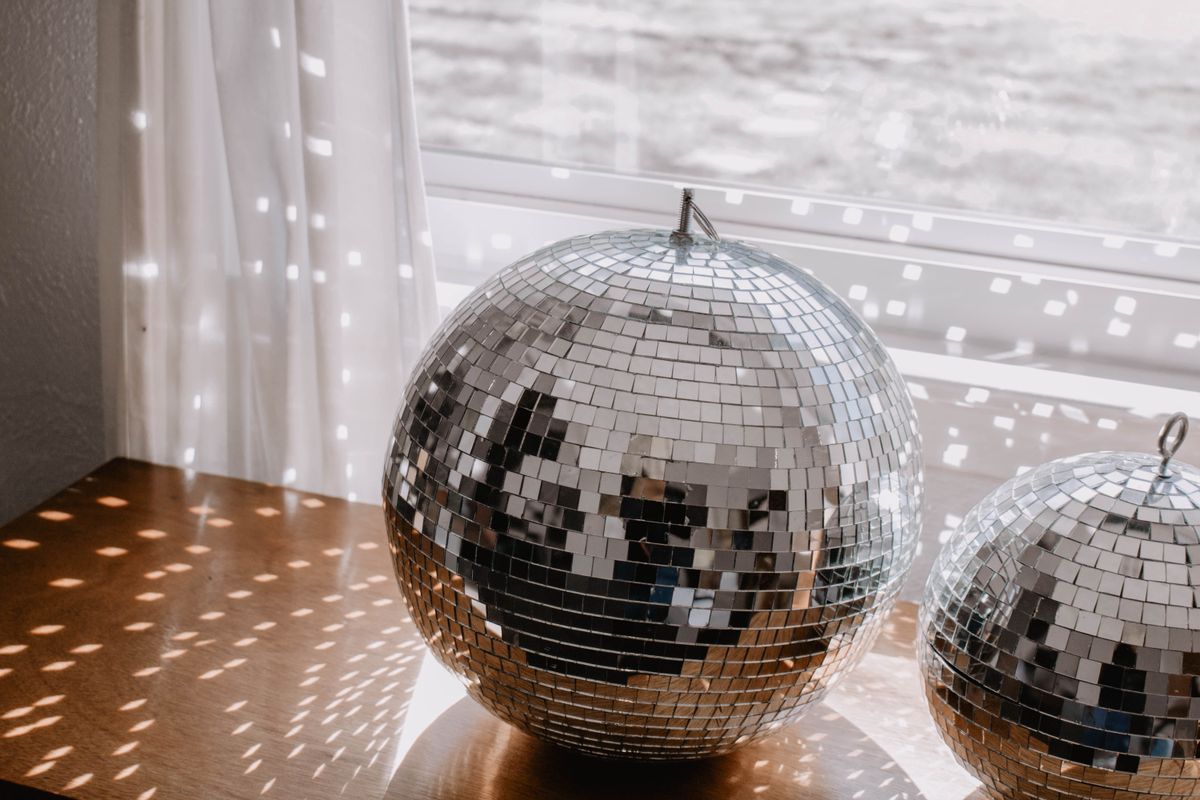
A disco ball is covered in hundreds of small flat mirror tiles, each one a tiny plane mirror. When light hits the ball, each tile reflects a beam in a different direction depending on its angle. As the ball rotates, the reflected beams sweep across the room, creating the familiar moving spots of light.
Each individual reflection follows the law of reflection perfectly — the angle of incidence equals the angle of reflection for every tile. The disco ball effect is simply hundreds of independent specular reflections working together. It is a vivid demonstration that even complex-looking reflection of light examples come down to the same simple rule applied many times over.
Technology examples of reflection
11. Periscopes — seeing around corners
A periscope uses two mirrors placed at 45° angles to redirect light. Light from the target enters the top opening, reflects off the first mirror, travels down the tube, reflects off the second mirror, and reaches the observer's eye. The two reflections keep the image upright.
Submarines use periscopes to see the surface while submerged. The same principle is used in dental mirrors, endoscopes, and even some rear-view mirrors in cars.
12. Retroreflectors — road signs and bicycle reflectors
Retroreflectors are surfaces that reflect light directly back toward its source, no matter what angle the light arrives from. They use either tiny glass beads or corner-cube prisms arranged in an array.
When a car's headlights hit a road sign or a bicycle reflector, the retroreflector sends the light straight back to the driver. This is why road signs seem to glow at night and why cyclists are visible from behind. The Evident Scientific introduction to reflection explains that this technology was originally developed for optical surveying equipment before becoming standard on roads worldwide. Road safety retroreflectors are among the most impactful reflection of light examples because they prevent accidents every night.
13. Anti-reflection coatings on solar panels
Solar panels need to absorb light, not reflect it. A bare silicon surface reflects about 30% of incoming sunlight — a huge loss for energy generation. Manufacturers apply anti-reflection coatings that use thin-film interference to cancel reflected light at specific wavelengths.
Modern coated solar panels reflect less than 2% of visible light, allowing the panel to absorb far more energy. The dark blue or black appearance of solar panels is actually the colour of the anti-reflection coating at work — the absence of reflected light.
14. Red-eye effect in flash photography
Red-eye happens when a camera flash reflects off the retina at the back of the eye. In dim light, the pupil is wide open. The flash enters the pupil, reflects off the blood-rich retina, and returns to the camera lens. The red colour comes from blood vessels in the retina.
This is pure specular reflection — the retina is smooth enough to act as a tiny mirror. Many cameras reduce red-eye by firing a pre-flash that narrows the pupils before the main flash, reducing the reflective area of the retina. This photography reflection of light examples is a nuisance in candids but a perfect illustration of how the eye's internal surfaces reflect light just like any other smooth boundary.
15. Optical telescopes using mirrors
Large optical telescopes use curved mirrors, not lenses, to collect and focus light. The primary mirror is a large concave mirror (sometimes 8–10 metres across) that gathers faint starlight and reflects it to a focal point. A secondary mirror then redirects the light to an eyepiece or camera.
Reflecting telescopes have a key advantage over refracting ones: mirrors do not suffer from chromatic aberration (colour fringing) because they reflect all wavelengths equally. The Hubble Space Telescope and the James Webb Space Telescope both use mirror-based designs. These reflection of light examples in astronomy show that even the most advanced technology relies on the same principle that makes a mirror work — the law of reflection. For more on how reflection connects to other wave behaviours, see reflection vs refraction and the reflection physics waves pillar guide.
Summary
These 15 examples of reflection of light show that the same simple physics — light bouncing off a surface at the same angle it arrived — governs everything from a cat's night vision to a space telescope's mirrors. Whether the surface is smooth (specular reflection) or rough (diffuse reflection), the law of reflection applies at every individual point.
Frequently Asked Questions
What are some examples of reflection of light in everyday life?
Everyday examples of reflection include looking in a mirror, seeing your face on a phone screen, glare on eyeglasses, car headlights reflecting off wet roads, and a shiny spoon showing an upside-down image.
What is a natural example of reflection of light?
Natural examples include a still lake reflecting mountains or the sky, the Moon shining by reflected sunlight, rainbows formed by internal reflection inside water droplets, and animal eyes glowing at night due to a reflective layer called the tapetum lucidum.
How does a rainbow use reflection?
A rainbow forms when sunlight enters a raindrop, refracts, reflects once off the inside back surface of the drop, then refracts again as it exits. The internal reflection is what sends the light back toward the observer, and different wavelengths emerge at different angles to create the colour arc.
Is the Moon an example of reflection?
Yes. The Moon does not produce its own light. It shines because its surface reflects sunlight toward Earth. The Moon's albedo (reflectivity) is only about 12% — roughly the same as worn asphalt — which is why it looks grey rather than white.
How do retroreflectors work on roads?
Retroreflectors use tiny corner-cube prisms or glass beads that reflect light directly back toward its source, regardless of the angle. This is why road signs and bicycle reflectors glow brightly in car headlights — they return the light to the driver's eyes.
What causes red-eye in photographs?
Red-eye happens when a camera flash reflects off the blood-rich retina at the back of the eye. The light enters the pupil, reflects off the retina, and returns to the camera. The red colour comes from blood vessels in the retina. It is more common in dim light when pupils are wide.

About Umar Farooq
Umar Farooq writes in-depth guides on the physics of light and optics — from reflection, refraction, and lenses to diffraction, lasers, and fiber optics, explained from first principles.
Read more about Umar Farooq →