
Reflection is what happens when a wave bounces off a surface. Whether it is light hitting a mirror, sound echoing off a canyon wall, or a water wave rebounding from a harbour barrier, the physics is the same: the wave changes direction and returns into the medium it came from. The angle at which it arrives equals the angle at which it leaves, and the wave's speed, frequency, and wavelength stay unchanged. This is the foundation of reflection physics waves.
Picture throwing a ball at a brick wall. The ball hits the wall and bounces back at the same angle you threw it — assuming the wall is flat and the ball hits cleanly. Light does the same thing, just at 299,792,458 metres per second. The only difference is that light does it without slowing down or deforming. The bounce is instantaneous because the wave never leaves its original medium.
Reflection physics waves: what is reflection?
Reflection is the change in direction of a wavefront at an interface between two different media, such that the wavefront returns into the medium from which it originated. The key idea is that the wave does not cross the boundary — it stays on the same side.
The simplest everyday example is a mirror. Light from your face travels to the mirror, bounces off the smooth glass surface, and returns to your eyes. Because the mirror surface is flat at the microscopic level, the light reflects in an orderly way and preserves the image.
But reflection happens with all wave types. Sound reflects off hard surfaces — that is what an echo is. Water waves reflect off the walls of a pool or harbour. Seismic waves reflect off layers of rock underground, which is how geologists map what lies beneath the surface. The same principle governs all of them.
The law of reflection
The behaviour of a reflected wave follows a rule so simple it is almost obvious once you see it:
- The angle of incidence (θᵢ) equals the angle of reflection (θᵣ).
- The incident ray, the reflected ray, and the normal (the line perpendicular to the surface at the point of impact) all lie in the same plane.
The angle of incidence is measured between the incoming ray and the normal. The angle of reflection is measured between the reflected ray and the same normal. They are always equal.
This law holds for every reflective surface, for every type of wave, at every scale. A light photon obeying it is no different from a water wave obeying it. The Evident Scientific introduction to reflection traces this law back to Euclid around 300 BC, with the first formal description by Alhazen over a millennium later.
Specular vs diffuse reflection
All reflection follows the law of reflection at the microscopic level. The difference between a mirror and a wall is how the surface is arranged.

Specular reflection happens when the surface is smooth on the scale of the wavelength. The microscopic peaks and valleys are smaller than the wavelength of the incoming wave, so every ray encounters the same surface orientation. The reflected rays remain parallel, and the result is a clear image — like a mirror or calm water.
Diffuse reflection happens when the surface is rough on the scale of the wavelength. Now each ray meets a differently oriented patch of surface. The normal direction varies from point to point, so the reflected rays scatter in different directions. No image forms — you see the surface itself, not a reflection in it.
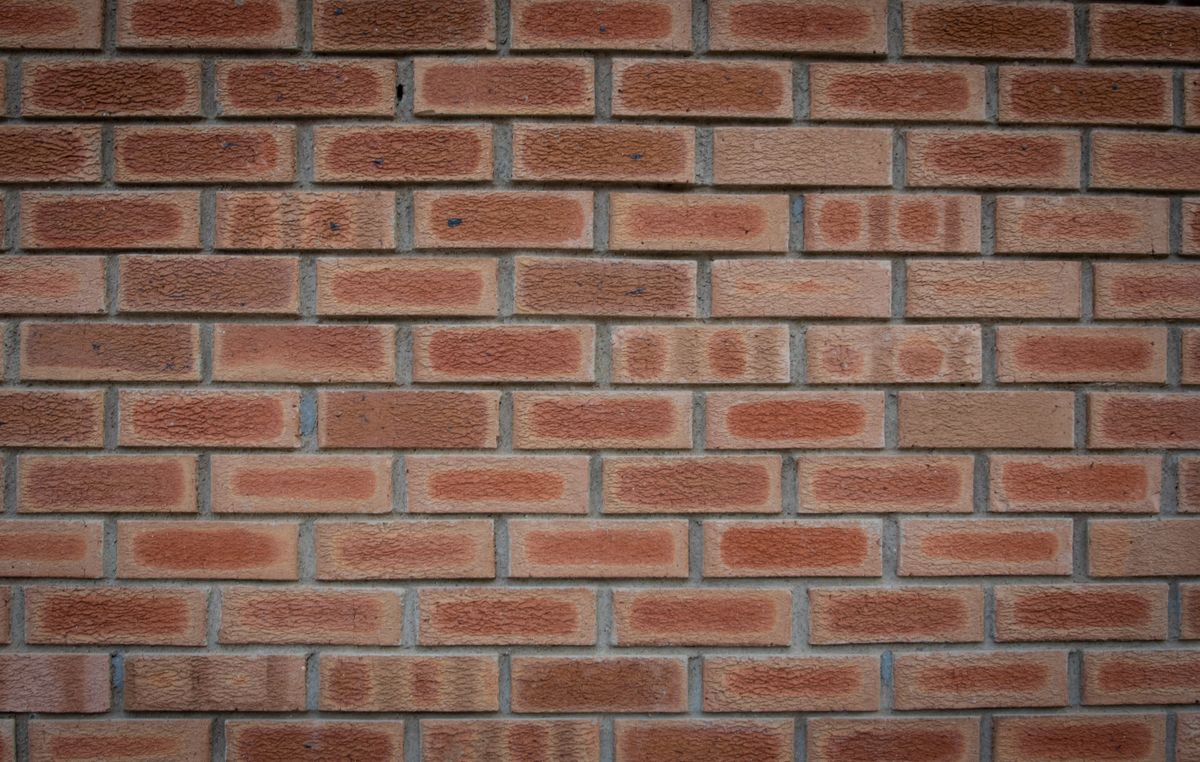
This is why you can read a book but not see your face in it. The paper is microscopically rough, producing diffuse reflection. Glossy magazine pages are smoother — they produce more specular reflection, which creates glare. The BYJU'S guide on reflection of light explains that most everyday objects rely on diffuse reflection for visibility.
What stays the same when a wave reflects?
A common question in reflection physics waves is whether anything changes when the wave bounces. The answer is almost nothing:
| Property | Before reflection | After reflection |
|---|---|---|
| Speed | v | v (unchanged) |
| Frequency | f | f (unchanged) |
| Wavelength | λ | λ (unchanged) |
| Direction | towards surface | away from surface (changed) |
| Amplitude | A | slightly less (some energy may be absorbed or transmitted) |
Speed, frequency, and wavelength stay the same because the wave never leaves its original medium. The only thing that changes is the direction of travel. Amplitude may decrease slightly because most surfaces absorb a tiny fraction of the energy — even a mirror absorbs about 5–10% of the light that hits it.
One exception: when a wave on a string reflects off a fixed (rigid) end, the reflected wave is inverted (phase change of 180°). At a free end, there is no inversion. The Physics Classroom tutorial on wave reflection demonstrates this with clear animations.
Where reflection happens in nature and technology
Mirrors and periscopes use specular reflection to redirect light. A periscope uses two mirrors at 45° to let you see around corners. The same principle is used in laser scanners and barcode readers.
Echoes are sound reflection. When you shout in a canyon, the sound wave travels to the rock face, reflects, and returns to your ears. The time delay tells you how far away the wall is — the same principle used in sonar and ultrasound imaging.
Water wave reflection happens whenever an ocean wave meets a sea wall or a ripple hits the edge of a pond. The reflected wave travels back and interferes with incoming waves, creating the complex patterns you see on the water surface.
Seismic surveying uses reflected sound waves (generated by controlled explosions or vibrations) to map underground rock layers. The time each reflection takes reveals the depth of each layer, which is how oil and gas deposits are found.
Fibre optics rely on total internal reflection — a special case where light reflects inside a glass fibre at an angle greater than the critical angle, allowing it to travel for kilometres with almost no loss. This is the backbone of the internet.
For a deeper look at how reflection compares with other wave behaviours, see reflection vs refraction and the three-way comparison in reflection, refraction and absorption.
Common misconception: reflection and refraction are opposites
People often think reflection and refraction are opposite — light either bounces or bends, and the two cannot happen together. In reality, both occur at the same time at most boundaries. When light hits a glass window, about 8% reflects off the surface while the rest transmits through (with some refraction). You see both the reflection (the window acting as a dim mirror) and the transmission (the view through the glass).
The distinction is simple: reflection keeps the wave in the same medium; refraction lets it cross into a different medium, changing its speed. They are not opposites — they are partners that share the incoming energy.
Summary
Reflection physics waves follow one simple rule: the angle of arrival equals the angle of departure. The type of reflection depends on the surface — smooth surfaces give specular reflection (clear images), rough surfaces give diffuse reflection (scattered light). Speed, frequency, and wavelength all remain unchanged. Every wave type — light, sound, water, seismic — reflects the same way, making reflection one of the most universal and predictable phenomena in physics.
Frequently Asked Questions
What is reflection of waves in physics?
Reflection in physics is the change in direction of a wave when it strikes a boundary between two different media and bounces back into the original medium. The law of reflection states that the angle of incidence equals the angle of reflection, and the incident ray, reflected ray, and normal all lie in the same plane.
What are the two types of reflection?
The two types of reflection are specular (regular) reflection and diffuse reflection. Specular reflection occurs on smooth surfaces like mirrors, producing a clear image. Diffuse reflection occurs on rough surfaces like paper or brick, scattering light in all directions.
Does reflection change the speed of a wave?
No. Reflection does not change the speed, frequency, or wavelength of a wave. The wave stays in the same medium, so its speed remains constant. What changes is the direction of propagation.
What is the difference between reflection and refraction?
Reflection bounces a wave back into the original medium when it hits a boundary. Refraction bends a wave as it passes through a boundary into a new medium, changing its speed. In reflection the wave stays in the same medium; in refraction it crosses into a different one.
Do all types of waves reflect?
Yes. All types of waves — light, sound, water, seismic, and radio waves — reflect when they encounter a boundary or surface they cannot pass through. The law of reflection applies to all of them.
Why can you see your reflection in a mirror but not in a wall?
A mirror reflects light specularly — its smooth surface keeps all reflected rays parallel, preserving the image. A wall reflects light diffusely — its rough surface scatters rays in different directions, destroying the image even though each individual ray still obeys the law of reflection.
What happens to a wave when it reflects off a fixed end?
When a wave reflects off a fixed (rigid) boundary, it undergoes a phase change of 180° — the reflected wave is inverted. When it reflects off a free boundary, it does not invert. This applies to waves on strings, sound waves, and other mechanical waves.

About Umar Farooq
Umar Farooq writes in-depth guides on the physics of light and optics — from reflection, refraction, and lenses to diffraction, lasers, and fiber optics, explained from first principles.
Read more about Umar Farooq →