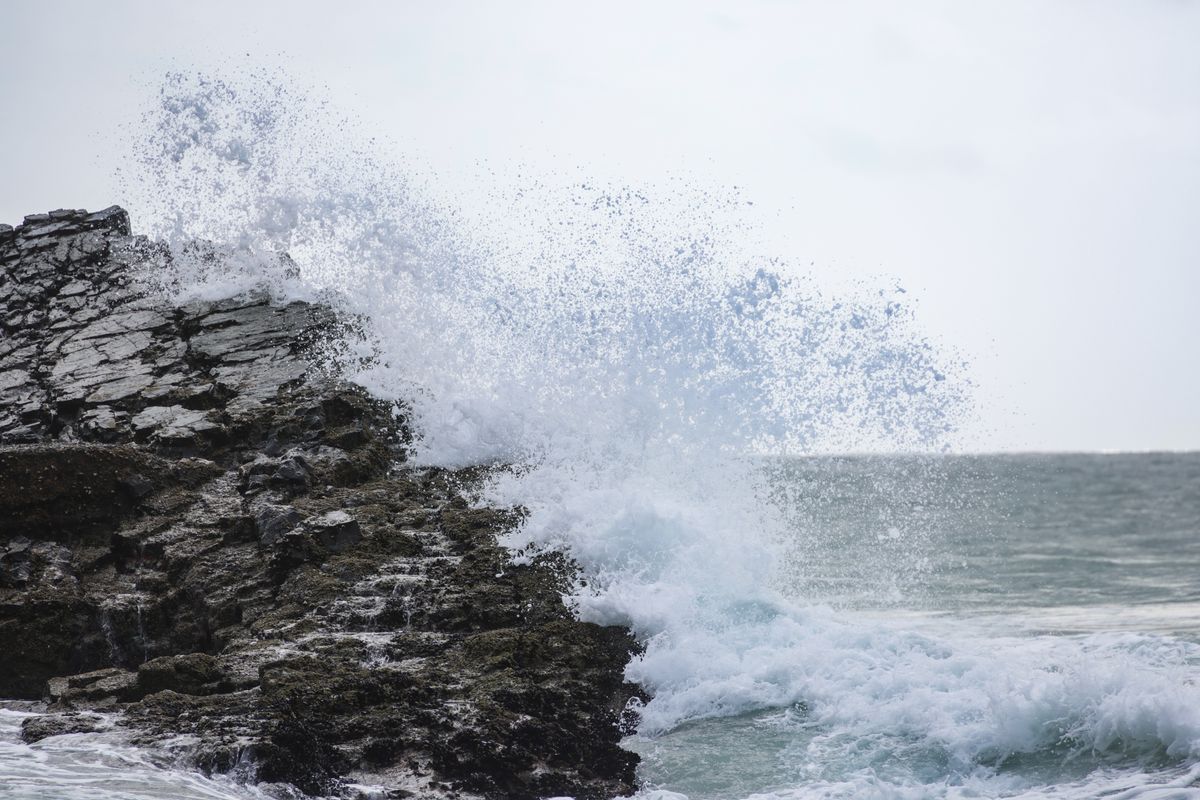
When a wave bounces off a material, physicists call it reflection. The wave hits the surface, cannot pass through, and returns into the medium it came from. Light off a mirror, sound off a cliff, water off a harbour wall — they all do the same thing: the angle in equals the angle out.
Picture throwing a ball at a brick wall. The ball hits the wall and bounces back at the same angle you threw it. The ball cannot go through the wall, so it goes back where it came from. Waves do exactly this, except they keep their speed and energy — a ball loses some energy on impact, but a reflected wave does not.
What is wave reflection?
The bouncing back of a wave from a surface it cannot pass through is called reflection. It is the most basic wave behaviour — every wave does it, from light to sound to water.
Reflection is the change in direction of a wave when it strikes a boundary between two different media and bounces back into the original medium. The NASA Science website describes reflection as what happens when incident light hits an object and bounces off — very smooth surfaces such as mirrors reflect almost all incident light.
The key points are simple:
- The wave stays in the same medium (it does not cross the boundary).
- The wave's speed, frequency, and wavelength do not change.
- Only the direction of travel changes.
When a wave bounces off a material, the amount of reflection depends on the surface. A mirror reflects about 90–95% of light. A rough surface like a brick wall reflects less, and it scatters the light in all directions. But the bouncing back still happens — you just see the scattered result rather than a clear image.
The law of reflection applies to all waves
The law of reflection is the same for every type of wave, whether light, sound, or water. It states:
The angle of incidence equals the angle of reflection.
Both angles are measured from the normal — an imaginary line drawn perpendicular to the surface at the point where the wave hits. The incident wave, the reflected wave, and the normal all lie in the same plane.
Here is a way to picture it. Think of the normal as a mirror placed edge-on to the surface. The incoming wave approaches from one side, and the reflected wave leaves from the other — both at the same angle measured from that centre line. A sound wave hitting a cliff does the same thing as a light wave hitting a mirror.
This is not a suggestion. It is a rule that every wave follows every time it reflects. Throw a light ray at a mirror at 30° from the normal, and it leaves at 30° from the normal. Shout at a cliff, and your sound wave does the same.
Fixed vs free boundary: when the wave flips
Here is a subtlety most introductory explanations skip. When a wave hits a boundary, it can reflect in one of two ways depending on whether the boundary is fixed or free.
Fixed boundary: The end cannot move. The wave reflects inverted — a crest becomes a trough, and a trough becomes a crest. Think of a rope tied to a wall. Send a pulse down the rope, and when it hits the wall, it bounces back upside down. The wall is the fixed end, and the wave experiences a 180° phase change.
Free boundary: The end can move. The wave reflects upright — no inversion. If you hold the end of a rope loosely and send a pulse, it bounces back on the same side.
This matters for sound waves in pipes, waves on strings, and seismic waves in the Earth. The BBC Bitesize guide to wave reflection illustrates this with clear diagrams showing how the boundary type changes the reflected wave.
Specular vs diffuse reflection
The smoothness of the surface determines whether you get a clear reflection or a scattered one.
Specular reflection: The surface is smooth on the scale of the wavelength. All reflected waves stay parallel, preserving the image. A mirror is the classic example — the surface is flat to within a fraction of a wavelength of visible light (about 500 nm).
Diffuse reflection: The surface is rough on the scale of the wavelength. Each point on the surface has a different normal direction, so reflected waves scatter in all directions. A brick wall does this to light. You can see the wall because light reflects diffusely off it, but you cannot see your face in it.
The law of reflection holds at every individual point in both cases. The difference is the surface geometry, not the physics.
Examples of wave reflection
Light waves
A mirror is the cleanest example. Light from your face travels to the mirror, strikes the smooth glass surface, and bounces back at the same angle. The image appears behind the mirror because your brain assumes light travels in straight lines.
Sound waves
An echo is sound reflecting off a distant surface. Shout at a cliff face 170 metres away, and the sound takes about one second to return — that is how long it takes to travel there and back at 340 m/s. Echolocation in bats and dolphins uses the same principle: they emit sound pulses and listen for the reflections to build a picture of their surroundings.
Water waves
Watch waves at a harbour wall. The incoming wave hits the wall and reflects back, creating a crisscross pattern. If the wall is vertical, the reflected wave has the same angle as the incoming wave. This is why harbours need careful design — reflected waves can interfere with incoming waves and create dangerous standing wave patterns.
Seismic waves
Earthquake waves reflect off different rock layers inside the Earth. Geologists use these reflections to map underground structures, a technique called seismic reflection surveying. It is how we find oil and gas deposits and study the Earth's internal structure.
Do all waves reflect?
Yes. All waves reflect — light, sound, water, seismic, and radio. When a wave bounces off a surface it cannot pass through, it always reflects. The law of reflection applies to every one of them.
Even waves that can pass through a boundary still reflect a small amount. Light passing from air into glass reflects about 4–8% at each surface — which is why you see glare on a window even though most of the light goes through. The fraction of the wave that reflects depends on the difference between the two materials, not on the type of wave.
Here is the catch: some waves appear to reflect more than others because of how we detect them. Sound reflects off a wall and we hear an echo. Light reflects off the same wall and we see a diffuse glow rather than a mirror image. The reflection is happening in both cases — the surface roughness just determines whether the reflection is specular (directional) or diffuse (scattered).
Real-world applications of wave reflection
Reflection is not just textbook physics. It runs the modern world. Whenever a wave bounces off a material in a controlled way, engineers put it to work.
- Radar: Radio waves reflect off aircraft, ships, and weather formations. The time delay tells you how far away they are.
- Sonar: Sound waves reflect off the seafloor and underwater objects. Ships map the ocean floor using sonar reflections.
- Medical ultrasound: High-frequency sound waves reflect off tissues inside the body. The reflections form an image doctors use to diagnose conditions.
- Fibre optics: Light reflects along a glass fibre by total internal reflection, carrying data at the speed of light.
- Seismic surveying: Controlled explosions or vibrations send waves into the ground. The reflections from different rock layers reveal what lies beneath.
Each application relies on the same underlying principle: when a wave bounces off a material, the return signal carries information about what it hit. For a full comparison of reflection with other wave behaviours, see reflection vs refraction. To see how these principles play out in the real world, browse reflection of light examples or read the reflection refraction and absorption guide.
Common misconceptions about wave reflection
"Only light reflects." No — all waves reflect. Sound, water, seismic, and radio waves all obey the same law. An echo is sound reflection. Radar is radio wave reflection. When a wave bounces off a material, the physics is identical whether it is a light wave or a sound wave.
"Reflection changes the wave's speed." It does not. The wave stays in the same medium, so its speed stays constant. What changes is the direction. The Evident Scientific introduction to reflection confirms that all wavelengths reflect at equal angles at the same speed.
"A rough surface does not reflect at all." It does reflect — it just scatters the waves in all directions (diffuse reflection). You can see a brick wall because light reflects off it. If it did not reflect light at all, it would be invisible. The law of reflection still holds at every individual point on the rough surface; the normals are all pointing different ways.
"Total internal reflection is just normal reflection." It is different. Normal reflection (from a mirror) reflects about 90–95% of the light. Total internal reflection reflects 100% — which is why fibre optics can carry signals over kilometres without significant loss. For more on this, see the reflection physics waves pillar guide.
Summary
When a wave bounces off a material, it follows the law of reflection: angle in equals angle out. The wave keeps its speed, frequency, and wavelength — only its direction changes. Whether the surface is smooth (specular) or rough (diffuse), whether the boundary is fixed (inversion) or free (no inversion), every reflection obeys the same simple rule.
Frequently Asked Questions
What happens when a wave bounces off a material?
When a wave bounces off a material, it is called reflection. The wave changes direction and returns into the medium it came from. The angle at which it arrives equals the angle at which it leaves, and the wave's speed, frequency, and wavelength stay unchanged.
Do all waves reflect?
Yes. All types of waves — light, sound, water, seismic, and radio waves — reflect when they encounter a boundary or surface they cannot pass through. The law of reflection applies to all of them. Even waves that normally pass through a boundary, like light through glass, still reflect a small fraction of their energy at each surface.
What is the difference between reflection and refraction?
Reflection bounces a wave back into the original medium when it hits a boundary. Refraction bends a wave as it passes through a boundary into a new medium, changing its speed. In reflection the wave stays in the same medium; in refraction it crosses into a different one.
What happens to a wave when it reflects off a fixed end?
When a wave reflects off a fixed (rigid) boundary, it undergoes a phase change of 180° — the reflected wave is inverted. A crest reflects as a trough, and vice versa. When it reflects off a free boundary, it does not invert. This applies to waves on strings, sound waves, and other mechanical waves.
What is the law of reflection?
The law of reflection states that the angle of incidence equals the angle of reflection. Both angles are measured from the normal, an imaginary line perpendicular to the surface at the point where the wave hits. The incident wave, reflected wave, and normal all lie in the same plane.
Why do waves reflect differently off different surfaces?
The smoothness of the surface determines how the wave reflects. On a smooth surface, all reflected waves stay parallel (specular reflection), giving a clear image. On a rough surface, the waves scatter in many directions (diffuse reflection), destroying the image. The law of reflection holds at every individual point in both cases.

About Umar Farooq
Umar Farooq writes in-depth guides on the physics of light and optics — from reflection, refraction, and lenses to diffraction, lasers, and fiber optics, explained from first principles.
Read more about Umar Farooq →