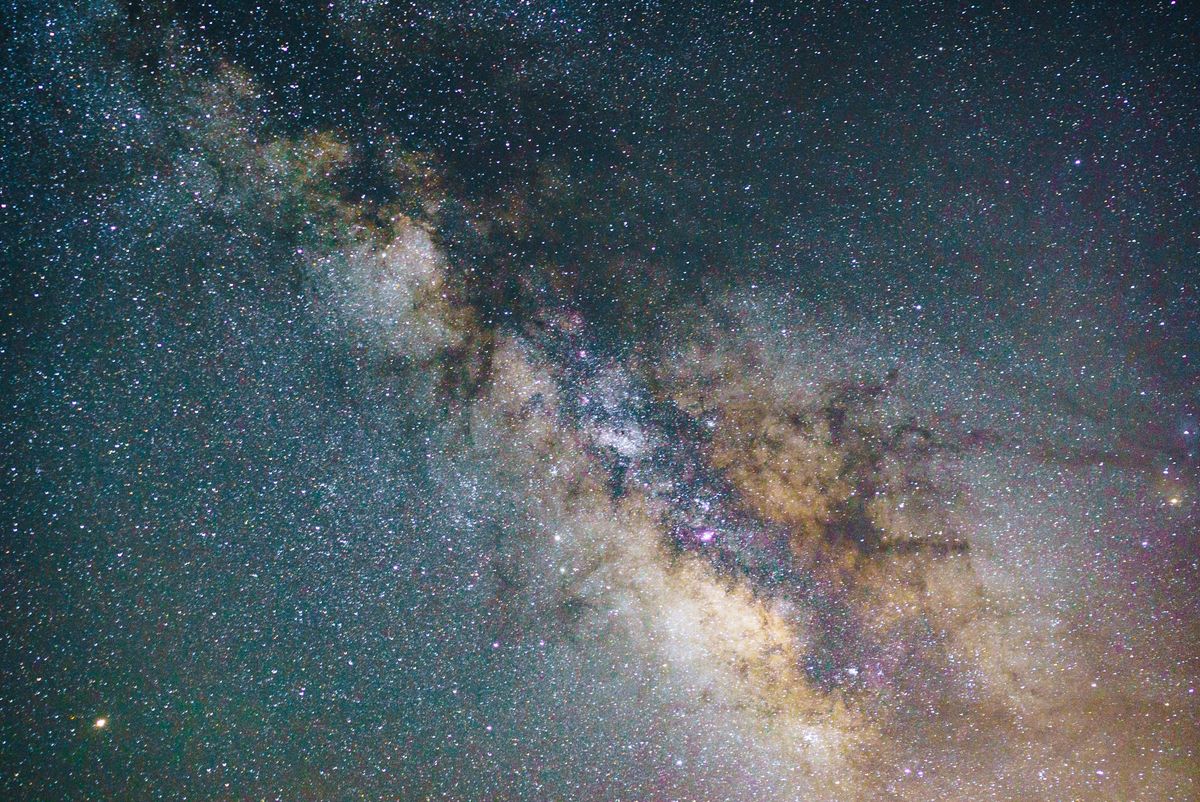
Does gravity bend light? Yes — it absolutely does. Light has no mass, yet gravity bends its path. That is the short answer to "does gravity bend light," and it was one of the most surprising predictions of Einstein's general theory of relativity, confirmed countless times since 1919. The effect is subtle around everyday objects — you would not see a lamp post lensing the light from a streetlight — but on cosmic scales, entire galaxies act as magnifying glasses, warping and distorting the light from objects behind them. Here is the answer to "does gravity bend light" in 5 simple steps.
Does gravity bend light? The short answer
Does gravity bend light? Yes. That is the direct answer to "does gravity bend light" — and here is how. According to general relativity, mass curves the fabric of spacetime. Light travels along the straightest possible path through that curved spacetime, and that path appears bent to an outside observer.
Think of it like this. Imagine a stretched rubber sheet held tight at the corners. Place a bowling ball in the centre, and the sheet sags. Now roll a marble across the sheet — it travels in a straight line until it reaches the dip, then curves around the bowling ball. The marble was not grabbed by a mysterious force. It simply followed the shape of the sheet. The same idea applies to light moving through curved spacetime near a massive object. The what causes refraction page explains how ordinary refraction works at material boundaries — gravitational lensing is different because it is the fabric of space itself that bends, not a surface between two media.
1. Mass curves spacetime
The key insight of Einstein's general theory of relativity (1915) is that gravity is not a force in the traditional sense. Massive objects like stars, galaxies, and black holes warp the four-dimensional fabric of spacetime around them. The more mass, the deeper the warp.
This curvature is what we experience as gravity. Earth orbits the Sun not because the Sun "pulls" on it, but because Earth is following the curvature that the Sun creates in spacetime. As physicist John Wheeler put it: "Matter tells spacetime how to curve, and spacetime tells matter how to move."
The same holds for light. Photons follow paths called geodesics — the straightest possible lines through curved spacetime. To someone watching from outside, that path looks curved. The light has bent.
2. Light follows the curvature
If light has no mass, how can gravity affect it? This is the most common question once people accept that gravity does bend light. The answer: gravity does not pull on the light itself. It changes the shape of the space the light travels through. Understanding "does gravity bend light" means understanding this distinction.
Imagine drawing a straight line on a sheet of paper. Now curve the paper. The line itself has not changed, but from a side view it now looks bent. Light through curved spacetime is the same: the photon follows a geodesic, which is locally straight, but globally curved because spacetime itself is bent.
The amount of bending depends on two things: the mass of the object creating the curvature, and how close the light passes to it. Near a star like our Sun, the deflection is small — about 1.75 arcseconds at the Sun's edge. Near a black hole, the bending is extreme: light can loop around the black hole entirely.
3. The 1919 eclipse proved it
Before Einstein, Newton had also predicted that gravity would bend light, but his calculation gave only half the amount Einstein's did. Which one was right?
In 1919, the astronomer Arthur Eddington led an expedition to observe a total solar eclipse. The plan was simple but bold: photograph the stars near the Sun's edge during the eclipse, when the Sun's glare was blocked by the Moon, and compare their positions to where they should be. If the Sun's gravity bent their light, the stars would appear slightly shifted.
Eddington travelled to the island of Príncipe off the coast of West Africa. Despite clouds and technical problems, his photographs showed a deflection of about 1.6 arcseconds — consistent with Einstein's prediction and twice what Newton's theory allowed. The news made Einstein a global celebrity overnight. Space.com's guide to gravitational lensing has a detailed account of this historic experiment and how it transformed physics.
4. Gravitational lensing: the cosmic magnifying glass
The same bending of light creates an effect called gravitational lensing. This is the most spectacular answer to "does gravity bend light" — it does, and the result is a cosmic magnifying glass. Gravitational lensing is the practical demonstration that gravity does bend light on astronomical scales. When light from a distant galaxy passes near a massive foreground object (another galaxy or a cluster of galaxies), the foreground object acts like a lens. The result can be spectacular.
Strong lensing occurs when alignment is near-perfect. The background galaxy's light is stretched into arcs or rings around the foreground object. An Einstein ring is a perfect circle of light created when the source, lens, and observer are exactly aligned. An Einstein cross appears as four images of the same object arranged around the lens. The first gravitational lens was discovered in 1979: the Twin Quasar, which appeared as two identical images of the same quasar.
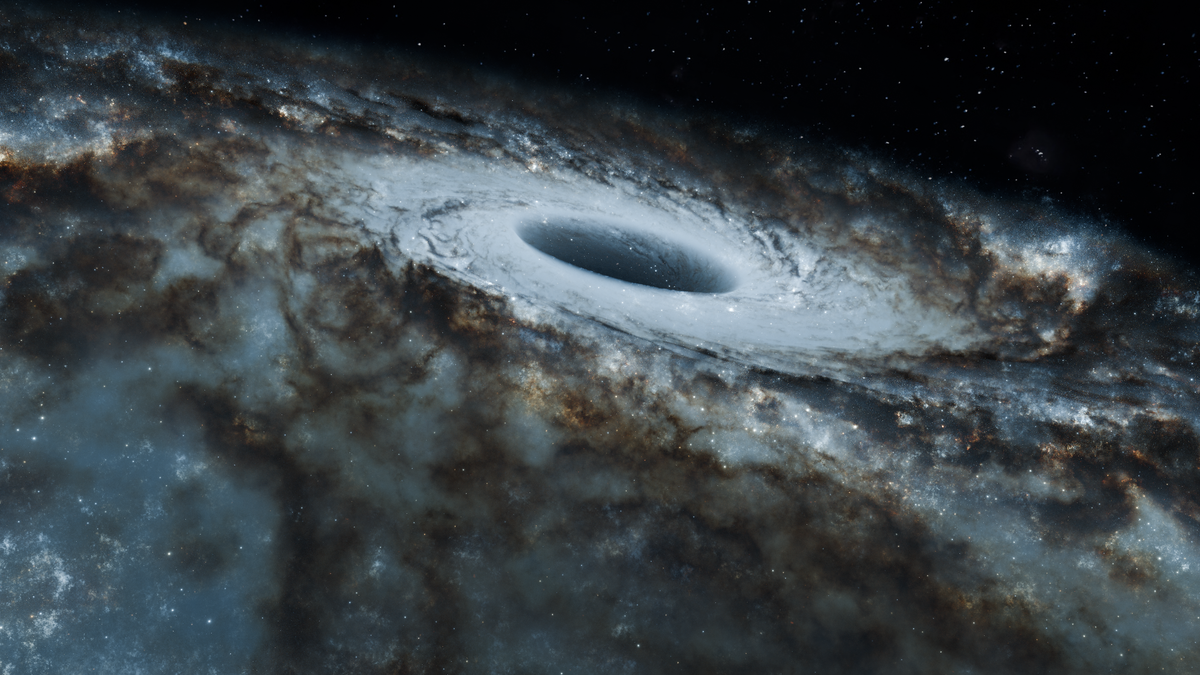
Weak lensing is subtler. The distortion is too small to see in a single galaxy, but by averaging over thousands of galaxies, astronomers can map the distribution of mass — including dark matter — across the sky.
Microlensing occurs when a smaller object like a star or a planet passes in front of a more distant star. The alignment briefly magnifies the background star's light, causing it to brighten for days or weeks. Astronomers use microlensing to detect exoplanets and black holes that would otherwise be invisible.
The bending of light genuinely magnifies the background source, making it appear brighter. This has let the James Webb Space Telescope and the Hubble Space Telescope see galaxies that existed just 350 million years after the Big Bang — objects too faint to detect without the magnification of gravitational lensing.
5. What gravitational lensing reveals about the universe
Gravitational lensing is not just a curiosity. It is one of astronomy's most powerful tools.
Dark matter mapping. The amount of lensing reveals the total mass of the foreground object. Astronomers compare the observed lensing to the lensing expected from visible matter (stars and gas). The difference tells them how much invisible dark matter is present and how it is distributed. This technique has produced the most detailed maps of dark matter in the universe.
Measuring the expansion rate. When a lensed object varies in brightness (like a supernova or a quasar), its multiple images vary at different times because the light takes different paths. Measuring the time delay between these variations gives the Hubble constant — the rate at which the universe is expanding. The BBC Sky at Night guide to gravitational lensing explains how this works in practice.
Finding the invisible. Microlensing has discovered planets orbiting stars thousands of light-years away and has revealed populations of black holes that emit no light of their own. Every time a dim star suddenly brightens and fades, it may be a sign that a dark, massive object has crossed our line of sight.
How is this different from ordinary refraction?
Does gravity bend light in the same way a glass lens does? The result is similar — both redirect light — but the mechanism is different.
Ordinary refraction (like a straw bending in water) happens at the boundary between two materials where the speed of light changes. The light wave slows down or speeds up, and the change in speed at an angle bends the wave. So when someone asks "does gravity bend light in the same way," the answer is no — the mechanism is different even though the outcome looks similar.
Gravitational lensing does not involve any change in the speed of light. Light travels at c through curved spacetime — it is the space itself that is bent, not the light's speed. There is no "medium" and no boundary. The lens is pure geometry.
Wikipedia's gravitational lens article has the mathematical details, including how the deflection angle depends on mass and distance. For a broad overview of how light behaves across different domains, see our guide to what light is and the refraction of light in water article.
Summary
| Concept | What happens | Why it matters |
|---|---|---|
| Spacetime curvature | Mass warps the fabric of space | Light follows geodesics through curved spacetime |
| 1919 eclipse | Stars near the Sun appeared shifted | Confirmed Einstein over Newton |
| Strong lensing | Multiple images, rings, and arcs | Reveals distant galaxies, maps dark matter |
| Weak lensing | Subtle distortion averaged over many galaxies | Maps large-scale structure of the universe |
| Microlensing | Temporary brightening of a star | Detects exoplanets and dark objects |
Does gravity bend light? Yes — and every time a telescope captures a stretched galaxy or a brightening star, it is using that bending to probe the universe. The question "does gravity bend light" has been settled for over a century, and the answer transformed our understanding of the cosmos. Gravitational refraction is ordinary refraction's cosmic cousin: both bend light, but one bends it with density and the other bends it with the shape of space itself.
Frequently Asked Questions
Does gravity bend light?
Yes, gravity bends light. Einstein's general theory of relativity predicts that mass curves the fabric of spacetime, and light follows that curvature. The effect is most noticeable when light from a distant galaxy passes near a massive object like another galaxy or galaxy cluster, which acts as a gravitational lens and bends the light. This was first confirmed during the solar eclipse of 1919.
How does gravity bend light if light has no mass?
Gravity does not pull on light directly. Instead, mass curves the spacetime that light travels through. Light always follows the straightest possible path through curved spacetime, which from the outside looks like a bent path. Think of a marble rolling across a stretched rubber sheet — it goes straight until the sheet is dented, then it curves.
What is gravitational lensing?
Gravitational lensing is the bending of light from a distant source by the gravity of a massive object between the source and the observer. It magnifies, distorts, and sometimes creates multiple images of the background object. It acts like a natural cosmic magnifying glass, letting telescopes see galaxies that would otherwise be too faint to detect.
How was light bending by gravity proven?
Arthur Eddington's 1919 expedition measured the apparent shift of stars near the Sun during a solar eclipse. The stars appeared slightly displaced from their known positions because the Sun's gravity bent their light. The amount of bending matched Einstein's prediction and was twice what Newton's theory predicted.
Can gravitational lensing create multiple images?
Yes. Strong gravitational lensing can produce multiple images of the same background object. When alignment is near-perfect, it creates an Einstein ring — a circular ring of light. Slight misalignment produces an Einstein cross, with four images arranged around the lensing galaxy. These were first observed in 1979 with the Twin Quasar.
How does gravitational lensing help find dark matter?
Gravitational lensing reveals dark matter because the amount of bending depends on the total mass of the lensing object. Astronomers compare the observed lensing to the lensing expected from visible matter alone. The difference reveals how much invisible dark matter is present and how it is distributed around galaxies and clusters.
What is the difference between gravitational lensing and regular refraction?
Regular refraction bends light at the boundary between two materials (like air and water) because light changes speed. Gravitational lensing bends light because mass curves spacetime itself. Regular refraction requires a surface between media. Gravitational lensing works anywhere there is a strong gravitational field and does not depend on the speed of light changing.

About Umar Farooq
Umar Farooq writes in-depth guides on the physics of light and optics — from reflection, refraction, and lenses to diffraction, lasers, and fiber optics, explained from first principles.
Read more about Umar Farooq →