
Lens refraction is what happens when light passes through a curved transparent object and bends to form an image. A convex (bulging) lens converges rays to a single point; a concave (hollowed) lens spreads them apart. Both work by the same physics — light slows entering the lens and speeds up leaving it, and the curved shape controls exactly where each ray goes. Here are the 5 essential ways lenses use refraction, from the glasses on your face to the microscope on a lab bench.
What is a lens?
A lens is a piece of glass, plastic, or other transparent material with at least one curved surface. The curve is what makes it a lens instead of a flat window — it redirects light in a way that a flat slab cannot.
Think of it like this. A flat glass slab lets light pass through and shifts it sideways a little, but the beam comes out parallel to where it entered. A lens, by contrast, has curved surfaces that steer each ray by a different amount depending on where it hits. The result is that all the rays either meet at a point (converge) or spread outward from a common origin (diverge).
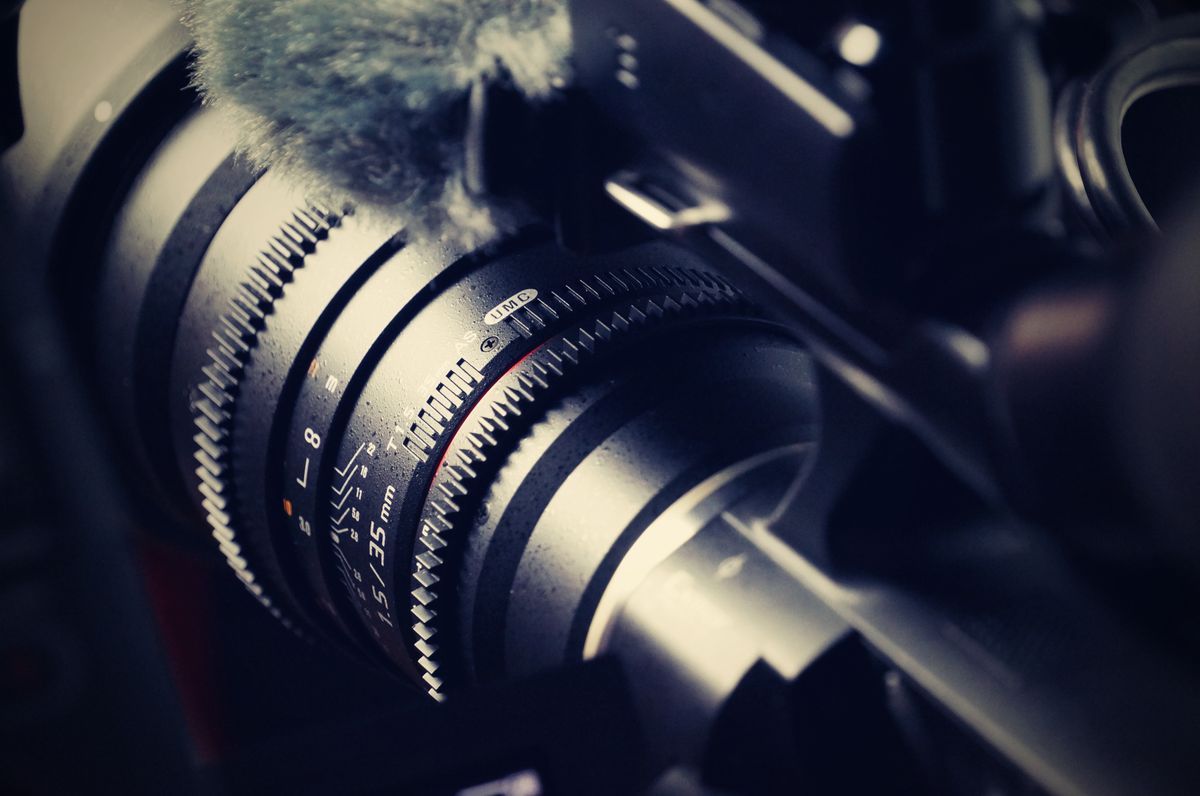
There are two fundamental types. A convex lens (also called converging or positive) is thicker in the centre than at the edges. A concave lens (diverging or negative) is thinner in the centre. Every other lens shape — plano-convex, bi-concave, meniscus — is a variation of these two.
How lens refraction works: double refraction
The key to understanding lens refraction is realising that every ray refracts not once but twice.
Picture a ray of light approaching a convex lens from the left. At the front surface, it moves from air (fast) into glass (slow). Since it hits the curved surface at an angle, it bends toward the normal — standard refraction. Once inside the lens, it travels straight until it reaches the back surface. There it leaves the glass and re-enters air, speeding up and bending away from the normal.
The two bends at the two curved surfaces combine to produce the net effect. A convex lens adds both bends toward the centre, so rays converge to a focus. A concave lens bends rays outward at both surfaces, so they diverge.
The amount of bending at each surface depends on the curvature (how steeply the surface is curved) and the refractive index of the lens material. Crown glass (index 1.52) bends more than acrylic (1.49), and a steeply curved lens bends more than a shallow one. (The Physics Classroom tutorial on refraction by lenses and the Science Primer refraction in lenses guide both walk through the FST and SFA principles step by step with clear ray diagrams.)
5 essential ways lenses use refraction

1. Convex lenses converge light to a focal point
A convex lens takes parallel rays — like the light from a distant object or the Sun — and bends them so they all cross at a single spot called the focal point. The distance from the lens to this point is the focal length, usually written as f.
The stronger the curvature or the higher the refractive index, the shorter the focal length. A magnifying glass has a short focal length — bring it close to a leaf on a sunny day and you can burn a hole through it, because all the sunlight concentrates on one tiny spot.
For a thin convex lens, the relationship between object distance, image distance, and focal length follows the thin lens equation: 1/f = 1/v − 1/u, where u is the object distance and v is the image distance.
2. Concave lenses diverge light
A concave lens does the opposite. Parallel rays hitting a concave lens spread outward as if they came from a point on the same side as the incoming light. This is called a virtual focal point — the rays never actually meet, but they appear to originate from a single location.
Concave lenses are used in eyeglasses for short-sightedness (myopia), where the eyeball is too long and the natural lens focuses images in front of the retina. The concave lens spreads the light slightly before it enters the eye, shifting the focus back onto the retina where it belongs.
3. Lenses form real and virtual images
Lens refraction doesn't just bend light — it creates images. The type of image depends on the lens and where the object sits.
A convex lens can produce both real and virtual images. Place an object beyond the focal point and the lens forms a real image — inverted, and projectable onto a screen (this is how a camera works). Place it inside the focal point, and the lens forms a virtual image — upright, magnified, and on the same side as the object (this is a magnifying glass).
A concave lens always produces a virtual, upright, and smaller image — which is why security peepholes use them to shrink a wide hallway into a viewable size.
4. Lens power determines how strongly light bends
Opticians don't talk about focal length — they talk about power, measured in dioptres (D). The power of a lens is simply 1 divided by the focal length in metres: P = 1/f.
A +2 D lens (convex) has a focal length of 0.5 m. A −3 D lens (concave) has a focal length of −0.33 m. The higher the number, the stronger the bend. This is why your eyeglass prescription looks like a set of small numbers: +1.50, −2.25, and so on.
The lens maker's formula connects the physical properties to the power: 1/f = (n − 1)(1/R₁ − 1/R₂), where n is the refractive index and R₁, R₂ are the radii of curvature of the two surfaces. It tells lens designers exactly how to grind a piece of glass to achieve a desired focal length.
5. Multiple lens elements correct image flaws
No single lens is perfect. Every simple lens suffers from aberrations — image flaws caused by the physics of refraction. Two common ones:
- Spherical aberration: rays near the edge of a lens focus at a slightly different point than rays near the centre
- Chromatic aberration: different colours (wavelengths) have slightly different refractive indices, so they focus at different points — the same dispersion effect that creates rainbows
The solution is to stack multiple lens elements made of different types of glass. A camera lens might have 15 or more individual elements, each one carefully shaped and positioned so the aberrations of one cancel out the aberrations of another. The result is a sharp, colour-accurate image across the whole frame.
This is also why the refraction through a prism is different from lens refraction — a prism has flat surfaces, so it deviates light without focusing it. A lens uses curved surfaces to do both at once.
Where you see lens refraction every day
Lens refraction is the quiet workhorse behind almost everything that helps us see better.
Eyeglasses and contact lenses correct vision by adding or subtracting just enough refraction to focus light on the retina. A +2 D lens adds convergence for long-sightedness; a −3 D lens adds divergence for short-sightedness.

Cameras use a stack of lenses — the lens assembly — to focus light from a scene onto a digital sensor. The photographer turns the focus ring to move elements closer or farther apart, changing the total refraction and shifting what's in focus.
Microscopes combine two convex lenses: the objective lens (short focal length) creates a magnified real image, and the eyepiece lens magnifies that image further for your eye. The total magnification is the product of both magnifications.
Telescopes do the same trick in reverse — a large objective lens gathers light from a distant star and brings it to a focus, and an eyepiece magnifies that image. The bigger the objective, the more light it collects and the fainter the objects you can see.
Your own eyes are two lens systems working in parallel. The cornea provides most of the refraction, and the crystalline lens adjusts shape to fine-tune the focus — a process called accommodation. For a deeper look at how refraction drives all of these devices, our guide to refraction examples covers over 20 cases from the natural world and technology.
Common misconception about lens refraction
A mistake people sometimes make is thinking that a lens works by "trapping" light inside and bouncing it around until it finds the right exit. That picture comes from confusing lenses with fibre optics or prisms that use total internal reflection.
In fact, the light does not bounce inside a standard lens. It enters, travels in a straight line through the material, and exits — bending only at the two surfaces. The curved shape is what makes the rays converge or diverge, not any internal reflections.
A related misconception is that a convex lens "attracts" light or that a concave lens "repels" it. Neither is true. The light bends toward the normal when entering the denser material and away from the normal when leaving, and the geometry of the curved surface determines where each ray ends up. The lens is completely passive — it just sits there and lets refraction do its work.
Worked example: finding the focal length of a simple lens
Let's look at a typical reading glass. A +2.5 D convex lens — what does that mean in practice?
The power P = +2.5 D. The focal length is f = 1/P = 1/2.5 = 0.4 m (40 cm). Hold this lens 40 cm from a book and distant objects are out of focus, but the text at 40 cm is sharp.
Now suppose you place an object 25 cm from this lens. Where does the image form? Using the thin lens equation: 1/v = 1/f + 1/u = 1/40 + 1/25 = 0.025 + 0.04 = 0.065. So v = 1/0.065 ≈ 15.4 cm. The image is real and lies about 15 cm on the other side of the lens.
This is exactly how a magnifying glass works when you hold it close to an object. The image forms on your retina, and because the rays enter your eye from a wider angle, the object looks larger.
For more details on how refraction works at a single surface, start with what causes refraction. For the calculations that predict the bend at each curved surface, our guide to Snell's law and the angle of refraction has step-by-step worked examples.
Frequently Asked Questions
What is lens refraction?
Lens refraction is the bending of light as it passes through a transparent curved object called a lens. Light refracts twice — once entering the lens and once leaving it — and the curved shape bends the rays in a controlled way to either converge (bring together) or diverge (spread apart) the light.
How does a lens refract light?
A lens refracts light by changing its speed at two boundaries. When light enters the denser lens material, it slows and bends toward the normal. When it exits back into air, it speeds up and bends away from the normal. The curved surfaces ensure all rays meet or spread in a predictable way.
What is the difference between convex and concave lens refraction?
A convex lens (thicker in the middle) converges parallel light rays to a single focal point. A concave lens (thinner in the middle) diverges parallel rays outward as if they came from a virtual focal point on the same side as the incoming light. Both work by the same refraction mechanism — the shape determines the outcome.
Do glasses use refraction or reflection?
Eyeglasses use refraction. The curved lenses bend incoming light by the precise amount needed to focus it on the retina, correcting for the eye's natural lens being slightly the wrong shape. Reflection would simply bounce the light away rather than redirecting it into the eye.
What is the focal point of a lens?
The focal point of a lens is the point where parallel rays of light converge after passing through a convex lens, or the point from which they appear to diverge after passing through a concave lens. The distance from the lens to this point is the focal length, which determines the lens's power.
How does the human eye use refraction?
The human eye uses refraction through its cornea and crystalline lens to focus light onto the retina. The cornea does about two-thirds of the bending, and the flexible lens changes shape (accommodation) to adjust focus for near and distant objects.
What is the difference between refraction through a prism and a lens?
A prism bends light without converging or diverging it — it simply deviates the beam by a fixed angle. A lens uses curved surfaces so that rays at different positions bend by different amounts, bringing them to a focus or spreading them out in a controlled way.

About Umar Farooq
Umar Farooq writes in-depth guides on the physics of light and optics — from reflection, refraction, and lenses to diffraction, lasers, and fiber optics, explained from first principles.
Read more about Umar Farooq →