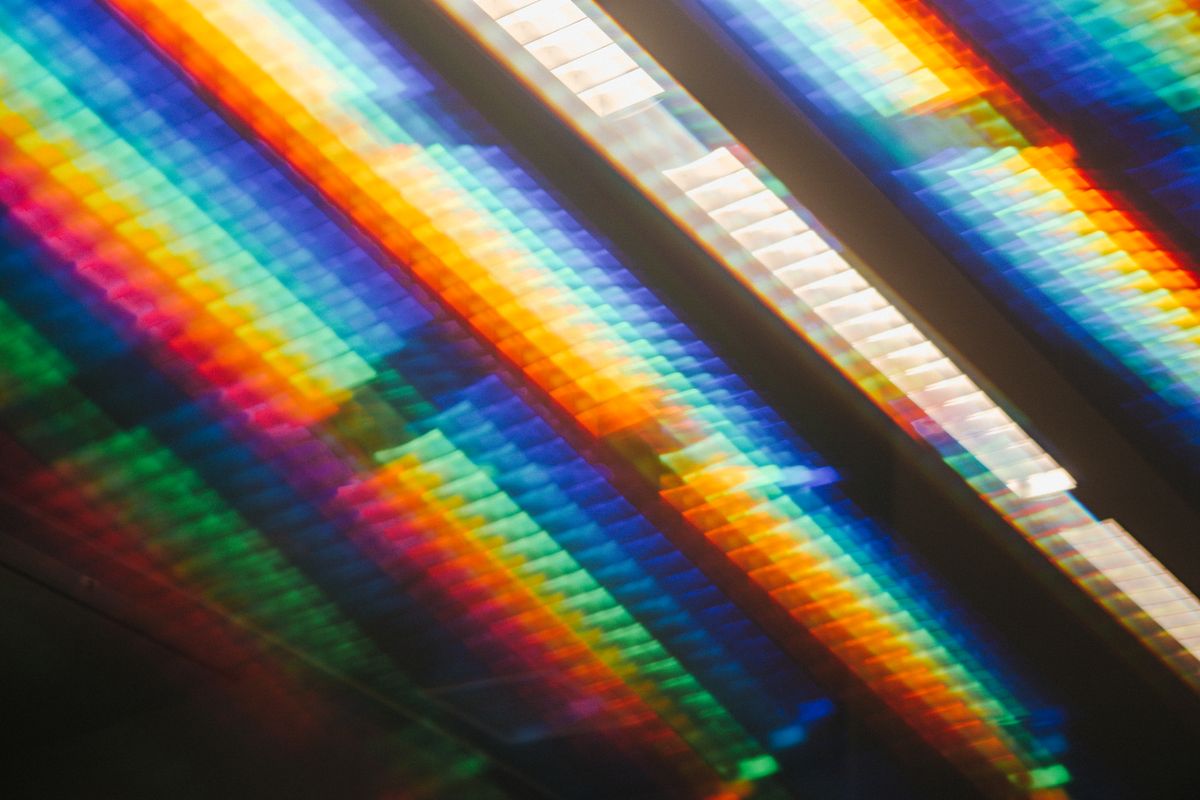
Light bends during diffraction because of its wave nature. To explain how light bends during diffraction, we start with a simple picture. When a wavefront meets an obstacle or passes through a narrow opening, every point on the unobstructed part acts as a new source of spherical wavelets. These wavelets spread into the region behind the obstacle — the geometric shadow — and interfere with one another, creating a pattern of bright and dark bands. Here is exactly how that happens, step by step.
Step 1: The wavefront meets a barrier — where light bending during diffraction begins
Think of light as a series of wavefronts — like the ripples spreading across a pond. Under ordinary conditions these wavefronts travel in straight lines. But when they encounter an edge, a corner, or a narrow slit, something changes.
Picture sea waves approaching a narrow harbour mouth. The incoming waves are straight and parallel. As they reach the gap in the harbour wall, only the part directly in line with the opening passes through. The rest is blocked.
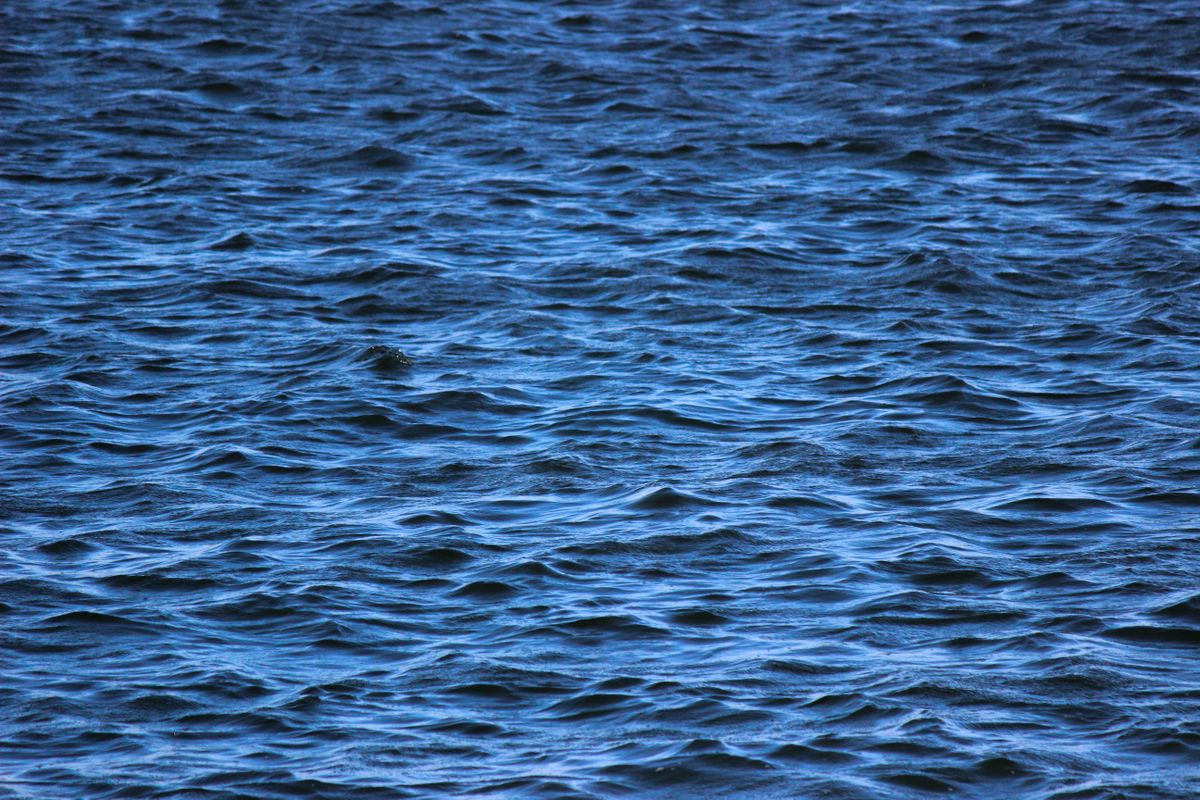
Light behaves the same way. A beam of light approaching a slit has a flat, straight wavefront — until it reaches the barrier. The wave then enters the geometric shadow zone, which straight-line physics says should stay dark.
Step 2: Huygens' principle activates at every point
Here is the key idea. Christiaan Huygens, a 17th-century Dutch physicist, realised that every point on a wavefront can be treated as a tiny source of its own spherical wavelets, spreading outward at the speed of light. This is Huygens' principle.
When the wavefront hits a barrier, the points that are not blocked — the ones within the opening — continue to emit these secondary wavelets. But now those wavelets are radiating into space that includes the region behind the barrier, where no direct light should reach according to straight-line optics. This is the mechanism behind diffraction. The secondary wavelets carry the wave into the "shadow" zone, filling it with light.
Step 3: Wavelets spread into the geometric shadow
The straight-line picture says the area behind the barrier should be dark. But the secondary wavelets from the unobstructed part of the wavefront spread sideways into that region. Light bends around the edge.
How much spreading? It depends on the size of the opening relative to the wavelength. When the slit is much wider than the wavelength, almost no spreading occurs — the wave passes through almost in a straight line. When the slit is comparable to the wavelength, the spreading is dramatic.
For visible light, with wavelengths around 500 nm — about 100 times thinner than a human hair — the slit needs to be extremely narrow for noticeable diffraction. This is why you do not see light bending around door frames the way sound does.
Step 4: Wavelets from different points overlap and interfere
Once the wavelets emerge from the slit, they do not travel independently. They overlap. Where the crest of one wavelet meets the crest of another, they reinforce — that is constructive interference, producing a bright band. Where a crest meets a trough, they cancel — destructive interference, producing a dark band.
This step is the heart of the diffraction pattern. The alternating bright and dark bands — called fringes — are not random. They follow a precise mathematical spacing determined by the wavelength and the geometry.
Thomas Young demonstrated this beautifully in 1801. He shone light through two narrow, closely spaced slits and got not two bright lines on the screen but a series of alternating light and dark bands. It was the decisive proof that light behaves as a wave. Particles could not produce that pattern; only interfering waves could.
Step 5: The pattern depends on wavelength and slit width
The angle at which the light spreads is given by a simple relation:
θ ≈ λ / a (for small angles)
Where θ is the spread angle, λ is the wavelength, and a is the slit width.
This means two things. First, longer wavelengths spread more. Red light (625 nm) diffracts more than blue light (450 nm) through the same slit. That is why in a diffraction pattern red appears further from the centre than blue.
Second, narrower slits produce wider diffraction patterns. Halving the slit width roughly doubles the angular spread. This is why a pinhole camera produces such soft, blurred images — the opening is so small that light spreads in all directions.
Step 6: Different slit arrangements produce different patterns
The same Huygens principle applies whether you have one slit, two slits, or thousands:
- Single-slit diffraction produces a central bright band twice as wide as the others, with alternating dimmer fringes on each side. The intensity falls off quickly as you move away from the centre.
- Double-slit diffraction combines the single-slit envelope with finer interference fringes inside it — the classic Young's fringes, equally spaced.
- Diffraction gratings have thousands of closely spaced lines (like on a CD) and produce sharp, bright fringes at precise angles, making them ideal for analysing the spectrum of light sources.
The governing equation for all of them is d sin θ = mλ, where d is the spacing between slits (or grating lines), m is the order number (0, 1, 2...), and λ is the wavelength. For a full comparison of diffraction with refraction, see our guide on refraction vs diffraction.
Where you see diffraction in everyday life
CDs and DVDs are the most familiar example. The spiral track of microscopic pits is spaced about 1.6 µm apart — comparable to visible light wavelengths. Each colour diffracts at a slightly different angle, producing the rainbow sheen you see when light hits the disc.

The underlying wave physics is the same one that governs how waves spread and focus in other optical contexts.
The soft glow around streetlights on a foggy or misty night is partly diffraction around tiny water droplets in the air. Each droplet scatters the light into a wider cone, creating a visible halo.
Hearing someone in the next room is sound diffraction — the same physics, just with much longer wavelengths. Speech has wavelengths of roughly 0.5–3 m, similar to the width of a doorway, so the sound spreads around the frame. As Encyclopaedia Britannica notes, only the longer bass notes diffract behind obstacles, which is why lower frequencies carry around corners better than higher ones.
X-ray crystallography uses diffraction through atomic lattices to determine molecular structures. X-rays have wavelengths around 0.1 nm — comparable to the spacing between atoms in a crystal. The diffraction pattern reveals the positions of atoms, which is how scientists determined the double-helix structure of DNA.
Common misconception: diffraction is not just "bending around a corner"
People often say "light bends around the edge of a door" and call it the same thing as refraction. It is not. The key distinction: no change of medium occurs. The air on both sides of the door is identical. The light spreads because wavelets from the unobstructed edge fan into the shadow by Huygens' principle.
The simplest test: did the wave change speed? If yes, it is refraction. If no, it is diffraction. For light, you can also ask: did the medium change? Same medium means diffraction; new medium means refraction. Our guide on what causes refraction explains the speed-change mechanism in detail, while the CK-12 Foundation article on diffraction provides a clear, curriculum-aligned walkthrough of the wave mathematics.
Summary
This article set out to explain how light bends during diffraction in six clear steps. The process — wavefront approach, Huygens activation, spreading into shadow, wavelet interference, wavelength/width dependence, and pattern types — covers the full phenomenon from first principles. The amount of diffraction depends on the ratio of wavelength to obstacle size, which is why it is subtle for visible light but obvious for sound. For the step-by-step maths behind another wave-bending effect, see Snell's law and the angle of refraction.
Frequently Asked Questions
What does it mean when light bends during diffraction?
When light bends during diffraction, it means the light waves spread out after passing around an obstacle or through a narrow opening. The bending is caused by each point on the wavefront acting as a new source of spherical wavelets (Huygens' principle), which then interfere with each other to create a pattern of bright and dark bands.
Why does light bend more when passing through a narrow slit?
Light bends more through a narrow slit because the ratio of the wavelength to the slit width is larger. The narrower the opening, the more the wavelets spread out after passing through it. The spread angle θ is given by sin θ ≈ λ/a, where λ is the wavelength and a is the slit width — so halving the slit width roughly doubles the spread.
What is the difference between how light bends in refraction vs diffraction?
Refraction bends light at a boundary between two media due to a change in speed. Diffraction bends light around obstacles or through openings within a single medium, caused by the wave nature of light itself. Refraction changes the speed and wavelength of light; diffraction does not, only changing the direction and intensity distribution.
Does longer wavelength light diffract more?
Yes. Longer wavelengths diffract more than shorter ones. For a given slit width, red light (625 nm) spreads out more than blue light (450 nm) because the ratio λ/a is larger. This is why red light has wider fringe spacing in a diffraction pattern, and why bass sounds (long wavelength) travel around corners better than treble sounds.
Can you see light diffraction in everyday life?
Yes, but it is subtle. The most common examples are the rainbow pattern on a CD or DVD (diffraction grating), the soft glow around streetlights on a foggy night, and the spreading of light through a fine curtain or your eyelashes. Sound diffraction is more obvious — hearing someone talk in the next room is sound bending around a doorway.
What causes the dark bands in a diffraction pattern?
Dark bands in a diffraction pattern are caused by destructive interference. When wavelets from different parts of the wavefront arrive at a point out of step — crest meeting trough — they cancel each other out, producing a dark fringe. Where they arrive in step (crest meeting crest), they reinforce and produce a bright fringe.

About Umar Farooq
Umar Farooq writes in-depth guides on the physics of light and optics — from reflection, refraction, and lenses to diffraction, lasers, and fiber optics, explained from first principles.
Read more about Umar Farooq →