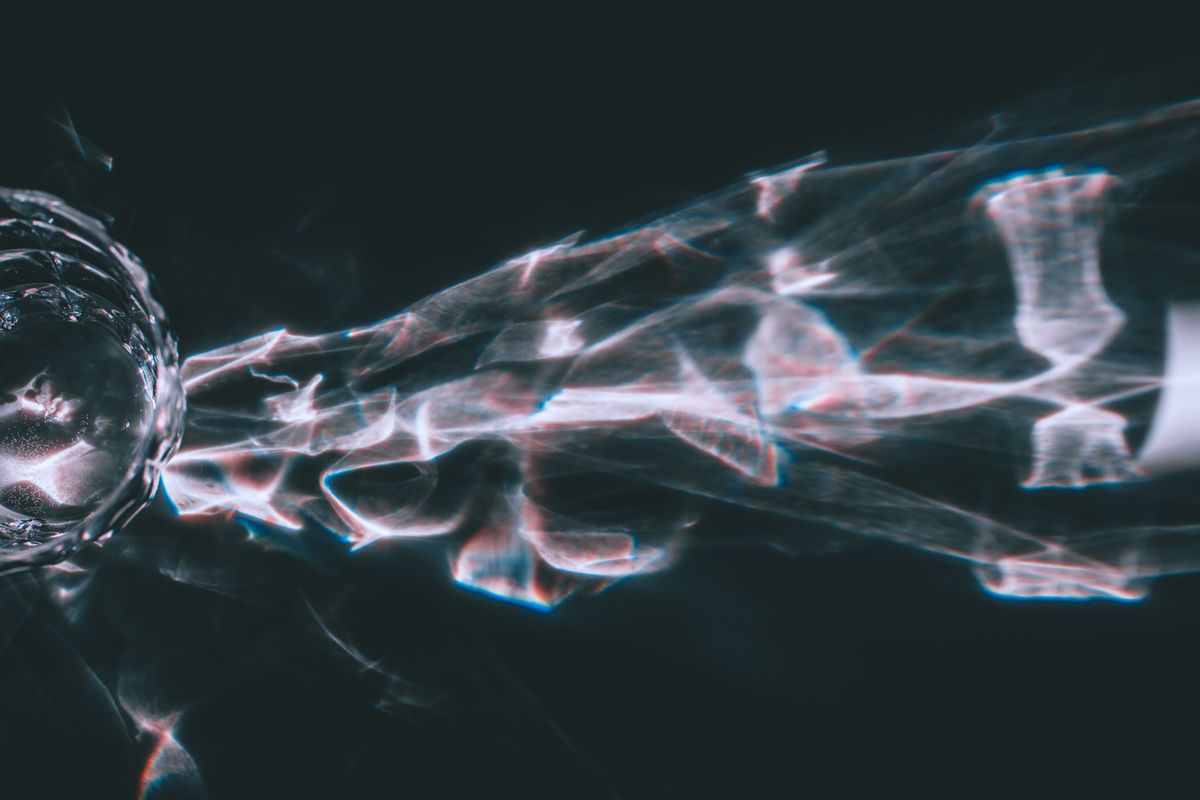
When light hits any material, it can be reflected, refracted, or absorbed. These three interactions — reflection refraction and absorption — are the only ways light and matter can interact at a macroscopic level. Most objects do all three at once, but one usually dominates. Here is how each one works, step by step.
Think of light like a ball thrown at different surfaces. Throw it at a brick wall and it bounces back — that is reflection. Throw it at a net and it passes through but changes direction — that is refraction. Throw it at thick mud and it sinks in, transferring its energy — that is absorption. Light does the same thing, just at 299,792,458 metres per second.
Reflection: when light bounces back
Reflection happens when light hits a surface and bounces off without entering the material. The law of reflection is simple: the angle at which the light arrives equals the angle at which it leaves, measured from an imaginary line perpendicular to the surface (the normal).
Two types of reflection exist:
- Specular reflection happens on smooth surfaces like mirrors or still water. All the reflected rays stay parallel, producing a clear image.
- Diffuse reflection happens on rough surfaces like paper or brick. The rays scatter in all directions, which is why you see the surface itself rather than a reflection.
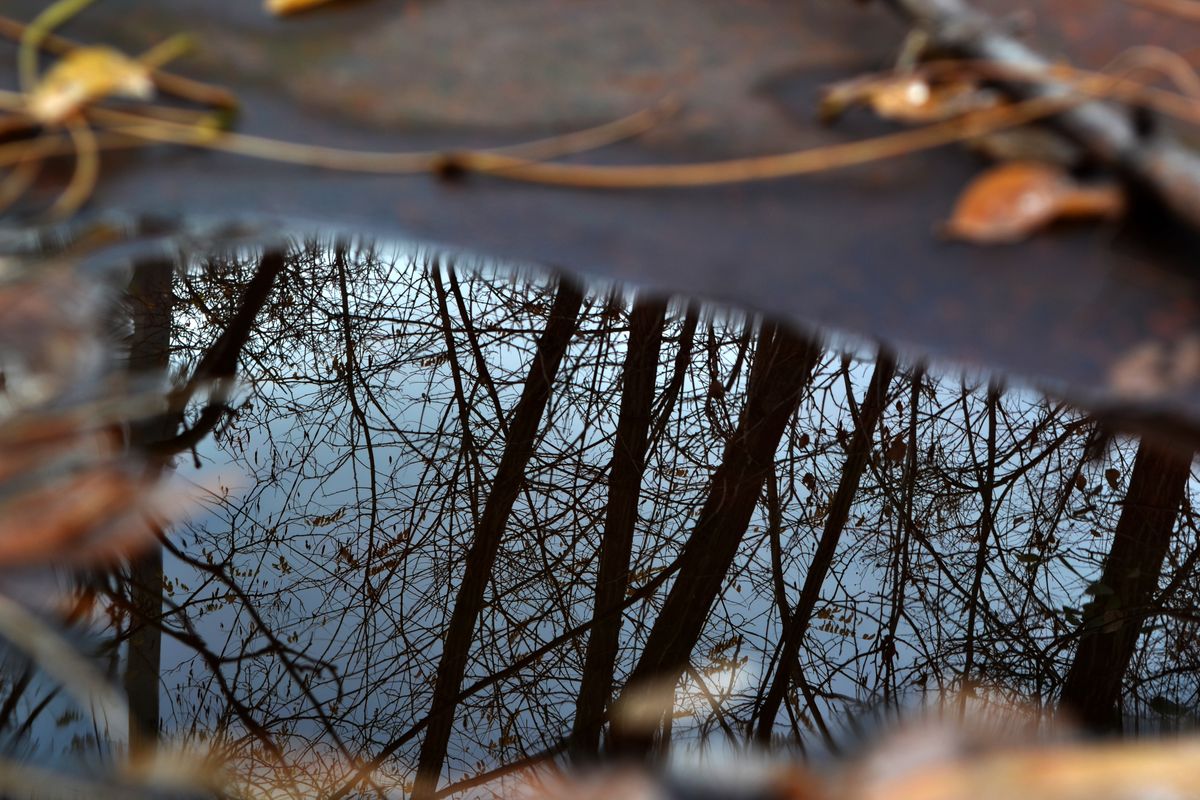
Every time you look in a mirror or see your reflection in a window, you are seeing reflection in action. For a detailed comparison of reflection with refraction, see our guide on reflection vs refraction.
Refraction: when light bends through a material
Refraction is the bending of light as it passes from one material into another. It happens because light travels at different speeds in different materials — fastest in a vacuum (299,792,458 m/s) and slower in anything else.
Picture a car driving off smooth tarmac onto sand at an angle. The front wheel that hits the sand first slows before the other wheel, so the car pivots toward the sand. Light does the same: the part of the wavefront that enters the denser medium first slows first, and the beam bends toward the normal.
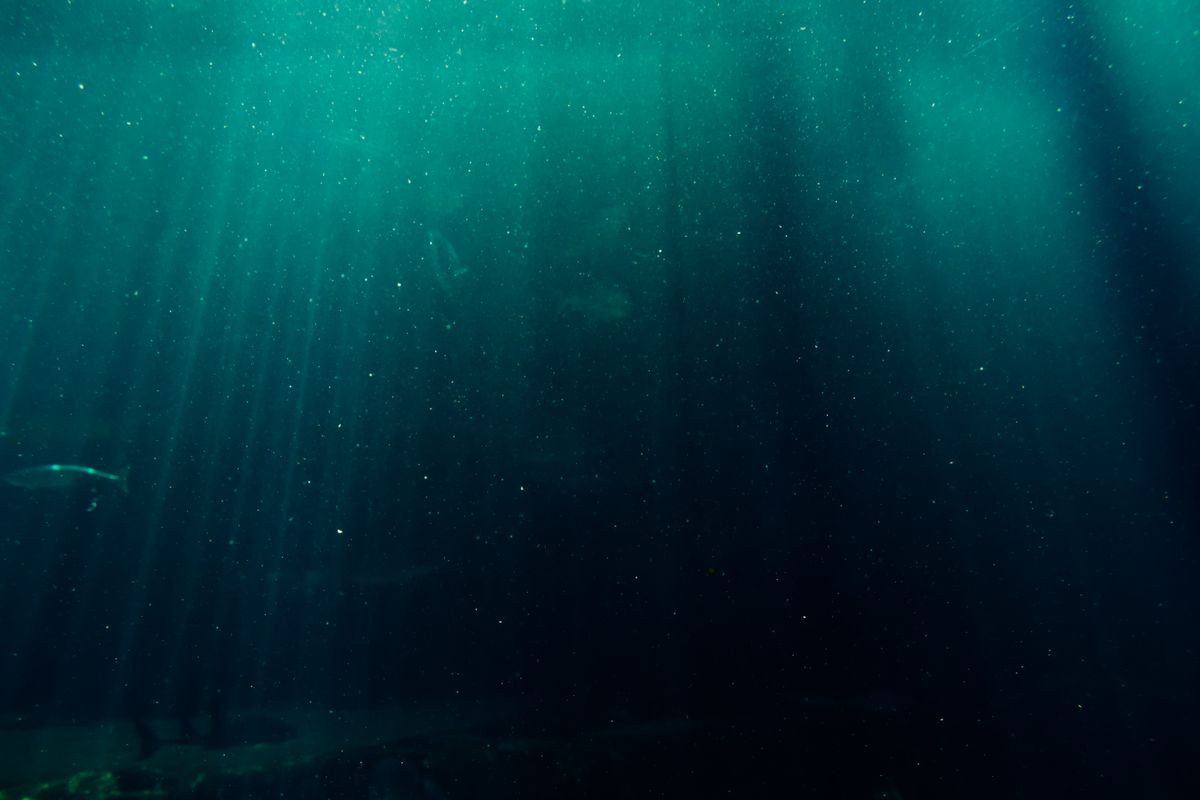
A straw looking bent in a glass of water is the classic example. The light from the submerged part of the straw refracts as it exits the water, shifting the apparent position. A rainbow is the same physics on a grander scale — each water droplet refracts sunlight, reflects inside, then refracts again, splitting white light into its component colours.
The exact amount of bending follows Snell's law: n₁ sin θ₁ = n₂ sin θ₂. Water has a refractive index of 1.333, so light slows to about 225,000 km/s inside it. For worked examples, see Snell's law and the angle of refraction.
Absorption: when light is taken in
Absorption happens when light enters a material and its energy is transferred to the atoms or molecules, typically becoming heat. Photons interact with electrons in the material; if the photon's energy matches an available energy transition, the electron absorbs it and jumps to a higher energy level. That extra energy eventually becomes vibrational motion — heat.
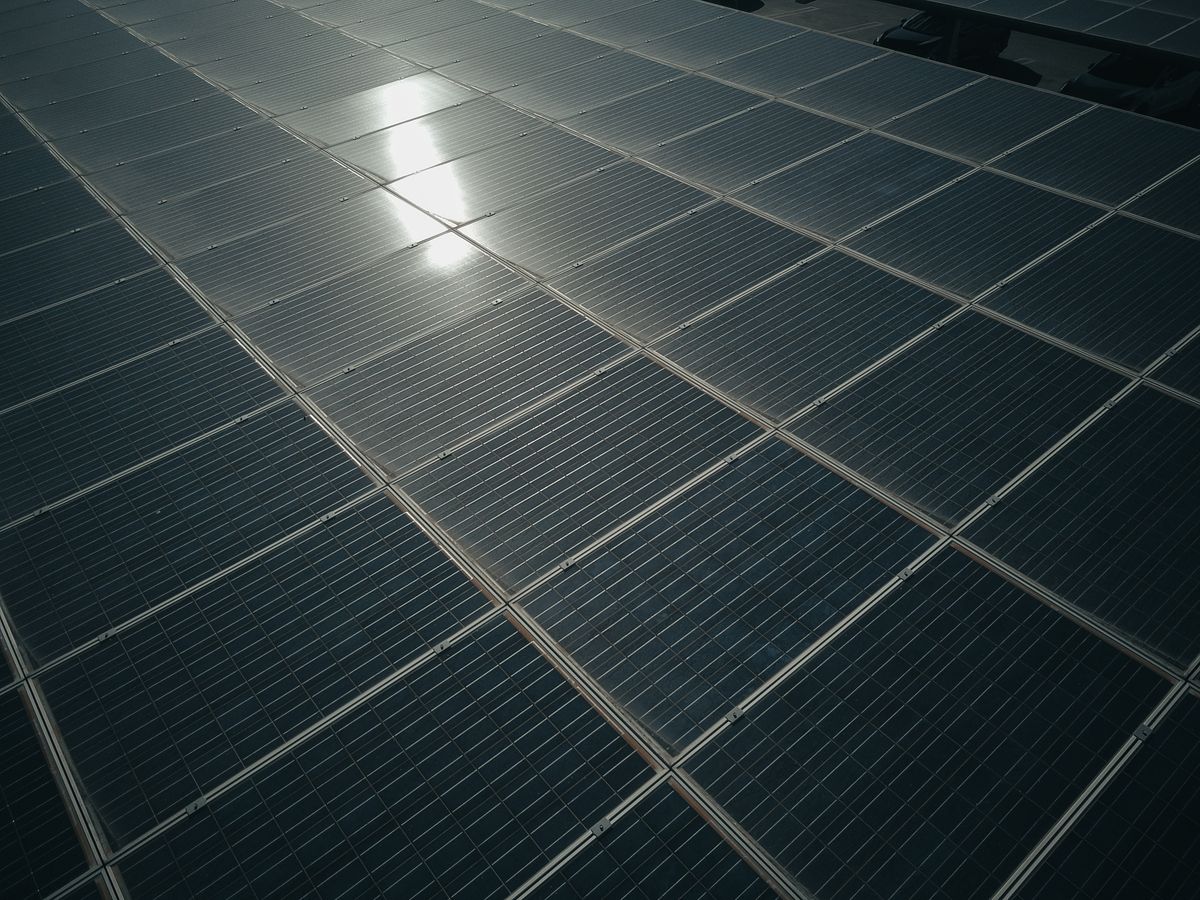
This is why a black pavement gets hot in the summer sun while a white pavement stays cooler — black absorbs most wavelengths, while white reflects most of them. The NASA Science page on wave behaviours notes that dark asphalt absorbs so much energy that it can raise a city's surface temperature by as much as 10 °C, creating an urban heat island effect.
Colour is directly linked to absorption. A red apple looks red because its skin reflects red wavelengths and absorbs blue and green. A green leaf reflects green for the same reason — it absorbs blue and red light for photosynthesis. An object that absorbs all visible wavelengths looks black, while one that reflects all of them looks white. For more detail on the absorption mechanism, see what happens when light is absorbed.
Reflection refraction and absorption: the 3-way comparison
| Aspect | Reflection | Refraction | Absorption |
|---|---|---|---|
| What happens | Light bounces off the surface | Light bends as it passes through | Light is taken in and converted to heat |
| Light speed | Unchanged | Changes (slows in denser medium) | Drops to zero (energy transferred) |
| Wavelength | Unchanged | Changes (shorter in denser medium) | Absorbed wavelengths disappear from the reflected/transmitted spectrum |
| Surface needed? | Yes (the interface) | Yes (must cross a boundary) | Yes (must enter the material) |
| Best surfaces | Smooth, metallic surfaces | Transparent materials (glass, water) | Dark, rough materials |
| Everyday example | Mirror, still water | Straw in water, rainbow | Black pavement in sunlight |
| Key equation | θᵢ = θᵣ (angles equal) | n₁ sin θ₁ = n₂ sin θ₂ | E = hf (photon energy) |
What determines which interaction dominates?
Three factors decide what happens when light meets a material:
The material's structure. Metals have free electrons that re-radiate incoming light almost instantly, producing strong reflection. Glass and water have tightly bound electrons that let light pass through. Dark organic materials have molecular structures that absorb broad ranges of wavelengths.
The surface smoothness. A smooth surface (like polished glass) reflects specularly. A rough surface (like frosted glass) scatters light diffusely. The same material, polished vs roughened, behaves completely differently.
The wavelength of the light. A material that transmits visible light may absorb infrared or ultraviolet. Glass is transparent to visible light but absorbs ultraviolet — which is why you cannot get a suntan through a window. The BBC Bitesize guide on transmission and absorption explains how greenhouses use this wavelength-dependent behaviour to trap heat.
Where you see all three working together
A single object often demonstrates all three interactions at once. Sunlight hitting a window: about 8% reflects off the surface (reflection), most passes through with a slight bend (refraction), and a small percentage warms the glass (absorption). The proportions change with the angle — at a steep angle, more light reflects.
A swimming pool is another example. Light reflects off the water surface (reflection), bends as it enters (refraction), travels through the water (transmission), and some is absorbed by the pool lining, warming the water. This is why the BYJU'S guide on transmission, absorption and reflection of light treats all three as parts of a single framework.
Common misconception: reflection and refraction are opposites
People sometimes think reflection and refraction are opposite behaviours — light either bounces or bends. In reality, both usually happen at the same interface. When light hits a glass of water, some reflects off the surface (allowing you to see the glass) and the rest refracts into the water (letting you see the straw inside). The split between reflected and transmitted light depends on the angle and the refractive indices of the two materials.
The same is true for absorption — it is rarely 100%. A black object absorbs most light but still reflects a few percent. A mirror reflects most light but absorbs a tiny fraction. The three interactions are not rivals; they are partners that share the incoming energy in proportions set by the material and the light.
Summary
Light interacts with materials through exactly three mechanisms: reflection, refraction and absorption. Reflection bounces light off surfaces. Refraction bends light as it passes through. Absorption converts light into heat. Every object you see is doing some combination of all three, and the proportions determine everything from colour to temperature to whether a material is transparent or opaque.
Frequently Asked Questions
What are the three things that can happen when light hits a material?
When light hits a material, it can be reflected (bounced off the surface), refracted (bent as it passes through), or absorbed (taken in and converted to heat). Most real materials do a combination of all three — the proportions depend on the material's properties and the wavelength of the light.
What is the difference between reflection, refraction and absorption?
Reflection is light bouncing off a surface without entering it — like a mirror. Refraction is light bending as it passes from one material into another — like a straw looking bent in water. Absorption is light being taken into a material and converted to heat — like a black pavement getting hot in the sun.
How do reflection, refraction and absorption affect the colour we see?
The colour you see is determined by which wavelengths are reflected and which are absorbed. A red apple looks red because its surface reflects red wavelengths and absorbs all the others. A green leaf looks green because it reflects green light and absorbs blue and red for photosynthesis.
Can reflection, refraction and absorption happen at the same time?
Yes. When sunlight hits a window, about 8% reflects off the surface, most transmits through (with some refraction), and a small amount is absorbed as the glass warms slightly. The three interactions always happen together — the question is which one dominates.
What determines whether light is reflected, refracted or absorbed?
Three factors matter: the material's atomic structure, the smoothness of the surface, and the wavelength of the light. Smooth surfaces reflect more (specular reflection). Materials with free electrons (metals) reflect strongly. Transparent materials let light through with refraction. Dark, rough materials absorb more.
Why do mirrors reflect light but glass lets it through?
Mirrors have a thin metal coating on the back. Metals contain free electrons that absorb incoming photons and re-emit them almost instantly — the net effect is reflection. Glass has no free electrons; its electrons are bound tightly, so light passes through with only a small fraction reflected at each surface.

About Umar Farooq
Umar Farooq writes in-depth guides on the physics of light and optics — from reflection, refraction, and lenses to diffraction, lasers, and fiber optics, explained from first principles.
Read more about Umar Farooq →