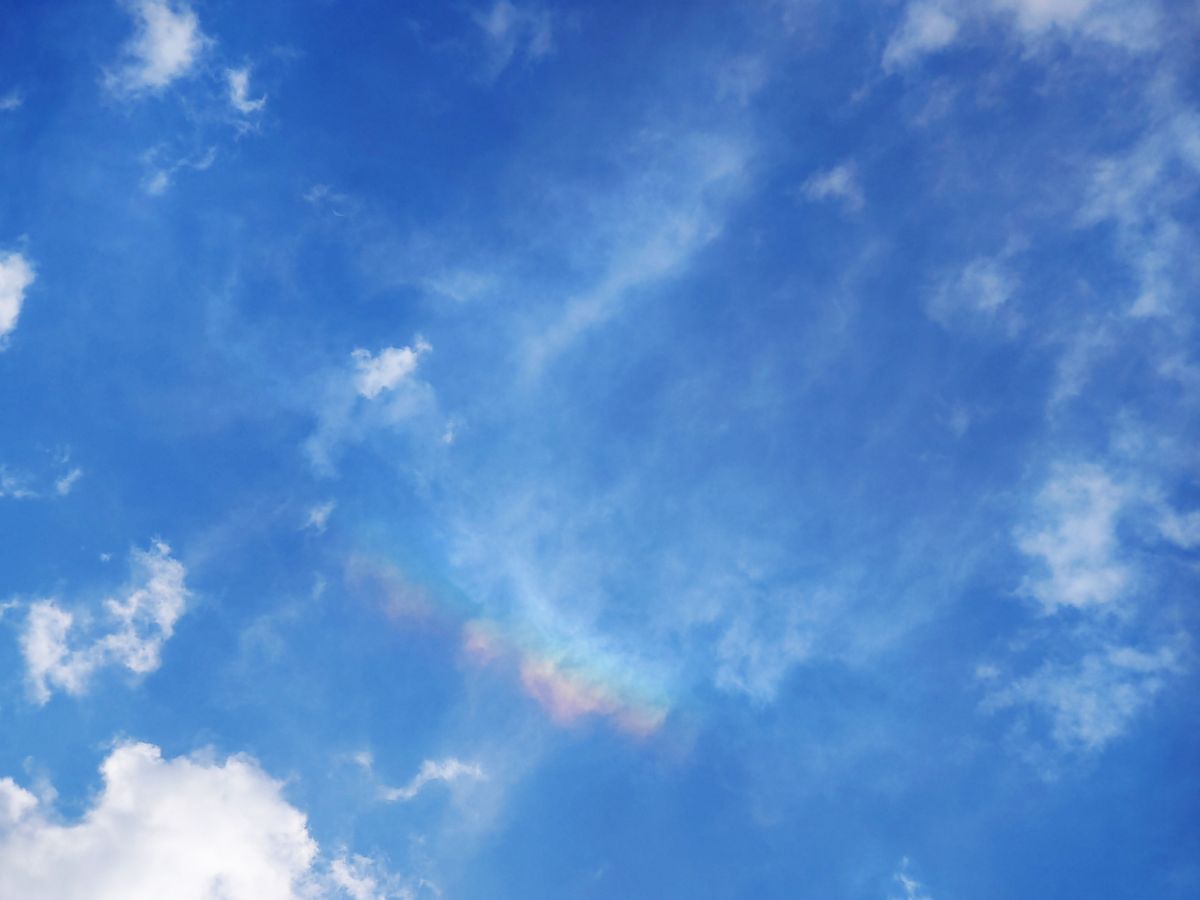
Diffraction and refraction both bend light, but they bend it for different reasons. Refraction bends light when it passes from one medium into another — like air to water — because the change in speed turns the wave. Diffraction spreads light when it encounters an obstacle or an opening about the size of its wavelength — the wave bends around the edges and fans out. The confusion is understandable: both change the direction of light. But the mechanism, the cause, and the everyday effects are entirely different. Here are the 6 critical differences, with examples to make each one stick.
What is refraction?
Refraction is the bending of light when it crosses a boundary between two different media. Light travels at different speeds in different materials — fastest in a vacuum (299,792,458 m/s) and slower in anything else. When a wave enters a new medium at an angle, the part that hits first changes speed first, and the whole beam pivots.
Picture a car driving off smooth tarmac onto sand at an angle. The front wheel that reaches the sand first slows down before the other wheel, so the car swings toward the sand side. Light does the same. The part of the wavefront that enters the denser medium first slows first, and the beam bends toward the normal line. That change of direction is refraction.
The amount of bending is given by Snell's law: n₁ sin θ₁ = n₂ sin θ₂, where n is the refractive index of each medium. For example, when light enters water (index 1.333) from air (1.0003), it slows to about 225,000 km/s and bends by an angle you can calculate precisely.
What is diffraction?
Diffraction is the spreading out of waves when they pass through an opening or around an obstacle. It happens when the size of the opening or obstacle is comparable to the wavelength of the wave. Unlike refraction, diffraction does not require a change of medium — it can happen entirely in air, water, or any single material.
Picture sea waves approaching a narrow harbour mouth. The incoming waves are straight, but after they pass through the gap, they spread out in circular arcs. The narrower the gap relative to the wavelength, the more the waves spread. Light does the same thing — but because its wavelength is tiny (around 500 nm — roughly 100 times thinner than a human hair), you need very narrow slits to see it clearly.

The amount of diffraction depends on the ratio of the wavelength to the obstacle size. For a single slit, the angle of spread is roughly θ ≈ λ/a, where a is the slit width. Wider slits give less spread; longer wavelengths diffract more.
This is a key distinction between refraction vs diffraction: refraction needs a change of medium, while diffraction is purely about the geometry of the wave encountering a gap or edge.
Refraction vs diffraction: the 6 key differences
| Aspect | Refraction | Diffraction |
|---|---|---|
| Cause | Change in wave speed when entering a different medium | Wave spreading when encountering an obstacle or opening |
| Medium | Requires a boundary between two media | Happens in a single medium |
| Wave speed | Always changes | Stays the same |
| Wavelength | Changes (shorter in denser medium) | Stays the same |
| Effect on the wave | Bends the direction | Spreads and bends, creating interference patterns |
| Everyday visibility | Easy to see (straw in water, rainbows) | Subtle for light (needs narrow slits), obvious for sound |
Let's go through each point in more detail.
1. The cause is fundamentally different
Refraction is caused by a change in the speed of light. When light moves from air into glass, it slows from 299,792,458 m/s to about 197,000 km/s. That slowdown at an angle redirects the beam. No change of medium, no refraction.
Diffraction does not involve a change in speed. It is caused by the wave nature of light itself. When a wavefront encounters an obstacle, every point on the unobstructed part acts as a new source of spherical wavelets (Huygens' principle). These wavelets interfere — reinforcing in some directions, cancelling in others — and the net effect is a spreading of the wave beyond the geometrical shadow.
2. Refraction needs two media; diffraction does not
You cannot have refraction without a boundary. Every example — a straw in water, a lens focusing light, a rainbow in the sky — involves light crossing from one material into another.
Diffraction works fine in a single medium. A laser beam passing through a narrow slit in air will diffract and produce a pattern of bright and dark bands called a diffraction pattern. No second medium needed. This is also why you can hear someone around a corner — the sound diffracts through the doorway, all within the same air.
3. Wave speed changes in refraction, not in diffraction
When light refracts, its speed changes. How much? Going from air to crown glass (index 1.52), light drops from 299,792,458 m/s to about 197,000 km/s. Going from air to diamond (2.417), it drops to about 124,000 km/s. The speed change is what causes the bending.
In diffraction, the speed of the wave does not change at all. The frequency, wavelength, and speed all remain constant. Only the direction and intensity distribution of the wave are altered. This is a critical distinction because it means diffraction is purely a geometric/ interference effect, not a material one.
4. Wavelength changes in refraction, not in diffraction
When light enters a denser medium, its frequency stays the same (the colour doesn't change) but its wavelength shortens. In water, red light (625 nm in air) becomes about 469 nm. This is why objects underwater look slightly different in colour — the wavelength of each colour has contracted, but your eye still interprets the frequency.
In diffraction, the wavelength does not change. The spacing of the interference fringes depends on the wavelength, but the wavelength itself is not altered by the diffraction process. The Physics Classroom tutorial on reflection, refraction, and diffraction explains how both effects are boundary behaviours of waves, but with this key difference in what happens to the wave inside each process.
5. Diffraction produces interference patterns; refraction does not
This is the most visually dramatic difference. When light diffracts through a narrow slit or around an obstacle, it produces a characteristic pattern of bright and dark bands — the diffraction pattern. These bands are caused by constructive and destructive interference between different parts of the wavefront.
Thomas Young demonstrated this in 1801 by shining light through two parallel slits. Instead of two bright lines on the screen, he got a series of alternating bright and dark bands. It was the decisive proof that light behaves as a wave. As he described it in his Bakerian Lecture to the Royal Society, the bright bands appeared wherever waves from the two slits arrived in step, and dark bands wherever they arrived out of step. Particles cannot produce that pattern; only interfering waves can.
Refraction does not produce interference patterns. A refracted beam changes direction cleanly, without the spreading and banding that characterises diffraction. However, refraction can combine with interference in devices like the diffraction grating, where light refracts through multiple parallel slits and the diffracted beams interfere with each other — the Lumen Learning guide on diffraction gratings explains this combined effect well.
6. Visibility differs hugely between the two
You see refraction every day. A straw looking bent in a glass of water. A rainbow after a storm. The distorted view through a glass of wine. The way a spoon appears magnified in a teacup. These are all refraction, and they are obvious to anyone.
Diffraction of light is subtle. The most common everyday example is the rainbow pattern you see when light reflects off a CD or DVD — those are tiny grooves acting as a diffraction grating, spacing out the colours by wavelength. Another is the soft glow around a bright light source viewed through a fine curtain or your eyelashes. But most people go through life without noticing light diffraction at all, because our eyes and the world around us are not built with tiny enough slits.
Sound diffraction is another story — you experience it constantly. Every time you hear someone talking from another room, sound is diffracting around the door frame. Long wavelengths (bass notes) diffract more than short ones (treble), which is why you hear the thump of a car stereo blocks away but not the melody.
Which one is happening in front of you?
One question settles it: did the wave cross into something different?
Yes, it crossed a boundary — refraction. Light going from air into water or glass, changing speed and bending at the surface. The straw that looks broken, the pool that looks shallower than it is, and every lens you own.
No boundary, only an edge or a gap — diffraction. Light spreading after a narrow slit, sound reaching you around a corner, the rainbow sheen off a CD. Nothing changed medium; the wave simply bent past an obstruction.
Try it on a real case: a rainbow is refraction, because light enters water droplets. The coloured rings around a streetlamp on a misty night are diffraction — light bending past tiny droplets without crossing into them.
Where you see refraction and diffraction in daily life
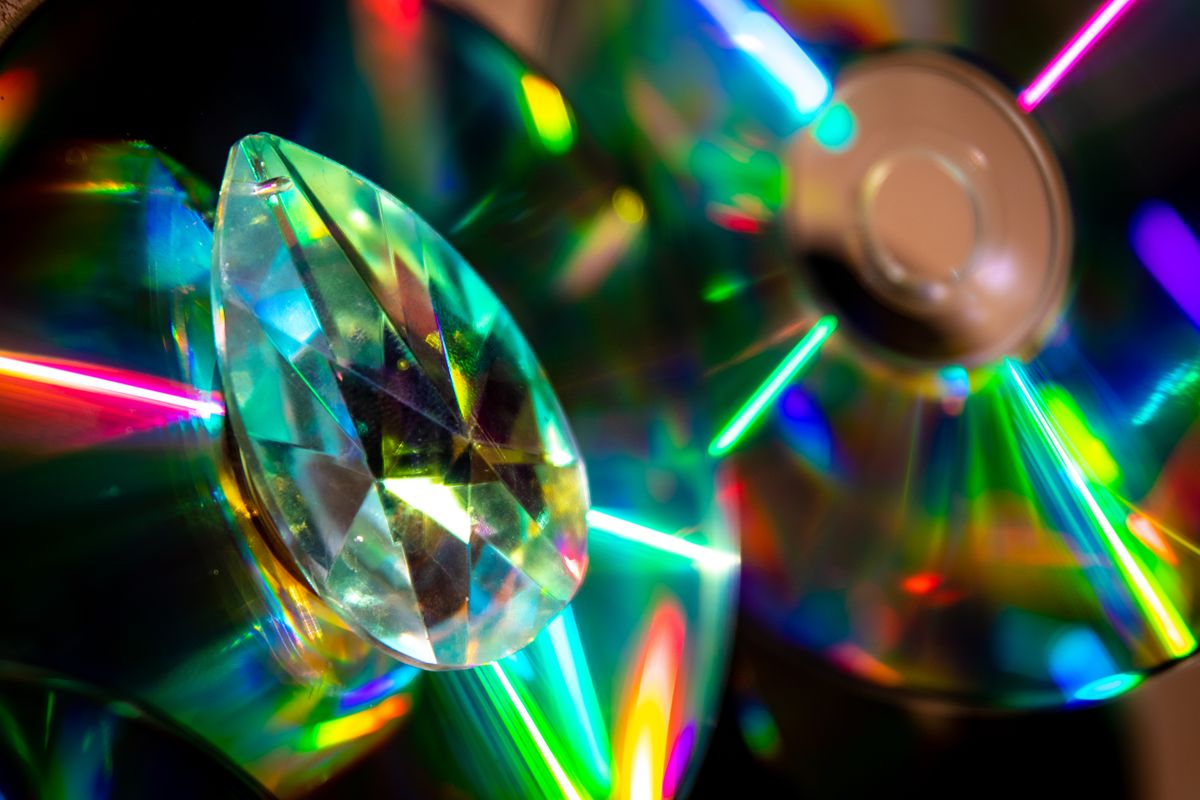
Everyday refraction
Eyeglasses and contact lenses correct vision by refracting light by precisely the right amount to focus on your retina. A +2 dioptre lens converges light; a −3 dioptre lens diverges it. Both are pure refraction.
Rainbows are refraction plus one internal reflection inside each water droplet. Different colours (wavelengths) have slightly different refractive indices in water, so they bend by different angles and fan out into the familiar arc — red at 42°, violet at 40°.
The bent-straw illusion in a glass of water is the classic kitchen-table demonstration. Light from the submerged part of the straw refracts as it exits the water, shifting the apparent position so the straw looks disjointed at the surface.
Lenses in cameras, microscopes, and telescopes all use refraction through curved glass surfaces to focus light. Whether it's a 15-element camera lens or a single magnifying glass, the underlying physics is Snell's law at every curved boundary. For a full breakdown of this, see our guide on how lenses use refraction.
Everyday diffraction
CDs and DVDs have a spiral track of microscopic pits spaced about 1.6 µm apart — comparable to the wavelength of visible light. When white light hits these grooves, each colour diffracts at a slightly different angle, producing the familiar rainbow sheen. The same principle is used in laboratory diffraction gratings to analyse the spectrum of light sources.
The soft glow around streetlights on a foggy night is partly diffraction of light around tiny water droplets in the air. The droplets act as obstacles that spread the light into a halo.
Your ability to hear someone in the next room is sound diffraction. Speech has wavelengths of roughly 0.5–3 m, similar to the width of a doorway, so the sound spreads around the frame and reaches your ears even without a direct line of sight. As the Encyclopaedia Britannica entry on diffraction notes, with sound "only the longer bass notes are diffracted" behind obstacles, which is why lower frequencies carry around corners better than higher ones.
X-ray crystallography uses diffraction of X-rays (wavelength ~0.1 nm) through the atomic lattice of crystals. The resulting diffraction pattern reveals the arrangement of atoms inside the material — how scientists determined the double-helix structure of DNA.
Common misconception about refraction vs diffraction
A widespread confusion in the refraction vs diffraction debate is thinking that diffraction is just refraction around an obstacle. People often say "light bends around the corner of a door" and call it refraction, when it is actually diffraction.
The difference is straightforward. Refraction requires a change of medium — light has to go from one material into another. When you close a door and light spills around the edge into a dark room, no medium change has occurred. The air on both sides of the door is the same. The light is spreading because its wavefront is being partially blocked by the door edge, and the unobstructed part fans out by Huygens' principle. That is diffraction, not refraction.
Similarly, a common textbook diagram shows light "bending" as it passes from shallow to deep water. That is water-wave refraction, driven by a change in wave speed. If the same water waves pass through a gap in a harbour wall, that is diffraction — the medium (water) is the same on both sides.
The simplest test: changed medium → refraction. Same medium, obstacle or slit → diffraction. If in doubt, check whether the wave speed has changed. No speed change means diffraction.
Summary
Refraction and diffraction both redirect waves, but they are not the same phenomenon. Refraction is what happens when light changes speed at a material boundary — it is the physics behind lenses, rainbows, and eyeglasses. Diffraction is what happens when waves spread around obstacles — it is the physics behind interference patterns, CD rainbows, and hearing around corners.
| Question | Refraction | Diffraction |
|---|---|---|
| What causes it? | Change in wave speed | Obstacle or opening |
| Medium needed? | Two different media | One medium is enough |
| Does speed change? | Yes | No |
| Does wavelength change? | Yes | No |
| Interference pattern? | No | Yes |
| Easy to see with light? | Yes, very | Only with narrow slits/gratings |
For more on the broader family of light behaviour, compare this with reflection vs refraction, or go deeper into the mechanism of what causes refraction at a material boundary. If you want the maths behind how much a wave bends, our guide to Snell's law and the angle of refraction has step-by-step worked examples.
Frequently Asked Questions
What is the difference between refraction and diffraction?
Refraction is the bending of light when it passes from one medium to another (like air to water), caused by a change in speed. Diffraction is the spreading of light when it passes through an opening or around an obstacle, caused by wave interference. Refraction needs a boundary between two media; diffraction can happen in a single medium.
Can refraction and diffraction happen at the same time?
Yes. Light entering a water droplet, for example, refracts at the surface and then diffracts slightly around the droplet's edges. In most real-world scenarios, both effects are present, though one usually dominates.
Does refraction or diffraction slow light down?
Only refraction changes the speed of light. When light enters a denser medium, it slows down. Diffraction does not change the speed of light — it only changes the direction and distribution of the wave.
Which is more noticeable in everyday life, refraction or diffraction?
Refraction is far more noticeable. You see it in rainbows, bent straws in water, and eyeglasses. Diffraction of light is subtle — you need narrow slits or fine gratings to see it clearly, though sound diffraction happens all the time (hearing someone around a corner).
How are refraction and diffraction similar?
Both are wave phenomena that change the direction of wave propagation. Both are governed by the wavelength of the wave relative to something — for refraction, relative to the change in medium; for diffraction, relative to the size of the obstacle or opening. Both also produce interference effects under the right conditions.
What is the main cause of diffraction?
Diffraction is caused by the wave nature of light. When a wavefront encounters an obstacle or opening, each point on the unobstructed part of the wavefront acts as a new source of spherical waves (Huygens' principle). These secondary waves interfere with each other, creating the spreading and pattern characteristic of diffraction.
Does diffraction occur with sound and water waves too?
Yes. Diffraction happens with all types of waves. Sound diffracts around doorways, which is why you can hear someone in the next room. Water waves diffract around harbour walls. The amount of diffraction depends on the wavelength — longer wavelengths diffract more, which is why bass sounds travel around corners better than treble.

About Umar Farooq
Umar Farooq writes in-depth guides on the physics of light and optics — from reflection, refraction, and lenses to diffraction, lasers, and fiber optics, explained from first principles.
Read more about Umar Farooq →