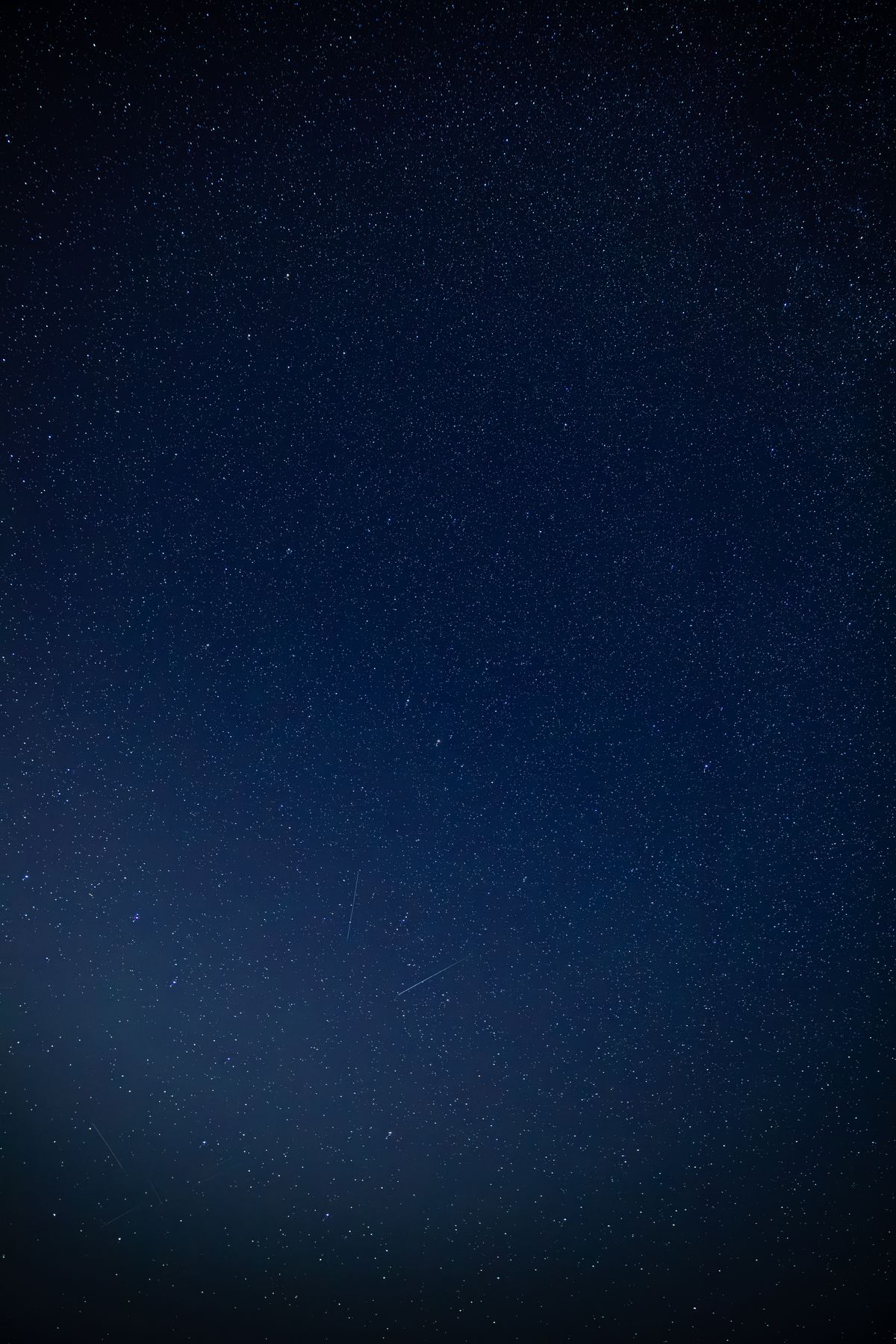
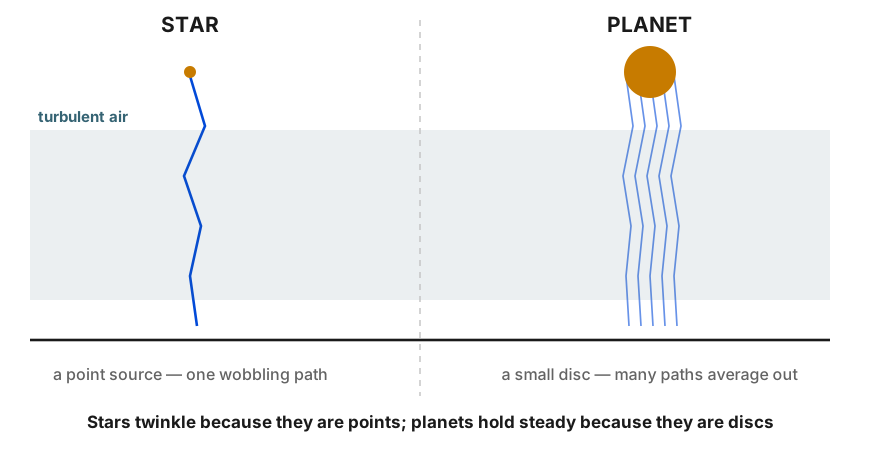
Stars twinkle because they are point sources of light whose rays are bent by Earth's restless atmosphere. Planets shine steadily because they are tiny discs — the same turbulence that scatters a star's light averages out across a planet's face. The whole difference comes down to one thing: angular size.
Here is the short version of why stars twinkle but planets don't: stars are so far away they appear as single points; planets are close enough that they show as tiny discs. Atmospheric turbulence messes with point-source light completely, but across a disc the mess cancels out. Below are the 4 reasons that explain why stars twinkle but planets don't, with the physics, the real-world test, and what it means for stargazing.
1. The point-source effect: why stars twinkle
A star is so far away — the nearest, Proxima Centauri, is about 4.25 light-years from Earth — that even the most powerful telescopes cannot resolve it as a disc. To your eye and to the atmosphere, a star is a point source: a single, infinitesimally small dot of light.
As that dot of light enters Earth's atmosphere, it passes through dozens of shifting layers of air at different temperatures and densities. Each layer bends (refracts) the light by a tiny amount. Warm air is less dense and bends light less; cool air is denser and bends light more. Because the atmosphere is never still — wind, convection, and temperature gradients keep it churning — the bending changes from millisecond to millisecond.
Your eye sees this as a rapid fluctuation in brightness and position. That is the twinkle. Astronomers call it astronomical scintillation.
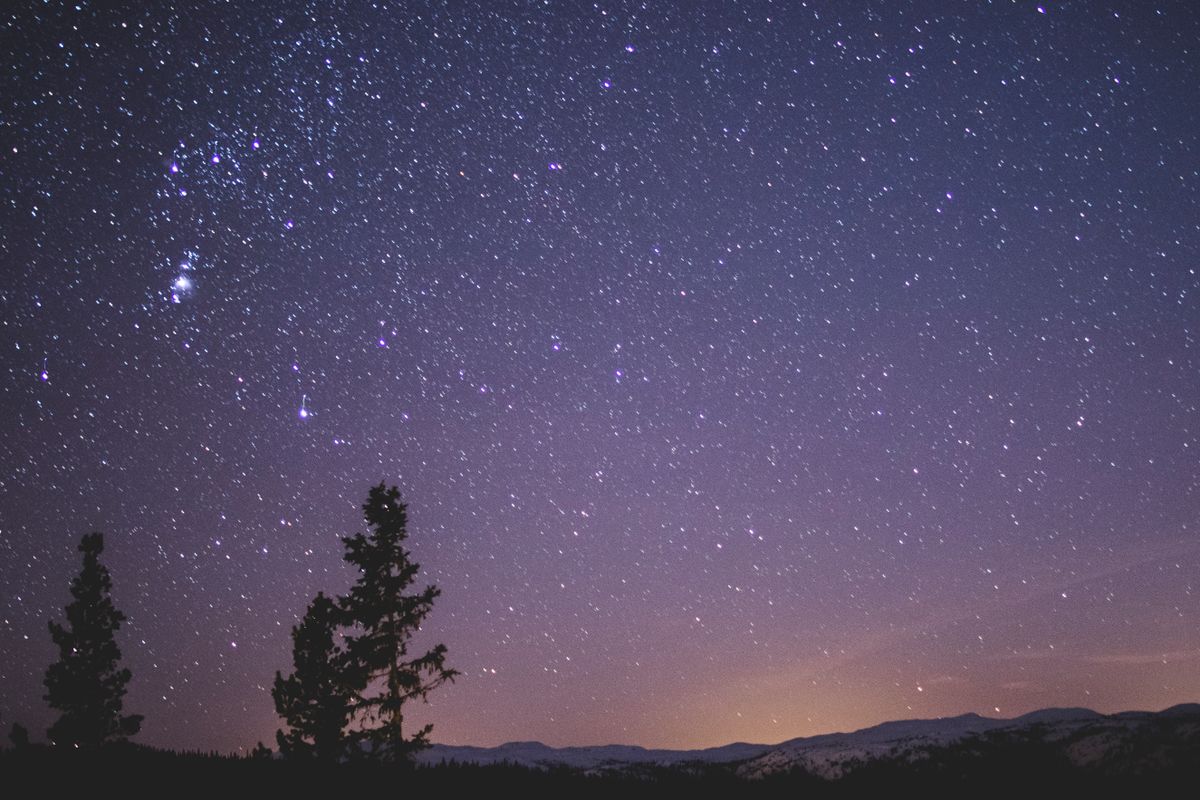
The effect is strongest near the horizon. Starlight from a low star travels through roughly 40 times more air mass than light from a star overhead — more atmosphere means more turbulence, so the twinkling is far more noticeable. Bright stars like Sirius, Betelgeuse, and Vega show the effect most dramatically, sometimes flashing red, blue, and white in rapid succession. For more on how refraction works in the atmosphere, see our guide to refraction at night.
2. The disc effect: why planets stay steady
Planets are much closer. Venus is never more than about 261 million km away; Jupiter at its closest is about 588 million km. That proximity means they appear as tiny discs — small but resolvable. Jupiter's disc, for instance, is about 40 arcseconds across when viewed from Earth — hundreds of times wider than the atmospheric turbulence cells that cause twinkling.
Here is the key point. Light from different parts of a planet's disc travels through separate atmospheric paths. One part of the disc might get refracted upward while another part gets refracted downward. The random fluctuations from each part cancel each other out, and the total brightness reaching your eye stays essentially constant.
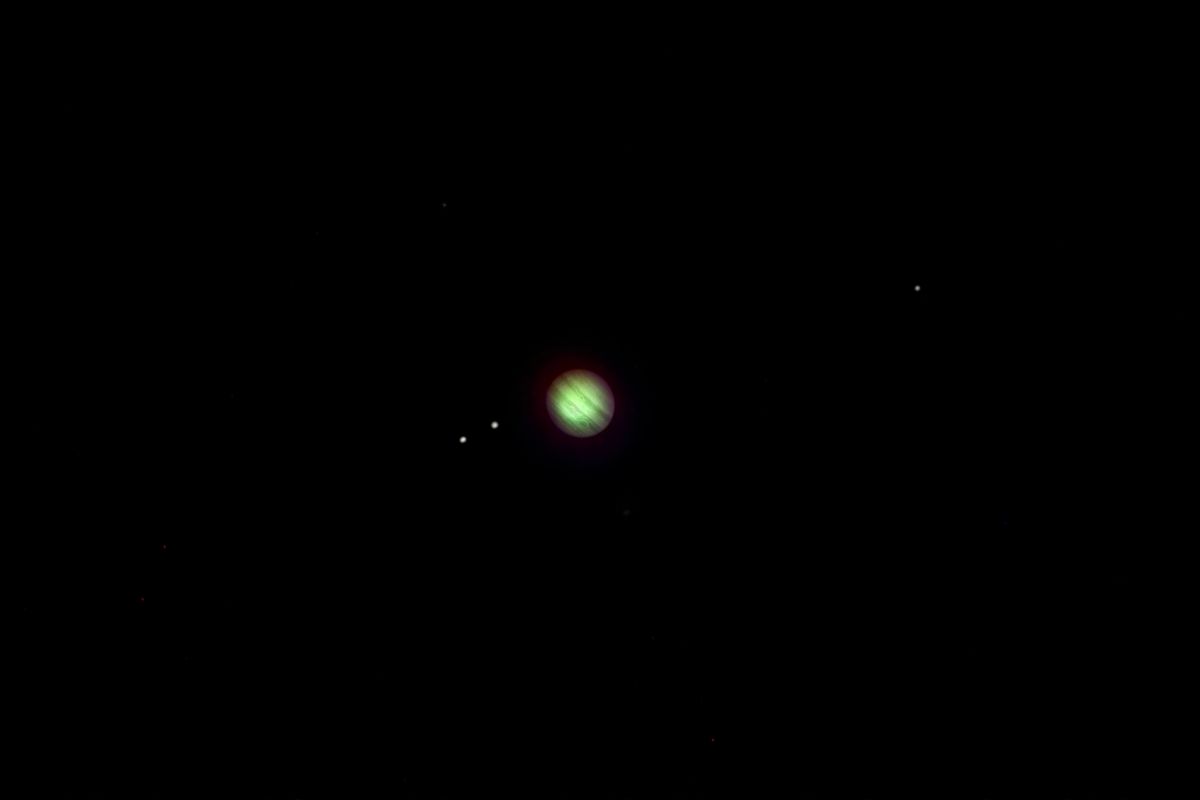
The result is a steady, non-twinkling glow.
The analogy (from our teaching playbook). Picture a coin and a dinner plate at the bottom of a rippling swimming pool. The coin shimmers and dances because a single ripple covers its whole surface — every part of it shifts at once. The dinner plate barely seems to move: the ripple that lifts one edge lowers the other, and the plate stays put. A star is the coin. A planet is the plate.
This analogy works beautifully for the basic idea, but here is where it stops: the plate does not actually "resist" ripples — the averaging happens because each point on the disc independently shifts, and your eye sums them all. It is not that planets are immune to turbulence; it is that their light has enough independent samples to average cleanly.
3. When planets do twinkle (and what it tells you)
Planets can twinkle, but only under special conditions. If you spot Venus or Jupiter low on the horizon, you might see it shimmer. The reason is the same one that makes low stars twinkle more: the light passes through far more atmosphere.
When a planet sits within about 10° of the horizon, its light travels through roughly 40 times more air mass than when it is overhead. The extended path means the turbulence cells are now numerous enough and large enough relative to the disc that the averaging breaks down partially. Venus near the horizon can flicker noticeably.
This is a useful practical rule for stargazers: if a bright dot twinkles, it is a star. If it shines steadily, it is almost certainly a planet. The exception — a low, twinkling planet — is rare enough that the rule still works for most of the night. For more on how to use this and other tricks, browse our optics guides.
4. What this means for stargazing and telescopes
Understanding why stars twinkle but planets don't is not just a curiosity — it has real consequences for anyone using a telescope.
Astronomers use the term seeing to describe how stable the atmosphere is. Good seeing means calm air and sharp images. Poor seeing means turbulence that makes stars dance and blurs fine detail. The twinkling you see with your naked eye is the same turbulence that degrades telescopic views.
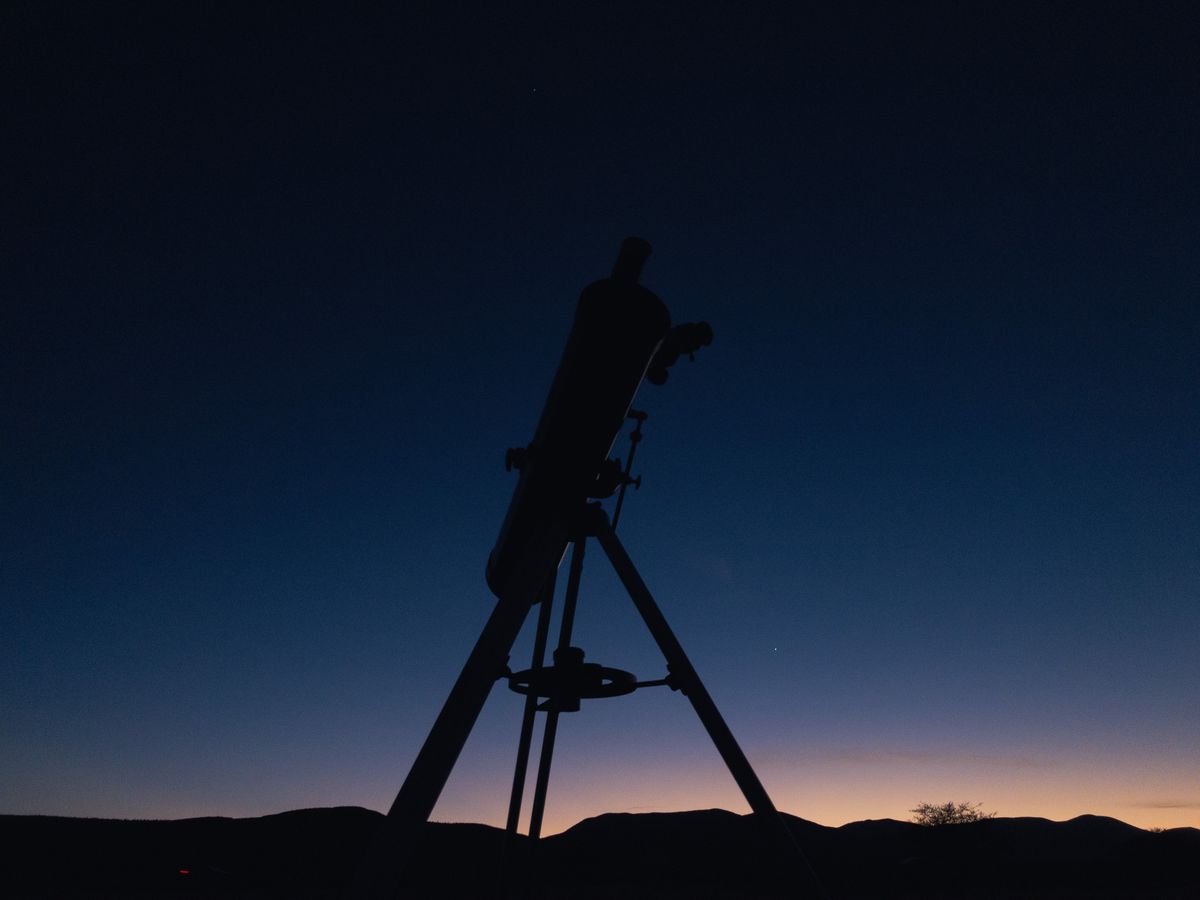
Practical tips for better observing:
- Observe objects when they are high overhead. The less atmosphere their light passes through, the steadier the image. A star at 45° altitude is shifted by less than 1 arcminute of refraction; one at 10° altitude shifts by over 5 arcminutes.
- Use planets when seeing is poor. On nights when stars are twinkling strongly, switch to Jupiter, Saturn, or Venus. Their extended discs are far less affected by turbulence and can show crisp detail even when the stars around them are dancing.
- Let your telescope cool. A warm telescope creates its own internal air currents that worsen image distortion. Let it sit outside for 30–60 minutes before observing.
For the full mathematical treatment of atmospheric refraction, including the formulas used to calculate refraction at any altitude, the Wikipedia entry on astronomical refraction is authoritative. The Scientific American article on star twinkling also explains the history of how scientists figured this out.
The question why stars twinkle but planets don't comes down to one thing: angular size. A star is a point, so turbulence scatters its single beam completely. A planet is a disc, so the scatter averages to zero. It is a neat piece of physics that you can check with your own eyes on any clear night — and knowing why stars twinkle but planets don't makes you a better observer.
Frequently Asked Questions
Why do stars twinkle?
Stars twinkle because of atmospheric turbulence — also called astronomical scintillation. Starlight passes through layers of air at different temperatures and densities, each bending the light slightly. Since a star is a point source, these tiny shifts translate directly into visible changes in brightness and colour.
Why don't planets twinkle like stars do?
Planets do not twinkle because they appear as tiny discs rather than points of light. Light from different parts of the disc travels through separate atmospheric paths, and the random fluctuations average out. The result is a steady, non-twinkling glow.
Do planets ever twinkle?
Yes — when they are very low near the horizon. Light from a low planet passes through much more atmosphere (roughly 40 times more air mass than overhead), so the turbulence can be strong enough to make even a disc shimmer noticeably. Venus near the horizon sometimes appears to twinkle.
Can you tell stars from planets by twinkling?
Yes. If a bright dot in the sky twinkles or flickers, it is almost certainly a star. If it shines with a steady, unwavering light, it is probably a planet. This is one of the easiest ways to identify planets with the naked eye.
Why do stars twinkle in different colours?
The atmosphere bends different wavelengths of light by slightly different amounts — the same dispersion that creates rainbows. As turbulent air shifts the light, different colours reach your eye at different moments, making bright stars appear to flash red, blue, and white in rapid succession.
Do astronauts see stars twinkle?
No. Twinkling is caused by Earth's atmosphere. In space, there is no atmosphere to distort starlight, so astronauts see stars as steady, unwavering points of light.
Do all stars twinkle equally?
No. Stars near the horizon twinkle much more than stars overhead because their light passes through more atmosphere. Bright stars also show stronger twinkling than dim ones because their light is intense enough for the fluctuations to be visible to the naked eye.

About Umar Farooq
Umar Farooq writes in-depth guides on the physics of light and optics — from reflection, refraction, and lenses to diffraction, lasers, and fiber optics, explained from first principles.
Read more about Umar Farooq →