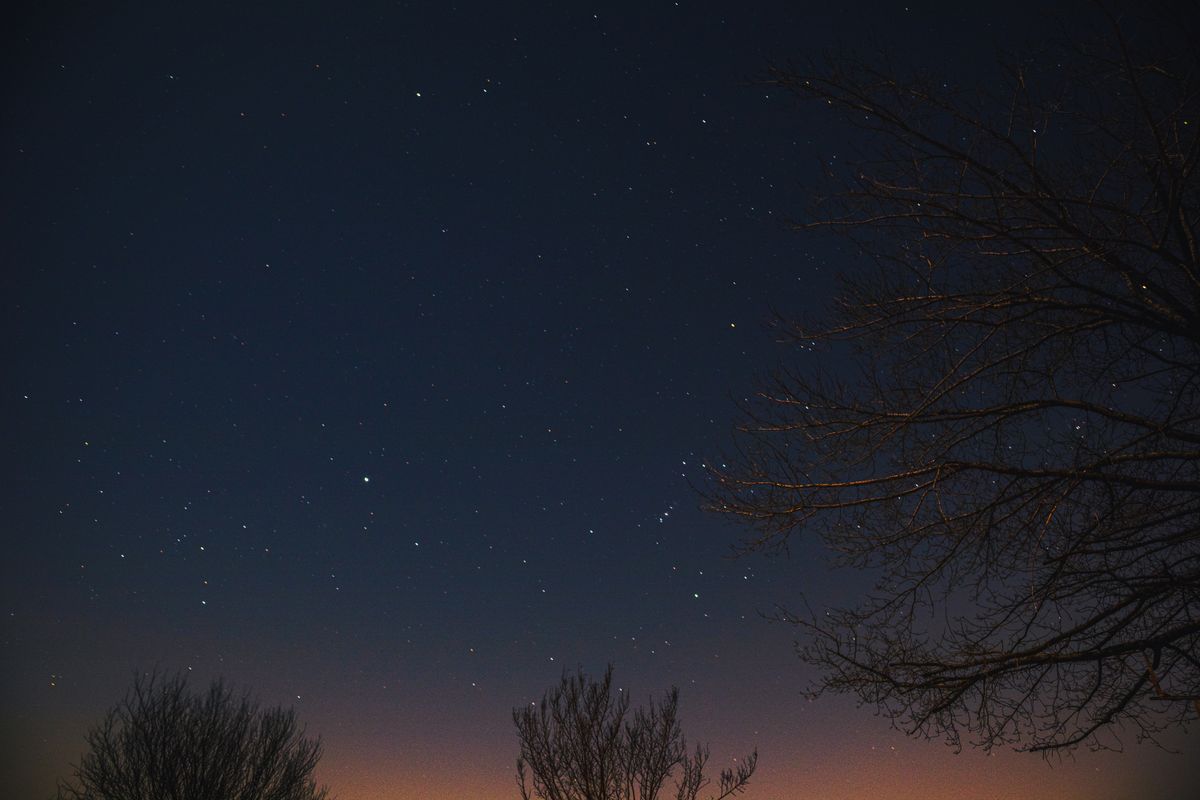
Stars twinkle because their light passes through Earth's turbulent atmosphere, which bends and distorts the beam before it reaches your eyes. The scientific name is atmospheric scintillation, and it is entirely caused by the air we breathe — not by anything the stars themselves are doing.
Here is what happens, why some stars sparkle more than others, and why planets stay stubbornly steady.
How atmospheric scintillation works
Starlight travels across space as a straight, steady beam. It arrives at Earth having already crossed trillions of kilometres without interruption. Then it hits our atmosphere and everything changes.
The atmosphere is not a uniform blanket. It is a churning stack of layers at different temperatures, densities, and pressures, all mixing constantly. Warm air rises, cold air sinks, wind shears layers past each other. Each pocket of air has a slightly different refractive index. At sea level, the refractive index of air is about 1.0003 — barely different from a vacuum, but enough to matter over the tens of kilometres the light must travel through it.
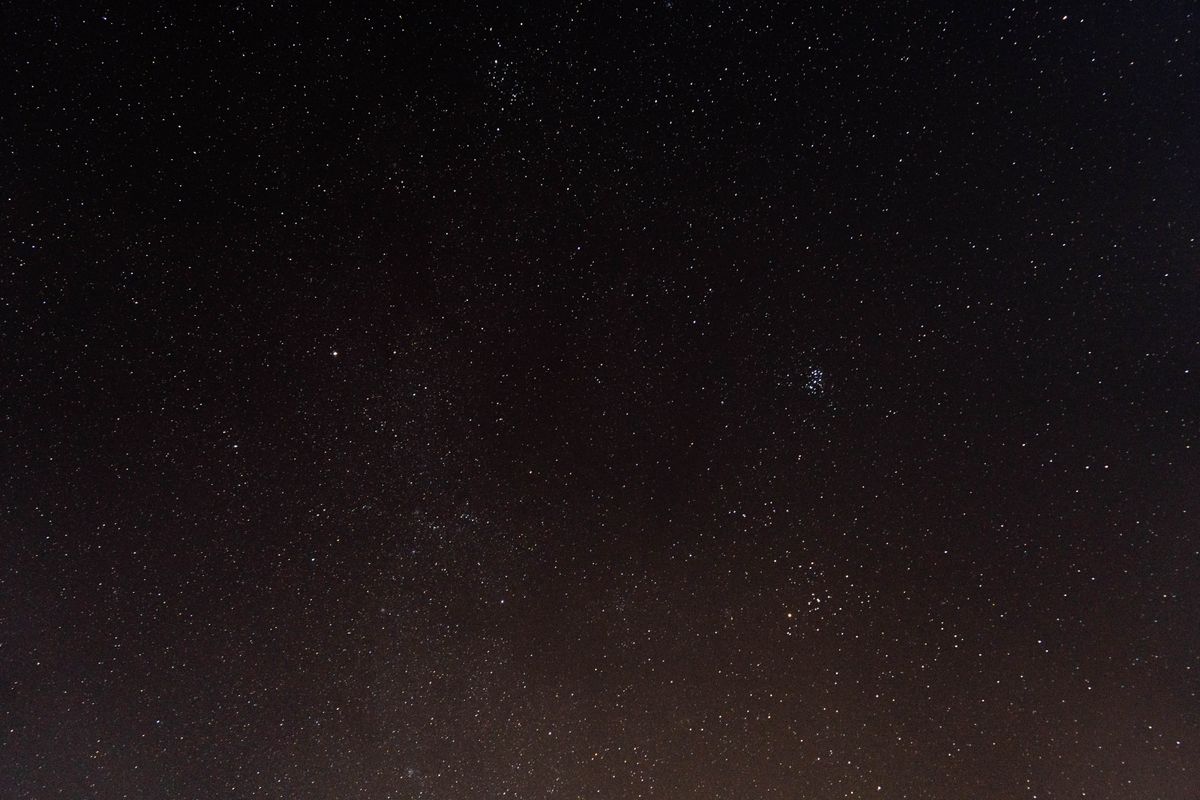
As the starlight enters each layer, it bends — refracts — by a tiny amount. The next layer bends it again, by a slightly different amount, in a slightly different direction. By the time the light reaches your eye, the cumulative bending has shifted the apparent position of the star and changed its apparent brightness. Half a second later, the air has rearranged, and the bending is different. The star seems to jump, dim, brighten, and shift in a cycle that repeats constantly.
This rapid fluctuation is atmospheric scintillation — the scientific term for why do stars twinkle. The word covers the same effect in radio astronomy, where atmospheric turbulence distorts radio signals from space.
A way to see it: the pool analogy
Here is a picture that makes the whole thing click. A coin sits at the bottom of a swimming pool. When the surface is still, the coin is sharp and clear. Ripple the water, and the coin appears to dance and shift.
Now place a dinner plate next to the coin. Ripple the water the same way. The plate barely seems to move.
The coin is a star — a point source of light. The dinner plate is a planet — a small disc. The same turbulence that makes a point source dance leaves a disc almost unchanged, because the shimmer across different parts of the disc averages out. This is the entire reason why stars twinkle but planets generally do not.
The analogy breaks down if you take it too far — the atmosphere is not a flat water surface, and the "ripple" is three-dimensional turbulence — but for the core idea of point source versus extended source, it is exactly right.
Why stars change colour when they twinkle
If you watch a bright star on a clear night, especially one near the horizon, you might see it flash between colours — blue, white, yellow, orange, red. Sirius, the brightest star in Earth's night sky, is famous for this.
The cause is atmospheric dispersion. Different wavelengths of light bend by slightly different amounts when they pass through air. Blue light (shorter wavelength, around 450 nm) bends slightly more than red light (longer wavelength, around 650 nm). Over the full visible spectrum — roughly 380 nm to 700 nm — the spread is small but real.
When the atmosphere is turbulent, the light at each wavelength follows a slightly different path to your eye. One instant you catch the blue-shifted ray; the next, the air has shifted and you see the red. The rapid colour cycling is especially pronounced when the star is low on the horizon because the light travels through more atmosphere, increasing the dispersion.
Why planets do not twinkle
You might be wondering: do planets twinkle? Look at Jupiter or Venus on a clear night and you will notice they shine with a steady, calm light. That steadiness is the quickest way to tell a planet from a star when you are out under the night sky.
Stars appear as points because they are so far away — the nearest star beyond the Sun, Proxima Centauri, is about 4.25 light-years from Earth. Even through the largest telescopes, stars are unresolved points. Planets, by contrast, are close enough that they appear as tiny discs. The Sun's light reflecting off Jupiter spreads across a disc about 50 arcseconds wide at its closest approach.
Because the planet's light arrives across a disc, the atmospheric distortions that affect one part of the disc are cancelled out by the light arriving from another part. The net result is steady.
There is a subtlety, though. When a planet sits very low on the horizon, its light passes through so much atmosphere — as much as 40 times the thickness at zenith — that even the disc averaging can no longer smooth out the turbulence. Under those conditions, planets can appear to twinkle, but it is much rarer and weaker than star twinkling.
Factors that affect how much a star twinkles
Not all stars twinkle equally. Several conditions determine whether you see a gentle shimmer or a vigorous flicker.
Altitude above the horizon. A star near the horizon twinkles far more than one directly overhead because its light travels through more atmosphere — roughly 40 times more air mass at the horizon than at the zenith.
Weather and turbulence. Humid, windy, or unstable air increases twinkling. Cold fronts pushing through create strong convection currents that make the atmosphere churn. Dry, calm nights produce the steadiest starlight.
Your elevation. Observers at high altitudes see less twinkling because they are above a significant fraction of the atmosphere. This is one reason professional observatories sit on mountaintops.
The star's brightness. Bright stars show twinkling more readily because the fluctuations are large enough for your eye to register. Faint stars may twinkle just as much relative to their size, but the changes are harder to spot.
How astronomers cope with twinkling
For the casual stargazer, twinkling is part of the charm. For an astronomer trying to measure a star's position or brightness precisely, it is a problem. Atmospheric scintillation limits the resolution of ground-based telescopes, smearing fine detail and introducing noise into measurements.
Telescope builders have developed three main strategies to deal with it.
Location, location, location. The world's largest observatories are built in places with minimal atmospheric turbulence: the Atacama Desert in Chile, the summit of Mauna Kea in Hawaii, and the Canary Islands. These sites combine high elevation with stable, dry air and minimal light pollution.
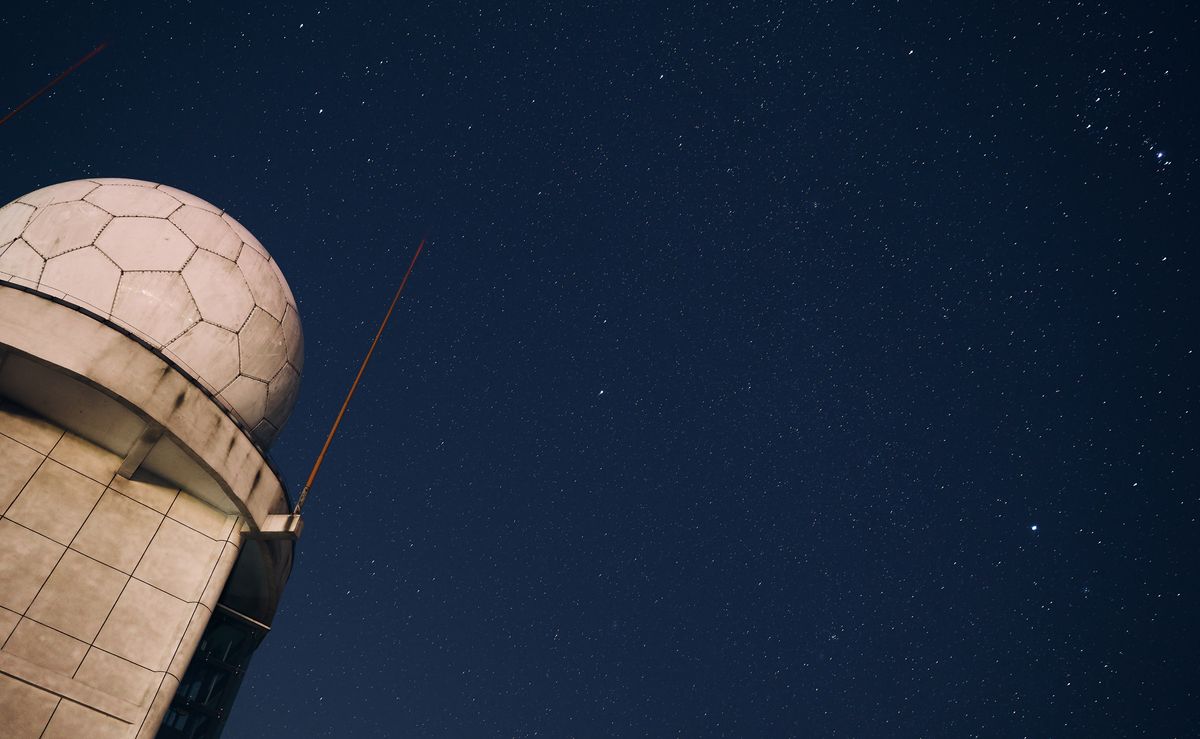
Adaptive optics. Modern telescopes use deformable mirrors that change shape hundreds or thousands of times per second to cancel out the distortion caused by the atmosphere. A laser or a guide star measures the atmospheric shimmer in real time, and the mirror adjusts to produce a sharp image. The European Southern Observatory's Very Large Telescope and the Keck Observatory both use adaptive optics to achieve images sharper than the Hubble Space Telescope in some wavelengths.
Going to space. The simplest solution is to get above the atmosphere entirely. The Hubble Space Telescope, the James Webb Space Telescope, and other space observatories see stars as steady, unwavering points. There is no air to distort them, so their resolution is limited only by the optics themselves.
Common misconceptions about star twinkling
Several myths about why stars twinkle are worth clearing up, because they are confidently repeated and often wrong.
"Stars twinkle because they flicker or burn unevenly." Not true. Stars are stable nuclear fusion reactors. Their output does not fluctuate on timescales of seconds. Every flicker you see is atmospheric.
"Stars twinkle but planets don't because planets are closer or brighter." That gets the direction right but the mechanism wrong. A dim star twinkles as much as a bright one. What matters is whether the object is a point source (star) or an extended disc (planet). The misconception is common because it is partly correct — planets are closer — but that closeness matters because it makes them extended discs, not because of brightness.
"Only some stars twinkle." All stars twinkle. You notice it more with bright stars or with stars near the horizon, but every star's light is distorted by the atmosphere.
"Twinkling is caused by clouds blocking the starlight." Clouds cause stars to dim or disappear, not to twinkle. Twinkling happens on perfectly clear nights.
Why this matters beyond the night sky
Atmospheric scintillation is not just a curiosity. Understanding it is essential for designing telescopes, for satellite communications that send signals through the atmosphere, and for studying turbulence in our atmosphere itself. Scintillation measurements can even be used to probe wind speeds at high altitudes — the twinkling of a star tells us something about the air it passed through.
The effect also ties directly to other atmospheric optics. The same refractive index gradients that make stars twinkle also create heat shimmer on a hot road and produce mirages in the desert. The physics is identical: light bending through layers of air at different temperatures. If you want to understand how that works in more detail, our guide to what causes a mirage goes deeper into the same mechanism.
Stars twinkle. Planets do not. The difference is not in the stars themselves — they shine steadily across the void. It is in the restless ocean of air beneath which we live, shifting and bending their light on its final journey to our eyes.
External references
- Science Notes — Why Do Stars Twinkle But Planets Do Not? (verified, covers stellar scintillation in detail)
- Wikipedia — Scintillation (astronomy) (verified, the physics of atmospheric scintillation)
- Wikipedia — Twinkling (verified, why stars twinkle but planets do not)
- Beckers, J.M. (1993). "Adaptive Optics for Astronomy" — Annual Review of Astronomy and Astrophysics 31: 13–62
Frequently Asked Questions
Why do stars twinkle?
Stars twinkle because their light passes through Earth's turbulent atmosphere, which bends the light slightly in different directions — an effect called atmospheric scintillation. Since stars are point sources, even tiny distortions make them appear to flicker.
Do stars twinkle in space?
No. Outside Earth's atmosphere, stars do not twinkle. The Hubble Space Telescope and astronauts on the ISS see stars as steady points of light because there is no atmosphere to distort them.
Why don't planets twinkle like stars?
Planets don't twinkle because they appear as small discs, not point sources. The light across the disc averages out the atmospheric distortion, so the overall brightness stays steady.
Why are the stars flickering more than usual?
Stars flicker more when conditions increase atmospheric turbulence — near the horizon, on humid nights, during windy weather, or after cold fronts. If stars seem especially flickery, you are probably looking through thicker or more disturbed air.
Can stars flicker different colours?
Yes. As the atmosphere bends starlight, different wavelengths (colours) bend by slightly different amounts. This can make bright stars like Sirius flash blue, red, and green in rapid succession.
What is atmospheric scintillation?
Atmospheric scintillation is the scientific term for star twinkling. It refers to the rapid fluctuation in brightness and position of a celestial object caused by turbulence in Earth's atmosphere. The same effect affects radio signals in radio astronomy.
At what altitude do stars stop twinkling?
Stars stop twinkling above about 99% of Earth's atmosphere, roughly 30 km up. In practical terms, you need to be in space or on a high-altitude balloon to see completely steady starlight.
Is there a star that does not twinkle?
No — all stars twinkle when viewed from Earth's surface. The effect varies in strength, but every star's light must pass through the atmosphere. Only planets and the Moon can appear not to twinkle.

About Umar Farooq
Umar Farooq writes in-depth guides on the physics of light and optics — from reflection, refraction, and lenses to diffraction, lasers, and fiber optics, explained from first principles.
Read more about Umar Farooq →