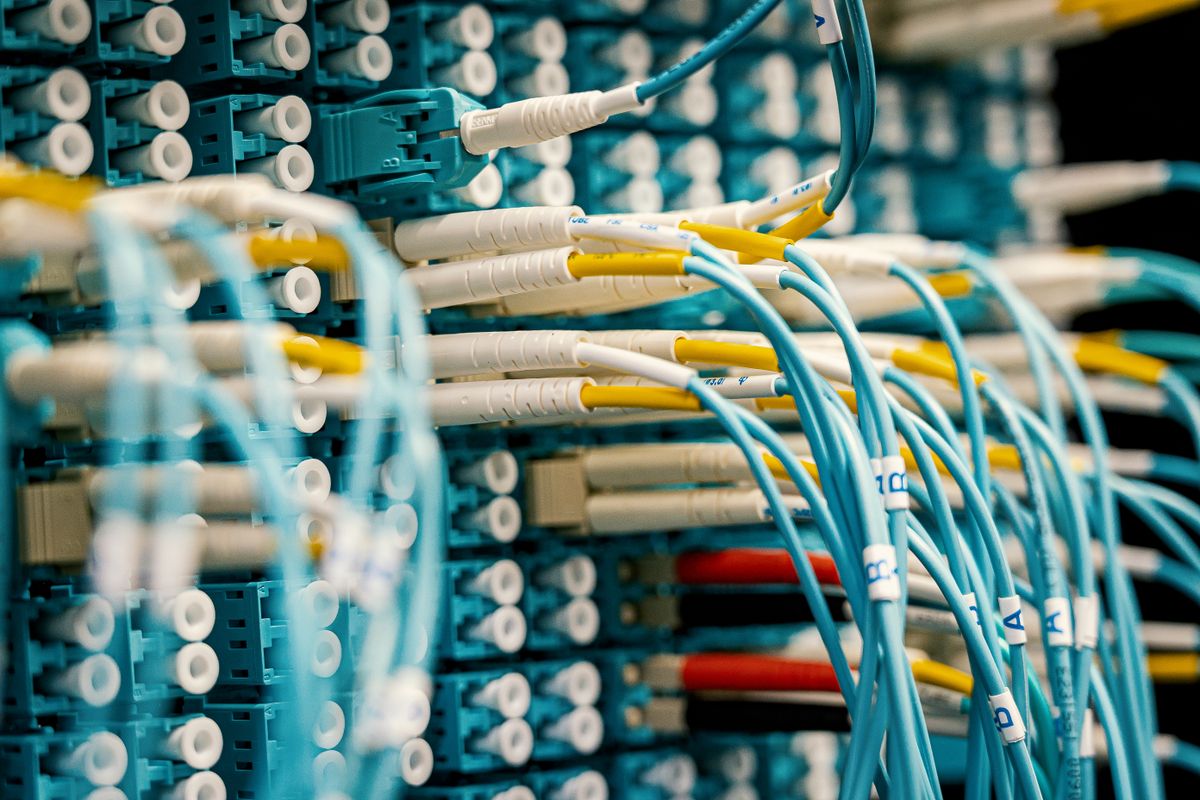
Fiber optic cables are used for much more than just internet. They carry data as pulses of light through hair-thin strands of glass, and this simple ability has found dozens of applications across telecommunications, medicine, the military, industry, and even home decor. The most common uses are internet backbones, data centres, medical endoscopy, submarine cables, industrial sensing, military communications, and decorative lighting.
Here is what we cover: 11 real-world uses of fibre optic cables — from the obvious (the internet) to the surprising (drone warfare, lab-on-a-fibre sensors, and car headlights). For each one we explain what the application needs, why fibre is the right tool, and what the physics looks like in practice.
What Are Fiber Optic Cables Used For? 11 Key Applications
1. Internet and Telecommunications Backbone
The internet runs on glass. When you send an email, stream a video, or load a webpage, your data travels most of the way through fibre optic cables. The global internet backbone — the core network connecting countries and continents — is almost entirely fibre.
Telecommunications companies replaced copper trunks with fibre for one reason: capacity. A single fibre pair using wavelength-division multiplexing can carry over 100 terabits per second — enough for millions of simultaneous HD streams. The backbone uses single-mode fibre (OS2) with dense wavelength division multiplexing (DWDM), which sends multiple colours of light down the same fibre to multiply the capacity.
Picture a motorway with 100 lanes stacked vertically, each lane carrying a different wavelength of light. That is what DWDM does inside a single strand of glass. Without fibre optic cables, the internet as we know it would be physically impossible. Copper simply cannot carry that much data over that distance.
2. Fibre to the Home (FTTH)
FTTH brings fibre optic cables directly to residential homes, replacing the copper telephone line or coaxial cable. It delivers symmetrical speeds — upload matches download — and typical plans range from 100 Mbps to 5 Gbps.
Major providers include AT&T Fibre, Verizon Fios, Google Fibre, and Frontier. In the US, about 45% of residential locations have fibre available. The reason fibre is considered the gold standard for home internet is that the infrastructure lasts 50-100 years and can be upgraded simply by changing the electronics at each end — no digging required.
The catch: FTTH requires running new cable to each home, which is why rollout has been slower in rural areas. The physics, though, is settled. Fibre to the home will outlast any copper-based alternative.
3. Data Centres and Cloud Computing
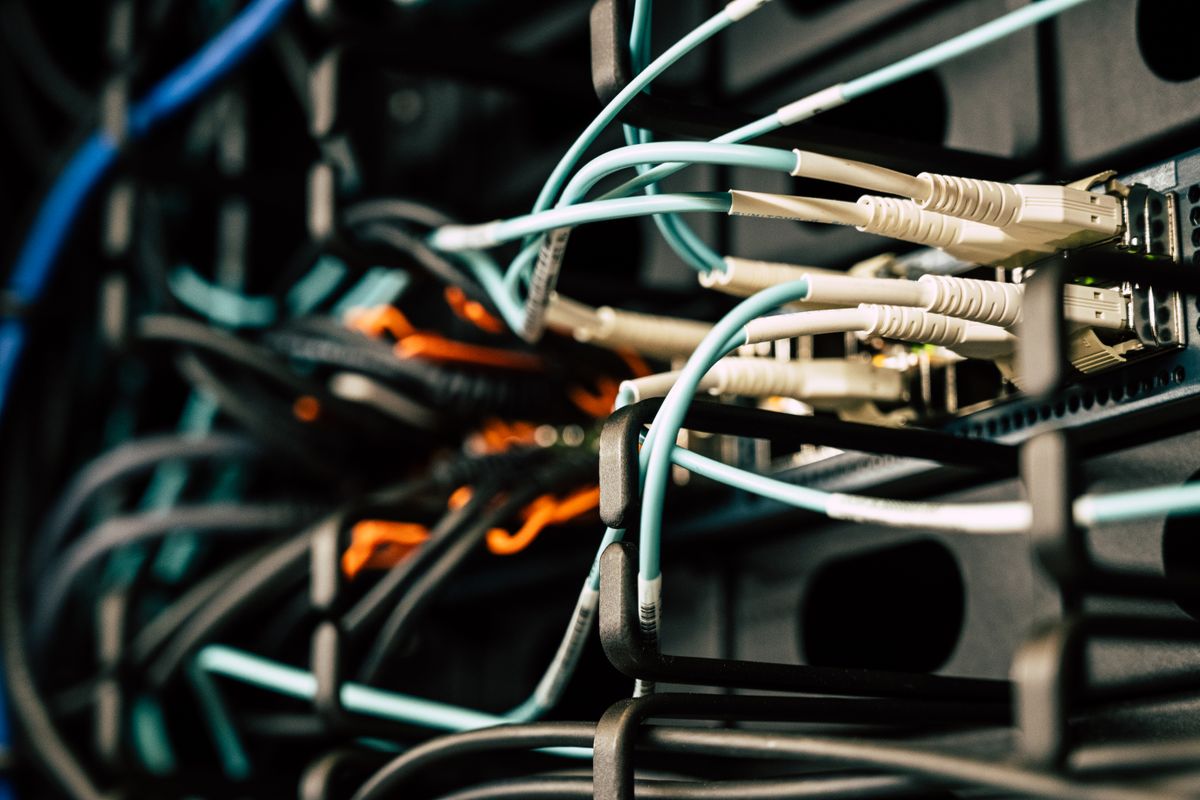
Modern data centres — the physical buildings that power Google Cloud, AWS, and Microsoft Azure — use fibre optic cables for almost every internal connection. Servers connect to top-of-rack switches via fibre, those switches connect to aggregation switches via fibre, and the aggregation switches connect to core routers via fibre. Every hop is fibre.
Data centres use OM4 multimode fibre for short rack connections (up to 150 m) and OS2 single-mode for longer links between buildings or campuses. Without fibre, cloud computing would be bottlenecked by copper's speed and distance limits.
4. Medical Endoscopy and Surgery
The first practical application of fibre optics was medical — not telecommunications. In 1956, Basil Hirschowitz built the first flexible gastroscope using bundles of glass fibres. Today, endoscopes use fibre optics to see inside the body without cutting it open.
A typical endoscope has two fibre bundles: one carries light from a lamp down to illuminate the target area, and the other carries the reflected image back up to a camera or eyepiece. The fibres are arranged in a coherent bundle — each fibre maintains its position, so the image is preserved.
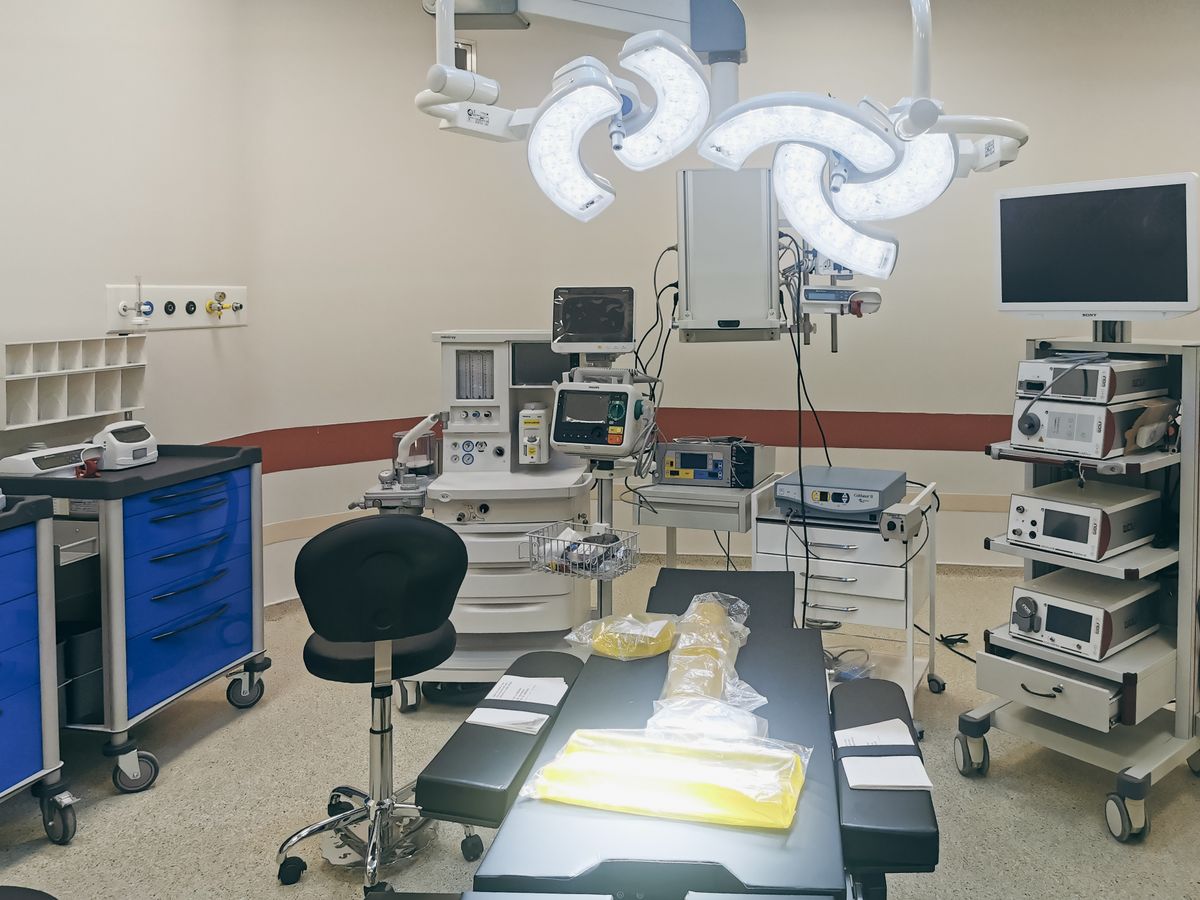
Laparoscopic surgery uses this same principle. A tiny camera on a fibre optic cable is inserted through a small incision, and the surgeon watches a video screen while operating through other small incisions. Recovery times are dramatically shorter than open surgery.
Newer applications include lab-on-a-fibre sensors: fibre cables with built-in sensors that measure temperature, pH, blood pressure, or the presence of specific chemicals inside a patient's body in real time.
5. Military and Aerospace
Militaries use fibre optic cables extensively for secure communications. Unlike copper, fibre cables do not radiate electromagnetic signals that can be detected by an enemy. They are also immune to jamming and electromagnetic pulse (EMP) attacks.
The key military applications:
- Secure battlefield communications between command posts, vehicles, and aircraft
- Aircraft wiring — fibre cables weigh about 90% less than copper equivalents, saving fuel
- Missile guidance — fibre optic gyroscopes (FOGs) measure rotation with no moving parts, using the Sagnac effect
- Radar systems — fibre connects radar antennas to processing equipment over long distances without signal degradation
- Fiber optic drones — a rapidly growing application (see section 11)
6. Submarine Communications Cables
The data that crosses oceans travels through submarine fibre optic cables. Over 600 active submarine cables span the world's seabeds, carrying approximately 99% of all intercontinental data traffic (stat source: TeleGeography).
A submarine cable is an engineering marvel. The glass fibres sit at the centre, surrounded by steel wire armour, copper shielding, and a polyethylene jacket. Optical amplifiers (erbium-doped fibre amplifiers) are spliced into the cable every 70-150 km on the ocean floor to boost the signal.
The first transatlantic fibre cable, TAT-8, entered service in 1988 and carried 280 Mbps. Modern cables like Dunant (2021) carry 250 Tbps — nearly a million times more capacity. Each new cable costs hundreds of millions of dollars and takes years to plan and lay. But without them, there is no global internet.
7. Industrial Sensing and Monitoring
Fibre optic sensors use the fibre itself as the sensing element. Changes in temperature, strain, or pressure alter the way light travels through the fibre, and these changes can be measured with high precision over kilometres of cable.
Distributed temperature sensing (DTS) uses a fibre cable as a continuous thermometer. A single fibre can measure temperature at thousands of points along its length. This is used for monitoring oil and gas wells, detecting hot spots in power cables, fire detection in tunnels, and leak detection in pipelines.
Distributed acoustic sensing (DAS) uses fibre to detect vibrations — footsteps along a fence line (perimeter security), passing trains (railway monitoring), or digging near a pipeline (intrusion detection).
Structural health monitoring embeds fibre sensors in bridges, dams, wind turbine blades, and aircraft wings to detect strain and cracks before they become dangerous. This is an extra topic the competitors miss — fibre is quietly making renewable energy infrastructure safer.
8. Cable Television and Broadcasting
Cable TV companies were early adopters of fibre optics. In the 1990s, they replaced long-distance coaxial trunks with fibre to improve signal quality and capacity. Today, most cable TV networks use a hybrid fibre-coaxial (HFC) architecture: fibre runs from the headend to neighbourhood nodes, and coaxial cable covers the final metres to each home.
Broadcasters use fibre to transmit video between studios, remote broadcast vans, and transmission towers. Fibre's high bandwidth and low latency make it ideal for live production, where multiple HD video streams must be synchronised. Without fibre, live sports broadcasts in 4K would be impossible over any practical distance.
9. Fibre Optic Lighting and Decoration
Fibre optic lighting uses plastic optical fibres (POF) to carry light from a source (often an LED) to a display point. The fibre does not carry electricity — only light — which makes it safe for underwater and wet environments.
Common uses include swimming pool and fountain lighting, museum exhibits, Christmas trees, automotive dashboards, architectural accent lighting, and art installations. Fibre optic lighting is also used in light piping — transporting sunlight from a rooftop collector to interior rooms that have no windows.
The physics here is the same as communications fibre: total internal reflection keeps the light trapped inside the core. The difference is that lighting applications use larger-core plastic fibres and visible-spectrum LEDs rather than infrared lasers.
10. Automotive and Transportation
Modern vehicles use fibre optics for several purposes. Automotive lighting uses plastic optical fibres to distribute light from a single LED source to multiple points around the car, enabling complex designs without multiple bulbs.
LiDAR (light detection and ranging) in autonomous vehicles uses fibre lasers and fibre amplifiers to generate the pulsed light beams that map the vehicle's surroundings. This is an application most articles miss.
In-vehicle networking is transitioning from copper to fibre for high-bandwidth applications like camera feeds, infotainment systems, and advanced driver-assistance systems (ADAS). The MOST standard (Media Oriented Systems Transport) already uses plastic optical fibre for in-car multimedia networks.
Railways use fibre for signalling, track monitoring via DAS, and passenger WiFi along train routes.
11. Fibre Optic Drones
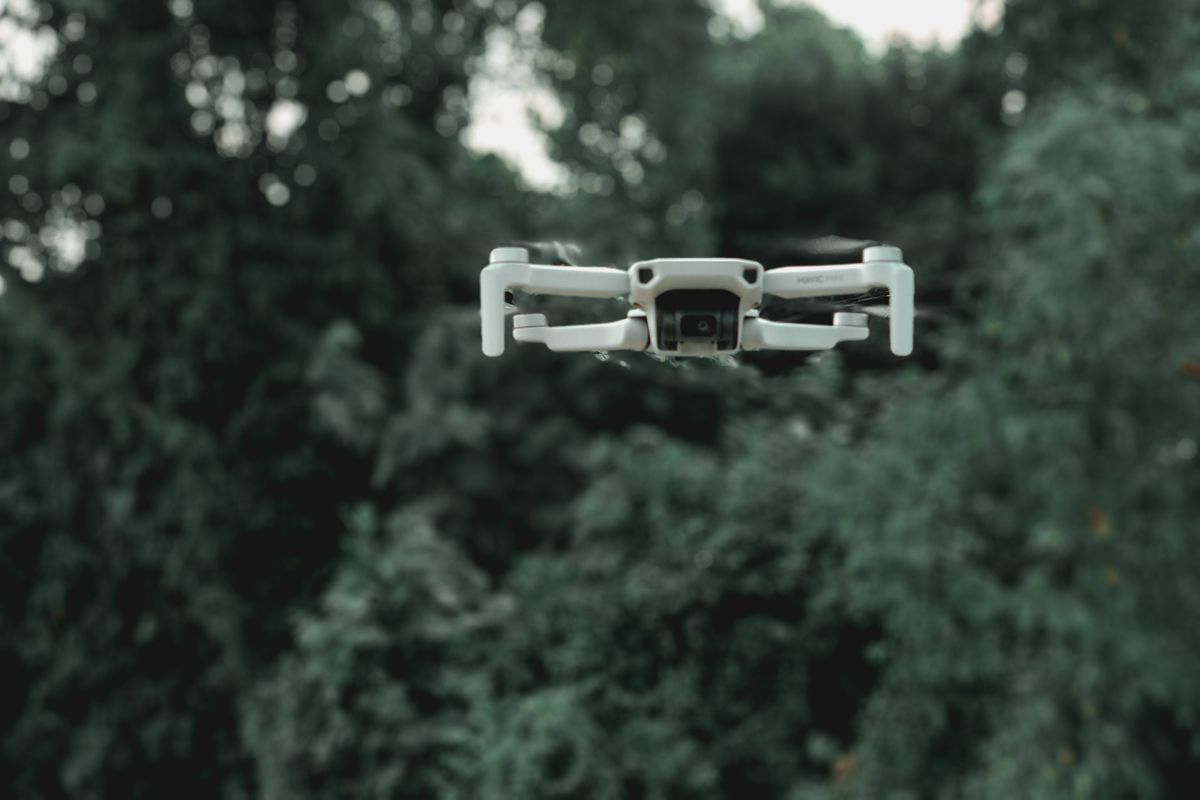
Fibre optic drones are an emerging and rapidly growing application. A fibre optic drone is an unmanned aerial vehicle tethered to its operator by a thin fibre optic cable. Control signals and video feed travel through the glass core instead of radio waves.
This makes fibre drones immune to electronic warfare. Radio jamming, GPS spoofing, and direction finding — the primary defences against conventional drones — have no effect on a fibre drone because it emits no radio signals.
Fibre optic drones were first used in combat in 2024 during the Russo-Ukrainian War. Russia's Ushkuynik KVN was among the first mass-produced fibre optic FPV loitering munitions. The fibre spool can carry 5-30 km of cable.
The limitation is manoeuvrability: the trailing cable can snag on trees or structures, snapping the connection. But for operations where jamming is a threat, fibre drones are a game-changing technology.
A Common Misconception: Fibre Is Not Only for the Internet
Many people assume fibre optic cables are used exclusively for internet and phone services. This is wrong. The first practical fibre optic application was medical endoscopy in the 1950s — a decade before fibre was used for communication. Today, fibre optics are used in surgery, military aircraft, oil rigs, swimming pools, car dashboards, and even art installations.
Another common myth: fibre cables are hollow tubes lined with mirrors. They are not. A fibre optic cable is solid glass. The light is trapped by total internal reflection at the boundary between core and cladding — two types of glass with slightly different refractive indices. There is no hollow space and no mirror coating. See our guide on total internal reflection for the full physics.
The versatility of fibre comes from a simple fact: light can carry information, images, power sensors, create visual effects, and measure physical properties. A fibre cable is not just an internet pipe. It is a universal platform for any application that involves transmitting light.
External resources
- Wikipedia: Optical fiber — Uses — detailed reference on fibre optic applications in communication, lighting, sensors, imaging, and power transmission
- Explain That Stuff: How fiber optics work — clear educational guide covering the principles, history, and applications of fibre optics
- Britannica: Fiber optics — comprehensive encyclopaedia entry with history and technical details on optical fibre
For the science behind the technology, start with what is optical fiber. For the different cable types used in these applications, read types of fiber optic cable. And for the physics that makes all of this possible, see our complete guide to total internal reflection.
Frequently Asked Questions
What are fiber optic cables used for in simple terms?
Fiber optic cables are used to transmit data as pulses of light through thin glass or plastic fibres, sending information over long distances at near light speed. They power the internet backbone, connect data centers, deliver broadband to homes (FTTH), enable medical endoscopy, carry telephone calls, link continents via submarine cables, connect military systems, control fiber optic drones, and even create decorative lighting displays.
What are 5 uses of optical fibers?
Five major uses of optical fibres are: (1) internet and telecommunications backbone — carrying nearly all long-distance data traffic; (2) medical endoscopy and minimally invasive surgery; (3) data center networking between servers and storage; (4) submarine communications cables that link continents across oceans; and (5) industrial sensing — measuring temperature, pressure, and strain in pipelines, bridges, and wind turbines.
What is the main use of a fiber optic cable?
The main use of a fiber optic cable is telecommunications — transmitting voice, video, and internet data over long distances at high speed. Fibre optic cables form the backbone of the global internet, carrying approximately 99% of all intercontinental data traffic. They are also widely used in medical imaging, military communications, cable television, and industrial monitoring.
What are fiber optic cables used for in medicine?
Fiber optic cables are used in medicine primarily for endoscopy — inserting a flexible bundle of optical fibres into the body to see inside without major surgery. They are also used in laser surgery to deliver precise laser light for cutting or cauterising tissue, and in lab-on-a-fibre sensors that measure temperature, pressure, or chemical levels inside a patient in real time.
How are fiber optic cables used in the internet?
Fiber optic cables carry internet data as pulses of laser light through glass fibres. At the transmitting end, a laser diode flashes on and off billions of times per second, encoding data. The light travels by total internal reflection — bouncing off the core-cladding boundary. At the receiving end, a photodetector converts the light pulses back into electrical data. This happens at near light speed, which is why fibre internet can deliver gigabit speeds.
What is the difference between fiber optic cable and copper cable?
Fiber optic cables use light to transmit data through glass fibres; copper cables use electrical signals through metal wires. Fibre offers higher bandwidth (100+ Tbps vs 10 Gbps), longer distances (40-100 km vs 1-2 km without amplification), immunity to electromagnetic interference, and better security — tapping a fibre causes detectable signal loss. Copper is cheaper for short distances but cannot match fibre's performance for modern data demands.
Do fiber optic cables have military uses?
Yes. Militaries use fiber optic cables for secure battlefield communications (fibre emits no detectable electromagnetic signal), aircraft wiring (90% lighter than copper), missile guidance via fibre optic gyroscopes, radar system connections, and most recently fiber optic drones — UAVs controlled through a trailing fibre cable that cannot be jammed by electronic warfare.
Can fiber optic cables be used for lighting?
Yes. Fiber optic lighting uses plastic optical fibres to carry light from a single LED source to multiple display points. Because fibre carries light — not electricity — it is safe for underwater use in swimming pools and fountains. Common decorative applications include museum exhibits, Christmas trees, automotive dashboards, architectural accent lighting, and art installations.
What are fiber optic cables made of?
Fiber optic cables are made of ultra-pure silica glass drawn into thin strands about 125 micrometres in diameter. Each strand has a core (8-62.5 µm) surrounded by cladding with a slightly lower refractive index. The glass is coated with a protective plastic buffer and an outer jacket. The core and cladding are solid glass — not hollow and not lined with mirrors.
How long do fiber optic cables last?
Fiber optic cables have a typical service life of 50-100 years when properly installed. The glass fibres themselves do not corrode or degrade over time. The main failure modes are physical damage from digging, bending beyond the minimum bend radius, or water ingress into the cable jacket. Modern fibre cables are designed to withstand outdoor conditions for decades.

About Umar Farooq
Umar Farooq writes in-depth guides on the physics of light and optics — from reflection, refraction, and lenses to diffraction, lasers, and fiber optics, explained from first principles.
Read more about Umar Farooq →