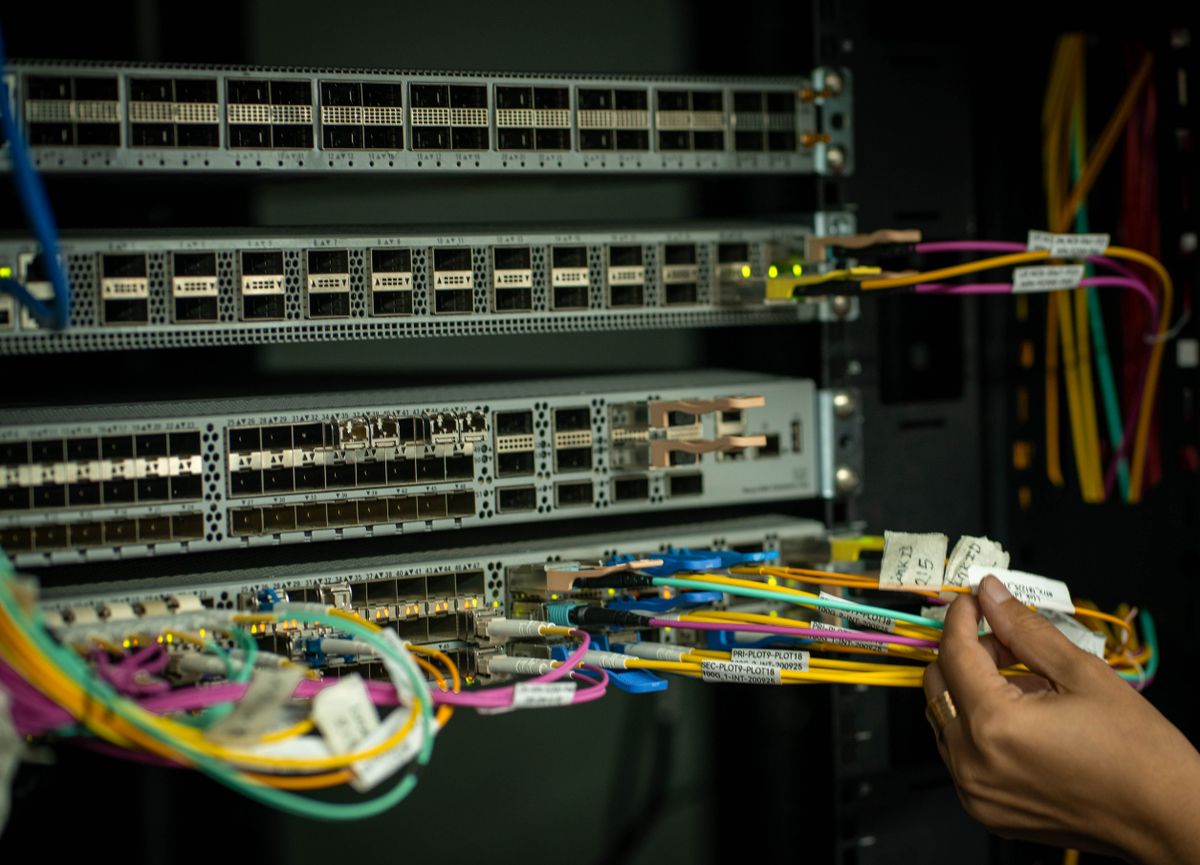
Fiber optic internet is a broadband connection that sends data as pulses of light through hair-thin glass cables. It is the fastest, most reliable, and most future-proof internet technology available to homes today. Unlike cable or DSL, which use electrical signals over copper wires, fiber offers symmetrical multi-gigabit speeds, lower latency, and immunity to interference.
Here is what we cover: how fiber internet works, real-world speeds, installation, how it compares to cable and 5G, which providers offer it, and whether it is worth the switch.
What Is Fiber Optic Internet?
Fiber optic internet, also called fiber broadband, delivers data through optical fibre cables made of ultra-pure silica glass. A laser at the provider's end flashes on and off billions of times per second, sending light pulses through the glass. At your home, an optical network terminal (ONT) converts those light pulses back into electrical signals your router can use.
The key difference from copper-based internet is simple: light travels faster than electricity, and glass does not corrode, heat up, or pick up electromagnetic interference. That means fiber delivers higher speeds over longer distances with less signal loss.
Picture a garden hose versus a high-pressure fire hose. Copper internet (cable or DSL) is the garden hose: it works, but the flow drops when multiple people use it, and the water (data) travels slowly. Fiber is the fire hose: the same high pressure whether one person or ten are using it, with data travelling at near light speed.
How Fast Is Fiber Internet?
Fiber internet speeds range from 100 Mbps to 5,000 Mbps (5 Gbps) for typical residential plans, with some providers now offering 50,000 Mbps (50 Gbps). The key feature is symmetrical speeds: upload matches download.
| Speed Tier | Typical Use | Download | Upload |
|---|---|---|---|
| 100–300 Mbps | Browsing, streaming, video calls | 100–300 Mbps | 100–300 Mbps |
| 500 Mbps–1 Gbps | 4K streaming, gaming, multiple users | 500–1000 Mbps | 500–1000 Mbps |
| 2–5 Gbps | Content creation, large file transfers | 2000–5000 Mbps | 2000–5000 Mbps |
| 10–50 Gbps | Prosumer, future-proofing | 10,000–50,000 Mbps | 10,000–50,000 Mbps |
Compare this to cable internet, where typical upload speeds are 10–50 Mbps even on 1 Gbps download plans. That 50 Mbps upload means uploading a 2 GB video file takes over five minutes. On 1 Gbps fiber, it takes about 15 seconds.
Latency is also significantly lower on fiber. Typical ping times on fiber are 5–15 milliseconds, compared to 20–50 ms on cable and 30–80 ms on DSL. For gaming and video calls, lower latency matters as much as raw speed.
How Is Fiber Internet Installed?
Fiber internet requires running a glass cable from the provider's network to your home. There are three common installation types:
Fiber to the home (FTTH) is the gold standard. A fiber cable runs directly from the network access point to your house. A technician installs an ONT — a small box about the size of a cable modem — that converts light signals to electrical signals. From the ONT, a standard Ethernet cable connects to your router.
Fiber to the curb (FTTC) runs fiber to a cabinet or utility pole near your home, then uses coaxial copper cable for the final metres. This is faster than cable alone but slower than true FTTH because the copper segment introduces signal loss and limits upload speeds.
Fiber to the node (FTTN) runs fiber to a neighbourhood hub, then uses existing copper phone or cable lines to reach your home. This is the slowest fiber-adjacent option and often cannot deliver speeds above 100 Mbps.
Installation typically takes 2–4 hours. Most major providers waive installation fees with a service contract. The ONT and router are often included in the monthly price.
Fiber vs Cable vs DSL vs 5G
| Feature | Fiber | Cable | DSL | 5G Home |
|---|---|---|---|---|
| Max download | 50,000 Mbps | 2,000 Mbps | 100 Mbps | 1,000 Mbps |
| Max upload | 50,000 Mbps | 50 Mbps | 20 Mbps | 50 Mbps |
| Latency | 5–15 ms | 20–50 ms | 30–80 ms | 20–50 ms |
| Reliability | Excellent | Good (congestion) | Fair | Fair (weather) |
| Availability | ~45% of US | ~82% of US | ~90% of US | Growing |
| Data caps | Rare (unlimited) | Common (1–2 TB) | Rare | Rare |
The biggest practical difference is upload speed. Cable internet is designed for downloading — streaming, browsing, downloading files. But modern life requires uploading: video calls (Teams, Zoom, FaceTime), cloud backups, sharing large files, live streaming. Cable's 10–50 Mbps upload cap becomes a bottleneck. Fiber eliminates it entirely.
Fiber is also the only technology that does not slow down during peak evening hours. Cable internet shares bandwidth among neighbourhood users on a shared coaxial line. Fiber uses dedicated light paths that do not degrade with demand.
Which Providers Offer Fiber Internet?
The major fiber internet providers in the United States as of 2026:
- AT&T Fiber — the largest fiber provider, covering approximately 12% of US households. Plans from 300 Mbps ($55/mo) to 5 Gbps ($250/mo). No contracts, unlimited data.
- Verizon Fios — covers about 9% of households, primarily in the Northeast and Mid-Atlantic. Plans from 300 Mbps ($50/mo) to 2 Gbps ($90/mo). Price lock guarantee.
- Google Fiber — available in select cities (Austin, Kansas City, Salt Lake City, and others). 1 Gbps ($70/mo), 2 Gbps ($100/mo), 5 Gbps ($125/mo). Simple pricing, no hidden fees.
- Quantum Fiber (Lumen) — available in parts of 40+ states. 200 Mbps to 8 Gbps. No contracts, price for life guarantee.
- Frontier Fiber — available in parts of 25+ states. Starting at $30/mo for 200 Mbps. No annual contracts.
- Ziply Fiber — Pacific Northwest. Starting at $20/mo for 100 Mbps. Up to 50 Gbps in select areas.
- Regional providers — Altafiber (Ohio/Kentucky), Metronet (Midwest/South), GoNetSpeed (Northeast), Point Broadband (Southeast), and dozens of municipal fiber networks.
Check availability at your address using the FCC's National Broadband Map or provider websites. Urban areas typically have 2–3 fiber options; rural coverage is still expanding through federal BEAD program funding.
A Common Misconception: "Fiber-Rich" Is Not Real Fiber
Cable companies often advertise "fiber-rich" or "fiber network" internet. This sounds like fiber, but it is not.
True fiber internet uses fiber optics all the way to your home. "Fiber-rich" internet uses fiber for the backbone network but switches to copper coaxial cable for the final connection to your house. The copper segment limits upload speeds, introduces latency, and is subject to the same peak-hour congestion as regular cable.
The test is simple: check if the plan offers symmetrical speeds. If upload speed matches download, it is true fiber. If upload is 10–50 Mbps on a 1 Gbps plan, it is cable with a fiber backbone — not true fiber internet.
Is Fiber Internet Worth It?
The short answer: yes, if it is available at your address.
Fiber internet wins on every metric that matters: speed, reliability, latency, upload performance, and long-term value. The starting prices ($30–$50 for 200–300 Mbps) are competitive with cable, and fiber does not have the annual price hikes that cable providers build into their contracts.
The case against fiber is limited to availability and, for some households, speed that exceeds what they need. The average US household uses about 500 Mbps at peak, according to OpenVault data. A 300 Mbps fiber plan covers most families comfortably. Going to 1 Gbps or higher is only necessary for heavy gamers, content creators, or homes with many simultaneous 4K streams.
But here is the long view: fiber infrastructure lasts 50–100 years. Copper infrastructure degrades over decades and has a hard speed limit. Installing fiber is a one-time investment for your property that increases home value and eliminates the need to upgrade again. As the Fiber Broadband Association puts it: "When you put in fiber, you are putting in the critical infrastructure for the next century."
External resources
- CNET: Fiber Internet Explained — comprehensive guide to fiber internet, speeds, providers, and comparison with other connection types
- FCC National Broadband Map — official US government map to check fiber and broadband availability at your address
- Fiber Broadband Association — industry research on fiber deployment, benefits, and the BEAD program for rural expansion
For the science behind the technology, see our guide on what is optical fiber. To understand the different cable types used in fiber networks, read types of fiber optic cable. For the history of how fiber internet became possible, see optical fibre invention.
Frequently Asked Questions
What is fiber optic internet in simple terms?
Fiber optic internet is a type of broadband that sends data as pulses of light through thin glass cables. It is much faster and more reliable than cable or DSL because light travels faster than electricity and the glass cables are immune to interference. Fiber offers symmetrical speeds — equal upload and download — which is rare for other internet types.
How fast is fiber optic internet?
Fiber internet speeds typically range from 100 Mbps to 5,000 Mbps (5 Gbps), with some providers offering up to 50,000 Mbps (50 Gbps) for residential customers. Even the lowest fiber tier (100–300 Mbps) often matches or beats the top speeds of cable internet. Fiber also delivers symmetrical speeds, so uploads are just as fast as downloads.
Is fiber optic internet better than cable?
Yes. Fiber optic internet is better than cable in nearly every way: faster speeds, symmetrical upload and download, lower latency, greater reliability, and no interference from electrical signals. Cable internet uses copper coaxial cables that are susceptible to signal degradation and congestion during peak hours. Fiber is also more future-proof — the infrastructure can last decades.
How is fiber optic internet installed?
Fiber installation requires an optical network terminal (ONT) that converts light signals to electrical signals. A technician runs a fiber cable from the nearest network access point to your home, installs the ONT indoors or outdoors, and connects it to your router. The best installation is fiber to the home (FTTH), where fiber runs directly to your premises. Installation is typically free or discounted with a service contract.
Do I need a special router for fiber internet?
Most modern routers work with fiber internet, but you need a router that supports the speed of your plan. For plans up to 1 Gbps, any Wi-Fi 5 or Wi-Fi 6 router works. For multi-gig plans (2 Gbps and above), you need a router with a 2.5 Gbps or higher WAN port and Wi-Fi 6 or 7 support. Your provider may include a compatible router.
What does fiber optic internet cost per month?
Fiber internet typically costs $30 to $100 per month for speeds from 100 Mbps to 2 Gbps, depending on the provider and location. Multi-gig plans (5 Gbps and up) range from $100 to $300 per month. Fiber often has lower long-term costs than cable because prices are more stable and there are fewer hidden fees. Many fiber plans include unlimited data with no caps.
What is the difference between fiber and fiber-rich internet?
True fiber internet (fiber to the home) runs fiber optic cables all the way to your premises. 'Fiber-rich' or 'fiber network' internet uses fiber for part of the network but switches to copper coaxial cables for the final connection to your home. This means slower speeds and lower upload speeds. You can tell the difference by checking if upload speeds match download speeds — symmetrical speeds mean true fiber.
Which internet providers offer fiber optic?
Major fiber internet providers in the US include AT&T Fiber (12% coverage), Verizon Fios (9%), Google Fiber, Quantum Fiber (Lumen), Frontier Fiber, Ziply Fiber, and Metronet. Smaller regional providers like Altafiber, GoNetSpeed, and Point Broadband also offer fiber in specific areas. Availability varies by location — urban areas have the most options.
Can I get fiber internet in a rural area?
Fiber availability in rural areas is limited but growing. The FCC's Broadband Data Collection program tracks coverage, and federal funding through the Broadband Equity Access and Deployment (BEAD) program is expanding rural fiber. As of 2026, about 45% of US residential locations have fiber available, with rural coverage significantly lower than urban. Satellite internet (Starlink) and fixed 5G are alternatives for rural areas without fiber.
Is fiber optic internet worth the cost?
Yes, if it is available at your address. Fiber internet offers the best speed, reliability, and value of any internet type. The starting prices ($30–$50 per month for 200–300 Mbps) are competitive with cable, and fiber does not have the annual price hikes typical of cable providers. The symmetrical upload speeds alone make it worth it for remote work, video calls, gaming, and content creation.

About Umar Farooq
Umar Farooq writes in-depth guides on the physics of light and optics — from reflection, refraction, and lenses to diffraction, lasers, and fiber optics, explained from first principles.
Read more about Umar Farooq →