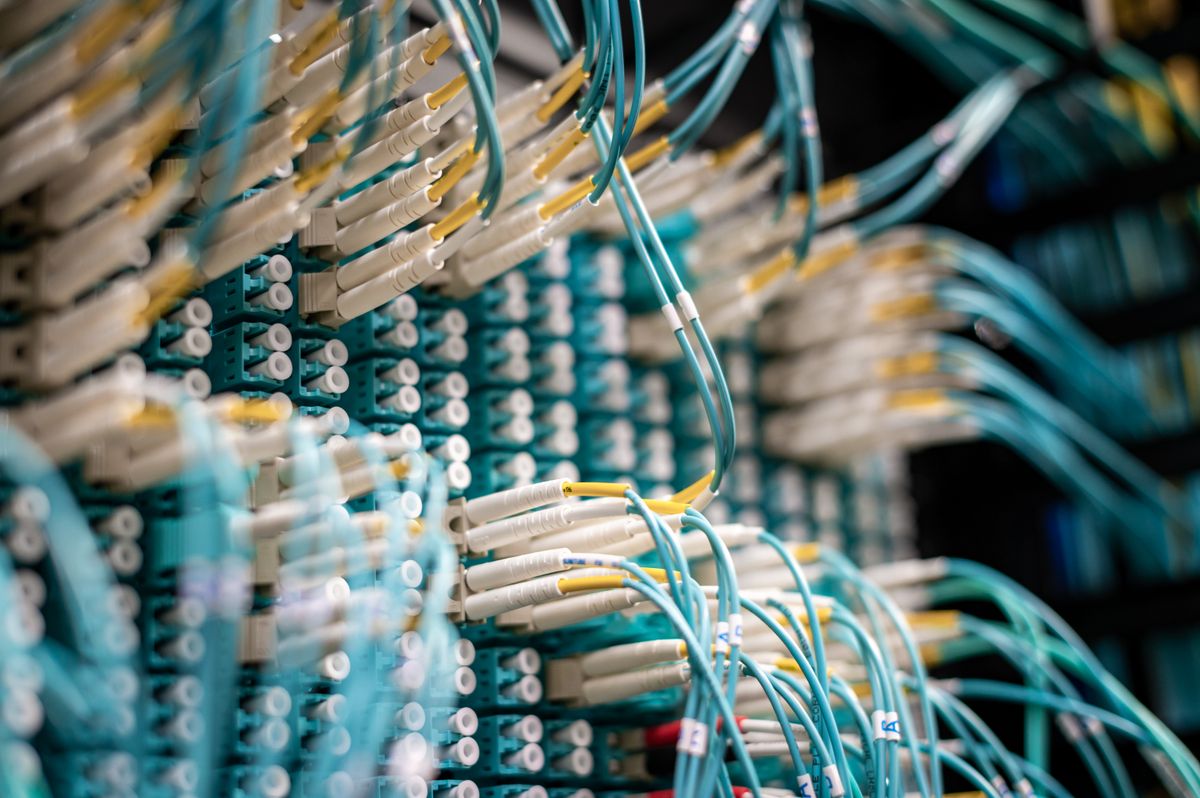
What is fiber optic cable made of? A fibre optic cable is made of five key layers: the glass core (ultra-pure silica) that carries the light signal, the cladding (lower-index glass) that keeps light trapped inside, a buffer coating (acrylate polymer) for protection, strength members (aramid yarn or Kevlar) for tension resistance, and an outer jacket (PVC, LSZH, or polyethylene) for environmental shielding. Understanding what is fiber optic cable made of starts with knowing each layer's material and job.
Think of it like a high-end mechanical pencil. The thin graphite lead is your core — the bit that does the work. The metal collar around it is the cladding, keeping the lead centred and contained. The rubber grip is the coating, protecting your fingers. The metal clip is the strength member, stopping the pencil from snapping. And the outer plastic barrel is the jacket, holding everything together. When you ask what is fiber optic cable made of, think of this layered approach — each material chosen for one specific job.
Here is what we cover: what each of the five layers is made of, why glass is used instead of plastic, how the materials work together, and a look at connectors and ferrules.
Fiber Optic Cable Diagram: What a Cable Is Made Of
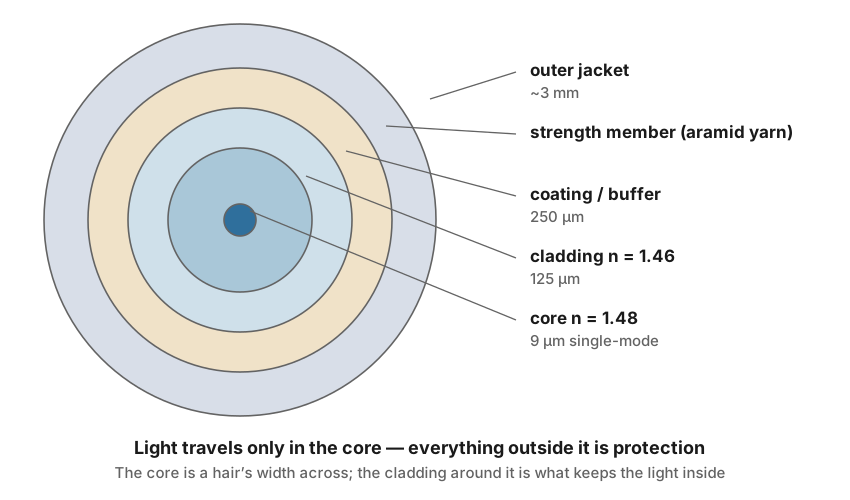
A fibre optic cable is not one material — it is a composite of five distinct layers, each with a specific material and purpose:
| Layer | Primary Material | Typical Thickness | Job |
|---|---|---|---|
| Core | Ultra-pure silica glass (SiO₂ + dopants) | 8–62.5 µm | Carries light pulses |
| Cladding | Silica glass (lower refractive index) | 125 µm (core + cladding) | Reflects light back into core |
| Buffer coating | Acrylate polymer or silicone | 250–900 µm | Protects glass from moisture and scratches |
| Strength members | Aramid yarn (Kevlar) or steel | Varies | Absorbs tension during pulling |
| Outer jacket | PVC, LSZH, PE, or plenum-rated | 900 µm–several mm | Shields from environment and fire |
The critical part — the core and cladding — is solid glass. The rest is mechanical protection. Let us look at each layer in detail.
Part 1: Core — The Ultra-Pure Glass Channel
The core is the heart of a fibre optic cable and the main answer to what is fiber optic cable made of. It is the tiny glass tube that actually carries the light. In a single-mode fibre, the core is just 8 to 10 micrometres in diameter — roughly one-tenth the width of a human hair.
The core is made of silica glass (silicon dioxide, SiO₂) that has been doped with small amounts of germanium or phosphorus. The doping raises the refractive index of the core just above that of the surrounding cladding. This tiny difference — less than 0.5% — is what makes total internal reflection possible.
The glass must be exceptionally pure. Impurities at the level of parts per billion would scatter the light and ruin performance. Corning, the company that invented low-loss optical fibre in 1970, uses a vapour deposition process to create ultra-pure silica. Flame jets blast silica vapours onto a spinning rod, building up layer after layer of pristine glass soot. The rod is then consolidated in a 2000 °C furnace to form a solid preform — a glass blank about the thickness of a walking stick. This preform is later drawn into kilometres of hair-thin fibre.
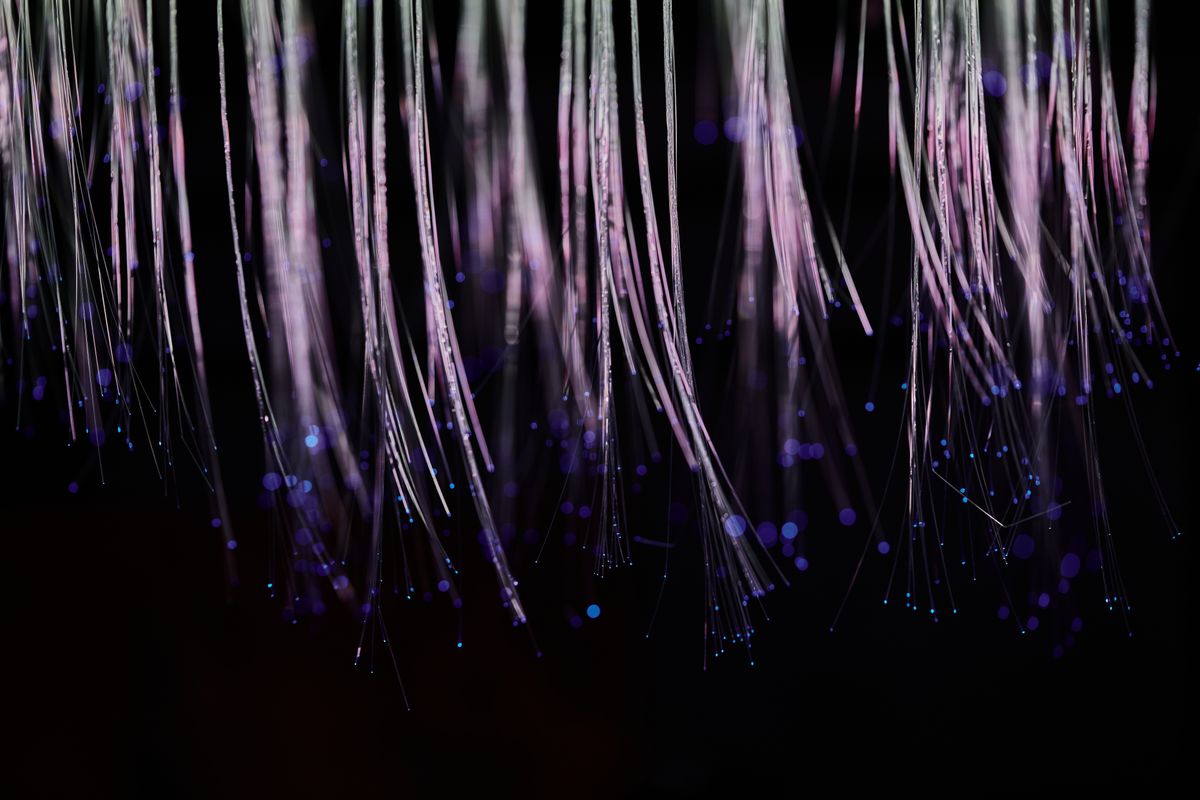
A common question: is the core hollow? No. It is solid glass all the way through. The light travels through the solid material, not through an empty tube.
Part 2: Cladding — The Light-Bouncing Layer
The cladding is a layer of glass that surrounds the core. It is made of the same base material — silica — but with no doping or with a small amount of fluorine, which lowers its refractive index.
The cladding does not carry light. It exists purely to provide an optical boundary. When a light ray hits the core-cladding interface at an angle shallower than the critical angle (about 42°), it reflects back into the core. This is total internal reflection, and it happens thousands of times per metre along the fibre.
The cladding brings the total diameter of the glass portion to 125 micrometres — a standard across the industry. Whether you buy fibre from Corning, OFS, or Prysmian, the outer diameter of the cladding is always 125 µm.
Cladding material is also remarkably strong. A 125 µm silica fibre can withstand tensile stress of over 700,000 PSI — stronger than high-tensile steel, ounce for ounce. The glass itself is not weak. Microcracks from handling are what cause failures, which is why the next layer is crucial.
Part 3: Buffer Coating — The First Line of Defence
The bare glass fibre (core + cladding) would snap the moment you touched it. Microscopic scratches on the pristine glass surface create stress concentrators that cause fractures under tension. The buffer coating prevents this.
The buffer coating is a layer of acrylate polymer or silicone applied immediately after the glass fibre is drawn from the preform. The fibre passes through a coating applicator, then through UV curing lamps that harden the polymer in milliseconds. This dual-layer coating system typically has:
- A soft inner primary coating (about 32 µm thick, modulus ~1 MPa) that cushions the glass
- A hard outer secondary coating (about 15 µm thick, modulus ~800 MPa) that provides abrasion resistance
The total coated diameter is 250 µm. Some cables use a tight buffer of 900 µm for extra protection in patch cables and indoor runs.
Common coating materials include:
- UV-cured acrylates — standard for telecom fibre, fast curing, excellent adhesion
- Silicone — used for speciality fibre operating at high temperatures (up to 300 °C)
- Polyimide — used in aerospace and medical fibre where space is tight (can handle 400 °C but is more brittle)
Without the buffer coating, a fibre optic cable would fail within hours of installation. The coating is arguably as important as the glass itself.
Part 4: Strength Members — Aramid Yarn & Kevlar
Strength members are the tensile backbone of the cable. When you pull a fibre optic cable through a conduit or suspend it between poles, the glass fibre cannot take the load. The strength members absorb the tension.
The most common strength member material is aramid yarn, better known by the brand name Kevlar (DuPont's para-aramid fibre). Aramid yarn has five properties that make it ideal for fibre cables:
- High tensile strength — five times stronger than steel by weight
- Low stretch — it elongates less than 2% before breaking
- Lightweight — specific gravity of 1.44 (steel is 7.8)
- Non-conductive — no risk of electrical shorts or lightning paths
- Thermal stability — works from -196 °C to 180 °C
In loose-tube cables designed for outdoor use, the aramid yarn is applied as a helically wound layer around the buffered fibres, often combined with water-blocking tapes or gels. In indoor patch cables, the aramid runs straight along the cable length, visible as the yellow or white strands you see when you strip back the jacket.
Some cables use steel wire armour instead of aramid. Armoured cables are used for direct burial and submarine applications where rodent damage or crushing is a risk. But steel adds weight and rigidity, so aramid is preferred for most indoor and aerial installations.
The lesson: when you see those yellow Kevlar threads inside a fibre cable, do not cut them off. They are not packaging — they are structural.
Part 5: Outer Jacket — The Tough Protective Shell
The outer jacket is the visible layer — the coloured plastic sleeve that runs from your router to the wall. If you have ever wondered what is fiber optic cable made of at the surface level, this is it. It provides mechanical protection, fire resistance, and moisture barrier.
The jacket material depends on the installation environment:
| Jacket Type | Material | Where Used | Key Property |
|---|---|---|---|
| PVC | Polyvinyl chloride | Indoor, general purpose | Flexible, inexpensive, flame-retardant |
| LSZH | Low smoke zero halogen | Public buildings, subways | Emits minimal toxic smoke in fire |
| Polyethylene | PE | Outdoor, buried | UV-resistant, waterproof |
| Plenum | Fluoropolymer (e.g., PVDF) | Air handling spaces | Self-extinguishing, low smoke |
| Riser | PVC (modified) | Vertical runs between floors | Flame-retardant, prevents fire spread |
The colour of the jacket tells you the fibre type — a convention established by industry standards:
- Yellow = single-mode fibre (OS1, OS2)
- Orange = multimode fibre (OM1, OM2)
- Aqua = OM3/OM4 multimode (laser-optimised 50/125)
- Violet = OM5 multimode (wideband)
- Blue = polarisation-maintaining fibre
In outdoor cables, the jacket also includes a flooded gel or water-blocking tape to stop moisture from reaching the glass. Moisture causes hydrogen darkening, which increases signal loss. A wet fibre is a dead fibre.
Part 6: Connectors & Ferrules — Making the Connection
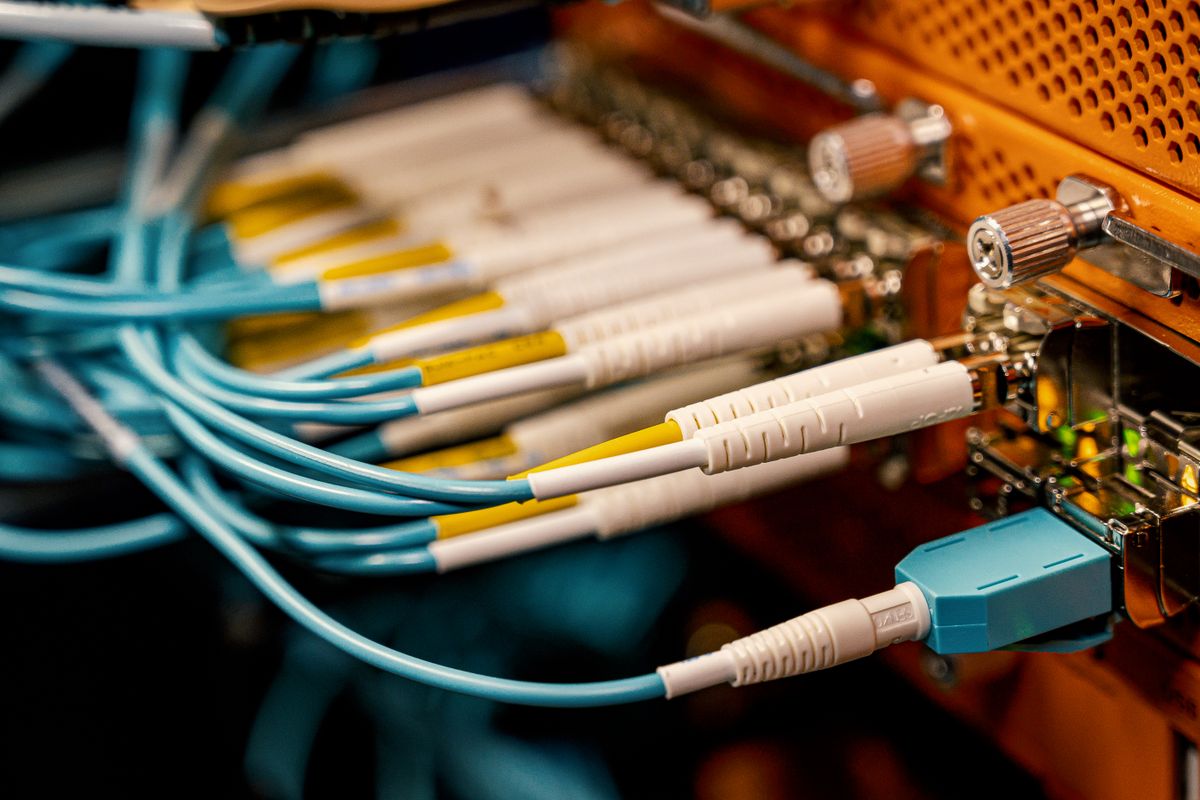
The cable itself is useless without connectors. A connector must align two glass cores to within less than 1 micrometre of each other. Any misalignment causes signal loss.
The ferrule is the precision component that holds the fibre. Most ferrules are made of:
- Zirconia ceramic — the industry standard. Hard, stable, and wear-resistant. Used on SC, LC, ST, and FC connectors.
- Stainless steel — used in industrial environments where durability matters more than precision.
- Glass-filled plastic — used on low-cost connectors; less precise and prone to wear.
The connector body is typically moulded plastic or machined metal (nickel-plated brass or stainless steel). The fibre is secured inside the ferrule with epoxy adhesive or by mechanical crimping.
Polishing the ferrule end face is what determines performance. A poor polish scatters light. Standards like PC, UPC (ultra physical contact), and APC (angled physical contact, 8°) describe increasingly precise polish profiles. APC connectors have lower return loss and are standard for FTTH (fibre to the home) installations.
How Fibre Optic Cable Materials Work Together
The genius of what is fiber optic cable made of is that each material handles exactly one threat:
- Glass handles light transmission — nothing else does this
- Acrylate coating handles microcracks — glass cannot protect itself
- Aramid yarn handles pulling tension — glass snaps under strain
- PVC jacket handles fire and abrasion — aramid is not enough alone
A cable designed for submarine use has all these layers plus steel armour, copper or aluminium shielding, and water-blocking compounds. A cable for indoor patch use has just the core, cladding, coating, aramid, and a thin PVC jacket. The materials change, but the principle stays the same: separate layers for separate jobs.
A Common Misconception About What Is Fiber Optic Cable Made Of
Many people imagine a fibre optic cable as a hollow glass tube with a mirrored inner surface, like a miniature periscope. This is wrong on both counts.
A fibre optic cable is solid glass. There is no hollow centre and no mirror. The light reflects off the core-cladding boundary not because of a reflective coating but because of total internal reflection — a purely optical phenomenon that depends on the refractive index difference between two transparent materials.
The analogy of a pipe with a mirrored lining confuses people because it sounds intuitive. But light in a fibre does not bounce off a shiny surface. It passes through a transparent boundary and gets reflected back because the angle is too shallow for it to escape. Water does the same thing: look up at the surface of a swimming pool from underwater, and you see a perfect mirror — no silver required.
The same physics applies to the glass in a fibre optic cable.
External resources
- trueCABLE: Basic Components of a Fiber Optic Cable — detailed guide to the five components with diagrams and video walkthrough
- Corning: How It Works — Optical Fiber — manufacturer's explanation of glass science and fibre manufacturing
- Wikipedia: Optical Fiber — comprehensive reference on fibre types, materials, and applications
For the physics behind total internal reflection that makes fibre work, see our guide on total internal reflection. For a broader introduction to fibre optics, read what is optical fiber. To understand the light source used in fibre systems, see how laser light works.
Frequently Asked Questions
What is fiber optic cable made of in simple terms?
A fiber optic cable is made of five layers: a glass core that carries light, a glass cladding that keeps light inside, a plastic buffer coating for protection, aramid yarn (Kevlar) strength members, and a tough outer jacket. The core and cladding are both ultra-pure silica glass — just with different refractive indices.
What materials are used in fiber optic cables?
The main materials are silica glass (for core and cladding), acrylate polymer or silicone (for the buffer coating), aramid yarn or steel (for strength members), and PVC, LSZH, or polyethylene (for the outer jacket). Connectors use ceramic (zirconia) ferrules, metal or plastic bodies, and epoxy adhesives.
Is fiber optic cable made of glass or plastic?
Most fiber optic cables use glass (silica) for the core and cladding because it offers the lowest signal loss over long distances. Plastic optical fiber (POF) exists and uses polymethyl methacrylate (PMMA) for the core, but it only works over short distances — typically under 100 metres.
What is the core of a fiber optic cable made of?
The core is made of ultra-pure silica glass (silicon dioxide, SiO₂) doped with germanium or phosphorus to increase its refractive index. The glass must be exceptionally pure — impurities measured in parts per billion would scatter the light signal and reduce performance.
What is the outer covering of a fiber optic cable made of?
The outer jacket is typically made of PVC (polyvinyl chloride) for indoor cables, LSZH (low smoke zero halogen) for public buildings, polyethylene (PE) for outdoor cables, and plenum-rated materials for air-handling spaces. Armoured cables add steel or aluminium wrap beneath the jacket for extra protection.

About Umar Farooq
Umar Farooq writes in-depth guides on the physics of light and optics — from reflection, refraction, and lenses to diffraction, lasers, and fiber optics, explained from first principles.
Read more about Umar Farooq →