The double slit experiment in quantum mechanics reveals something that classical physics cannot explain: a single particle can behave like a wave and interfere with itself. Shoot photons through two slits one at a time and they land at random spots, but over time those spots trace out an interference pattern — bright and dark fringes — exactly as if each photon went through both slits at once. Place a detector at the slits to see which one it uses, and the pattern vanishes. The particle becomes a particle again.
This is not a flaw in the equipment. It is the central mystery of quantum mechanics, and Richard Feynman said it contains the theory's only real secret.
For the classical explanation of how light waves produce interference in the original Young's experiment, see the full double slit explanation guide.
What is the double slit experiment in quantum mechanics?
The classical double slit experiment uses a coherent light source — a laser — shining through two narrow slits onto a screen. The double slit experiment quantum mechanics version, by contrast, reveals phenomena that have no classical explanation. The light waves from each slit overlap and interfere, producing alternating bright and dark bands. That is standard wave optics.
The quantum version does something different. Instead of a bright laser, the source is turned down so low that only one photon is in the apparatus at any time. Each photon hits the screen as a single flash — a particle-like event. If photons were classical particles, you would expect them to build up two bright strips behind the slits. Instead, as the single-photon impacts accumulate, they gradually trace out the same interference pattern that a bright beam produces.
Each photon, by itself, interferes with itself. The double slit experiment quantum mechanics reveals is that the wave-like behaviour belongs to the probability of finding the particle, not to the particle's motion through space.
For a broader introduction to the principle of interference across all wave types, see what is wave interference.
The single-photon version
G. I. Taylor performed the first low-intensity double-slit experiment in 1909, using a light source so dim that only one photon was present at a time. He exposed photographic plates for up to three months to accumulate enough hits. The result was a clear interference pattern, identical to the one produced by a bright beam.
Later, in the 1980s and 1990s, more precise experiments with single photons confirmed the result with modern detectors. The same experiment has since been done with electrons, neutrons, atoms, and even molecules of 2,000 atoms (25,000 daltons). In every case, the single particles produce an interference pattern when unobserved, and a particle-like pattern when measured at the slit.
This is precisely what the double slit experiment quantum mechanics demonstrates: a single quantum particle exists in a superposition of states — one for each slit — until a measurement causes the superposition to collapse into a definite outcome.
Wave-particle duality: the central mystery
Quantum particles are not sometimes waves and sometimes particles. They are always both, and the choice of which face they show you depends on how you measure them.
This is wave-particle duality. It is not that particles switch between two modes — it is that our classical language lacks a single concept that captures what they really are. Light behaves like a wave in an interference experiment and like a particle in a photoelectric effect experiment. The same photon causes both results.
Niels Bohr called this complementarity: the wave picture and the particle picture are complementary descriptions of the same underlying quantum reality. You can observe one or the other, but never both simultaneously in the same experiment.
Which-way experiments: what happens when you observe?
Here is the result that surprises everyone: if you place a detector at the slits to determine which slit a particle passes through, the interference pattern disappears.
The particle now behaves like a classical object, hitting the screen in two broad bands behind each slit. The moment you extract which-path information, the superposition collapses and the wave-like behaviour is lost.
A common misconception is that "observation" means a conscious observer watching the experiment. It does not. Any physical interaction that measures which slit the particle used — even an automated, unobserved detector — is enough to collapse the wavefunction. The particle interacts with the measuring device, and that interaction destroys the phase relationship between the two paths. Decoherence replaces coherence.
The observer effect is not about the mind. It is about measurement: extracting information from a quantum system necessarily disturbs it.
For a detailed treatment of how interference fringes form, see interference patterns explained.
The electron double slit and Dr. Quantum
In 1961, Claus Jönsson at the University of Tübingen performed the double slit experiment with electrons
 — matter particles — and observed interference fringes. In 1974, the Italian physicists Merli, Missiroli, and Pozzi repeated the experiment with single electrons, building the interference pattern one electron at a time. A famous video of their result, often called the Dr. Quantum double slit animation, visualises how individual random impacts gradually form a wave pattern.
This dr quantum double slit experiment demonstration is widely used to teach quantum mechanics. The classic dr quantum double slit animation has been viewed millions of times online. The electron double slit experiment confirmed what de Broglie had predicted in 1924: all matter has wave-like properties. The wavelength of a moving electron is given by λ = h / p, where h is Planck's constant and p is the electron's momentum. For a typical electron in the experiment, the wavelength is comparable to the spacing between slits — which is why the interference is visible.
The experiment has since been extended to neutrons, atoms, and molecules. In 2019, the record stood at molecules of 2,000 atoms, demonstrating that wave-particle duality holds well into the molecular realm.
The Wikipedia article on the double-slit experiment provides a comprehensive technical overview of all major variations and their results.
Delayed choice and quantum eraser
The most mind-stretching variation is the delayed choice quantum eraser, first proposed by John Archibald Wheeler and later realised experimentally by Kim et al. in 1999.
In this experiment, a photon passes through the double slit and is immediately converted into two entangled photons — a signal photon and an idler photon. The signal photon goes straight to the detector. The idler photon takes a longer path and passes through a device that can either reveal or erase the which-path information.
The astonishing result: the decision to erase or preserve the which-path information can be made after the signal photon has already been detected. Yet the interference pattern in the signal photon's data depends on what was later decided for the idler.
This does not violate causality. The interference pattern only becomes visible after the experimenter uses the idler data to sort the signal photons into subsets. No information travels backwards in time. But the experiment does reveal that quantum systems cannot be described with our everyday notions of past and future.
The Wikipedia delayed-choice quantum eraser page gives the full experimental details and a clear explanation of why retrocausality is not required.
Why it matters: applications and implications
Among quantum mechanics experiments, the double slit is the most instructive because it packs the entire theory into a single setup. And it is not just a philosophical puzzle — its principles drive real technologies.
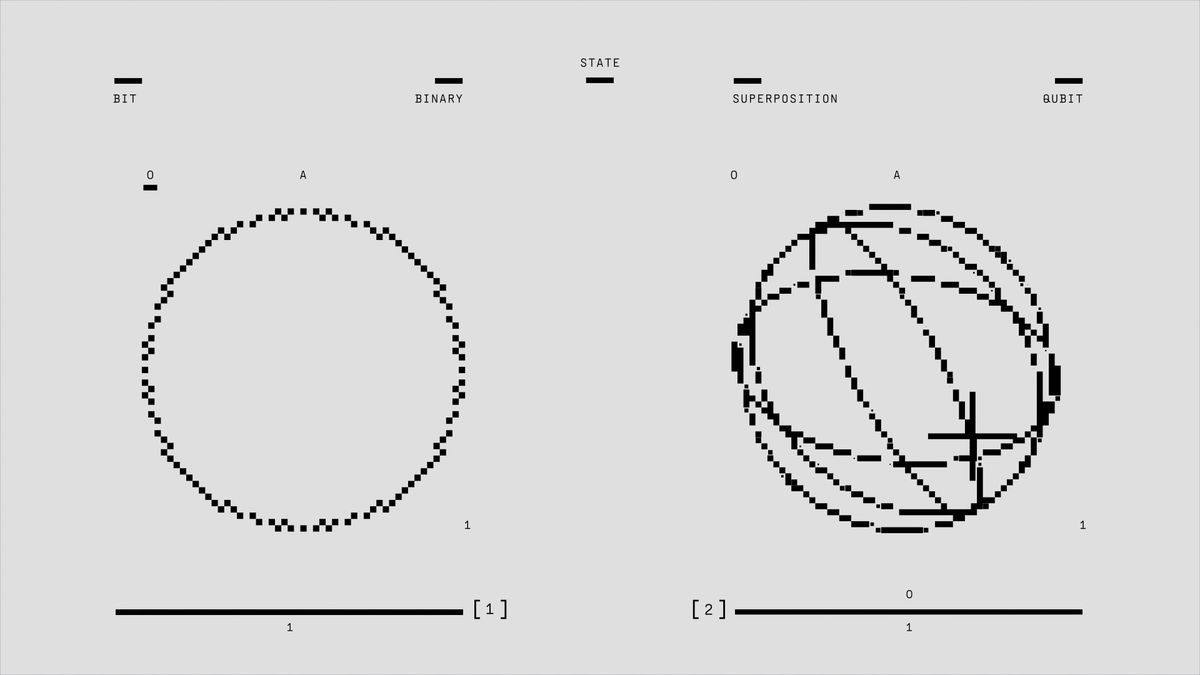
Quantum computing relies on superposition: qubits exist in states that are analogous to the particle being in multiple paths at once. The double slit is the simplest illustration of how superposition works and how measurement collapses it.
Quantum cryptography exploits the measurement disturbance demonstrated by the which-way experiment. If an eavesdropper intercepts a quantum communication, the act of measuring changes the quantum state — exactly as placing a detector at the slits destroys the interference pattern. This makes quantum key distribution provably secure.
Electron microscopy uses the wave nature of electrons — the same wave-particle duality confirmed by the double slit — to image objects at atomic resolution. The shorter wavelength of electrons compared to light gives much higher resolution.
The Science Notes guide covers additional variations including large molecule interference and weak measurement experiments.
Key takeaways
- The double slit experiment quantum mechanics version sends one particle at a time through two slits. Each particle interferes with itself, building an interference pattern over time.
- This demonstrates wave-particle duality: quantum entities display wave or particle behaviour depending on how they are measured.
- Which-way detectors destroy the interference pattern by collapsing the wavefunction. This is measurement, not consciousness.
- The electron double slit (and later experiments with atoms and molecules) confirms that all matter exhibits wave-like properties.
- Delayed choice quantum eraser experiments show that the decision to measure path information can be made after the particle is detected, without violating causality.
- The principles behind the double slit underpin quantum computing, quantum cryptography, and electron microscopy.
Frequently Asked Questions
What is the double slit experiment in quantum mechanics?
In quantum mechanics, the double slit experiment sends single particles — photons, electrons, or even atoms — one at a time through two narrow slits. Over time, the particles build an interference pattern on the screen, as if each particle travelled through both slits as a wave. If a detector is placed at the slits to determine which path the particle took, the interference pattern disappears and the particles behave like classical objects.
Does the double slit experiment prove wave-particle duality?
Yes. The double slit experiment is the clearest demonstration of wave-particle duality. When unobserved, particles exhibit wave-like behaviour — they interfere with themselves and produce a pattern of alternating bright and dark bands. When observed (measured), they behave like discrete particles that go through one slit at a time. The same entity — a photon or electron — can display both wave and particle characteristics depending on how it is measured.
What is the observer effect in the double slit experiment?
The observer effect in the double slit experiment refers to the fact that measuring which slit a particle passes through destroys the interference pattern. This is often misunderstood as requiring a conscious observer. In reality, any physical interaction that extracts which-path information — even with an automated detector — collapses the wavefunction and eliminates interference. The effect is about measurement, not consciousness.
Has the double slit experiment been done with electrons?
Yes. In 1961, Claus Jönsson performed the double slit experiment with electrons and observed interference fringes. In 1974, Merli, Missiroli, and Pozzi built an interference pattern one electron at a time, proving that each individual electron interferes with itself. Since then, the experiment has been repeated with neutrons, atoms, and even molecules containing over 2,000 atoms.
What is a delayed choice quantum eraser?
A delayed choice quantum eraser is an extension of the double slit experiment that uses entangled photons. The which-path information of one photon is stored in its entangled partner, and the experimenter can choose to 'erase' that information after the first photon has already been detected. When the which-path information is erased, the interference pattern reappears — even though the decision was made after the measurement.
What happens when you send one photon at a time through a double slit?
When you send one photon at a time through a double slit, each photon hits the screen at a single random point, like a particle. But as more photons accumulate, they gradually build a wave-like interference pattern of alternating bright and dark bands. This shows that each individual photon interfered with itself — it must have travelled through both slits as a wave, then collapsed to a single point upon detection.
What is the wavefunction in the double slit experiment?
The wavefunction is a mathematical description of the quantum state of a particle. In the double slit experiment, the wavefunction of a single particle passes through both slits, spreads out, and interferes with itself. The square of the wavefunction at each point on the screen gives the probability of detecting the particle there. When a measurement is made, the wavefunction collapses to a single location.
Why is the double slit experiment important for quantum mechanics?
The double slit experiment is important because it reveals the core puzzles of quantum mechanics in a single demonstration: wave-particle duality, superposition, the measurement problem, and complementarity. Richard Feynman called it 'the only mystery' of quantum mechanics — the one experiment from which all quantum behaviour can be understood. Its implications drive research in quantum computing, cryptography, and fundamental physics.

About Umar Farooq
Umar Farooq writes in-depth guides on the physics of light and optics — from reflection, refraction, and lenses to diffraction, lasers, and fiber optics, explained from first principles.
Read more about Umar Farooq →