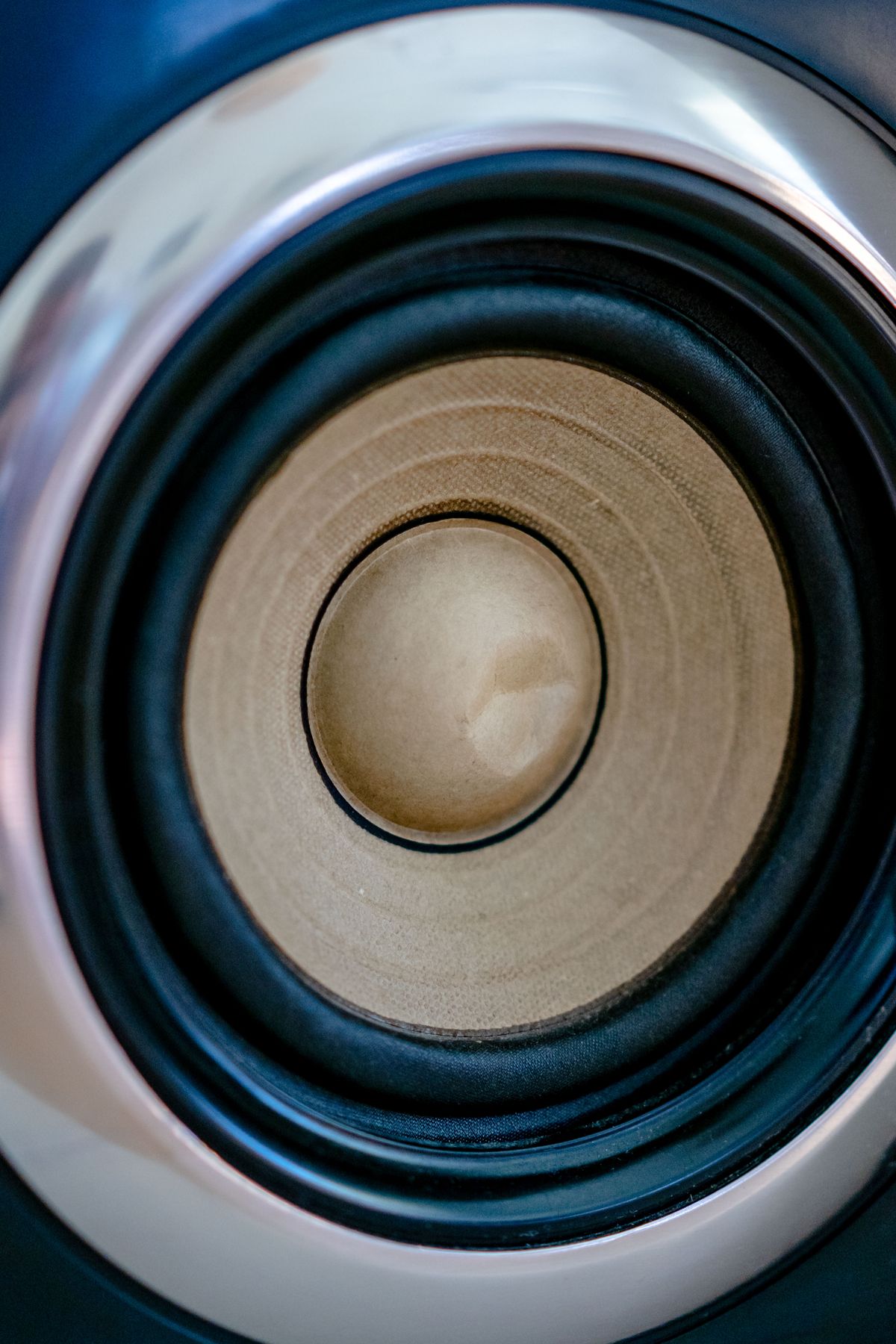
Interference in sound waves is not a special effect — it is what sound naturally does whenever two or more waves meet. Push two speakers playing the same tone towards each other and the rumble swells in some spots and vanishes in others. That is not a trick with the volume knob. The waves are adding and cancelling in real time.
Sound travels as a longitudinal pressure wave — a chain of compressions (squashed air) and rarefactions (stretched air) moving through the air at about 343 metres per second at room temperature. When two sound waves from different sources reach the same spot, they combine. The air cannot follow two sets of instructions. It follows the sum. That sum can be bigger, smaller, or somewhere in between, and what you hear depends entirely on how the two waves are aligned. This phenomenon is called acoustic interference, and it governs everything from the rumble of a concert PA to the hum of a passing truck.
For the full background on how interference works across all wave types, see our guide on what is wave interference.

What is interference in sound waves?
Two people talking at the same time do not collide like two billiard balls. Their voices pass through each other, and what reaches your ear is the combined pressure wave. That is superposition: the simple addition of displacements.
When two identical sound waves arrive exactly in step — compression aligned with compression, rarefaction with rarefaction — the pressure peaks add. The combined wave has twice the amplitude, and the sound is about four times as intense (because intensity goes as amplitude squared). That is constructive interference in sound, and it produces a noticeably louder tone. This constructive interference sound effect is the reason a pair of speakers can fill a room more fully than a single one.
When one wave arrives shifted by half a wavelength — compression meeting rarefaction — the two cancel. If the waves have equal amplitude, the result is silence at that point. That is destructive interference, and it is the principle behind noise-cancelling headphones.
The rule is the same as for light waves, stated in our constructive vs destructive interference guide: constructive when the path difference is a whole number of wavelengths (nλ), destructive when it is a half-integer ((n + ½)λ). Sound is just easier to demonstrate because you can hear the result without instruments.
Constructive interference in sound
Picture two trampoline jumpers bouncing in perfect sync. Both push down together, and the mat flies higher than either could manage alone. That is constructive interference.
For sound waves, constructive interference happens. This classic example of interference in sound waves is easy to reproduce at home: place two identical speakers side by side and listen from the centre line. when the compressions of two waves coincide. The air pressure at that point swings higher than either wave alone. Your eardrum feels a larger push, and your brain registers a louder sound.
The simplest demonstration: two identical speakers placed side by side, both playing the same pure tone. Stand exactly halfway between them. The waves from each speaker travel the same distance and arrive in phase. The sound is noticeably louder than from either speaker alone. Move one speaker back by half a wavelength, and the tone nearly vanishes at the centre line — destructive interference takes over.
This is not a laboratory curiosity. Concert sound engineers use constructive interference deliberately, arranging speaker arrays so that waves combine to project sound evenly across a large audience. The physics of sound wave interference is designed into every professional audio system.

Destructive interference in sound
Constructive interference makes the noise. Destructive interference kills it.
When two identical sound waves meet exactly out of phase — compression meeting rarefaction — the net air displacement at that point is zero. No push on the eardrum. Silence.
This destructive interference sound pattern is why you can cancel unwanted noise. A common misconception is that sound waves "bounce off" each other or that destructive interference destroys energy. Neither is true. Waves pass through each other undisturbed; the interference pattern is simply what happens at the point where they overlap. And the energy is not lost — it is redirected to regions of constructive interference elsewhere in the room. Total energy is conserved.
Destructive interference is why you can walk past two speakers playing the same tone and hear the volume rise and fall. The zones of silence are not dead spots — they are points where the waves cancel at that specific location. Move your head a few centimetres and the sound returns.
The most familiar use of destructive interference is noise-cancelling headphones. A tiny microphone on the outside of the earcup captures ambient noise. A processor calculates the exact opposite waveform — the anti-noise — and a miniature speaker plays it into your ear canal. The original noise and the anti-noise meet and cancel. The result is near silence, especially for low-frequency sounds like engine rumble or aeroplane drone.
Beats: when frequencies are nearly the same
So far we have considered two sound waves with the same frequency. But what happens when the frequencies are slightly different?
The two waves start in phase, then drift out of phase, then back in, then out again — in a repeating cycle. As they do, the volume rises (constructive) and falls (destructive) at a steady rate. That periodic swelling and fading is called a beat — one of the most recognisable effects in beats physics.
The beat frequency — how many times per second the volume pulses — is simply the difference between the two original frequencies:
f_beat = |f1 − f2|
For example, strike a 440 Hz tuning fork and a 442 Hz tuning fork together and you hear a 2 Hz beat — two pulses per second. The closer the frequencies, the slower the beat. When they match exactly, the beat disappears.
This is why musicians tune instruments. A guitarist plays a string against a reference tone and listens for the beats. If the beats are fast, the string is far out of tune. As the string approaches the correct pitch, the beats slow down. When they vanish entirely, the string is in tune.
The beat frequency formula is one of the simplest and most useful tools in acoustics. It converts a purely subjective experience — "that sounds a bit off" — into a number you can measure and act on. For a detailed explanation of how different wave types interfere, see interference patterns explained.
Beats also occur in light and radio waves, but they are easiest to hear. A full treatment of beat phenomena is available from the Physics Classroom tutorial on interference and beats.
Two-source interference patterns
Put two speakers in an open field, both playing the same tone. Walk around and you quickly discover that the sound is not uniform. This two-source experiment is the clearest demonstration of interference in sound waves: the pattern of loud and quiet zones is a direct map of how the waves interact at every point. In some spots it is loud. In others it is nearly silent. The pattern of loud and quiet zones is a two-dimensional interference map.
The loud regions are points where the path difference from the two speakers is a whole number of wavelengths — the waves arrive in phase and add constructively. The quiet regions are where the path difference is a half-integer number — the waves arrive out of phase and cancel.
This is the acoustic version of Young's double-slit experiment. The same maths governs both. The spacing between loud zones depends on the wavelength (and therefore the frequency) and the distance between the speakers. Higher frequencies (shorter wavelengths) produce more closely spaced loud-soft-loud bands. Lower frequencies (longer wavelengths) produce a broader, smoother pattern.
The Science Learning Hub provides excellent simulations of two-source sound interference patterns that make the spatial structure intuitive.
Noise-cancelling headphones: active noise control
Noise-cancelling headphones are the most widespread practical application of destructive interference, and the noise cancellation principle they use is the same superposition physics that governs all wave interactions. Here is how they work in four steps:
- A microphone on the outside of the earcup picks up ambient noise — the hum of an aeroplane engine, the drone of a fan, the rumble of a train.
- A digital signal processor analyses the incoming noise waveform and calculates its exact inverse — a wave with the same amplitude but opposite phase (a 180° shift).
- A miniature speaker inside the earcup plays this inverse wave, known as the anti-noise.
- The original noise and the anti-noise meet inside the earcup and undergo destructive interference. The result is silence — or near silence — at the listener's eardrum.
The effectiveness depends on frequency. Understanding interference in sound waves helps explain why active noise control works best for low, continuous sounds (up to about 1 kHz) because the electronics have time to sample the wave and generate the inverse. Sharp, irregular sounds like clapping, talking, or dog barking change too quickly for the cancellation to keep up. That is why high-end noise-cancelling headphones combine active cancellation with passive sound isolation — thick foam padding that physically blocks high frequencies.
The Encyclopaedia Britannica entry on beats traces the broader history of interference in sound, including the mathematical framework that makes active noise control possible.
Other real-world applications
Beyond headphones and concert speakers, sound wave interference is used in:
Musical instrument tuning — as described above, beats are the standard tool for matching pitches across strings, keyboards, and ensembles.
Architectural acoustics — concert halls and recording studios are designed to manage interference. Walls are angled and surfaces are treated to avoid dead zones (destructive interference) and hotspots (constructive interference) that would ruin the listening experience.
SONAR — submarines and ships use interference patterns in reflected sound waves to detect objects underwater. The phase relationships between multiple sonar pings reveal direction, distance, and even the composition of targets.
Medical ultrasound — interference between ultrasonic waves and their reflections is used to generate detailed images of internal tissues. The technique relies on the same superposition principle that governs interference in audible sound.
Key takeaways
- Sound wave interference is the superposition of two or more sound waves. The result depends on how the waves are aligned.
- Constructive interference makes sound louder. It happens when compressions align — path difference = nλ.
- Destructive interference makes sound quieter or silent. It happens when a compression meets a rarefaction — path difference = (n + ½)λ.
- Beats are periodic volume fluctuations caused by two waves with slightly different frequencies. The beat frequency is f_beat = |f1 − f2|.
- Noise-cancelling headphones are a direct application of destructive interference: they generate an inverted copy of ambient noise and cancel it at the ear.
- Interference does not destroy energy — it redistributes it. The silence at one point is balanced by extra loudness elsewhere.
Frequently Asked Questions
What is interference in sound waves?
Interference in sound waves happens when two or more sound waves occupy the same space at the same time. The waves combine according to the principle of superposition: the total displacement at any point is the sum of the individual displacements. When the compressions of both waves align, the sound is louder (constructive interference). When a compression aligns with a rarefaction, they cancel and the sound is quieter or silent (destructive interference).
What is the beat frequency formula?
The beat frequency formula is f_beat = |f1 − f2|, where f1 and f2 are the frequencies of the two sound waves. For example, if a 440 Hz tuning fork and a 442 Hz tuning fork are struck together, the beat frequency is 2 Hz, meaning the volume pulses twice per second.
How do noise-cancelling headphones work?
Noise-cancelling headphones use a microphone to detect ambient noise, a tiny speaker to generate a sound wave that is exactly 180° out of phase with the noise (its 'anti-noise'), and destructive interference to cancel the original sound. This active noise control is most effective at lower frequencies (engine hum, aeroplane noise) and less effective at sharp, irregular sounds.
What causes beats in sound?
Beats occur when two sound waves with slightly different frequencies interfere. The waves go in and out of phase periodically, producing a fluctuating volume. The rate of the fluctuation equals the difference between the two frequencies. You hear this as a throbbing or pulsating sound, and it is the standard method musicians use to tune instruments.
What is the difference between constructive and destructive interference in sound?
Constructive interference in sound occurs when the compressions and rarefactions of two waves are aligned — the pressure peaks add, producing a louder sound. Destructive interference occurs when a compression aligns with a rarefaction — they cancel, producing a quieter sound or silence. The path difference determines which one occurs: whole wavelengths give constructive interference; half-wavelength shifts give destructive interference.
Does destructive interference destroy sound energy?
No. Destructive interference does not destroy energy — it redistributes it. When sound waves cancel at one point, the energy appears elsewhere in the room. This is the same principle that redistributes light energy from the dark fringes to the bright fringes in an interference pattern. Total energy is conserved.
What are examples of sound wave interference in everyday life?
Common examples include: the beats you hear when two guitar strings are slightly out of tune, noise-cancelling headphones reducing aeroplane engine drone, the fluctuating volume of a siren as two police cars pass at slightly different speeds, the zones of loud and quiet sound when walking past two loudspeakers playing the same audio, and musical harmony from the superposition of different notes.
Can sound waves interfere in open air?
Yes. Two speakers playing the same frequency in an open space produce a clear interference pattern. As you walk around, you hear alternating regions of loudness (constructive interference) and quietness (destructive interference). This is easiest to observe with pure tones rather than complex music, and the pattern depends on the distance between the speakers relative to the wavelength.

About Umar Farooq
Umar Farooq writes in-depth guides on the physics of light and optics — from reflection, refraction, and lenses to diffraction, lasers, and fiber optics, explained from first principles.
Read more about Umar Farooq →