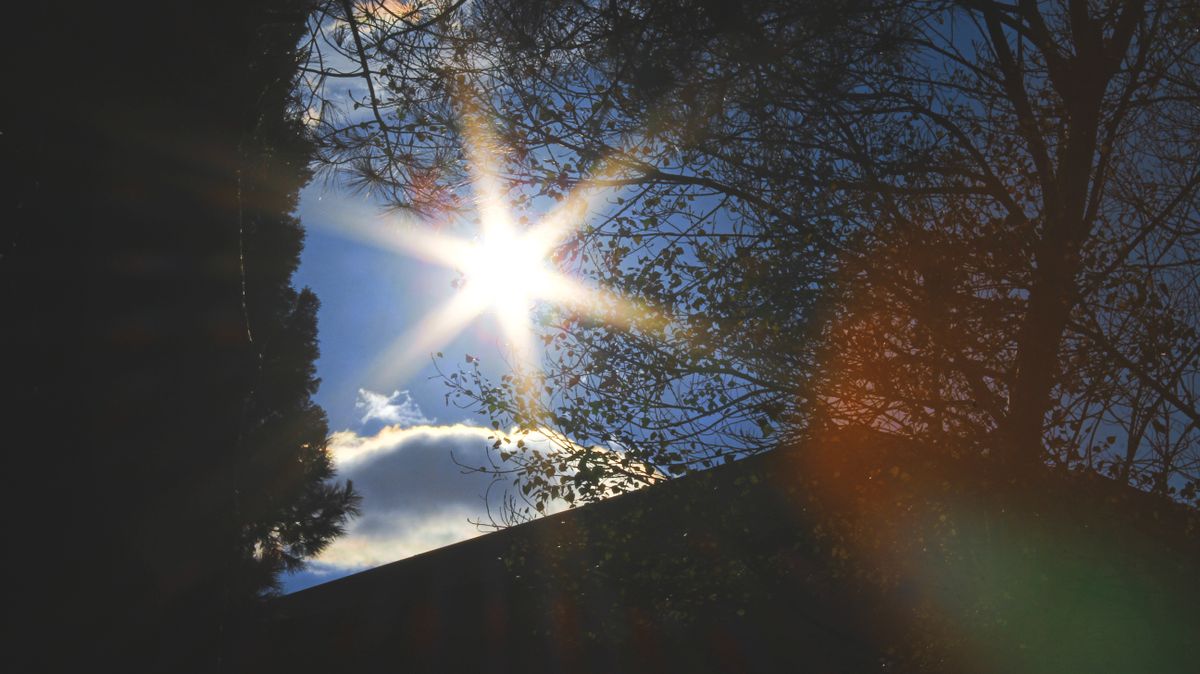
Light in nature comes from far more than the Sun — though the Sun towers over everything else. Look around and nature lights up in at least eight ways: sunlight, starlight, reflected moonlight, fire, glowing lava, lightning, the shimmering auroras, and the cold glow of living things. Each one makes light through a different trick of physics. Here's where we're going: the master source first, then a tour of nature's other lamps and the mechanism behind each.
What is light in nature?
Natural light is simply light from sources nature provides, as opposed to the bulbs, screens, and flames we engineer. It splits into two broad kinds: light that an object makes for itself, and light that an object merely reflects.
Most natural light is made by just a few processes — nuclear fusion in stars, the burning of fuel in fire, electrical discharge in lightning, and chemical reactions in living things. Everything else, including the Moon and the planets, only borrows and bounces light that those sources made. Light itself — what it actually is — is the subject of our guide to what light energy is.
The Sun: the master source of natural light
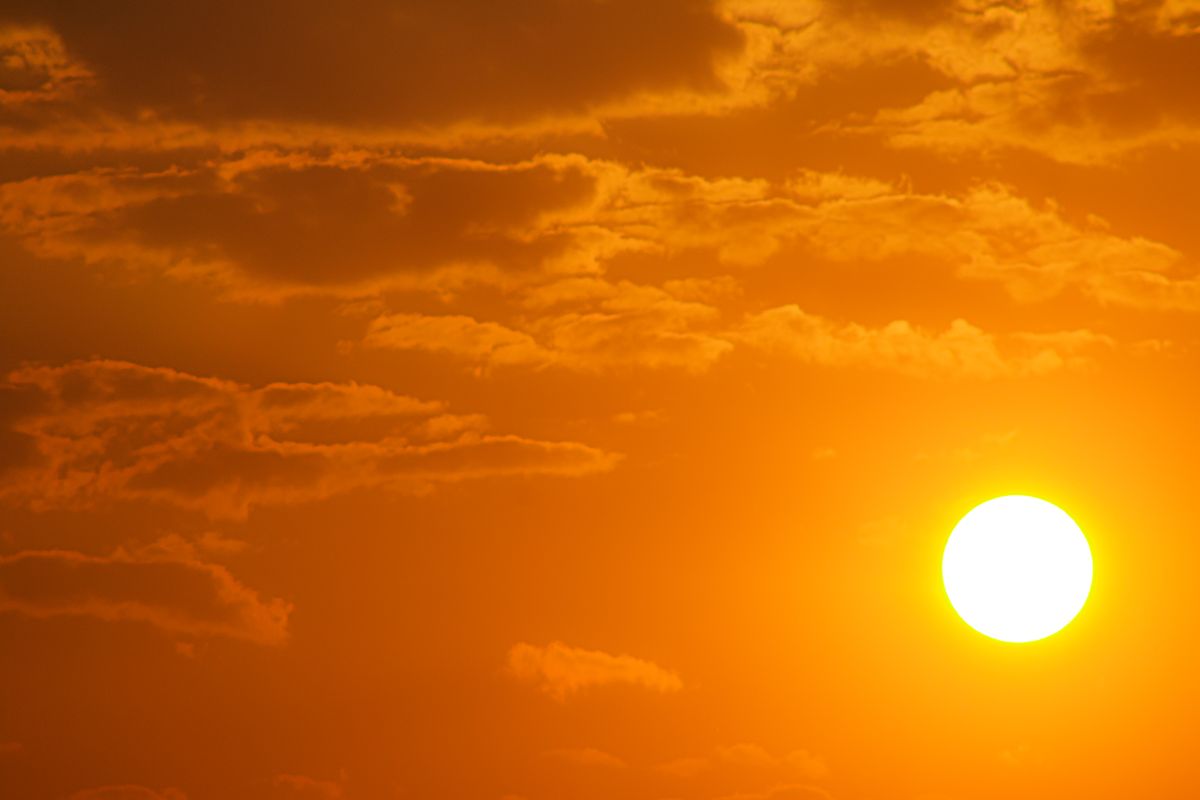
The Sun is the headline act, and nothing else comes close. It makes its light the way every star does: deep in its core, nuclear fusion crushes hydrogen nuclei into helium and releases a torrent of energy, a sliver of which leaves as sunlight. That light takes about 8 minutes 20 seconds to cross 150 million kilometres of space and reach us. (NASA's overview of the Sun covers our star in depth.)
Almost all the natural light you ever use traces back to the Sun. It lights the day, it lights the Moon, it grows the plants, and — through ancient stored sunlight in wood and fossil fuels — it even feeds most of our fires. For how that light first came to exist, see our guide to how light was made.
Starlight and moonlight: the lights of the night
Step outside on a clear night and two kinds of natural light greet you — and only one of them is genuinely a source. Stars are distant suns, each fusing hydrogen and pouring out their own light across the galaxy. The starlight you see set off years, centuries, or millennia ago, so the night sky is a view into the past.
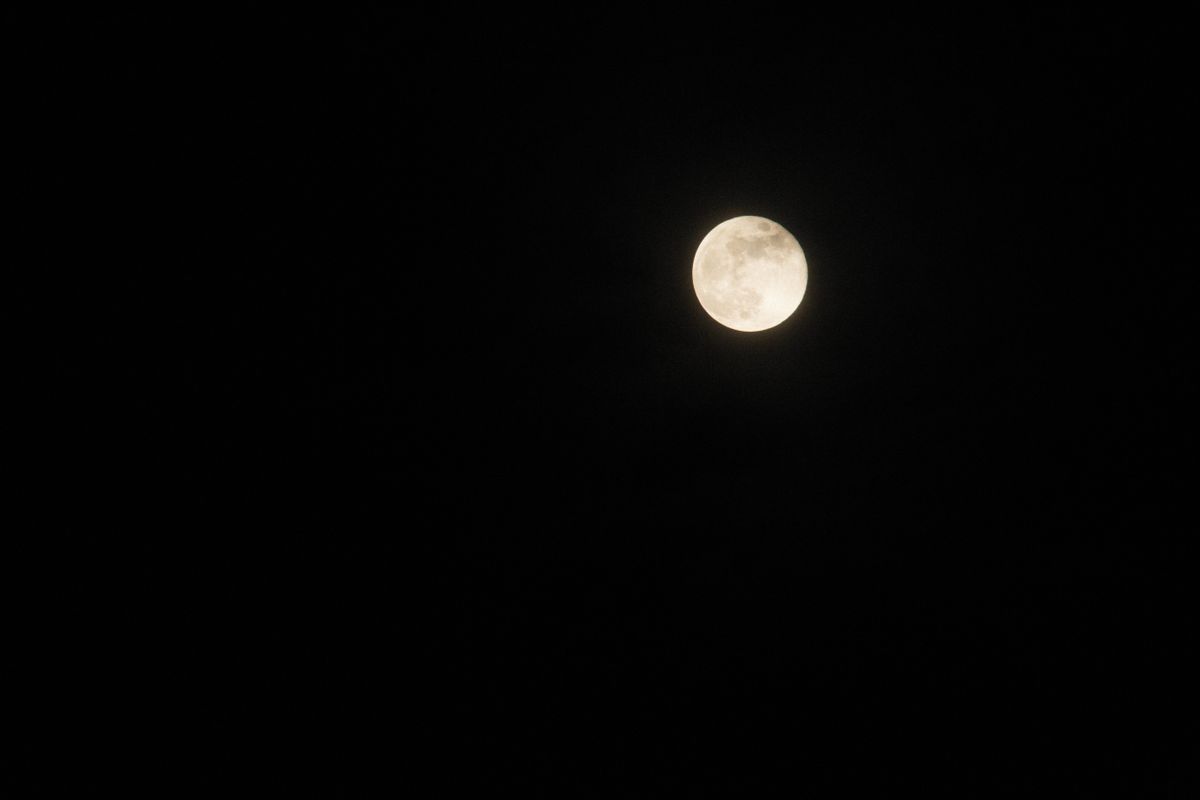
The Moon is the impostor. Here's a misconception worth fixing: the Moon does not make its own light. It's a dark, rocky ball — about as reflective as worn tarmac — that simply catches sunlight and bounces a little of it our way, like a dull mirror catching a torch. That's why the Moon has phases and why its shadowed part stays dark: no sunlight reaching a patch means no moonlight from it. Moonlight is just second-hand sunlight.
Fire, lava, and lightning: nature's hot and electric light
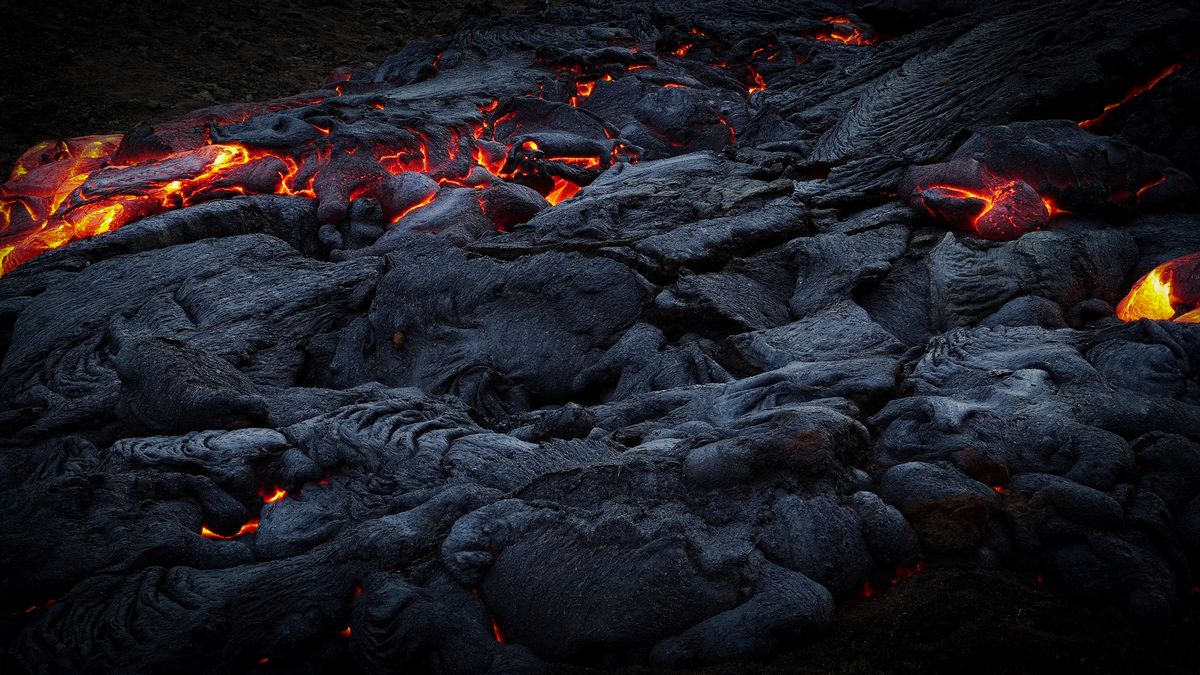
Some natural light comes straight from heat and electricity. Fire glows because burning fuel heats soot particles until they're hot enough to give off light — the same incandescence that lit every campfire in history. Lava does it without burning at all: molten rock from a volcano can top 1,000 °C, hot enough to glow red and orange on its own.
Lightning is the dramatic one. A bolt is a giant electrical discharge that rips through the air, heating a narrow channel so violently that the air itself turns to glowing plasma — and that channel can reach around 30,000 kelvin, roughly five times hotter than the surface of the Sun. For the brief instant it exists, lightning is one of the brightest natural lights on Earth. (The colours of any hot glow depend on what's burning or heated, the same idea behind the types of light that materials emit.)
Auroras: the sky's natural light show
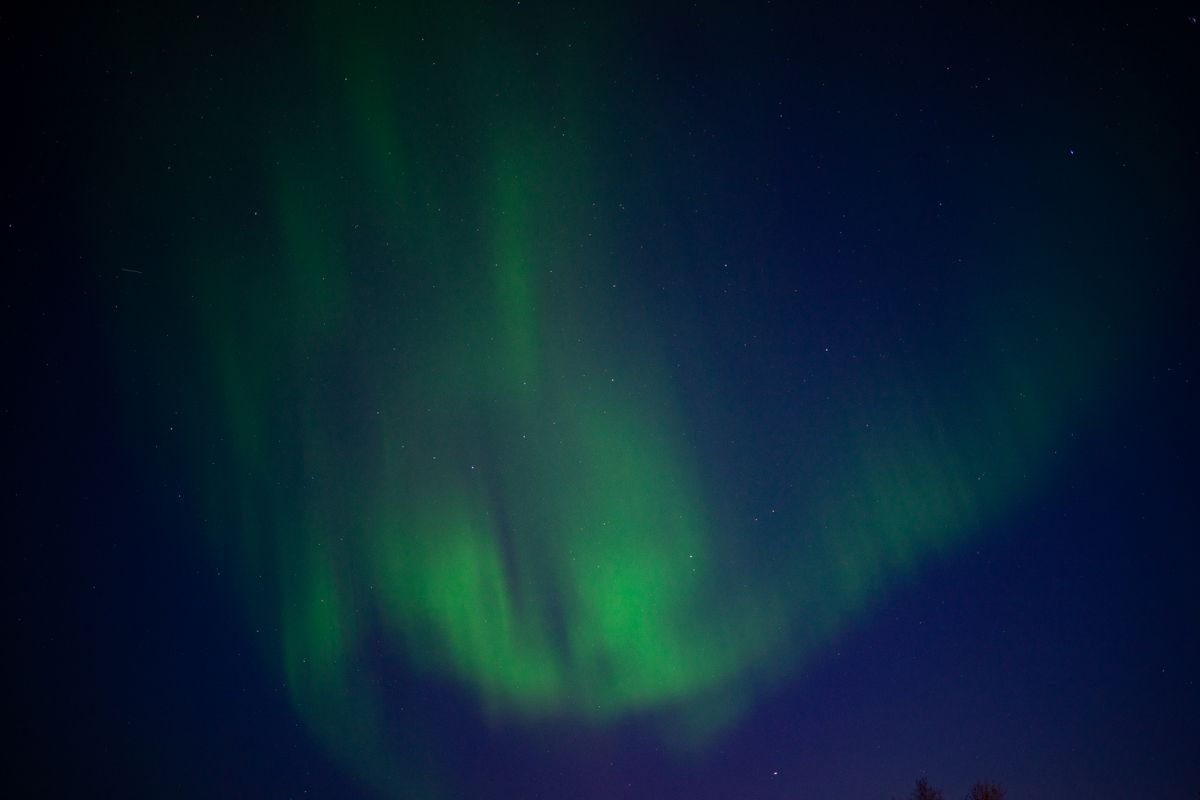
The auroras — the northern and southern lights — are the most spectacular light in nature, and they're a collaboration between the Sun and the Earth. The Sun constantly flings out charged particles, the solar wind. Earth's magnetic field funnels some of them toward the poles and down into the upper atmosphere.
Here's the key idea, and it's a familiar one: an aurora works like a giant neon sign. In a neon tube, electricity excites the gas and it glows a particular colour. In the sky, the incoming solar particles slam into oxygen and nitrogen atoms 100 to 300 kilometres up, kicking their electrons into higher energy states. As those electrons drop back down, they release the energy as light — green and red from oxygen, blue and purple from nitrogen. The curtain shapes trace the invisible lines of Earth's magnetic field. (NASA explains how auroras form in more detail.)
Bioluminescence: light made by living things
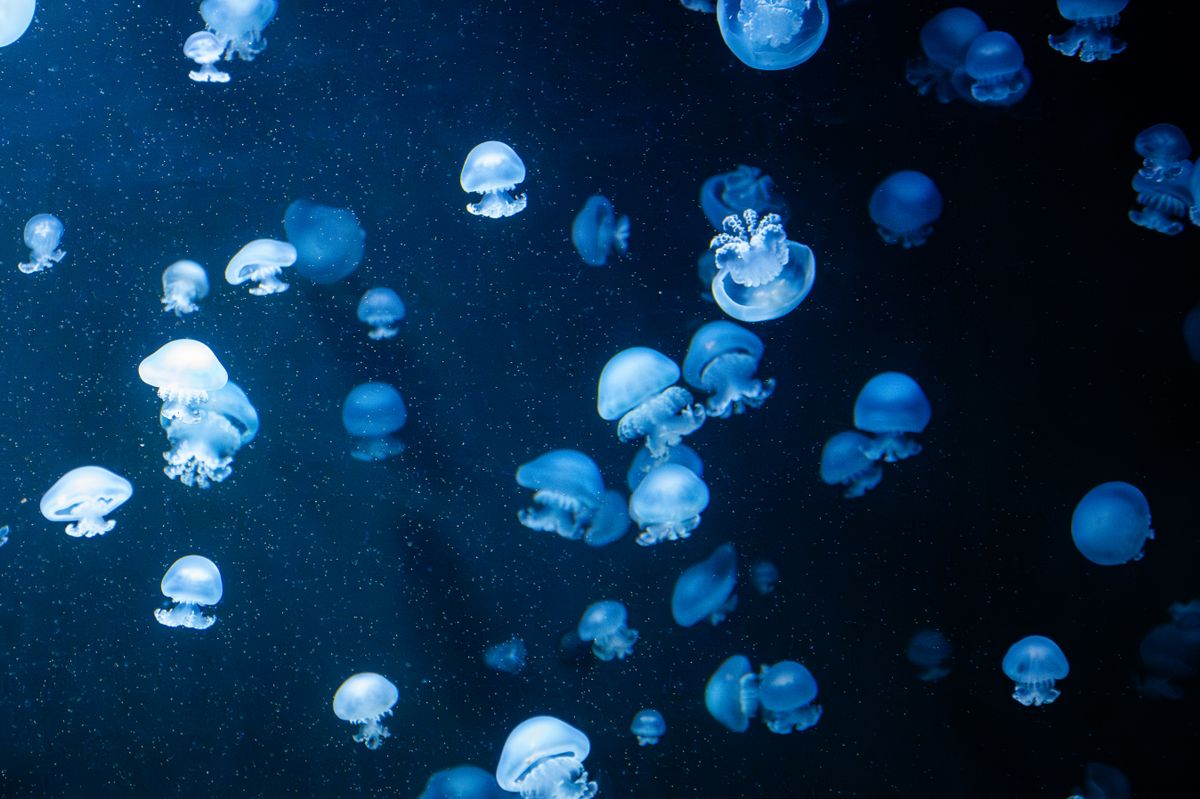
The strangest natural light of all is made by life itself. Bioluminescence is a living glow stick: a light-emitting molecule reacts with oxygen, helped along by an enzyme, and the released energy comes out almost entirely as light rather than heat. It's "cold light," which is why a firefly never burns.
It's also everywhere once you look. Fireflies flash to find mates; deep-sea anglerfish dangle glowing lures; some fungi and plankton glow blue when disturbed. In the dark deep ocean — the largest habitat on Earth — the majority of animals can make their own light, making bioluminescence arguably the most common way light is produced in nature. (Wikipedia's overview of bioluminescence covers the chemistry and the creatures.)
One original diagram for this article: a single night-and-day scene labelled with every natural light source and how each makes light — the Sun and stars marked "fusion," fire and lava "heat/incandescence," lightning "electrical → plasma," the aurora "solar particles exciting air," a firefly and jellyfish "chemistry (cold light)," and the Moon marked "reflected sunlight — makes none of its own." One picture sorting nature's lights by their physics.
Want to keep exploring? See what light energy is, the full range of types of light, or browse all our optics guides.
Frequently Asked Questions
What is light in nature?
Light in nature is light that comes from natural sources rather than from anything human-made. The Sun is by far the biggest, but nature also lights up through stars, reflected moonlight, fire and lava, lightning, the auroras, and the cold glow of living things. Each makes light through a different physical process — fusion, combustion, electrical discharge, or chemistry.
What are the natural sources of light?
The main natural sources of light are: the Sun, other stars, the Moon (which reflects sunlight rather than making its own), fire, glowing lava from volcanoes, lightning, the auroras, and bioluminescent living things like fireflies and deep-sea creatures. The Sun supplies almost all the natural light we use day to day.
Is the Moon a natural source of light?
Not in the strict sense. The Moon makes no light of its own — it is a dark, rocky ball that reflects a small fraction of the sunlight hitting it back toward Earth. Moonlight is simply reflected sunlight, which is why the Moon has phases and never glows on its own in shadow.
What is the main source of natural light on Earth?
The Sun. It provides almost all the natural light on Earth, drives the weather, powers photosynthesis, and even lights the Moon. Its light takes about 8 minutes 20 seconds to reach us, and nearly every other form of natural light is either tiny by comparison or ultimately traces back to it.
How do living things make light?
Through bioluminescence — a chemical reaction inside the organism that releases energy as light with almost no heat. A light-emitting molecule reacts with oxygen, helped by an enzyme, and the energy comes out as a cold glow. Fireflies, many deep-sea fish, and some fungi use it to attract mates, lure prey, or defend themselves.
What causes the northern lights?
Auroras happen when charged particles streaming from the Sun are funnelled by Earth's magnetic field into the upper atmosphere. There they slam into oxygen and nitrogen atoms and excite their electrons; as those electrons drop back, they release light — green and red from oxygen, blue and purple from nitrogen. It is the same physics as a neon sign, painted across the sky.

About Umar Farooq
Umar Farooq writes in-depth guides on the physics of light and optics — from reflection, refraction, and lenses to diffraction, lasers, and fiber optics, explained from first principles.
Read more about Umar Farooq →