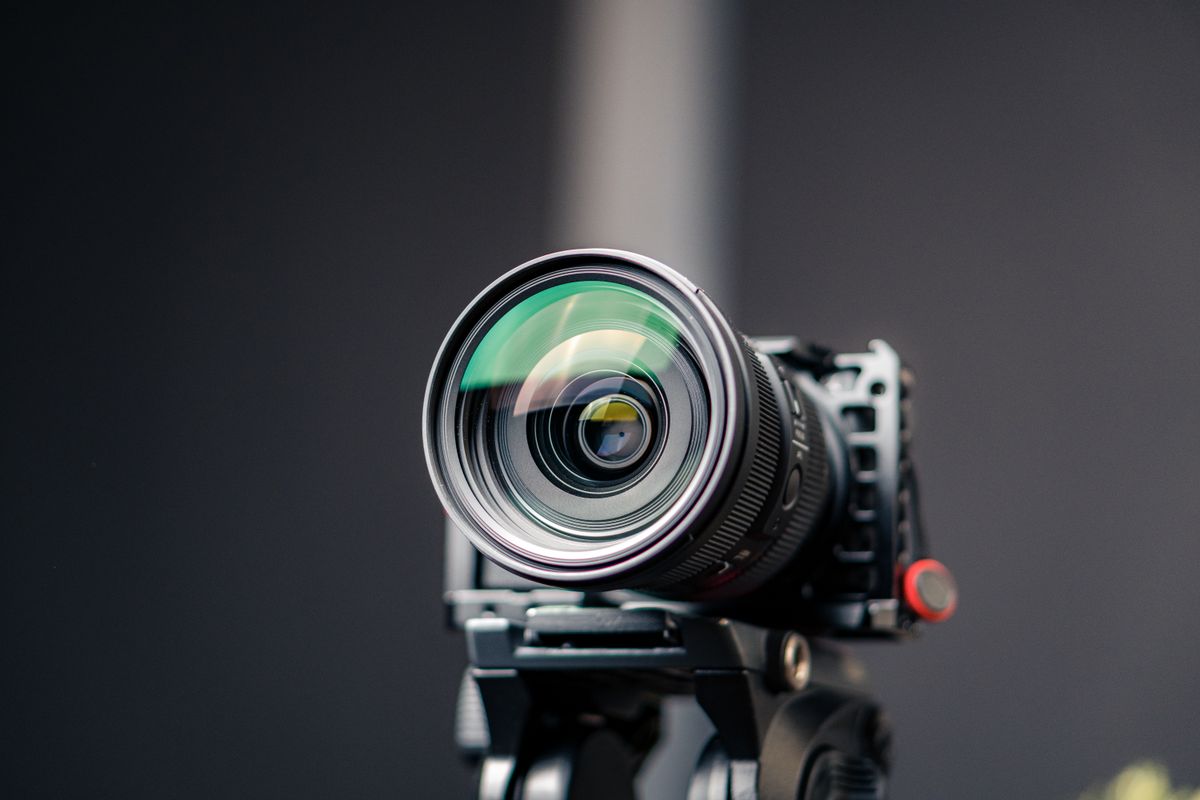
A circular polarizer filter is the only piece of camera glass that can do something no software can: eliminate reflections and glare at the source. Every landscape photographer, every travel shooter, every architecture specialist carries one. But most do not know what is actually inside the metal ring.
Here is what we cover: the optical construction inside a CPL filter — how the polarising film works, what the quarter-wave plate does, and what separates a budget filter from a premium one — plus 5 best uses and when to leave it off.
What Is Inside a Circular Polarizer Filter?
A circular polariser is not a single sheet of glass. It is a precisely assembled optical sandwich. From front to back:
The glass. A polished optical glass disc — either standard optical glass, water-white glass, or premium optical glass depending on the price. Multi-coated with several layers (from 2 to 18 in high-end filters) to reduce flare and ghosting. The edges are painted black on quality filters to stop light bouncing around inside the ring.
The polarising film. A thin sheet of PVA (polyvinyl alcohol) that has been heated, stretched, and soaked in iodine. This is the active polarising element — the part that actually blocks polarised light.
The quarter-wave plate. A birefringent optical layer that converts linearly polarised light into circularly polarised light. This is what makes it a circular polariser. Without it, modern cameras would struggle with autofocus and metering.
The rear glass. Another optical glass disc, often with anti-reflective coating on the inner surface. Protects the quarter-wave plate and completes the sandwich.
All of this is held in a two-piece rotating metal frame. The front ring (housing the linear polariser layer) rotates independently of the rear ring (housing the quarter-wave plate), giving you the control to dial in exactly how much polarisation you want.
How the Polarising Layer Works
The heart of every circular polariser is the polarising film.
Picture a rope shaking up-and-down trying to pass through a vertical picket fence. Only the wiggle that matches the gap gets through. Rotate the fence 90°, and nothing passes. A polarising film does exactly this to light waves — but at the molecular level.
The film starts as a clear sheet of PVA. It is heated and stretched in one direction, which aligns the long polymer chains like rows of parallel wires. Then it is dipped in iodine. The iodine molecules attach to the stretched chains and form conductive pathways.
When light hits the film, the electric field of the wave pushes electrons along these conductive chains if the wave is parallel to them. The electrons absorb the energy. If the wave is vibrating perpendicular to the chains, the electrons barely move and the wave passes through.
The result: roughly half the light is absorbed, and the transmitted light vibrates in a single direction — linearly polarised.
The quality of this film determines the filter's extinction ratio — how thoroughly it blocks the unwanted orientation. Cheap filters might achieve 1000:1. Premium filters with HRT (High Rate Transmission) film reach 8000:1 or better, meaning less than 0.01 per cent leakage.
Why the Quarter-Wave Plate Matters
A linear polariser is fine for some applications. But put it on a modern DSLR or mirrorless camera, and you get problems.
Many cameras use beam-splitting mirrors to direct light to the autofocus sensor. These mirrors are sensitive to the orientation of polarised light. A linear polariser can cause the autofocus to hunt, fail, or produce inconsistent results. The light meter may also read incorrectly.
The quarter-wave plate fixes this. It is a layer of birefringent material with a precise optical thickness. As linearly polarised light passes through it, one component of the wave is delayed by exactly one-quarter of a wavelength relative to the other. The result is circularly polarised light — the electric field rotates like a corkscrew as it travels.
Circularly polarised light behaves identically regardless of orientation, so beam-splitting mirrors in the camera treat it as unpolarised. Autofocus and metering work normally.
This is the sole reason circular polarisers exist. In the pre-autofocus era, all camera polarisers were linear. If you shoot only manual-focus cameras, a cheap linear polariser achieves the same visual effect.
What Makes a Quality Circular Polarizer?
Not all CPL filters are created equal. The price range — from £20 to £200 — reflects real differences in the quality of every layer.
| Feature | Budget filter | Premium filter |
|---|---|---|
| Polarising film | Standard, ~1000:1 extinction | HRT or Pro, 8000:1+ extinction |
| Light transmission | ~38% (2 stops loss) | ~50% (1 stop loss) |
| Glass type | Standard optical | Water-white or ED optical |
| Multi-coatings | None or 2 layers | 8–18 layers, anti-reflective |
| Black-rimmed edges | No | Yes |
| Frame | Standard aluminium | Brass or slim-profile aluminium |
| Colour neutrality | Slight warm cast | Neutral across spectrum |
The biggest practical difference is the HRT film. A filter with HRT film loses about 1 stop of light instead of 2. That translates to faster shutter speeds, easier autofocus, and a brighter viewfinder — especially in overcast conditions or when shooting stopped down.
Multi-coatings are the second differentiator. An uncoated filter reflects about 4% of light per surface (creating flare). A multi-coated filter with 16 layers reflects less than 0.3% — virtually invisible ghosting.
For the physics of how light becomes polarised in the first place, see our guide on how polarisation works.
5 Best Uses for a Circular Polarizer Filter
1. Deepening blue skies and bringing out clouds
A polariser darkens blue sky at 90° from the sun. Clouds stay white, creating dramatic contrast. The effect is strongest in midday light. At sunrise or sunset, the effect is minimal because the light path is too long.
2. Cutting glare on water
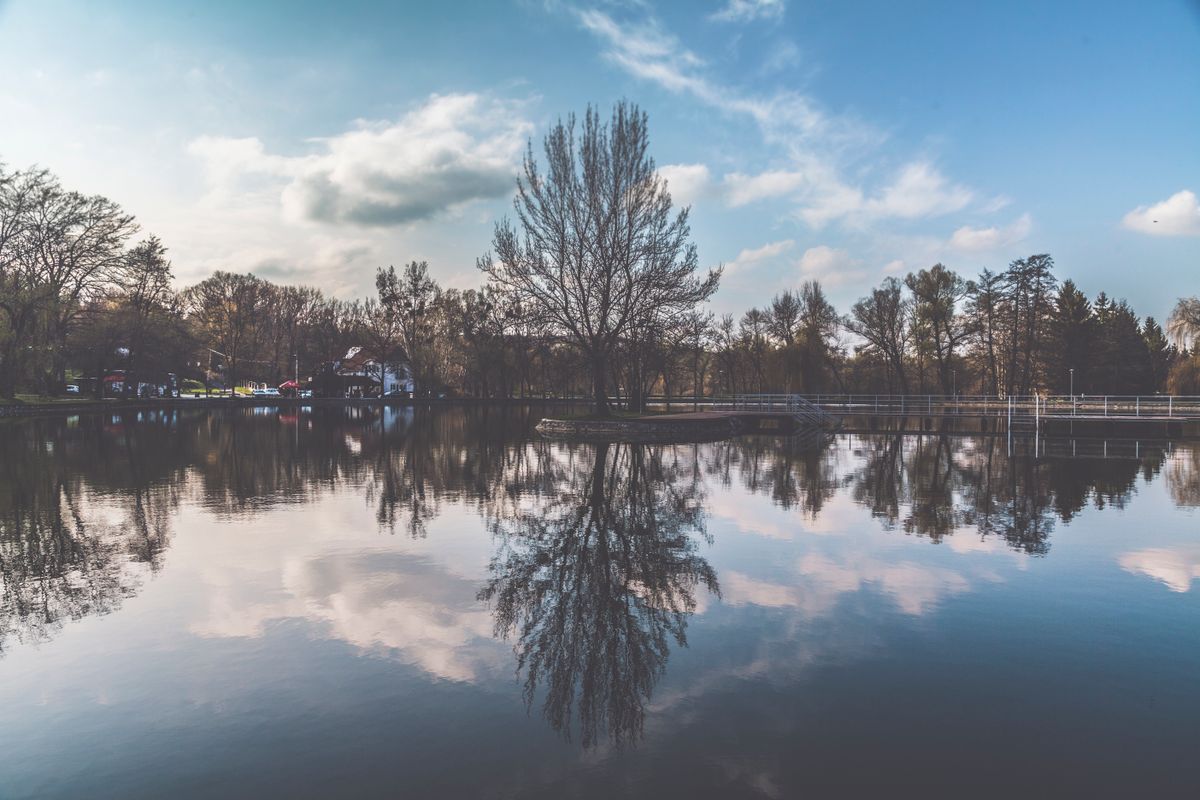
Reflections on lakes, rivers, and the sea wash out colour and hide underwater detail. A circular polariser restores clarity. Rotate until the glare disappears, but be careful not to over-polarise — you can end up with unnaturally black water.
3. Saturating foliage and vegetation
Leaves, grass, and wet vegetation reflect strongly polarised light. A polariser cuts through this glare, making greens deeper and more natural. This is most noticeable after rain.
4. Eliminating reflections through glass
Shooting through windows — in architecture, museums, or from observation decks — always produces unwanted reflections. A CPL filter removes them, revealing the scene behind the glass.
5. Reducing haze in landscapes
Atmospheric haze is partly caused by scattered polarised light. A polariser cuts through it, giving distant mountains and horizons sharper contrast. This works best at mid-range distances and at 90° from the sun.
For a practical photography guide with before-and-after examples, see our article on what a CPL filter is and how to use it.
Common Misconception: A Polariser Is Just a Dark Filter
Some photographers treat a circular polariser as a permanent lens cap that "makes photos look better." That is a misunderstanding of what the filter actually does.
A polariser does not uniformly darken the scene. It selectively removes light waves of a specific orientation. The 1–2 stop light loss is a side effect, not the purpose. If you want a uniformly darker exposure, use an ND filter or close your aperture.
The second part of the myth: that a darker image always looks better. Over-polarised skies turn an unnatural deep blue-black. Reflections that add depth to a composition get stripped out. Rotate the filter and check your framing — do not leave it at maximum effect by default.
Use a polariser deliberately: dial it in to solve a specific problem (glare, washed-out sky, dull foliage) and dial it back when the effect is achieved. Partial polarisation often looks more natural than maximum.
When to Leave the Polariser Off
A circular polariser is not useful in every situation. Skip it when:
The sun is behind you. Polarisation is strongest at 90° from the sun. Facing directly toward or away from the sun produces minimal effect.
You want reflections. Sometimes reflections are the subject — golden-hour light on water, symmetrical buildings in a glass facade, raindrops on leaves. The polariser removes them.
Shooting panoramas. The sky can develop uneven dark bands because the angle to the sun changes across the frame.
Using ultra-wide lenses. Lenses below 24mm can show a dark gradient across the sky and vignetting from the filter ring.
For a detailed breakdown of when to use a polariser versus other filters, see our polariser vs ND filter comparison.
External resources
- B&H Explora: Why and How to Use a Circular Polarizer Filter — professional guide covering polariser tips, wide-angle considerations, and exposure compensation
- PetaPixel: CPL Filter Guide — comprehensive photography guide with design explanation, side effects, and use-case examples
- HOYA Filter USA: How Circular Polarizers Work — manufacturer breakdown of filter construction, HRT film, and quality features
Frequently Asked Questions
What is a circular polarizer filter?
A circular polarizer filter (CPL) is a glass filter that screws onto a camera lens to reduce glare, darken skies, and boost colour saturation. It contains a linear polariser layer followed by a quarter-wave plate that converts the light to circular polarisation — necessary for modern autofocus and metering systems.
How does a circular polarizer filter work?
A circular polarizer has two optical layers. The front layer is a linear polariser made from stretched PVA film treated with iodine — it acts like a molecular picket fence, blocking light waves vibrating in one direction. The rear layer is a quarter-wave plate that converts the linearly polarised light into circularly polarised light so your camera's autofocus and light meter work correctly.
What is the difference between a CPL and a linear polarizer?
A CPL (circular polariser) adds a quarter-wave plate behind the linear polariser layer. This converts the polarised light into circularly polarised light, which is needed for modern DSLR and mirrorless cameras with beam-splitter autofocus systems. A linear polariser (without the quarter-wave plate) can cause autofocus errors and incorrect metering on most digital cameras.
When should I use a circular polarizer filter?
Use a CPL filter for outdoor scenes with reflections or glare: landscapes (to deepen blue skies and reduce haze), water scenes (to see beneath the surface), foliage (to saturate greens), glass surfaces (to eliminate reflections on windows or buildings), and any scene where you want boosted colour contrast. Remove it in low light, for sunset shots, or when using ultra-wide lenses.
Does a circular polarizer affect image quality?
A high-quality CPL filter with multi-coated optical glass has minimal effect on sharpness. Cheap filters with low-grade glass and thin polarising film can introduce softness, colour casts, or flare. The key quality factors are the polarising film grade (HRT vs standard), multi-coating layers, optical glass type, and black-rimmed edges to prevent internal reflections.
How many stops of light does a CPL filter lose?
A circular polarizer filter typically reduces light by 1–2 stops depending on the brand and film quality. Standard polarising film loses about 2 stops. High Rate Transmission (HRT) film loses only about 1 stop — useful for faster autofocus and brighter viewfinder images.
Can I use a circular polarizer on a wide-angle lens?
Yes, but with caution. Wide-angle lenses (below 24mm full-frame equivalent) can show uneven polarisation across the sky — one side appears darker than the other. Use a slim-frame CPL filter to avoid vignetting. For panoramas, skip the polariser entirely to avoid inconsistent sky tones.
Is a circular polarizer filter worth the money?
Yes, because the effect cannot be replicated in post-processing. Once glare is captured in the raw file, it is baked in. A CPL filter is one of the few optical tools that does something no software can do. For anyone who shoots landscapes, water scenes, or architecture regularly, it is the most valuable filter in the bag.

About Umar Farooq
Umar Farooq writes in-depth guides on the physics of light and optics — from reflection, refraction, and lenses to diffraction, lasers, and fiber optics, explained from first principles.
Read more about Umar Farooq →