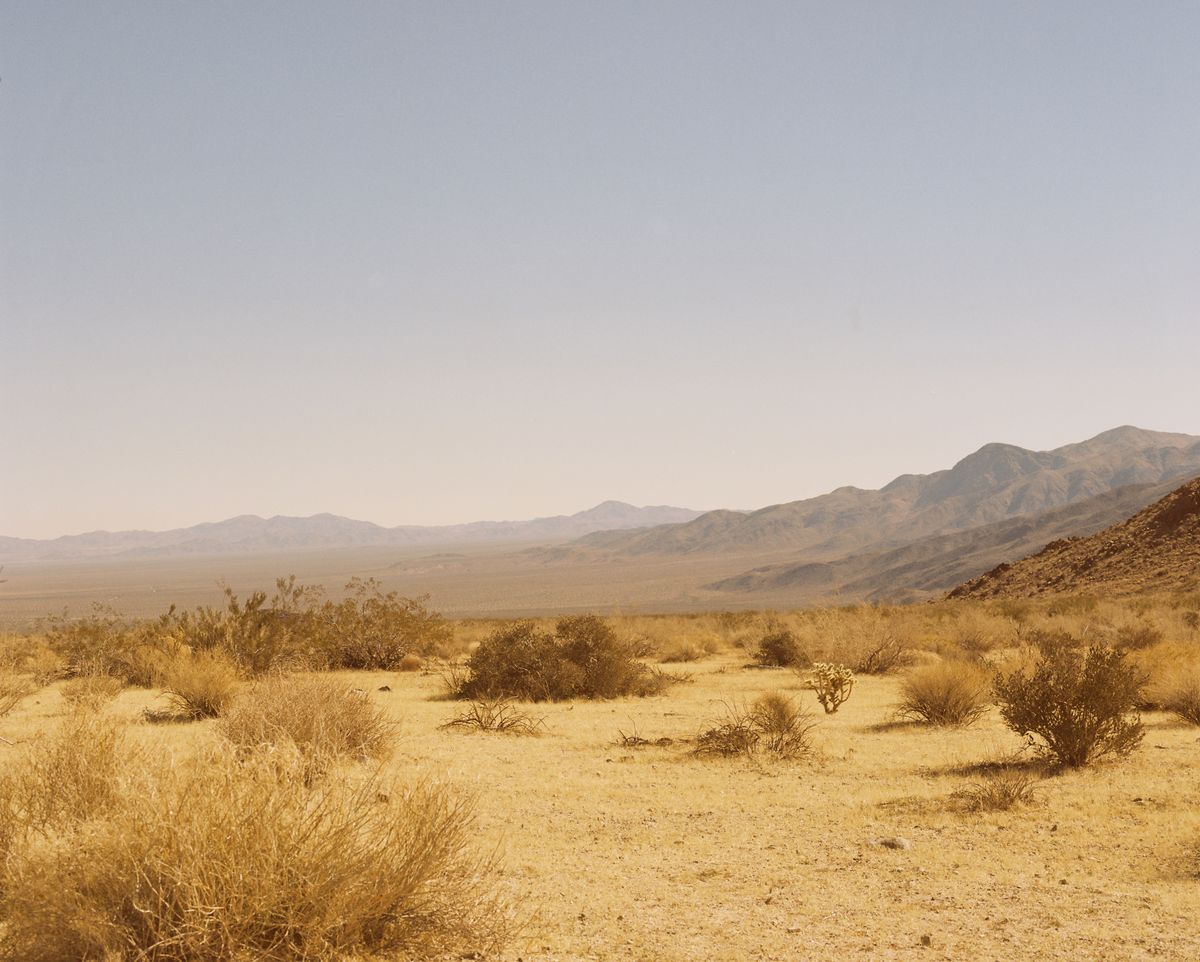
A mirage is an optical illusion caused by atmospheric refraction — light bends as it passes through layers of air at different temperatures, creating a false image of water, sky, or distant objects that is not really there. The classic example is the shimmering pool of water on a hot road that vanishes as you approach. But mirages come in several forms, from desert lakes to towering castles over the sea.
Here is what we cover: the physics of how mirages form (including why the common misspelling "mirrage" is so widespread), the two main types, the spectacular Fata Morgana, why hot roads look wet, heat shimmer, and why mirages are not the same as hallucinations.
What Causes a Mirage? Atmospheric Refraction Explained
Picture a marching band rolling at an angle from hard pavement onto muddy ground. The side that hits the mud first slows first, so the whole formation pivots toward the mud. Light does the same thing when it moves between layers of air at different temperatures — it bends.
Here is the key idea. Air density changes with temperature. Hot air is less dense than cold air. When light travels from hot air into cooler air, it slows down and bends toward the cooler layer — just like the band members hitting the mud. When it goes from cool air into hot air, it speeds up and bends away.
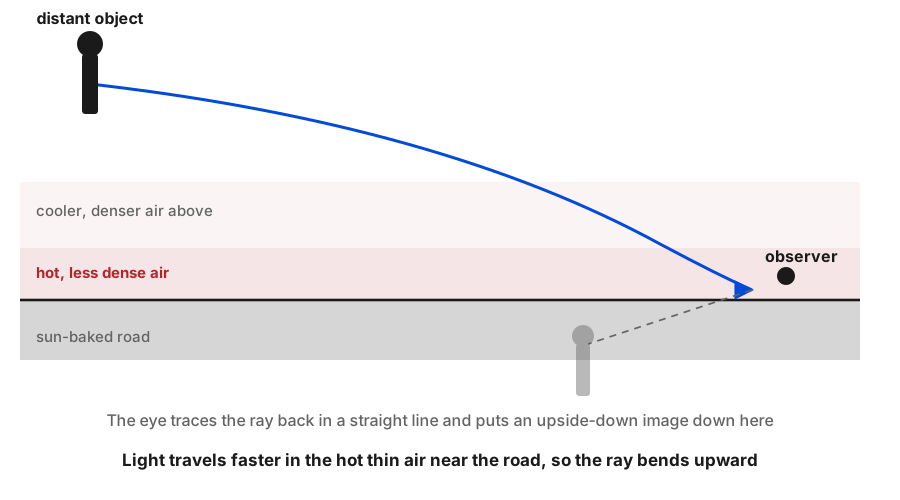
In a typical mirage, a steep temperature gradient exists near the ground. The air right above a sun-baked road can be 20–30°C hotter than the air just a metre higher. Light passing through this gradient bends gradually along a curved path. Your eye traces that curved path back in a straight line, so you see the image in the wrong place.
Physicists call this atmospheric refraction. It is the same phenomenon that makes the sun appear flattened at sunset and makes stars twinkle. The difference is that the temperature gradient near the ground is extreme enough to create a visible false image.
This diagram shows how it works: a light ray from the sky curves upward as it passes through the hot air layer near the ground. Your eye projects it back along a straight dashed line, seeing the blue sky reflected on the road surface.
Inferior Mirages — Why Roads Look Wet in Summer
The road mirage is the most common type. On a hot day, black asphalt absorbs sunlight and heats the air just above it well above the surrounding temperature. This creates a sharp gradient: very hot, thin air near the surface and cooler, denser air above.
Light from the sky travels down through the cool air toward the road. As it enters the hot layer near the ground, it speeds up and bends upward — away from the road. Your brain traces the bent light back along a straight line and sees what looks like a reflection of the sky on the ground. It resembles a puddle of water because water also reflects the sky.
This is called an inferior mirage because the image appears below the real object — "inferior" means lower, not worse. Inferior mirages are common on roads, desert floors, airport runways, and any flat surface in strong sunlight. The illusion moves away as you approach because the angle changes; the reflected sky shifts further ahead, perpetually out of reach.
For a full breakdown of how this works, see our guide to inferior vs superior mirages.
Superior Mirages — Ships in the Sky
A superior mirage is the opposite: the image appears above the real object. This happens when a layer of warm air sits above cold air — a temperature inversion, the reverse of the road mirage.
Superior mirages occur most often over cold water or ice, where the surface chills the air just above it. In polar regions, this inversion is common. Light from a distant object (a ship, a coastline, an iceberg) travels upward through the cold layer near the surface and bends back downward as it enters the warmer air above. Your eye traces the curved path straight, and the object appears higher than it really is — sometimes floating above the horizon.
This is how the "Flying Dutchman" ghost ship sightings began. Sailors saw distant ships hovering above the water because a superior mirage bent light from ships below the horizon upward into view. Explorers in the Arctic reported seeing mountains hundreds of kilometres away — the same physics bending light around the curvature of the Earth.
Fata Morgana — The Most Spectacular Mirage
Fata Morgana is the most complex and visually stunning type of superior mirage. The name comes from Morgan le Fay, the fairy enchantress of Arthurian legend, who was said to conjure castles in the air to lure sailors.
A Fata Morgana happens when the temperature inversion is particularly strong, creating multiple layers of warm and cold air stacked vertically. Light passing through these layers bends differently in each one, producing multiple distorted images of the same object — some upright, some inverted, some stretched vertically.
The result looks like a fantastic castle or city rising from the sea, complete with towers and battlements. In reality, you are seeing a distant ship, coastline, or iceberg that has been multiplied and distorted by the layered atmosphere. The Strait of Messina between Italy and Sicily is famous for Fata Morgana sightings.
The physics is the same as any superior mirage: atmospheric refraction through a temperature inversion. What makes Fata Morgana special is the complexity of the layers, which creates the intricate castle-like appearance that has fascinated observers for centuries.
Our guide to desert mirages covers more on how heat creates these illusions in arid environments.
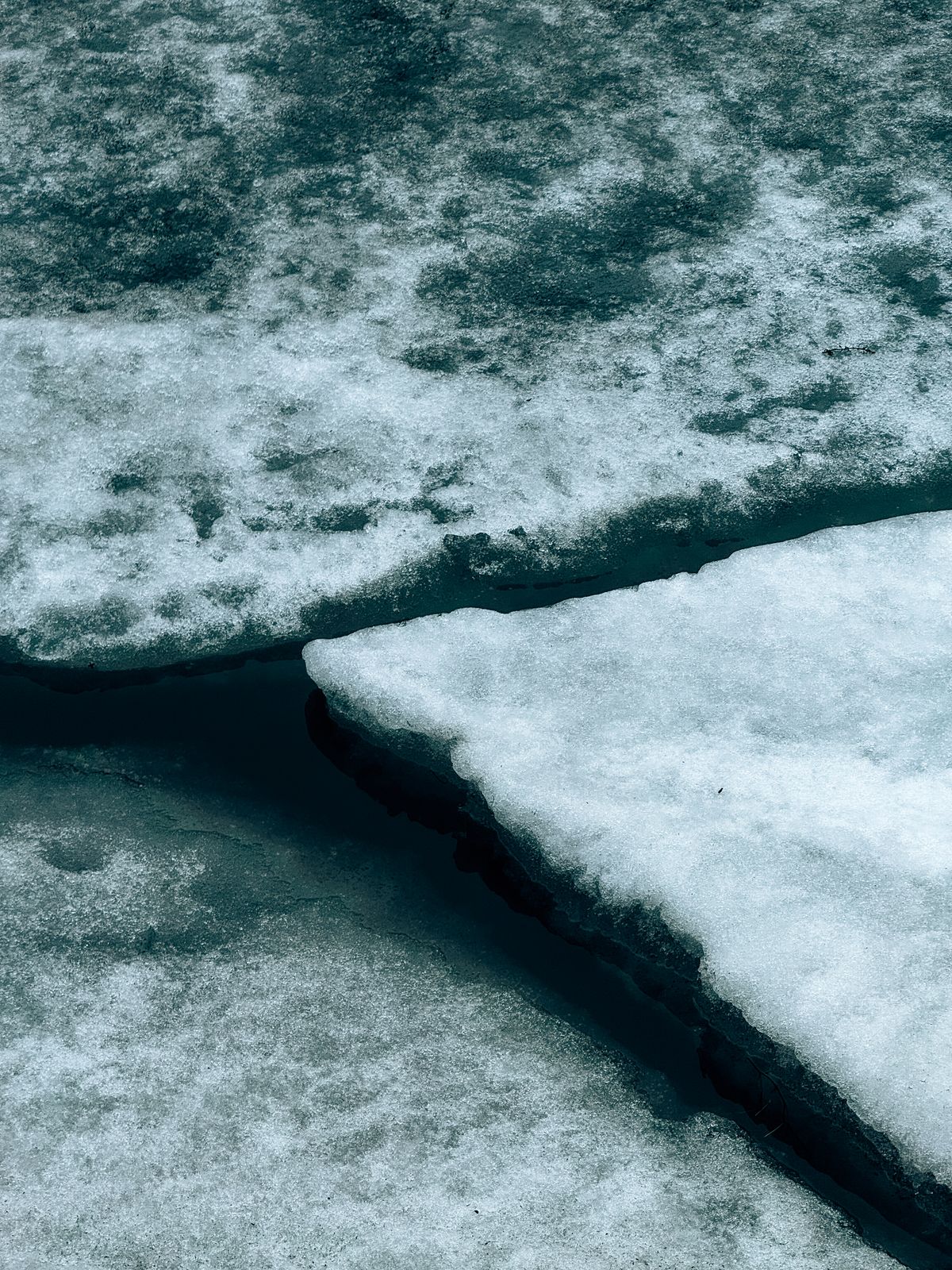
Heat Shimmer — Why the Air Looks Wavy on Hot Days
The wavy, rippling air you see rising from a hot road or desert floor is the same physics on a smaller scale. It is not a mirage in the full sense — you are not seeing a false image of something else — but it is atmospheric refraction at work.
Turbulence in the hot air near the surface creates constantly shifting patches of different temperatures. Light passing through these patches bends by slightly different amounts from one moment to the next. Your eye sees these fluctuations as a shimmering or wavy distortion.
Think of it like looking at a coin at the bottom of a swimming pool when the surface is rippled. The moving water bends the light differently each instant, making the coin appear to dance. Heat shimmer is the same effect, except the moving "surface" is the boundary between hot and cool air, not water.
This has the technical name optical scintillation. It is the same effect that makes stars twinkle — except for stars, the turbulence is in the upper atmosphere, not near the ground.
Common Misconception — Mirages Are Not Hallucinations
There is a widespread idea that mirages are something your imagination creates — a desperate, thirst-driven trick of the mind in the desert. This is wrong.
A mirage is a physical optical phenomenon. It is caused by real light bending through real air at different temperatures. It can be photographed. It can be measured. Two people standing next to each other see the same mirage. A camera pointed at the same spot captures exactly what the eye sees.
A hallucination, by contrast, is a perception without an external stimulus. It cannot be photographed. Each person experiences a different hallucination. Thirst or exhaustion might cause a hallucination, but they do not cause a mirage.
The confusion probably comes from movies and stories that portray mirages as wishful thinking projected onto the sand. In reality, the desert traveller sees a mirage for the same physical reason the motorist sees a wet road: light bends through hot air near the ground. The physics does not care how thirsty you are.
External resources
- Wikipedia: Mirage — comprehensive article covering the physics, history, and types of mirages
- Scientific American: What Causes a Mirage? — accessible Q&A explaining the refraction process
- HyperPhysics: Atmospheric Refraction — detailed educational resource on the temperature-gradient mechanism
See our related guides: what is refraction at night explains how atmospheric refraction affects starlight, what is light covers the fundamentals of light, and our inferior vs superior mirage guide has a detailed comparison of both types.
Frequently Asked Questions
How do mirages form?
Mirages form when light passes through layers of air at different temperatures. Hot air near the ground is less dense than cooler air above, so the speed of light changes as it crosses between layers. The light bends (refracts) gradually through the temperature gradient, and your brain traces the bent light back in a straight line — creating a false image.
Can you photograph a mirage?
Yes. A mirage is a real optical phenomenon caused by the physical bending of light, not a psychological trick. Any camera can capture a mirage because the light really does curve on its way to the lens. Photographs of road mirages and Fata Morgana are widely available and well documented.
What is the difference between a mirage and a hallucination?
A mirage is a physical optical illusion — real light bending through real air at different temperatures. It can be photographed and measured. A hallucination is a psychological perception without an external stimulus; it cannot be photographed. The two are fundamentally different. The confusion comes from movies that portray mirages as thirst-induced visions.
How do you spell mirage?
The correct spelling is m-i-r-a-g-e. A common misspelling is 'mirrage' (with double r). The word comes from French, where 'mirer' means 'to look at', and entered English in the early 19th century.
Why does hot air cause mirages?
Hot air is less dense than cold air, so light travels faster through it. When light moves from cold air into hot air, it speeds up and bends away from the hot layer. On a hot road, the steep temperature gradient near the ground bends light upward, creating the illusion of water reflecting the sky.

About Umar Farooq
Umar Farooq writes in-depth guides on the physics of light and optics — from reflection, refraction, and lenses to diffraction, lasers, and fiber optics, explained from first principles.
Read more about Umar Farooq →