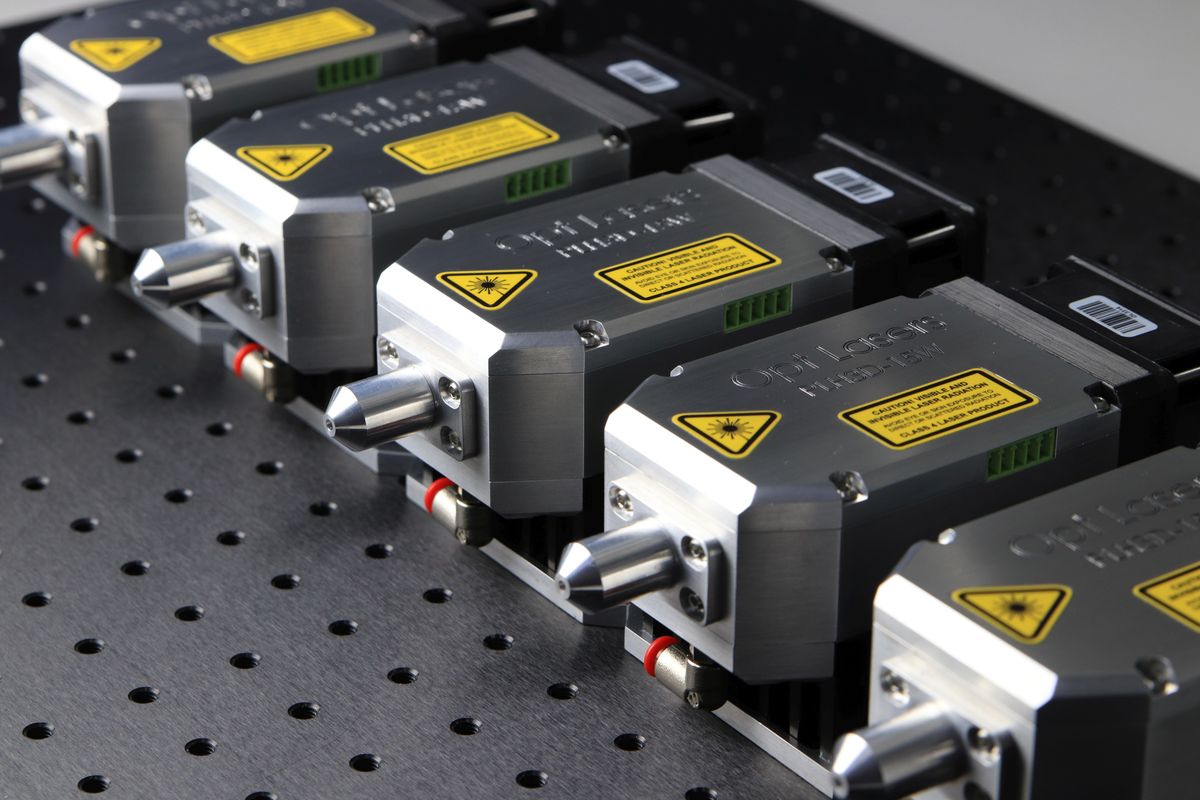
A laser is built from a handful of carefully assembled components. Every laser — from a $5 pointer to a 10 kW industrial cutter — shares the same basic design: a gain medium, a pump source, an optical cavity, a cooling system, and a power supply. The construction of a laser is defined by how these parts fit together and what materials they use. This guide covers every stage of the construction of a laser, from selecting components to final assembly.
Here is what we cover: the 5 key parts of every laser, how each component works, how construction differs between gas, solid-state, and diode types, and common misconceptions about laser building.
Diagram of a Laser: The 5 Key Parts
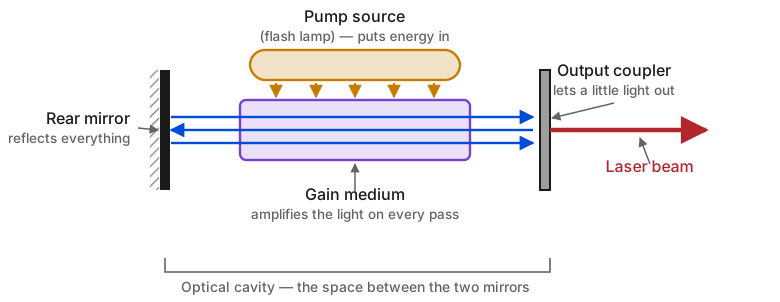
Every laser, regardless of size or power, has the same five functional parts:
| Component | What It Does | What It Looks Like |
|---|---|---|
| Gain medium | Amplifies light through stimulated emission | Crystal rod, gas tube, or semiconductor chip |
| Pump source | Supplies energy to excite the gain medium | Flash lamp, electrical discharge, or laser diode |
| Optical cavity | Bounces light back and forth to amplify it | Two parallel mirrors, one fully reflective, one partially |
| Cooling system | Removes waste heat from the laser | Heat sink, water jacket, or air fan |
| Power supply | Provides controlled electrical power | Circuit board with capacitors, drivers, and regulators |
The first three — gain medium, pump, and cavity — are the minimum required for laser action. The cooling and power supply make the laser practical and safe to operate.
The Gain Medium — The Material That Amplifies Light
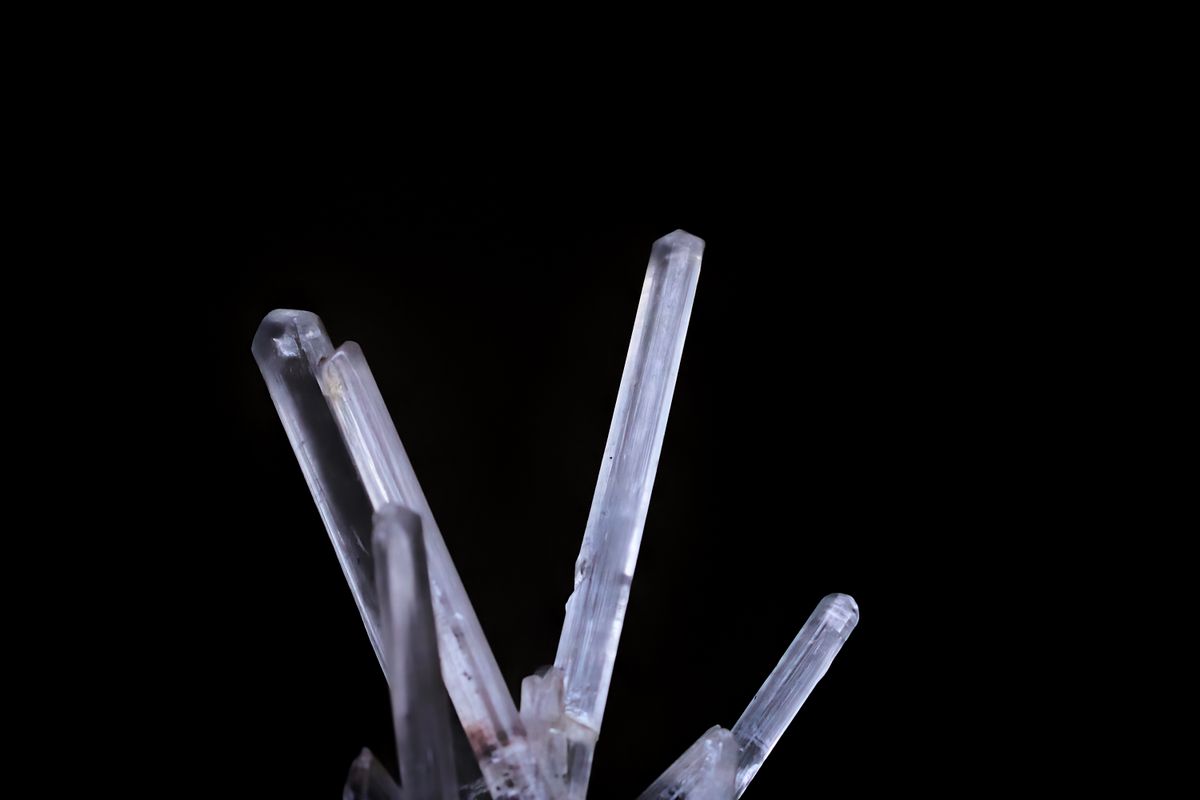
The gain medium is the substance inside the laser that actually produces the coherent beam. In any construction of a laser, the gain medium is the first component you choose because it determines nearly everything else. When energised by the pump source, its atoms or molecules undergo population inversion — more are in an excited state than in the ground state. A passing photon triggers these excited atoms to release identical photons, a process called stimulated emission.
Different gain media produce different lasers. The gain medium determines the laser's wavelength, power, and applications. It is also the site of laser amplification — the process where light intensity grows with each pass through the medium:
- Ruby crystal (Al2O3 doped with Cr3+) — red at 694 nm, the first laser medium ever used
- Nd:YAG crystal — infrared at 1064 nm, the most common solid-state laser for industrial cutting
- Helium-neon gas mixture — red at 632.8 nm, the classic lab laser with excellent beam quality
- CO2 gas — far infrared at 10.6 μm, used for heavy-duty cutting and welding
- Gallium arsenide semiconductor — infrared, used in laser diodes and fibre-optic transmitters
- Organic dye solution — tunable across a broad wavelength range
Different gain media are like different guitar strings. A steel string, a nylon string, and a wound bass string all produce sound when plucked, but they vibrate at different frequencies and suit different music. The same is true of gain media: each one "vibrates" at its own wavelength and suits different jobs.
The Pump Source — The Energy Behind the Beam
A gain medium cannot amplify light until it is energised. The pump source provides that energy — it is the engine of the entire construction of a laser. Without pumping, the atoms in the medium sit in their ground state and absorb photons rather than emit them.
There are three common ways to pump a laser:
Electrical pumping. An electric current passes directly through the gain medium. This is how gas lasers (HeNe, CO2, argon-ion) and semiconductor diode lasers work. A high-voltage discharge excites the gas atoms, or a forward-biased current excites electrons in a diode junction.
Optical pumping. A bright light source — a flash lamp or another laser — shines onto the gain medium. The medium absorbs that light energy and reaches population inversion. This is how ruby and Nd:YAG lasers are pumped. Modern solid-state lasers often use laser diodes as the pump source because they are more efficient than flash lamps.
Chemical pumping. A chemical reaction releases energy that excites the gain medium. Chemical lasers like COIL (Chemical Oxygen Iodine Laser) use this method, reaching megawatt-class power for military applications.
The Optical Cavity — Where Light Becomes a Beam
The optical cavity is a pair of mirrors facing each other with the gain medium between them. This is the part of the construction of a laser that builds the beam intensity. In fact, the optical cavity is what makes the construction of a laser different from a simple amplifier — without the feedback from the mirrors, you would get amplified spontaneous emission rather than a true laser beam. One mirror is 100% reflective; the other is partially reflective (typically 95-99%) and lets some light escape as the output beam.
Picture a ball bouncing down a long hallway between two walls. With each bounce, it gains speed. In an optical cavity, light bounces between the mirrors, passing through the gain medium each time. With each pass, stimulated emission adds more photons, all marching in the same direction and phase. After many round trips, the beam is strong enough to exit through the partially reflective mirror.
The alignment of these mirrors is critical. Even a tiny misalignment — a fraction of a degree — can stop the laser from working. Mirror alignment is one of the most delicate steps in the construction of a laser, whether it is a laboratory HeNe tube or a high-power industrial cutter.
The cavity also determines the beam's properties. The distance between mirrors, their curvature, and their coatings control the beam's diameter, divergence, and mode structure.
Cooling System and Power Supply — The Supporting Cast
Cooling System
Lasers are inefficient. A typical gas laser converts less than 10% of input power into light; the rest becomes heat. Any practical construction of a laser must include a way to remove this heat. Without cooling, the gain medium would overheat, the mirrors would distort, and the laser would fail.
- Small diode lasers use passive aluminium heat sinks — just enough surface area to radiate heat away.
- Medium-power solid-state lasers use forced air cooling with fans.
- High-power CO2 and fibre lasers use water cooling. The water flows through a jacket around the laser tube or gain medium, carrying heat away to a radiator.
- Pulsed lasers may use a chiller to handle the peak heat load during firing.
Power Supply and Control Electronics
The power supply converts mains electricity into the precise voltage and current the laser needs. A full construction of a laser must account for the electrical requirements of every component. A gas laser might need 10-20 kV to ionise the gas. A diode laser needs a carefully regulated low-voltage current source — too much current, and the diode burns out instantly.
Control electronics manage:
- Pulse timing — how long and how often the laser fires
- Power regulation — maintaining stable output
- Safety interlocks — shutting down the laser if a cover is opened or cooling fails
- Modulation — varying the beam intensity for communication or material processing
How the Construction of a Laser Differs Across Types
The basic parts are the same, but their physical form changes dramatically depending on the laser type. Understanding how to construct a laser means knowing which form each component takes. A diagram of a laser helps visualise these differences.
| Laser Type | Gain Medium Form | Cavity Type | Pump Method | Cooling Needs |
|---|---|---|---|---|
| Gas (HeNe, CO2) | Sealed glass tube with gas | External mirrors on tube ends | Electrical discharge (high voltage) | Air or water |
| Solid-state (Nd:YAG) | Crystal rod, 5-100 mm long | Dielectric coatings on rod ends | Flash lamp or diode laser | Water |
| Diode (semiconductor) | Tiny chip, <1 mm | Cleaved facets of the chip | Electric current (low voltage) | Heat sink (passive) |
| Fibre | Doped optical fibre, metres long | Fibre Bragg gratings | Diode laser coupled into fibre | Air or water |
| Excimer | Gas mixture in sealed chamber | External mirrors | Electrical discharge (pulsed) | Water |
Gas lasers are the bulkiest because they need a long tube to contain the gas and high-voltage electronics. The optical cavity mirrors are often mounted externally on adjustable mounts for fine alignment.
Solid-state lasers are more compact. The gain medium is a crystal rod with reflective coatings applied directly to its ends. The entire assembly — rod, pump source, and heat sink — fits in a housing smaller than a shoebox for medium-power models.
Diode lasers are the smallest. The gain medium is a semiconductor chip smaller than a grain of rice, and the cavity mirrors are the chip's own cleaved edges. The entire laser is a fraction of a millimetre across. Read about the types of lasers for more on how each type is built.
Common Misconception: A Laser's Mirrors Are Perfect Reflectors
Many people assume the mirrors in a laser must be perfectly reflective. They are not. The output coupler — the mirror that lets the beam escape — is deliberately only 95-99% reflective. Without that partial transmission, no laser beam would ever leave the cavity.
The high reflector is as close to 100% as modern coating technology can make it, but even it absorbs a tiny fraction of the light. That absorbed energy heats the mirror, which is another reason cooling is necessary.
The real trick is not perfect reflection — it is that the gain medium adds more energy to the beam with each pass than the mirrors lose.
External resources
- Wikipedia: Laser construction — encyclopedia entry covering the three principal parts of a laser, pump sources, gain media, and optical resonator design
- RP Photonics: Lasers — comprehensive guide to laser operation principles, resonator design, and types of lasers
- Britannica: How Does a Laser Work? — authoritative overview of laser components, stimulated emission, and population inversion
See our guide on how laser light works for the physics of stimulated emission that underlies the construction of a laser, and read what LASER stands for for the meaning behind the acronym.
Frequently Asked Questions
What are the 3 main parts of a laser?
Every laser has three essential parts: a gain medium (the material that amplifies light), a pump source (the energy supply that excites the medium), and an optical cavity (two mirrors that bounce light back and forth to amplify it). Most practical lasers also need a cooling system and a power supply.
How is a laser constructed step by step?
First, select the gain medium (crystal, gas tube, or semiconductor chip). Second, mount it inside an optical cavity between two mirrors. Third, attach the pump source (flash lamp, electrical discharge, or laser diode). Fourth, add a cooling system to manage heat. Fifth, connect the power supply and control electronics. Finally, align the mirrors and test the output beam.
What material is used to make a laser?
Lasers use different gain media depending on the type. Common materials include ruby crystal (Al2O3 doped with chromium), Nd:YAG crystal (yttrium aluminium garnet doped with neodymium), helium-neon gas mixtures, carbon dioxide gas, gallium arsenide semiconductor, and organic dye solutions.
What is the heart of a laser?
The gain medium is considered the heart of a laser because it is where stimulated emission occurs — the process that produces the coherent laser beam. Without the gain medium, there is no amplification and therefore no laser light.
How does a laser diode differ from other lasers?
A laser diode uses a semiconductor chip as the gain medium instead of a crystal rod or gas tube. The mirrors are the cleaved edges of the chip itself, and it is pumped by a simple electric current rather than an external flash lamp or laser. This makes laser diodes far smaller, cheaper, and more efficient than gas or solid-state lasers.
What is the role of mirrors in a laser?
The two mirrors form the optical cavity. One mirror is 100% reflective and the other is partially reflective (the output coupler). Light bounces between them, passing through the gain medium each time, growing stronger with every pass until it exits through the partially reflective mirror as the laser beam.
Why do lasers need cooling?
Lasers are inefficient — most pump energy turns into heat rather than light. Without cooling, the gain medium and optics would overheat and fail. Small diode lasers use passive heat sinks, while high-power CO2 and solid-state lasers use water or air cooling systems.

About Umar Farooq
Umar Farooq writes in-depth guides on the physics of light and optics — from reflection, refraction, and lenses to diffraction, lasers, and fiber optics, explained from first principles.
Read more about Umar Farooq →