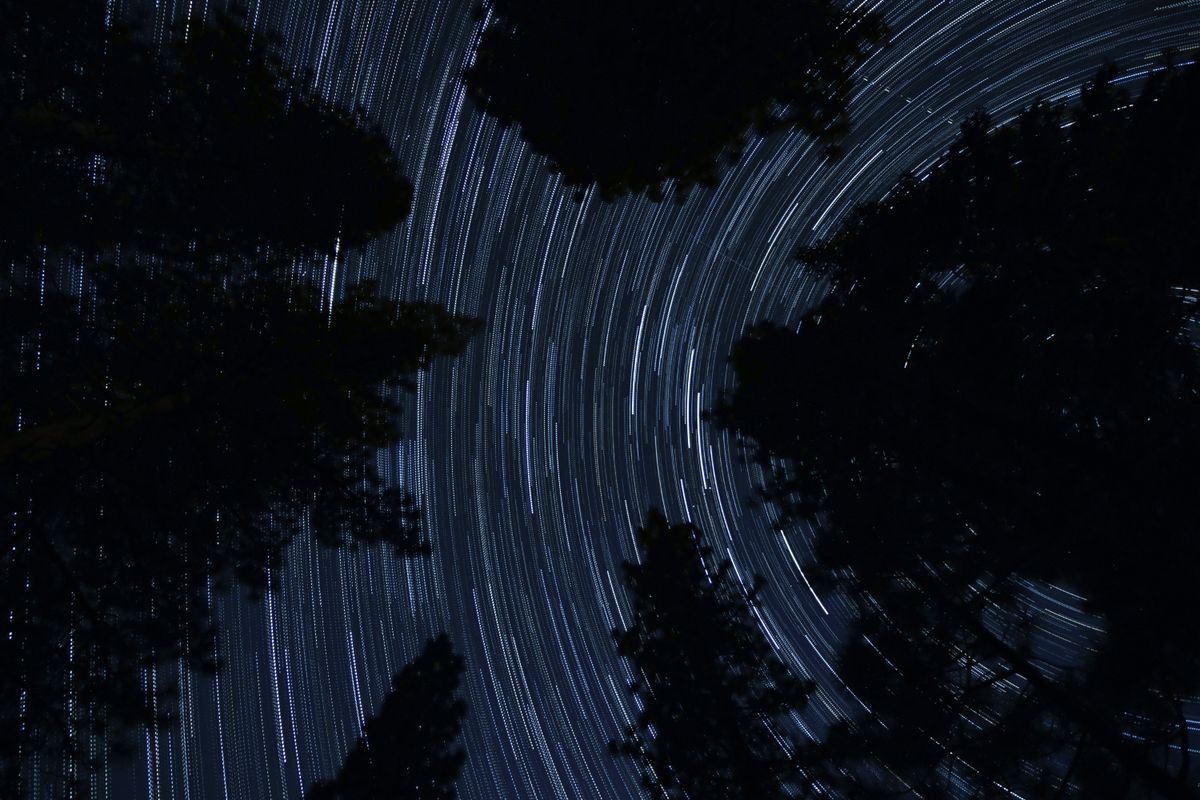
Fun facts about light start with this one: light is the fastest thing in the universe, and almost nothing you think you know about it is quite as simple as it seems. The Sun's light reaches you already eight minutes old, your eyes are photon detectors, and the blue sky is pulling a quiet trick on you. Here are 25 facts about light — each one true, each explained in a line or two, grouped so you can skim.
Fast facts about light: speed and time
- Light is the universe's speed limit. In a vacuum it travels at exactly 299,792,458 metres per second — quick enough to lap the Earth about 7.5 times in one second.
- Nothing outruns it. No object, signal, or piece of information is known to travel faster than light in a vacuum. It is the hard ceiling built into the laws of physics.
- Sunlight is eight minutes old. Light takes about 8 minutes 20 seconds to cross from the Sun to Earth, so you always see the Sun where it was, not where it is.
- Moonlight is fresher. Light bounces back from the Moon in just 1.28 seconds — while starlight can be thousands or millions of years old. Looking at distant stars is literally looking back in time.
- We proved light's speed was finite by watching Jupiter. In 1676, Danish astronomer Ole Rømer noticed eclipses of Jupiter's moon Io ran late when Earth was farther away. The only explanation: light takes time to cross the extra distance — the first evidence that its speed is finite, and the first rough measurement of it.
Facts about light and colour

- White light is every colour at once. Sunlight is all the colours of the rainbow mixed together; a prism or a raindrop simply fans them back out. For the full range, see our guide to the types of light.
- The colours you see are a sliver. Visible light runs only from about 380 nanometres (violet) to 700 nanometres (red) — a tiny slice of the whole electromagnetic spectrum.
- Black isn't a colour of light. It's the absence of light. A surface looks black when it absorbs almost every wavelength and sends none back to your eye.
- The blue sky is a trick of scattering — not the ocean. Air scatters short blue wavelengths far more than long red ones (Rayleigh scattering, strongest for short wavelengths). Blue light ricochets across the whole sky and reaches you from everywhere. The popular idea that the sky mirrors the sea has it backwards.
- Sunsets are red for the same reason. Near the horizon, sunlight takes a long slanted path through the air. The blue has scattered away by the time it reaches you, leaving the reds and oranges.
Surprising facts about light you see every day
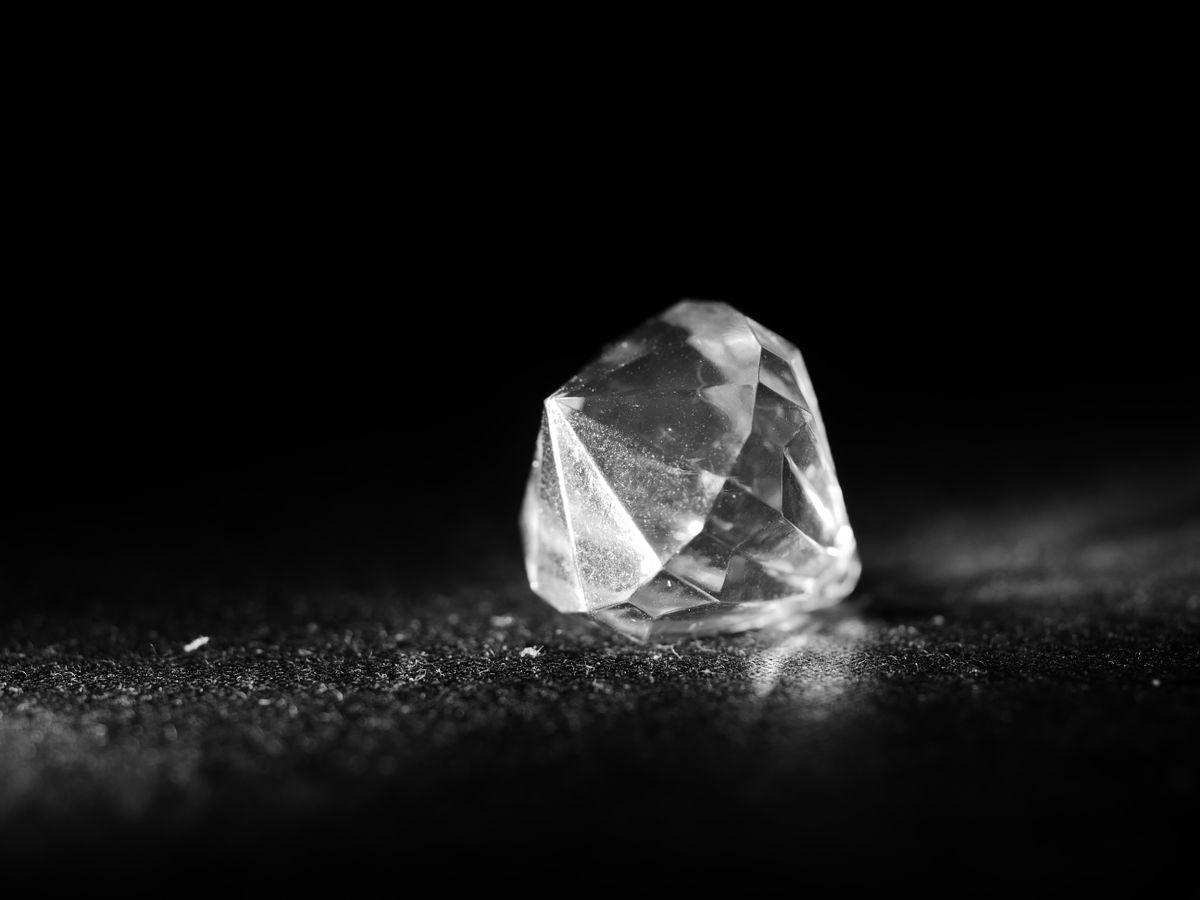
- Light slows down in stuff. It only hits full speed in a vacuum. In water it drops to about 225,000 km/s, and in diamond to roughly 124,000 km/s — about 40% slower than in empty space.
- A diamond's sparkle is trapped light. Diamond bends light so strongly that its critical angle is just 24.4°. Light that gets in struggles to get out, rattling around inside like a ball in a mirrored room before escaping in concentrated flashes.
- No two people see the same rainbow. A rainbow isn't a fixed object in the sky — it's a 42° cone of directions, personal to your exact viewpoint. The person beside you sees their own.
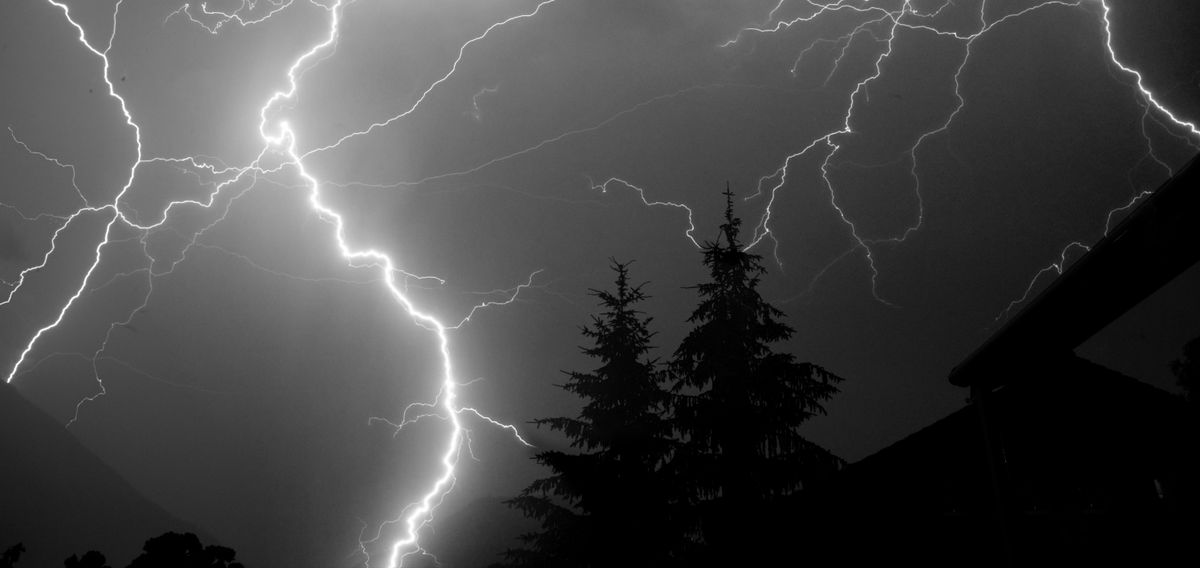
- You see lightning before you hear it. Light reaches you almost instantly; the sound of thunder crawls along at roughly 343 metres per second. Count the gap and you can estimate how far away the strike was.
- A mirror just plays by the rules. Your reflection is light obeying one tidy law — the angle it arrives equals the angle it leaves. More on that in our guide to the properties of light.
The strange physics of light
- Light is a wave and a particle. It spreads and interferes like a wave, yet arrives in countable packets called photons. Which face you see depends on the experiment — the heart of wave-particle duality.
- Light has no mass but carries a push. Photons are massless, yet they have momentum and can nudge objects along — the principle behind solar sails that ride sunlight through space.
- Brightness is just a head count. A single green photon carries about 2.5 electronvolts of energy. A dim light and a dazzling one send the same kind of photons; the bright one simply sends far more per second.
- A laser is light marching in step. A torch is a noisy crowd heading every direction; a laser is one wavelength, all in phase. The first working laser fired in 1960 — a ruby rod glowing deep red at 694 nanometres.
- Light runs the internet. Around 99% of the world's intercontinental data travels as pulses of light down hair-thin glass fibres, bouncing along by total internal reflection.
Fun facts about light in nature and life
- Light is the start of nearly every meal. Plants capture sunlight and store its energy as sugars through photosynthesis — the base of almost every food chain. The full story is in our light energy guide.
- Your eyes are photon detectors. Vision is light absorbed: photons land on cells in your retina and trigger the signals your brain reads as a picture of the world.
- Many animals see light you can't. Bees and many birds see ultraviolet, picking out flower patterns invisible to us; some snakes and fish sense infrared. Our visible window is not the only one.
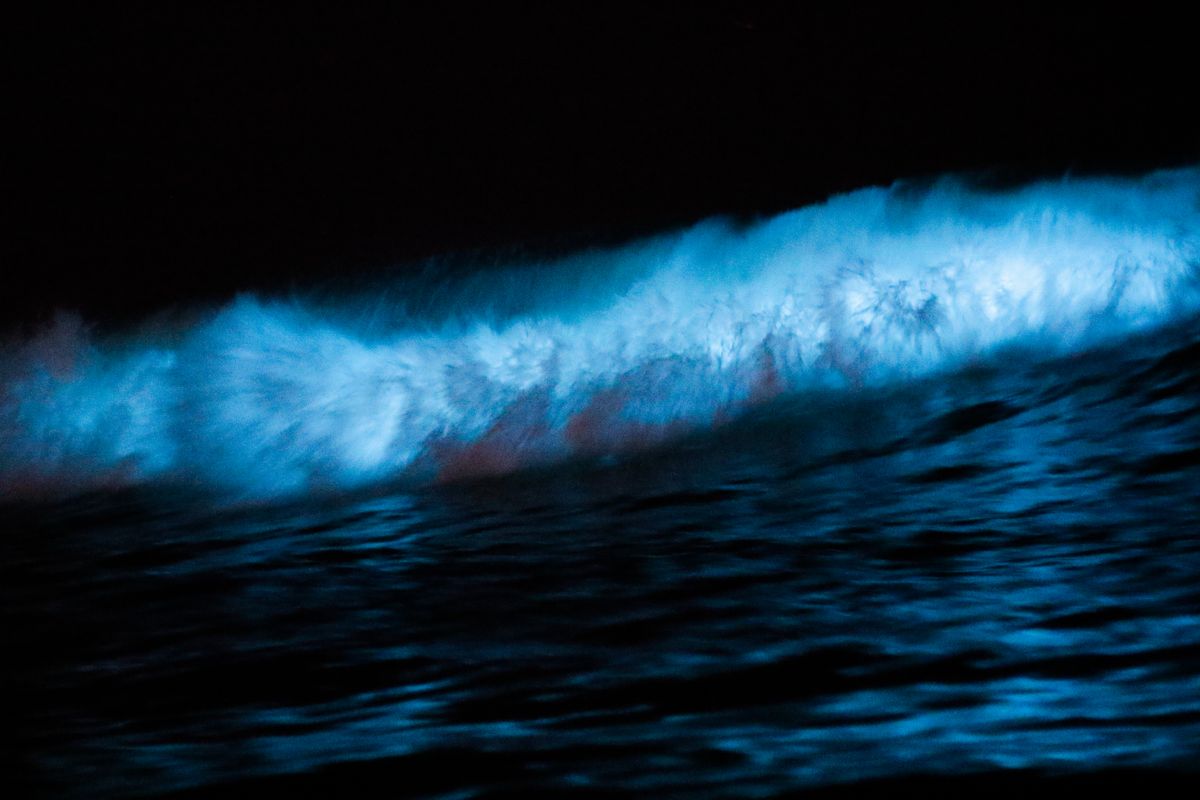
- The deep ocean glows with living light. Fireflies, anglerfish, and countless sea creatures make their own cold light by chemistry — bioluminescence. By some estimates, the majority of deep-sea animals can produce light. (NOAA explains how and why.)
- Most of the universe's light is invisible to us. Radio waves, infrared, ultraviolet, X-rays, and gamma rays are all "light" too — we just can't see them. The glowing colours we perceive are a narrow slot in a vast, mostly invisible spectrum. (For more oddities, the Perimeter Institute's list of light facts is a good rabbit hole.)
One original diagram for this article: a single timeline-style "light's journey" strip — Sun to Earth (8 min 20 s), Moon to Earth (1.28 s), and a distant star (thousands of years) drawn to the same clock, so a reader can see that looking out in space is looking back in time.
Want to go from facts to the physics behind them? Start with our light energy guide, or browse all our optics guides.
Frequently Asked Questions
What is the most interesting fact about light?
A favourite is that looking at distant stars is looking back in time. Light travels at a fixed speed, so the light reaching your eye left those stars years, centuries, or millions of years ago. You are seeing them as they were, not as they are — some may no longer exist.
What are 3 facts about light for kids?
One: light is the fastest thing in the universe, at about 300,000 kilometres a second. Two: white light is really all the colours of the rainbow mixed together. Three: we see things because light bounces off them and into our eyes — no light means no seeing.
How fast does light travel?
Light travels at exactly 299,792,458 metres per second in a vacuum — about 300,000 kilometres per second, fast enough to circle the Earth roughly 7.5 times in a single second. Nothing carrying information or energy is known to travel faster.
Why is the sky blue and not another colour?
Because air scatters short, blue wavelengths far more than long, red ones — an effect called Rayleigh scattering, which is strongest for short wavelengths. Blue light bounces around the sky in every direction and reaches your eye from all over. It is not a reflection of the ocean.
Can light be both a wave and a particle?
Yes. Light behaves as a wave in experiments like the double slit and as a stream of particles (photons) in effects like the photoelectric effect. Neither picture is the whole story — each captures one face of a quantum object that is neither a classical wave nor a classical particle.

About Umar Farooq
Umar Farooq writes in-depth guides on the physics of light and optics — from reflection, refraction, and lenses to diffraction, lasers, and fiber optics, explained from first principles.
Read more about Umar Farooq →