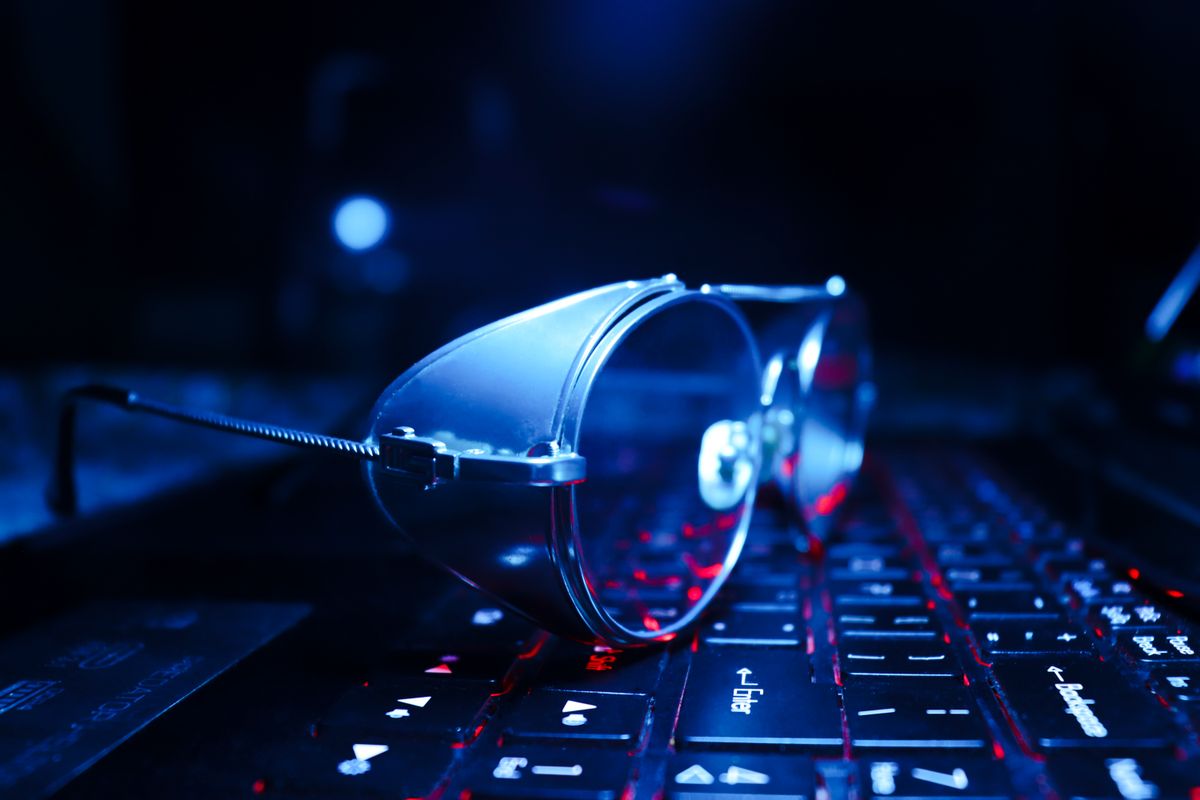
How do blue light glasses work? The optics are simple: a faint tint or a thin coating on the lens absorbs or reflects a slice of the blue light coming off your screens, cutting roughly 20 to 30 percent of it. That part genuinely works. The surprising part is what that filtering actually achieves — because the best medical evidence says it probably does very little for eye strain or sleep. Here's where we're going: how the lenses filter light, what blue light even is, and the honest answer to whether they help.
How do blue light glasses work? The quick answer
A blue light lens is a colour filter. Think of a tinted window that lets most light through but soaks up part of one colour — these lenses do that to the blue end of the spectrum.
They use one of two tricks, sometimes both:
- An absorptive tint — a faint yellow or amber dye baked into the lens. Yellow is the opposite of blue, so it absorbs some of the blue light passing through.
- A reflective coating — an ultra-thin film on the lens surface that bounces a little blue light back, the same kind of thin-film effect behind anti-reflective coatings (a wave behaviour we cover in the properties of light).
Either way, the key word is some. Most blue light glasses filter only a fraction of the blue band, not all of it. They dim blue; they don't block it.
What is blue light, and where does it come from?
Blue light is just one stretch of the colours your eye can see — wavelengths from about 450 to 485 nanometres, near the high-energy end of the visible spectrum. Because shorter wavelengths carry more energy per photon (the E = hf rule from our guide to light energy), blue light packs a bit more punch than red or green. That higher energy is why it gets singled out.
Here's the part the marketing skips. Your screens are a minor source of blue light. The overwhelmingly biggest one is the Sun — daylight delivers far more blue light than any phone or monitor. Worrying about your laptop's blue light while spending time outdoors is a little like worrying about a torch beam while standing in the midday sun. Blue light is also a normal, useful signal: it's part of how daylight keeps your body clock on time. For where it sits among the other types of light, see our spectrum guide.
How blue light glasses filter the light
So how do the lenses actually catch the blue? It comes down to absorption and reflection — two of the basic things light does when it meets a material.
With an absorptive tint, the dye molecules in the lens soak up photons in the blue band and convert that energy to a tiny amount of heat. The light that gets through is missing some of its blue, which is why strong blue-blockers look faintly yellow. With a reflective coating, a microscopically thin layer is tuned so that blue wavelengths partly reflect off it — you can often see a faint blue-purple sheen on the lens. Premium lenses combine a light tint with a coating to filter more without an obvious yellow cast.
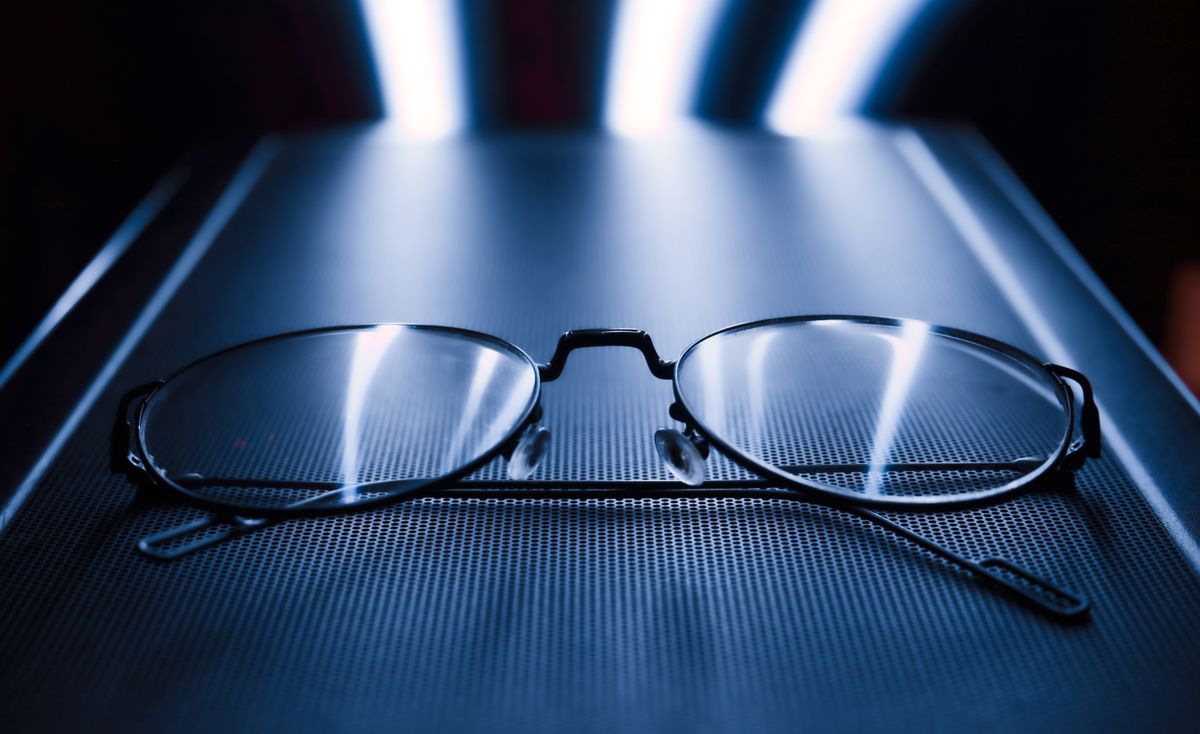
The honest limit: filtering 20–30 percent of a band that your eyes already handle all day, from a source far dimmer than the sky, is a small intervention. The optics are real; the question is whether that small change does anything you can feel.
Do blue light glasses actually reduce eye strain?
Here's the misconception worth correcting head-on: blue light glasses are widely sold as a cure for digital eye strain, but the best evidence says they probably don't reduce it. The claim is reasonable-sounding, which is exactly why it spread — but it hasn't held up in testing.
In 2023, a Cochrane review pooled 17 randomised controlled trials and concluded that blue-light filtering spectacles likely make no difference to eye strain from computer use, and found no evidence they protect the retina from damage. The American Academy of Ophthalmology takes the same position: there's no solid evidence the glasses relieve digital eye strain. (Cochrane's summary and the AAO's guidance both lay this out.)
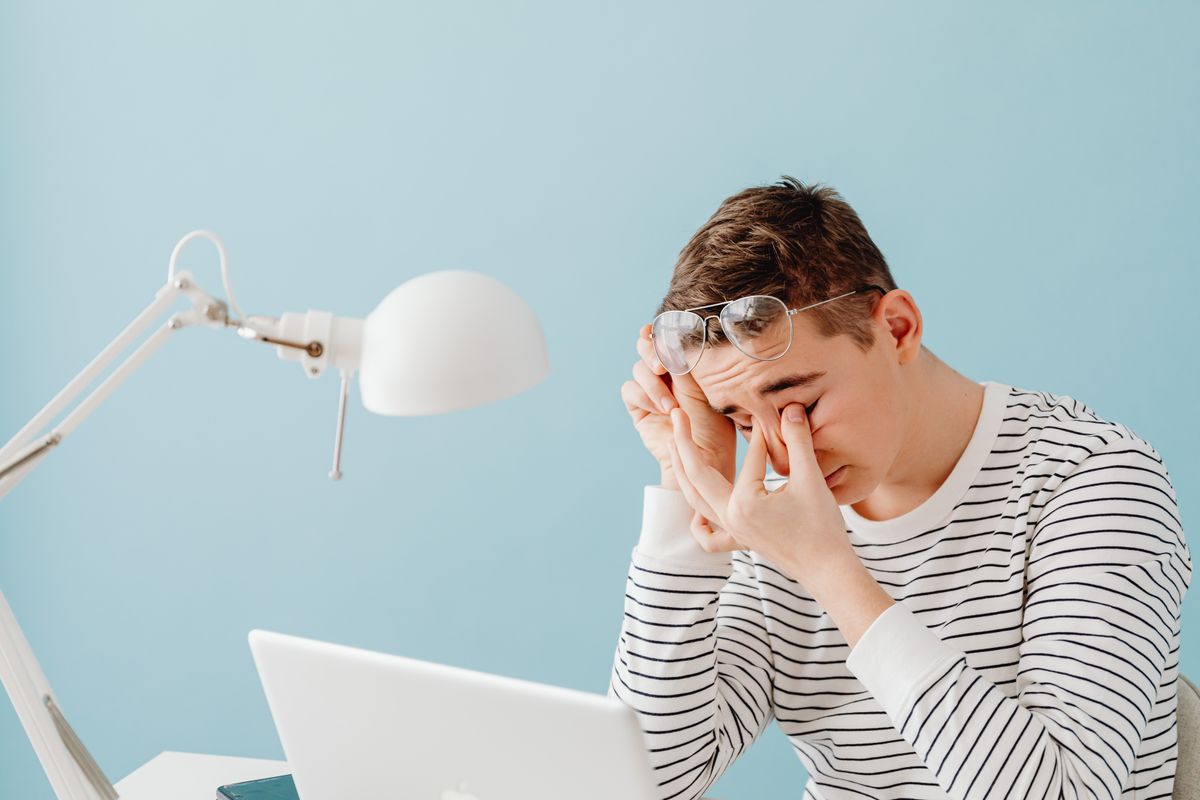
Why the gap between the promise and the proof? Because screen eye strain mostly isn't caused by blue light in the first place. It comes from how you use a screen — which is good news, because that's fixable.
Can blue light glasses help you sleep?
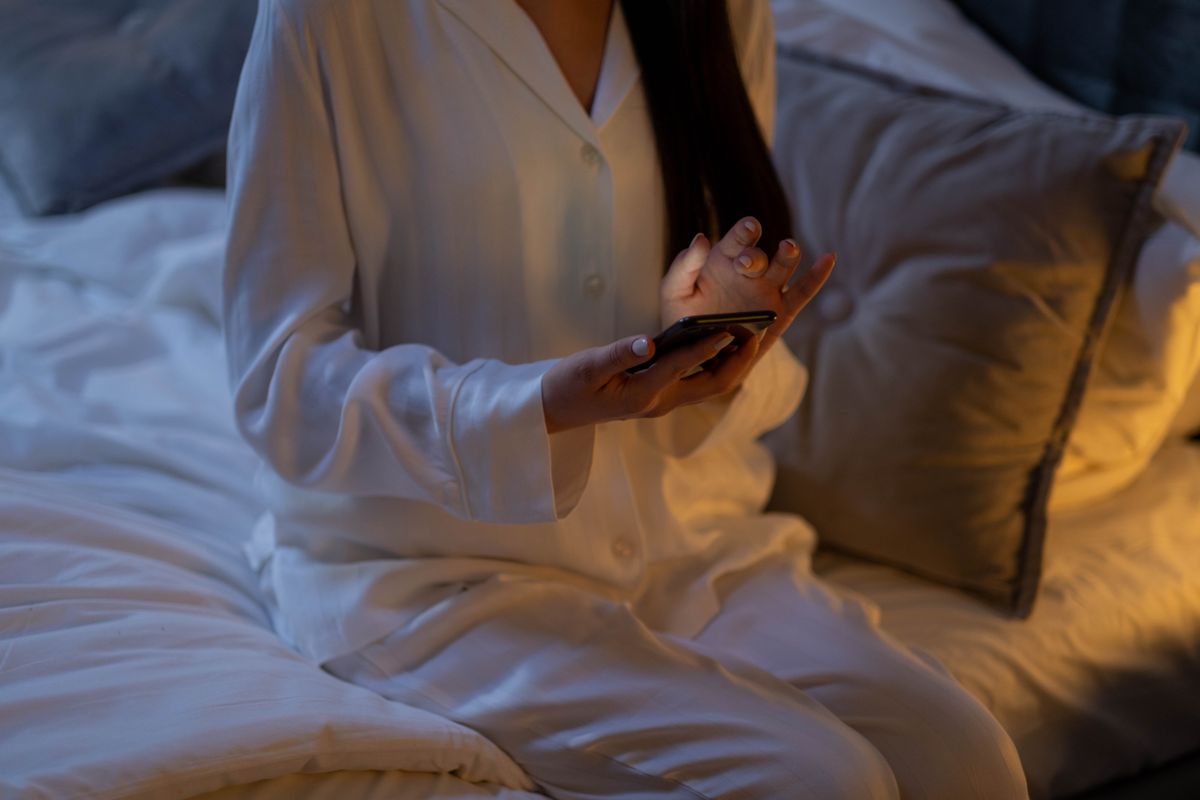
This is the one claim with real physics behind it — but a weaker track record than you'd expect. Blue light in the evening can suppress melatonin, the hormone that makes you sleepy, which is why late-night screens can nudge your body clock later. In principle, filtering evening blue light might help.
In practice, the trials on the glasses themselves haven't shown a clear improvement in sleep quality — the same Cochrane review found no convincing sleep benefit. If evening screens are keeping you up, the better-supported moves are simpler: dim the screen, switch on night mode, and put the phone down a while before bed. The glasses might help a little; the habits almost certainly help more.
What actually causes digital eye strain (and what helps)
If blue light isn't the culprit, what is? Three ordinary things:
- You stop blinking. Focused on a screen, people blink up to half as often, so the eyes dry out and sting.
- You hold one focus. Staring at a fixed close distance for hours tires the muscles that focus the eye.
- Glare and small text. Reflections, harsh lighting, and squinting at tiny fonts all add strain.

The fixes are behavioural, free, and backed by eye doctors:
- The 20-20-20 rule. Every 20 minutes, look at something about 20 feet (6 metres) away for 20 seconds, to let your focusing muscles relax.
- Blink on purpose, and use lubricating drops if your eyes feel dry.
- Cut glare with better lighting and an anti-reflective screen or lens.
- Set the screen up well — comfortable text size, an arm's length away, top of the screen at or below eye level.
None of that costs anything, and all of it has better evidence than the glasses. (This article is general science, not medical advice — if you have persistent eye discomfort, see an optometrist or ophthalmologist.)
One original diagram for this article: a lens cross-section splitting white light into its colours, with the blue band partly absorbed by the tint and partly reflected by the coating, while the rest passes through — and a side-by-side bar comparing the blue light from a screen against the blue light from midday daylight, so the reader can see the scale difference at a glance.
Curious about the light itself rather than the eyewear? Start with our guide to what light energy is, or browse all our optics guides.
Frequently Asked Questions
How do blue light glasses work?
Blue light glasses have a tint or a thin coating on the lens that absorbs or reflects a portion of blue light — typically wavelengths around 400 to 450 nanometres. A faint yellow tint absorbs some blue; a reflective coating bounces a little back. Most filter only about 20 to 30 percent of blue light, so they reduce it rather than block it.
Do blue light glasses actually reduce eye strain?
Probably not, according to the best evidence. A 2023 Cochrane review of 17 randomised trials found that blue-light filtering glasses likely make no difference to eye strain from screens, and the American Academy of Ophthalmology agrees there is no solid evidence they help. Digital eye strain is mostly caused by reduced blinking, glare, and focusing effort — not by blue light.
Is blue light from screens harmful to your eyes?
There is no good evidence that the blue light from screens damages your eyes. The amount a phone or laptop emits is a tiny fraction of what you get from daylight. The Cochrane review found no evidence that blue-light filtering lenses protect the retina. The Sun, not your screen, is by far your largest source of blue light.
Do blue light glasses help you sleep?
The theory is reasonable — blue light in the evening can suppress the sleep hormone melatonin — but trials on the glasses themselves have not shown a clear improvement in sleep quality. If evening screens disrupt your sleep, dimming the screen, using night mode, and putting devices away before bed are better-supported steps than the glasses alone.
Should I wear blue light glasses all day?
There is no proven benefit to wearing them all day, and no known harm either. If you like how they feel or they cut glare for you, there is no reason to stop. Just don't rely on them instead of the habits that genuinely reduce eye strain, like the 20-20-20 rule and a well-set-up screen.
What actually causes digital eye strain?
Staring at a screen makes you blink far less, which dries the eyes, and holding focus at one close distance tires the eye muscles. Glare, poor lighting, small text, and bad posture add to it. The fixes are behavioural: blink often, take regular distance breaks, reduce glare, and set the screen at a comfortable size and distance.

About Umar Farooq
Umar Farooq writes in-depth guides on the physics of light and optics — from reflection, refraction, and lenses to diffraction, lasers, and fiber optics, explained from first principles.
Read more about Umar Farooq →