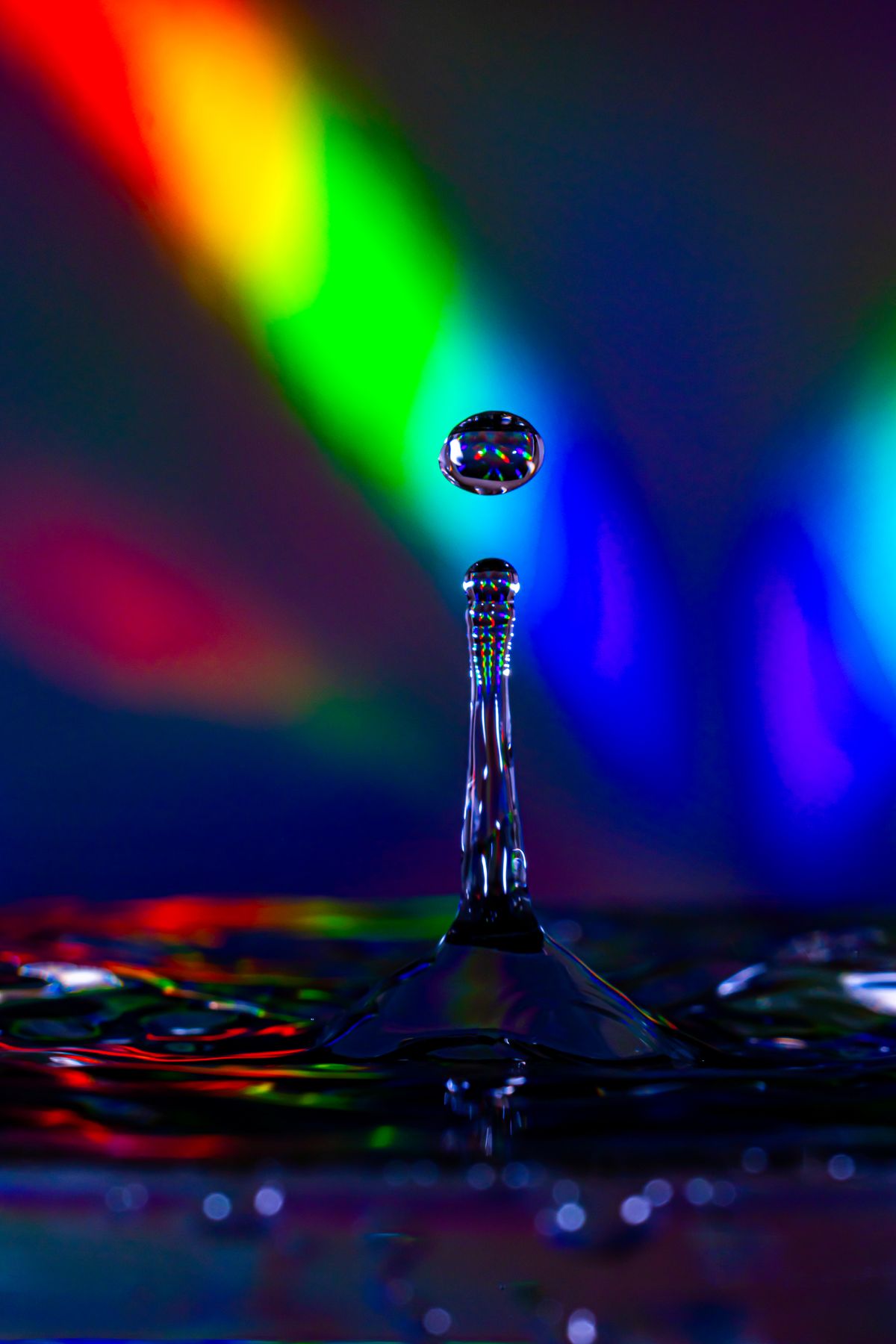
You can make a rainbow at home using five simple methods: a prism, a glass of water with a mirror, a garden hose on mist, a CD, or a bowl of water in sunlight. All five work by splitting white light into the colours of the visible spectrum — the same physics that creates rainbows in the sky.
Here is what we cover: the science of how rainbows form, five step-by-step experiments you can try today, tips for getting the clearest results, and the common misconception about prisms that has been around since the 1660s.
The Science: How Rainbows Work
White light from the sun looks colourless, but it is actually a mixture of all the colours of the rainbow. When light passes from one material into another — from air into water, for example — it slows down and bends. This bending is called refraction.
Each colour bends by a slightly different amount because each colour has a different wavelength. Violet light has the shortest wavelength (around 380 nm) and bends the most. Red light has the longest wavelength (around 700 nm) and bends the least. The spreading of the colours is called dispersion.
All the methods below create a rainbow by making sunlight refract and disperse through water, glass, or the grooves on a disc.
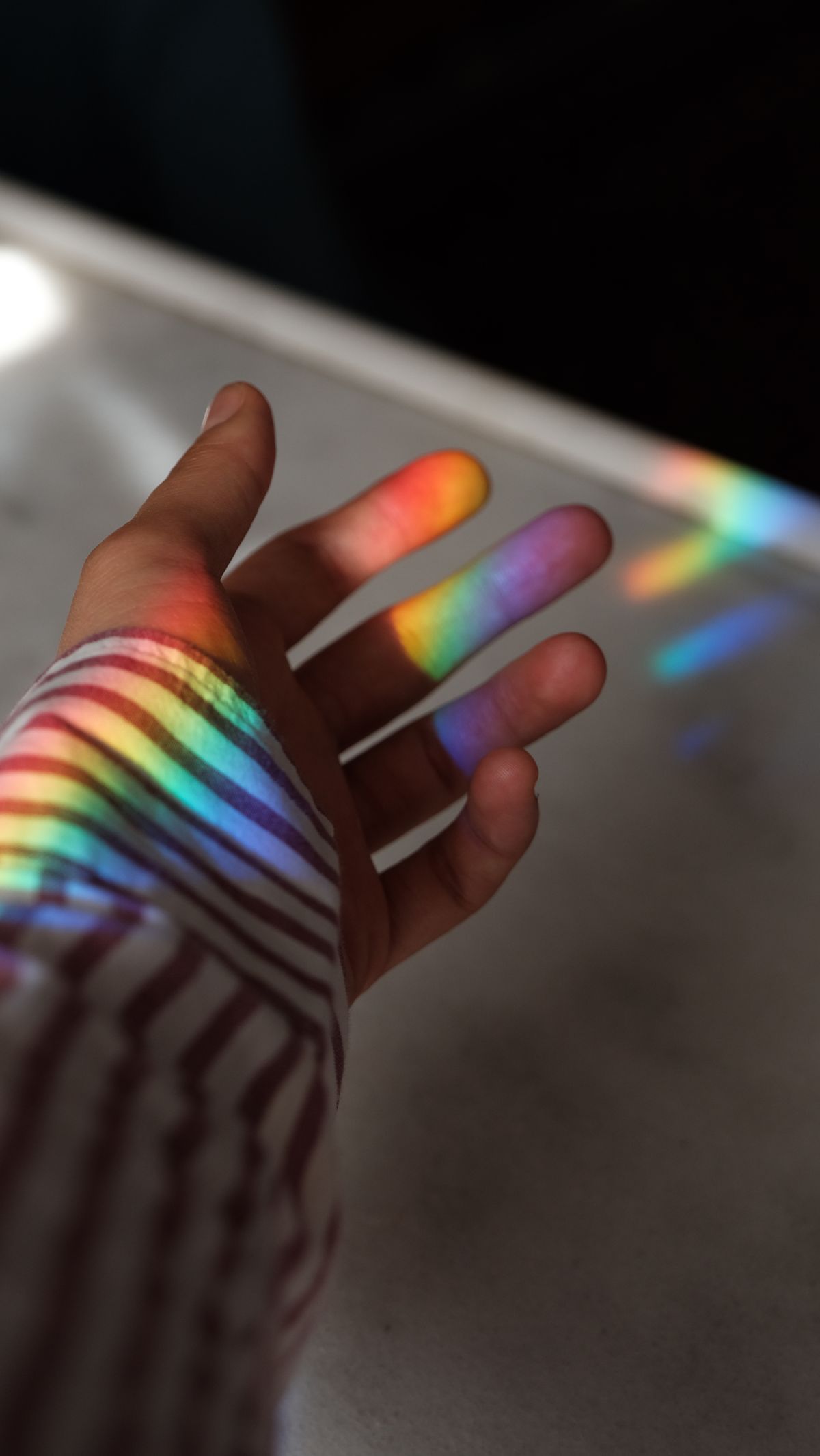
Experiment 1: Using a Prism
A glass prism is the cleanest way to make a rainbow. It was also the method Isaac Newton used in the 1660s to prove that white light contains all the colours — a discovery he published in Opticks (1704). Before Newton, people thought the prism added colour to white light. His second-prism recombination experiment proved otherwise.
You will need: a glass prism, sunlight, a white wall or piece of white paper.
Steps:
- Find a sunny window where a beam of sunlight enters the room.
- Hold the prism in the sunlight and rotate it slowly.
- Project the light onto a white wall or a sheet of white paper.
- Adjust the angle until you see a clear spectrum of colours.
What is happening: The glass slows the light and bends it. Each colour bends at a slightly different angle, so the white light fans out into a rainbow.
Experiment 2: Water and Mirror (The Water Prism)
This method uses water as the prism and a mirror to reflect the separated colours onto a surface.
You will need: a shallow baking dish or pan, water, a small mirror, a white piece of paper, direct sunlight.
Steps:
- Fill the pan about halfway with water.
- Place the mirror in the water, leaning it against the edge at about a 45-degree angle.
- Position the pan in direct sunlight.
- Hold the white paper above the mirror to catch the reflection.
- Adjust the mirror angle until a rainbow appears on the paper.
What is happening: Sunlight enters the water and refracts. The light reflects off the mirror and refracts again as it leaves the water, spreading the colours further.
Experiment 3: Garden Hose or Spray Bottle
This method mimics the way natural rainbows form — using millions of tiny water droplets suspended in air.
You will need: a garden hose with a spray/mist nozzle, or a spray bottle, sunny day.
Steps:
- Stand with your back to the sun.
- Turn the hose to a fine mist setting.
- Spray the water into the air in front of you.
- Look for a rainbow in the mist. Move the spray angle if needed.
What is happening: Each tiny water droplet acts as a miniature prism, refracting and reflecting the sunlight. You see the combined effect of millions of droplets — just like a real rainbow after rain.
Experiment 4: Using a CD or DVD
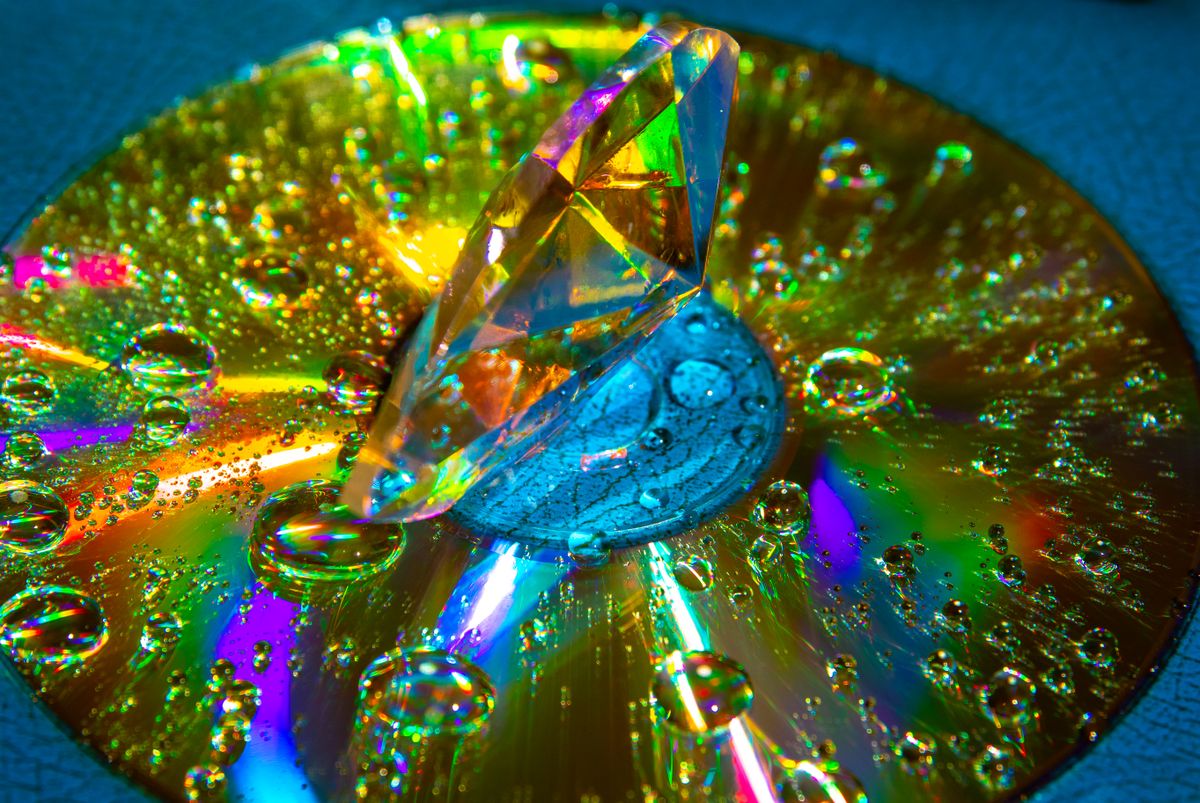
The surface of a CD or DVD has microscopic grooves that act as a diffraction grating, splitting light into colours.
You will need: an old CD or DVD (shiny side), a bright light source (sunlight or a desk lamp).
Steps:
- Hold the CD with its shiny side facing up under a light.
- Tilt the disc and watch the rainbow bands appear on its surface.
- Try different angles to see which colours appear.
What is happening: The grooves on the disc are spaced about the same distance as the wavelength of visible light. This causes diffraction — light waves spread out and interfere with each other, creating rainbow patterns.
Experiment 5: Glass of Water on a Sunny Windowsill
This is the simplest method — it needs only a glass of water and sunlight.
You will need: a clear glass of water, a white tabletop or piece of paper, direct sunlight.
Steps:
- Fill a clear glass with water.
- Place it on a white tabletop or a sheet of white paper in direct sunlight.
- Look for a rainbow on the table or paper near the glass.
- Adjust the glass angle if needed.
What is happening: The water in the glass acts as a cylindrical lens, refracting the sunlight and splitting it into colours where it hits the white surface.
Tips to Make a Rainbow Every Time
- Sunlight works better than artificial light. The sun is bright enough to produce clear, vivid rainbows. Flashlights and lamps are much weaker and may not give visible colours.
- Use a white surface. White paper, walls, or tables reflect all colours equally and give the sharpest rainbow. Dark surfaces absorb the light.
- Still water gives the cleanest rainbow. Ripples in the water scatter the light and blur the colours.
- Shallow water works best. In the water-and-mirror method, water depth of 2–3 cm gives the clearest result.
- Try different angles. If you cannot see a rainbow immediately, slowly tilt the prism, mirror, or CD. The rainbow appears at a specific angle depending on the light source position.
Common Misconception: "Prisms Add Colour to Light"
Before Newton's experiments in the 1660s, people believed that a prism somehow added colour to white light. Newton proved this wrong by passing a beam through a prism, letting the colours spread out, and then passing them through a second prism — which recombined them back into white light. The colours were already inside the white light all along. The prism only separates them.
This is true for every method in this article. Water, CDs, and prisms do not create colour. They reveal the colours that were always there.
Why We See the Same Colour Order Every Time
The colours always appear as red, orange, yellow, green, blue, indigo, violet (ROYGBIV) because the order is set by wavelength. Red has the longest wavelength and bends the least. Violet has the shortest wavelength and bends the most. This order never changes — it is a direct consequence of the physics of refraction and dispersion.
For a deeper look at how refraction works, see our what causes refraction guide. For the history of how Newton unlocked the secrets of light, read about the visible spectrum and light fundamentals.
Sources used in this article: Science Sparks — How to Make a Rainbow, wikiHow — How to Make a Rainbow, and Science Fun — Make a Rainbow Water Science Experiment.
Frequently Asked Questions
How to make a rainbow at home?
You can make a rainbow at home using a prism, a glass of water with a mirror, a garden hose on mist setting, a CD or DVD, or a bowl of water placed in sunlight. All five methods work by splitting white light into its component colours through refraction, reflection, or diffraction.
What materials do you need to make a rainbow?
The simplest method needs just a glass of water, a small mirror, and a sunny window. A prism also works well. For outdoor rainbows, a garden hose on mist setting is effective. A CD or DVD creates rainbow patterns through diffraction. Most methods require direct sunlight and a white surface to project the colours onto.
Can you make a rainbow without a prism?
Yes. You do not need a glass prism to make a rainbow. A glass of water with a mirror, a garden hose on mist, a CD or DVD, or even a clear glass of water placed in sunlight can all split white light into its component colours.
How to make a rainbow with a glass of water?
Fill a glass with water, place it on a white tabletop in direct sunlight, and let the light pass through the water at an angle. The water acts as a prism, refracting the light and projecting a rainbow onto the table or a piece of white paper held nearby.
How to make a rainbow with a mirror?
Fill a shallow pan with water, place a mirror in it at a 45-degree angle in direct sunlight, and hold a white piece of paper above the mirror. The water refracts the light, the mirror reflects it, and the paper catches the rainbow. Adjust the angle until the colours are clear.
How to make a rainbow with a CD?
Hold a CD or DVD under a bright light or in sunlight with the shiny side facing up. Tilt it until you see rainbow bands on the surface. The tiny grooves on the disc act as a diffraction grating, splitting the light into its component colours.
How to make a rainbow with a garden hose?
Stand with your back to the sun on a sunny day and set your garden hose to a fine mist or spray. Spray the water into the air in front of you and look for a rainbow in the mist. The tiny water droplets act as individual prisms.
Why does water create a rainbow?
Water creates a rainbow because it refracts (bends) sunlight. When white light enters a water droplet, it slows down and bends. Different colours bend by different amounts because they travel at different speeds in water. This separates the colours and creates the rainbow spectrum.
How to make a rainbow indoors?
The easiest indoor method uses a glass of water and a sunny window. Place the glass on a white surface in direct sunlight, or use a flashlight in a dark room. A CD under a desk lamp also works well. A prism placed in a beam of sunlight through a window gives the clearest result.
What is the science behind making a rainbow?
Making a rainbow demonstrates three optical principles: refraction (light bending as it passes from one medium to another), dispersion (different wavelengths bending by different amounts, separating white light into colours), and reflection (light bouncing off surfaces). The colours always appear in the same order — red, orange, yellow, green, blue, indigo, violet — because each colour has a different wavelength.

About Umar Farooq
Umar Farooq writes in-depth guides on the physics of light and optics — from reflection, refraction, and lenses to diffraction, lasers, and fiber optics, explained from first principles.
Read more about Umar Farooq →