Total Internal Reflection
6 articles on total internal reflection, sorted newest first.
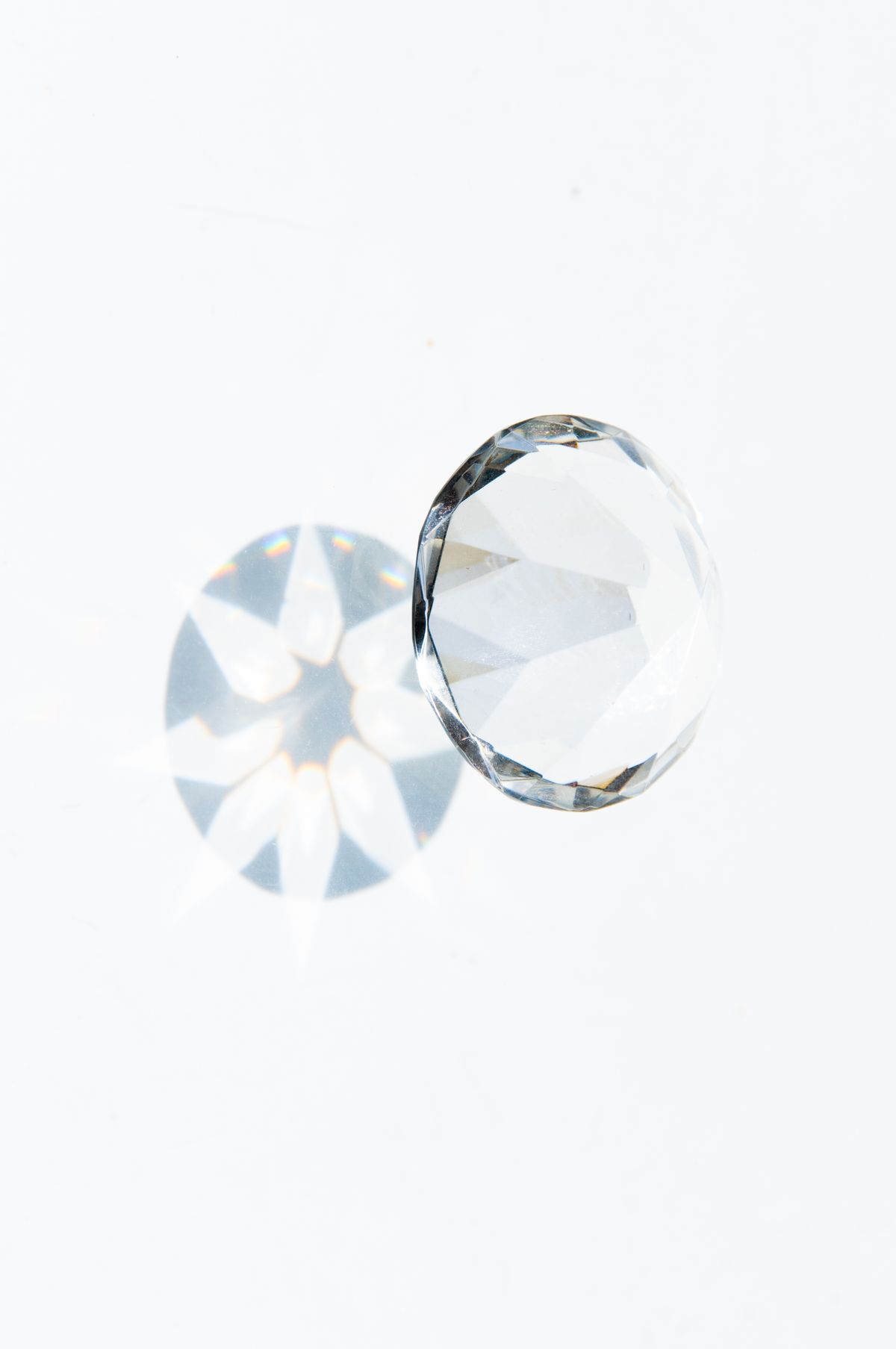
Total Internal Reflection Explained: Definition, Conditions & Real-World Examples
Total internal reflection (TIR) happens when light travelling through a denser medium hits the boundary with a rarer medium at an angle greater than the critical angle, and the light reflects entirely back into the denser medium. Here are the 3 conditions for TIR, the critical angle formula, and 5 real-world examples.

TIRF Microscopy Explained: Total Internal Reflection Fluorescence Guide
Total internal reflection fluorescence (TIRF) microscopy is an optical technique that uses the evanescent wave generated by total internal reflection to selectively excite fluorophores within 100-200 nanometres of the coverslip surface. This produces images with extremely low background and high signal-to-noise ratio, ideal for studying cell membrane dynamics, endocytosis, exocytosis, and single-molecule events.
FTIR Explained — Frustrated Total Internal Reflection Guide
Frustrated total internal reflection (FTIR) is what happens when light that should reflect entirely instead tunnels across a tiny gap into a third medium. It spoils perfect TIR — and it is the physics behind fingerprint scanners, optical sensors, and a beautiful party trick with a glass of water.
Critical Angle: Simple Definition, Formula & 4 Worked Examples
The critical angle is the angle of incidence in a denser medium at which the refracted ray in the rarer medium runs exactly along the boundary at 90 degrees. Any angle larger than this produces total internal reflection. Here is the formula, how to calculate it, and 4 worked examples for water, glass, diamond, and ice.
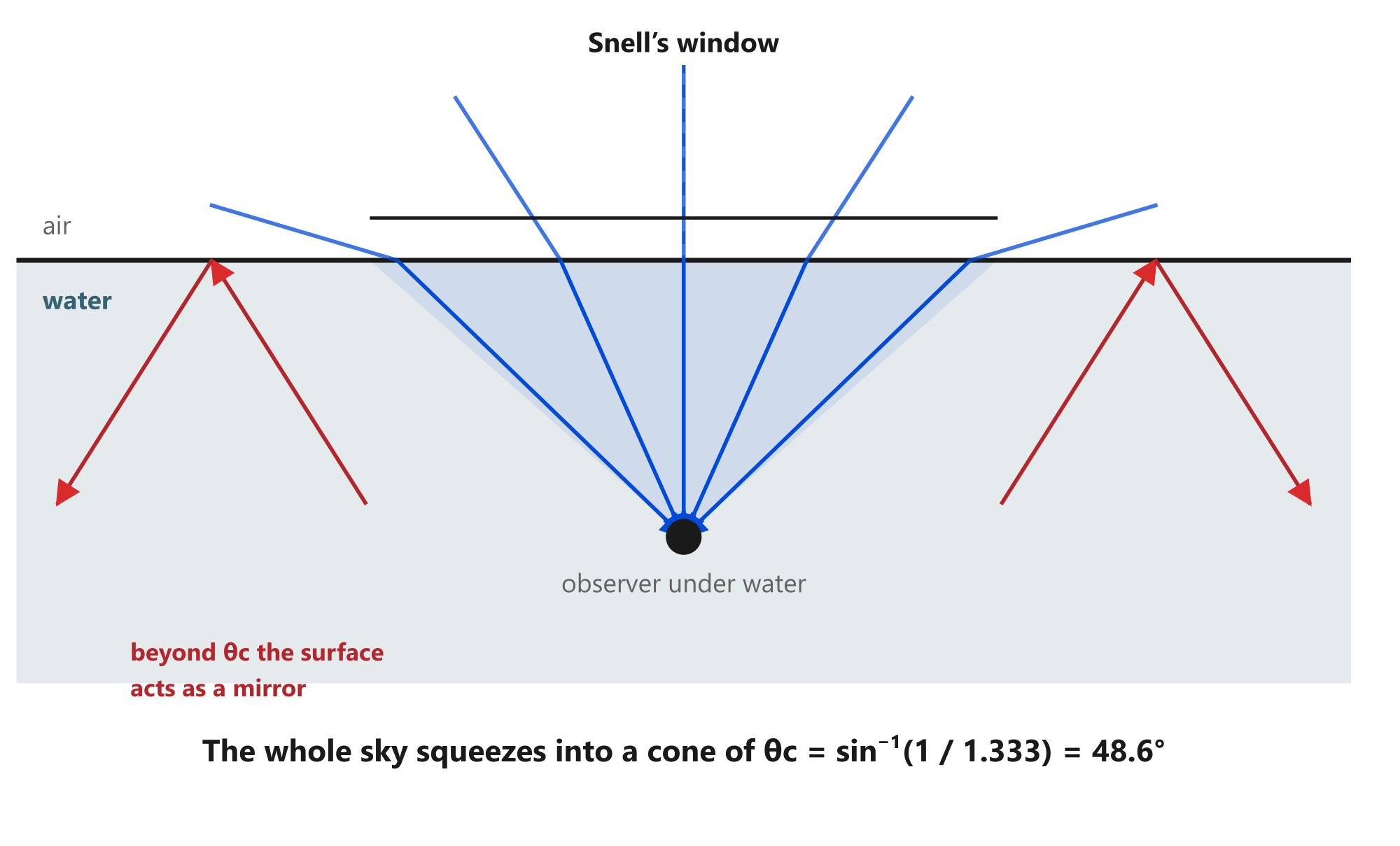
Critical Angle & Reflection: The Relationship Explained
The critical angle of reflection is the threshold angle of incidence in a denser medium where light goes from partial reflection (some transmits, some reflects) to total internal reflection (100% reflects). Below θc you get a mix of refraction and reflection. At exactly θc the refracted ray grazes the boundary and reflection is minimal. Beyond θc all light reflects. Here is how this relationship works and why it matters.

Critical Angle Formula & How to Calculate It (Worked Examples)
The critical angle formula θc = sin⁻¹(n₂/n₁) gives the angle of incidence at which light switches from refraction to total internal reflection. Here is how to derive it from Snell's law, use it step by step, and apply it with 6 worked examples for different materials.