The full archive.
Page 4 of 13 — articles on the physics of light, sorted newest first.
Circular Polarizer Filter: How It Works & 5 Best Uses
A circular polarizer filter is a glass optical filter that screws onto your camera lens to cut glare, deepen skies, and saturate colours. This guide explains the optical construction inside a CPL filter — the polarising film, quarter-wave plate, multi-coatings, and glass types — with 5 best uses and what separates a £30 filter from a £150 one.

7 Best Polarizing Filters in 2026 — Top Picks Tested
The best polarizing filters cut glare, deepen skies, and boost colour saturation in ways no software can replicate. We tested top CPL filters from Hoya, B+W, Tiffen, K&F Concept, Breakthrough Photography, NiSi, and Hoya Fusion to find the best circular polariser for every budget and camera system. This guide covers 7 top picks, a comparison table, a how-to-choose section, and buying tips.
What Is Polarized Light? 5 Easy Examples & How It Works
Polarized light is light in which the electric field vibrates in a single direction rather than randomly in all directions. Unpolarized light from the sun or a lamp vibrates in every plane perpendicular to its travel. Polarized light is restricted to one plane. This happens naturally when light reflects off water or glass, and artificially when it passes through a polarising filter. This guide covers what polarization is, how it works, the three types, and where you see it every day.

What Is Polarization in Chemistry? 5 Essential Differences
Polarization in chemistry means the separation of electric charge within a molecule, creating a dipole with a positive end and a negative end. This is fundamentally different from polarisation in physics, which describes the direction an electromagnetic wave oscillates. In chemistry, polarity determines solubility, boiling points, and intermolecular forces. This guide explains chemical polarity, bond polarity, molecular polarity, electronegativity, dipole moments, and the essential differences between chemistry and physics polarisation.

Unpolarized Light: 5 Essential Facts & Differences
Unpolarized light is light whose electric field vibrates randomly in all directions perpendicular to its path. Most natural and artificial light — sunlight, incandescent bulbs, LED lamps, candles — is unpolarized. The key difference from polarized light is that unpolarized light has no preferred direction of vibration. This guide covers what unpolarized light is, why most light sources produce it, how it compares to polarized light, and why it cannot form interference patterns.
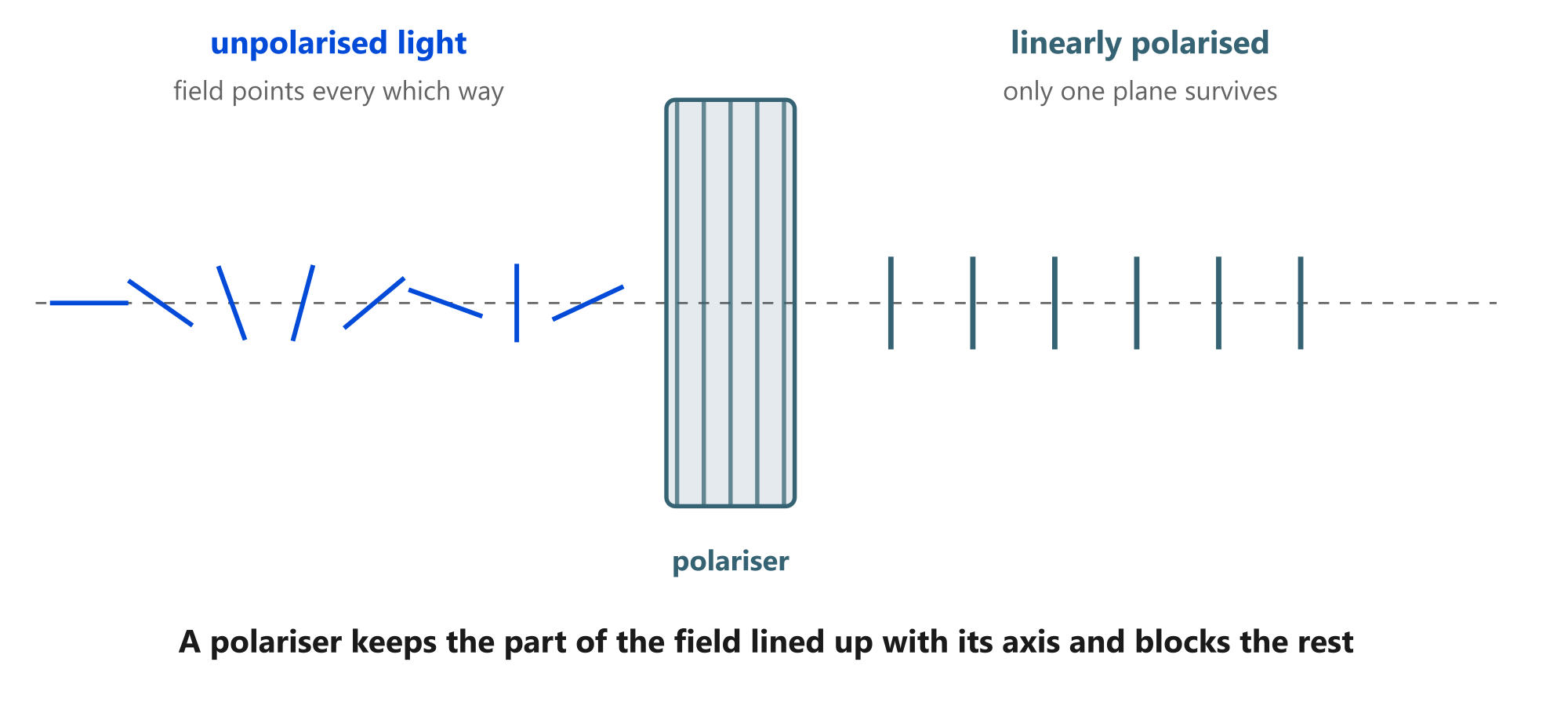
3 Key Types of Polarization: Linear, Circular & Elliptical
The three types of polarisation — linear, circular, and elliptical — describe how the electric field of a light wave behaves as it travels. Linear polarisation has the field oscillating in a single fixed plane. Circular polarisation has it rotating in a circle. Elliptical polarisation traces an ellipse and is the most general form. This guide covers each type in detail with analogies, phase relationships, detection methods, waveplate conversion, and everyday applications.

S and P Polarization: 5 Easy Facts & Fresnel Equations Guide
S and p polarization describe two perpendicular polarization states relative to the plane of incidence. S-polarization (from the German 'senkrecht,' meaning perpendicular) has the electric field perpendicular to the plane of incidence. P-polarization has the electric field parallel to it. This distinction is essential for understanding Fresnel equations, Brewster's angle, and why polarized sunglasses block glare from water and roads.
Polarization of Electromagnetic Waves: 5 Easy Facts
Polarization of electromagnetic waves describes the orientation of the electric field as the wave travels. For radio waves and microwaves — just as for light — the three types are linear, circular, and elliptical. Antenna polarization must match between transmitter and receiver for efficient signal transfer. This guide covers EM wave polarisation, antenna types, and why polarization matters in radio communications, satellite links, and radar.
How Does Polarization Work? 5 Easy Facts on Polarizers
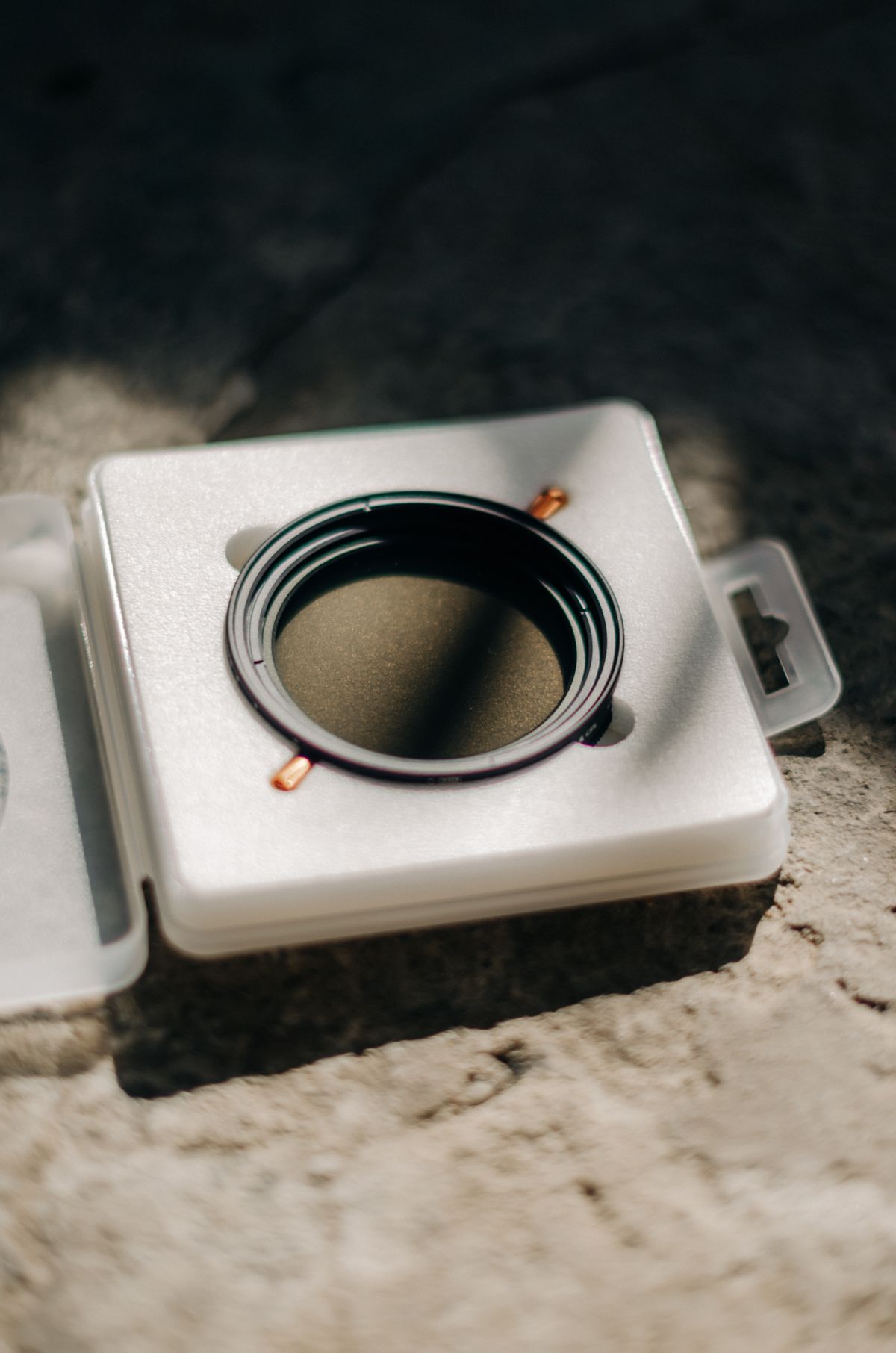
How does polarization work? A polariser restricts the direction in which the electric field of a light wave can vibrate. This guide covers the physics of how polarisers work — from dichroic filters and wire-grid polarisers to circular polarisers and the manufacturing process — with simple explanations and real-world examples.

When Were Lasers Invented? 6 Key History & Invention Facts
The first laser was built on 16 May 1960 by Theodore Maiman at Hughes Research Laboratories, using a ruby crystal. But the story stretches back to Einstein's 1917 theory of stimulated emission. This guide covers the full history, key inventors, and what came next.

What Does LASER Stand For? 5 Powerful Acronym Facts
LASER is an acronym for Light Amplification by Stimulated Emission of Radiation. This guide breaks down each letter — what Light, Amplification, Stimulated, Emission, and Radiation mean in context — traces the word's origin from MASER to laser, explains how an acronym became an everyday verb, and covers the fun facts behind the term.

What Are Lasers Used For? 10 Powerful Everyday Applications
Lasers cut steel, correct vision, carry internet traffic, read barcodes, and project starry light shows. This guide covers 10 major areas where lasers are used — medicine, manufacturing, communications, data storage, retail, science, military, entertainment, construction, and everyday devices — explaining the physics behind each application.